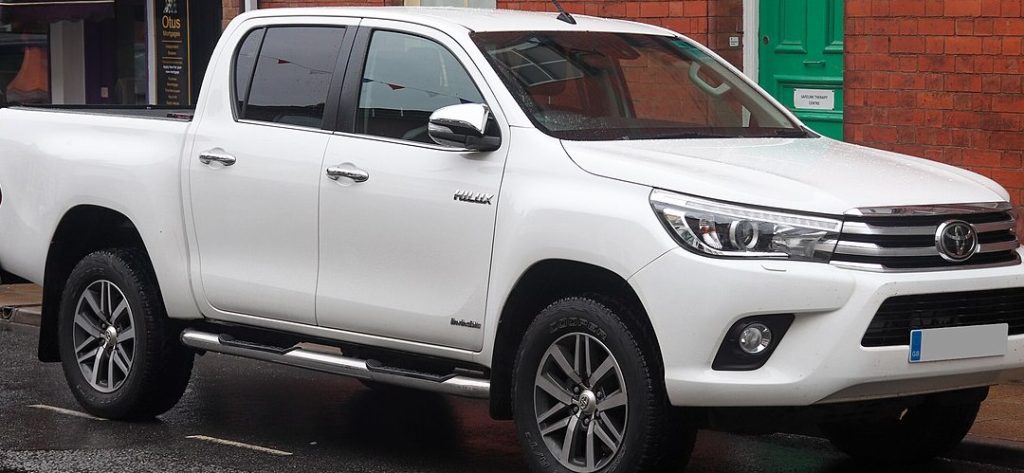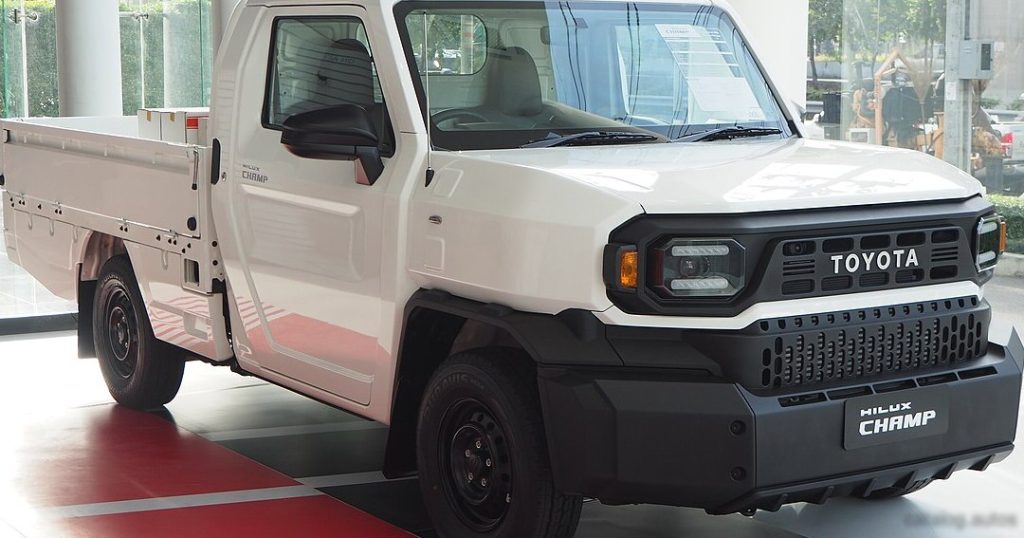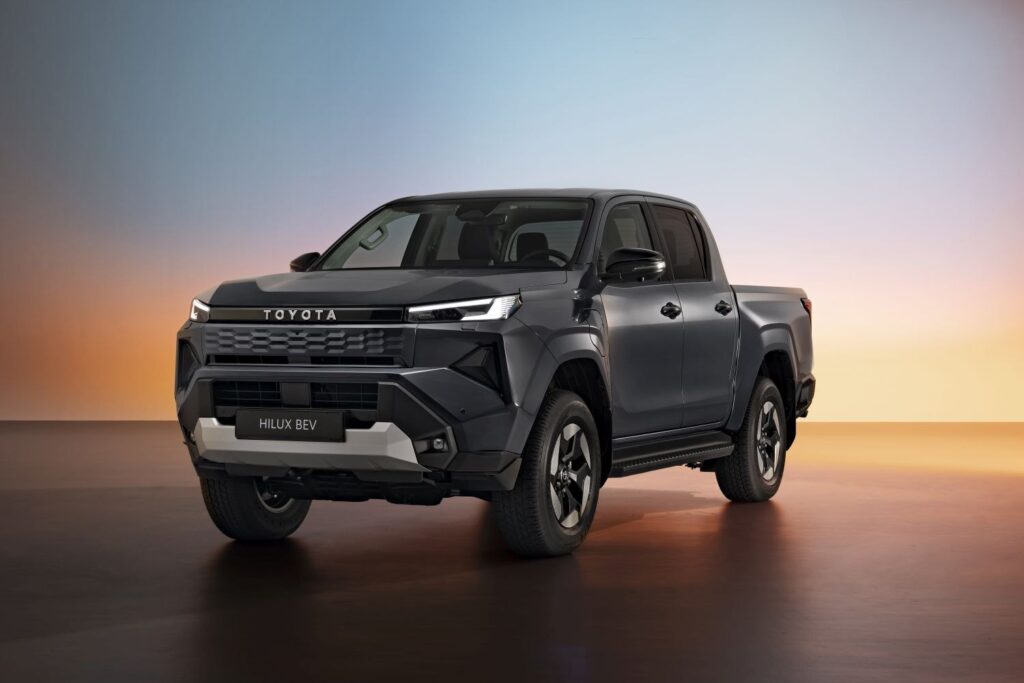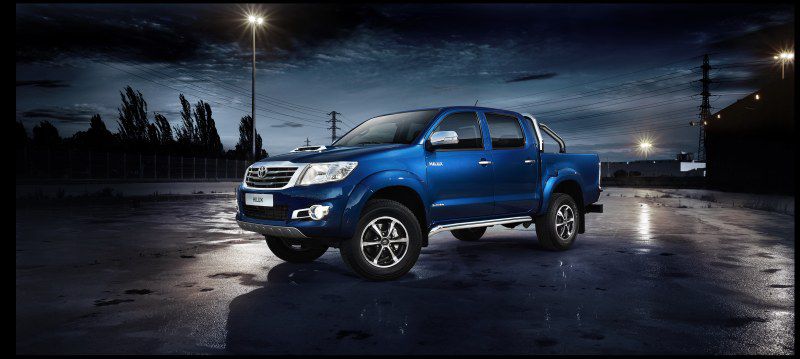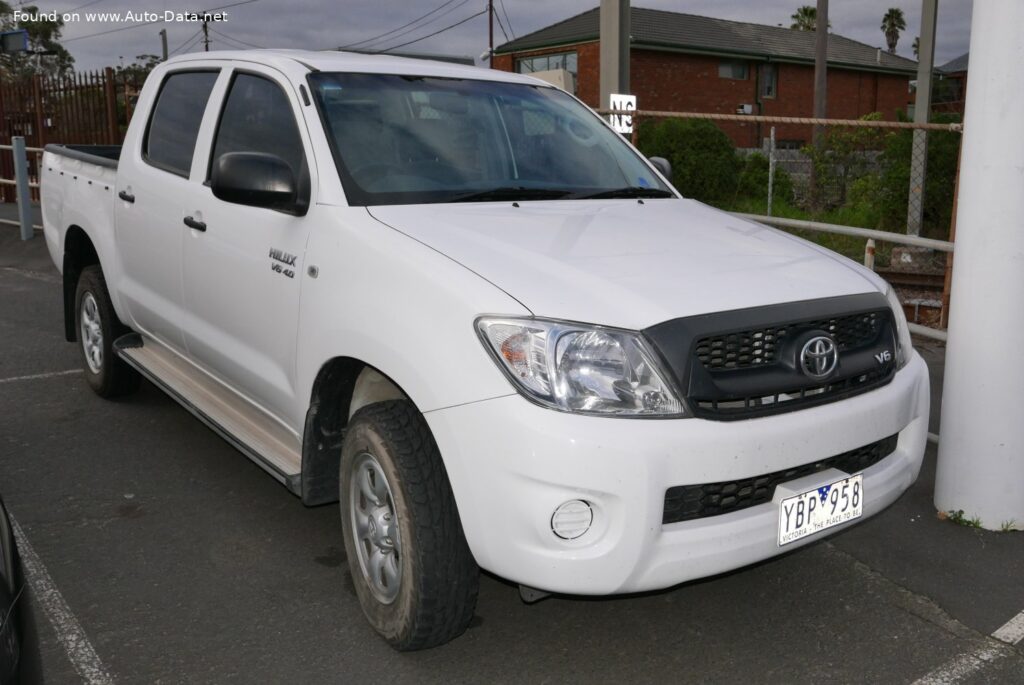
The Toyota Hilux Double Cab VII, specifically the facelifted version introduced in 2008, represents a significant iteration of Toyota’s globally renowned pickup truck. Produced from 2009 to 2011, this model was primarily aimed at markets outside of North America, where the Hilux was not officially sold during this generation. Instead, Toyota offered the Tacoma in the US. The Double Cab configuration offered increased passenger space, making it a popular choice for families and work crews needing both utility and practicality. This version of the Hilux was particularly prominent in Europe, Australia, South America, and Asia, known for its durability, reliability, and off-road capability.
Toyota Hilux Double Cab VII (2008-2011): A Global Workhorse
The Hilux has a long and storied history, dating back to 1968. The seventh generation, and particularly the 2008 facelift, brought refinements to both the exterior styling and interior comfort. While maintaining the core values of toughness and dependability, Toyota focused on improving ride quality and adding features to appeal to a broader customer base. The Double Cab variant, with its four doors and five-seat capacity, broadened the Hilux’s appeal beyond traditional commercial users. It became a viable option for those seeking a versatile vehicle capable of handling both work and family duties.
Engine & Performance
The 2009-2011 Toyota Hilux Double Cab VII facelift was commonly equipped with the 2.5 D-4D diesel engine, producing 144 horsepower at 3400 rpm and 343 Nm (252.98 lb.-ft.) of torque between 1600 and 2800 rpm. This 2.5-liter (2494 cm3 or 152.19 cu. in.) inline-four cylinder engine featured a turbocharger with intercooler and a diesel common rail fuel injection system. The engine’s longitudinal front-mounted layout contributed to a balanced weight distribution. Power was delivered to all four wheels via a five-speed manual transmission and a part-time four-wheel-drive system. Acceleration from 0 to 100 km/h (0-62 mph) took approximately 12.5 seconds, with a top speed of 170 km/h (105.63 mph). Fuel economy figures, measured using the NEDC standard, were rated at 8.3 l/100 km (28.3 US mpg, 34 UK mpg) combined, with urban consumption at 10.1 l/100 km (23.3 US mpg, 28 UK mpg) and extra-urban at 7.2 l/100 km (32.7 US mpg, 39.2 UK mpg). CO2 emissions were recorded at 219 g/km, meeting Euro 4 emission standards.
Design & Features
The Hilux Double Cab VII is a classic pickup truck design, characterized by its robust build and functional aesthetics. The facelifted model received subtle styling updates, including revised front grilles and headlights, enhancing its appearance. The Double Cab body style provides ample space for five passengers, with two full doors for rear-seat access. The truck bed offers a practical cargo area for hauling goods. The interior, while utilitarian, was improved with better materials and ergonomics compared to earlier generations. Key features included hydraulic power steering, an anti-lock braking system (ABS), and a comfortable, if not luxurious, cabin. The Hilux’s high ground clearance (292 mm or 11.5 in.) and robust suspension – featuring double wishbones at the front and a rigid axle with leaf springs at the rear – made it capable of tackling challenging terrain. Approach, departure, and ramp-over angles of 30°, 25°, and 19° respectively, further enhanced its off-road prowess. Towing capacity was substantial, with a maximum braked trailer load of 2250 kg (4960.4 lbs).
Technical Specifications
| Brand | Toyota |
| Model | Hilux |
| Generation | Hilux Double Cab VII (facelift 2008) |
| Type (Engine) | 2.5 D-4D (144 Hp) 4×4 |
| Start of production | 2009 |
| End of production | 2011 |
| Powertrain Architecture | Internal Combustion engine |
| Body type | Pick-up |
| Seats | 5 |
| Doors | 4 |
| Fuel consumption (urban) | 10.1 l/100 km (23.3 US mpg, 28 UK mpg) |
| Fuel consumption (extra urban) | 7.2 l/100 km (32.7 US mpg, 39.2 UK mpg) |
| Fuel consumption (combined) | 8.3 l/100 km (28.3 US mpg, 34 UK mpg) |
| CO2 emissions | 219 g/km |
| Fuel Type | Diesel |
| Acceleration 0 – 100 km/h | 12.5 sec |
| Acceleration 0 – 60 mph | 11.9 sec |
| Maximum speed | 170 km/h (105.63 mph) |
| Emission standard | Euro 4 |
| Weight-to-power ratio | 13.3 kg/Hp |
| Weight-to-torque ratio | 5.6 kg/Nm |
| Power | 144 Hp @ 3400 rpm |
| Torque | 343 Nm @ 1600-2800 rpm (252.98 lb.-ft.) |
| Engine layout | Front, Longitudinal |
| Engine Model/Code | 2KD-FTV |
| Engine displacement | 2494 cm3 (152.19 cu. in.) |
| Number of cylinders | 4 |
| Engine configuration | Inline |
| Cylinder Bore | 92 mm (3.62 in.) |
| Piston Stroke | 93.8 mm (3.69 in.) |
| Compression ratio | 17.4:1 |
| Engine oil capacity | 6.9 l (7.29 US qt | 6.07 UK qt) |
| Coolant capacity | 9 l (9.51 US qt | 7.92 UK qt) |
| Kerb Weight | 1920 kg (4232.88 lbs.) |
| Max. weight | 2715 kg (5985.55 lbs.) |
| Max load | 795 kg (1752.67 lbs.) |
| Fuel tank capacity | 80 l (21.13 US gal | 17.6 UK gal) |
| Max. roof load | 50 kg (110.23 lbs.) |
| Permitted trailer load (braked) | 2250 kg (4960.4 lbs.) |
| Permitted trailer load (unbraked) | 750 kg (1653.47 lbs.) |
| Length | 5255 mm (206.89 in.) |
| Width | 1760 mm (69.29 in.) |
| Height | 1810 mm (71.26 in.) |
| Wheelbase | 3085 mm (121.46 in.) |
| Front track | 1510 mm (59.45 in.) |
| Rear track | 1510 mm (59.45 in.) |
| Ride height (ground clearance) | 292 mm (11.5 in.) |
| Minimum turning circle | 13.2 m (43.31 ft.) |
| Drivetrain | All wheel drive (4×4) |
| Gearbox | 5 gears, manual transmission |
| Front suspension | Double wishbone, Transverse stabilizer |
| Rear suspension | Rigid axle suspension, Leaf spring |
| Front brakes | Ventilated discs |
| Rear brakes | Drum |
| Steering type | Steering rack and pinion |
| Tires size | 205/80 R16 |
The Toyota Hilux Double Cab VII (2008-2011) remains a popular choice in many parts of the world, celebrated for its reliability, durability, and versatility. Its combination of passenger comfort and cargo capacity makes it a practical vehicle for a wide range of applications, from commercial use to family transportation. While not officially sold in the US during this generation, its reputation as a tough and dependable workhorse is globally recognized.