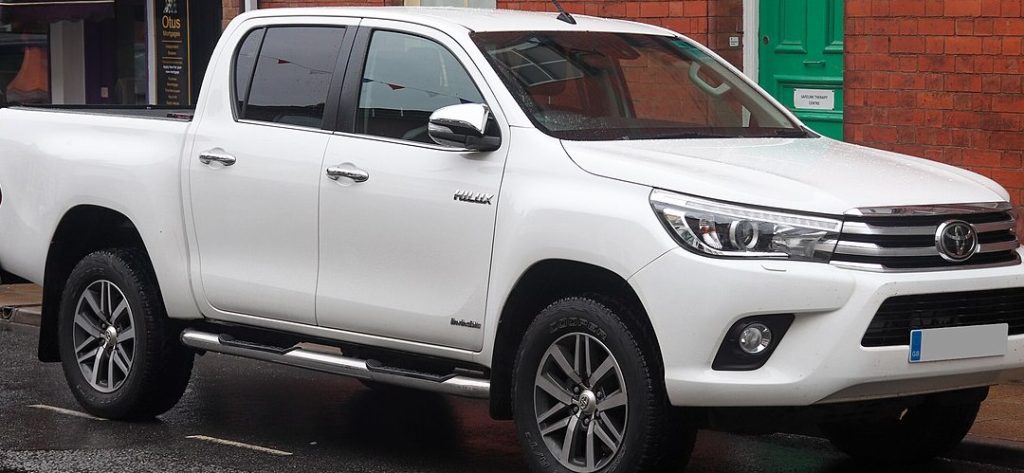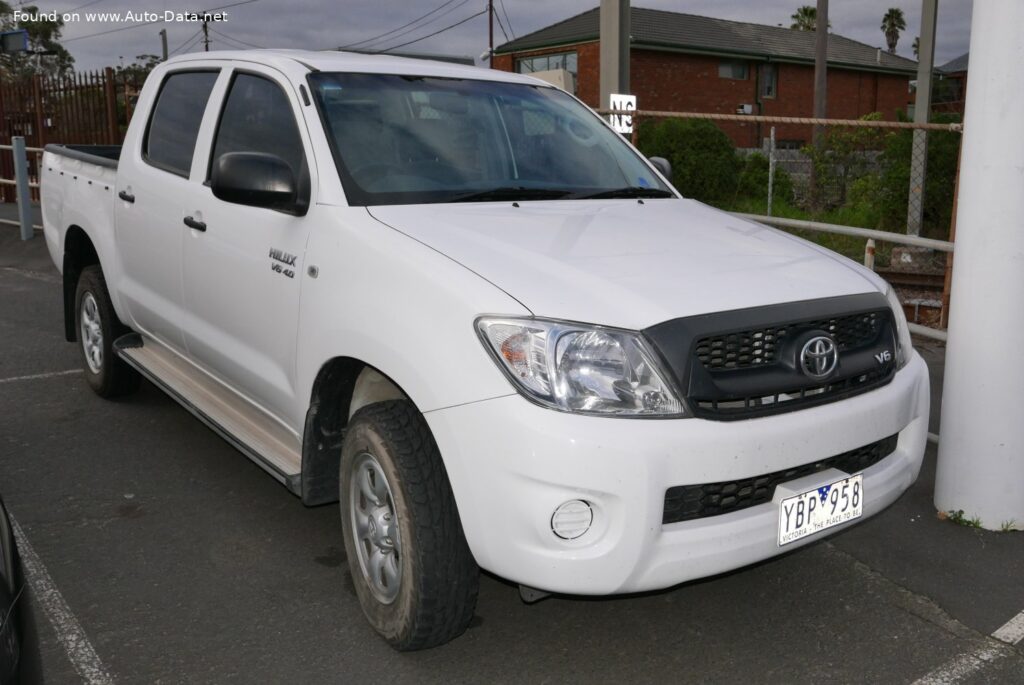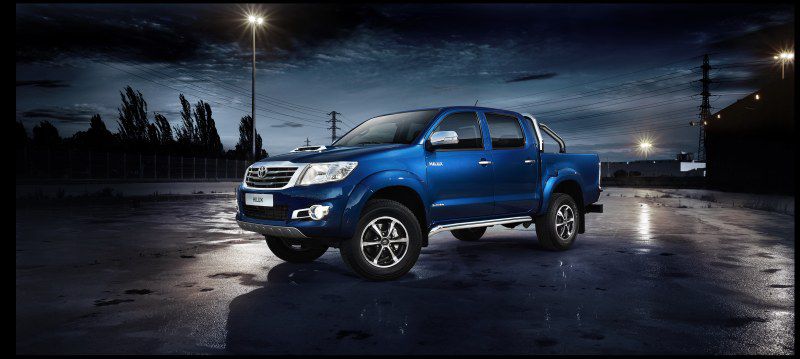
The Toyota Hilux Double Cab VII, specifically the facelifted version introduced in 2011, represents a significant iteration of Toyota’s globally renowned pickup truck. This generation, produced from 2005 to 2015 (with the facelift spanning 2011-2015), was particularly important in markets outside of North America, where mid-size trucks maintain substantial popularity. While the Hilux was not officially sold in the United States during this period, it held a dominant position in regions like Europe, Australia, South America, and Asia, prized for its durability, reliability, and off-road capability. The 3.0 D-4D variant, equipped with a 171 horsepower diesel engine and four-wheel drive, was a common configuration, catering to both commercial and personal use.
Toyota Hilux Double Cab VII (2011-2015): A Global Workhorse
The Hilux Double Cab VII facelift brought subtle but important updates to the existing platform. These included revised front-end styling, interior refinements, and improvements to the 3.0-liter D-4D diesel engine to meet increasingly stringent Euro 5 emission standards. The Double Cab configuration, offering seating for five passengers, broadened the Hilux’s appeal beyond purely utilitarian applications, making it a viable family vehicle alongside its work-truck capabilities. The model’s success stemmed from Toyota’s commitment to building a vehicle that could withstand harsh conditions and provide dependable transportation in diverse environments.
Engine & Performance
The heart of the 2011-2015 Toyota Hilux Double Cab 3.0 D-4D is the 1KD-FTV 3.0-liter inline-four cylinder diesel engine. This engine produces 171 horsepower at 3600 rpm and 343 Nm (252.98 lb.-ft.) of torque between 1400 and 3400 rpm. The engine features a turbocharger with intercooler and a diesel common rail fuel injection system, contributing to both power output and fuel efficiency. The engine’s transverse mounting within the chassis is a common layout for this class of vehicle, optimizing space utilization. Acceleration from 0 to 100 km/h (0-62 mph) takes approximately 12.1 seconds, while 0-60 mph is achieved in around 11.5 seconds. The Hilux boasts a maximum speed of 170 km/h (105.63 mph). Fuel economy figures are respectable for a vehicle of this type, achieving 7.7 l/100 km (30.5 US mpg) combined, 9.5 l/100 km (24.8 US mpg) in urban settings, and 6.7 l/100 km (35.1 US mpg) on the extra-urban cycle. A particulate filter was included to meet Euro 5 emission regulations, reducing harmful emissions.
Design & Features
The Hilux Double Cab VII is a five-door pickup truck with a crew cab configuration, providing comfortable seating for five occupants. Its body-on-frame construction contributes to its robust nature and load-carrying capacity. The 2011 facelift brought minor cosmetic changes, primarily to the front grille, headlights, and bumper, giving the vehicle a more modern appearance. The truck’s design prioritizes functionality and durability over outright aesthetics. Key features include a spacious cargo bed with a minimum capacity of 900 liters (31.78 cu. ft.), a fuel tank capacity of 80 liters (21.13 US gal), and a maximum roof load capacity of 50 kg (110.23 lbs). Safety features, while not as comprehensive as modern vehicles, included an Anti-lock Braking System (ABS). The Hilux’s robust suspension – double wishbone at the front and leaf springs at the rear – is designed to handle both on-road and off-road conditions. The vehicle’s towing capacity is substantial, with a maximum braked trailer load of 2500 kg (5511.56 lbs) and an unbraked trailer load of 750 kg (1653.47 lbs).
Technical Specifications
| Brand | Toyota |
| Model | Hilux |
| Generation | Hilux Double Cab VII (facelift 2011) |
| Type (Engine) | 3.0 D-4D (171 Hp) 4WD |
| Start of production | 2011 |
| End of production | 2015 |
| Powertrain Architecture | Internal Combustion engine |
| Body type | Pick-up |
| Seats | 5 |
| Doors | 5 |
| Fuel consumption (urban) | 9.5 l/100 km (24.8 US mpg) |
| Fuel consumption (extra urban) | 6.7 l/100 km (35.1 US mpg) |
| Fuel consumption (combined) | 7.7 l/100 km (30.5 US mpg) |
| CO2 emissions | 203 g/km |
| Fuel Type | Diesel |
| Acceleration 0 – 100 km/h | 12.1 sec |
| Acceleration 0 – 62 mph | 12.1 sec |
| Acceleration 0 – 60 mph | 11.5 sec |
| Maximum speed | 170 km/h (105.63 mph) |
| Emission standard | Euro 5 |
| Power | 171 Hp @ 3600 rpm |
| Torque | 343 Nm @ 1400-3400 rpm (252.98 lb.-ft.) |
| Engine layout | Front, Transverse |
| Engine Model/Code | 1KD-FTV |
| Engine displacement | 2982 cm3 (181.97 cu. in.) |
| Number of cylinders | 4 |
| Engine configuration | Inline |
| Cylinder Bore | 96 mm (3.78 in.) |
| Piston Stroke | 103 mm (4.06 in.) |
| Compression ratio | 15:1 |
| Number of valves per cylinder | 4 |
| Fuel injection system | Diesel Commonrail |
| Engine aspiration | Turbocharger, Intercooler |
| Valvetrain | DOHC |
| Engine oil capacity | 6.9 l (7.29 US qt | 6.07 UK qt) |
| Coolant capacity | 9 l (9.51 US qt | 7.92 UK qt) |
| Max. weight | 2730 kg (6018.62 lbs.) |
| Trunk (boot) space – minimum | 900 l (31.78 cu. ft.) |
| Fuel tank capacity | 80 l (21.13 US gal | 17.6 UK gal) |
| Max. roof load | 50 kg (110.23 lbs.) |
| Permitted trailer load with brakes (12%) | 2500 kg (5511.56 lbs.) |
| Permitted trailer load without brakes | 750 kg (1653.47 lbs.) |
| Length | 5260 mm (207.09 in.) |
| Width | 1835 mm (72.24 in.) |
| Height | 1850 mm (72.83 in.) |
| Wheelbase | 3085 mm (121.46 in.) |
| Front track | 1540 mm (60.63 in.) |
| Rear (Back) track | 1540 mm (60.63 in.) |
| Minimum turning circle | 13.2 m (43.31 ft.) |
| Drive wheel | All wheel drive (4×4) |
| Number of gears and type of gearbox | 5 gears, manual transmission |
| Front suspension | Double wishbone |
| Rear suspension | Leaf spring |
| Front brakes | Ventilated discs |
| Rear brakes | Drum |
| Assisting systems | ABS (Anti-lock braking system) |
| Steering type | Steering rack and pinion |
| Tires size | 255/70 R15C |
| Wheel rims size | 7J x 15 |
The Toyota Hilux Double Cab VII (2011-2015) 3.0 D-4D 4WD remains a popular choice in many parts of the world, celebrated for its blend of practicality, durability, and off-road prowess. Its continued presence on roads and work sites is a testament to Toyota’s engineering and the Hilux’s enduring reputation as a reliable and capable pickup truck.