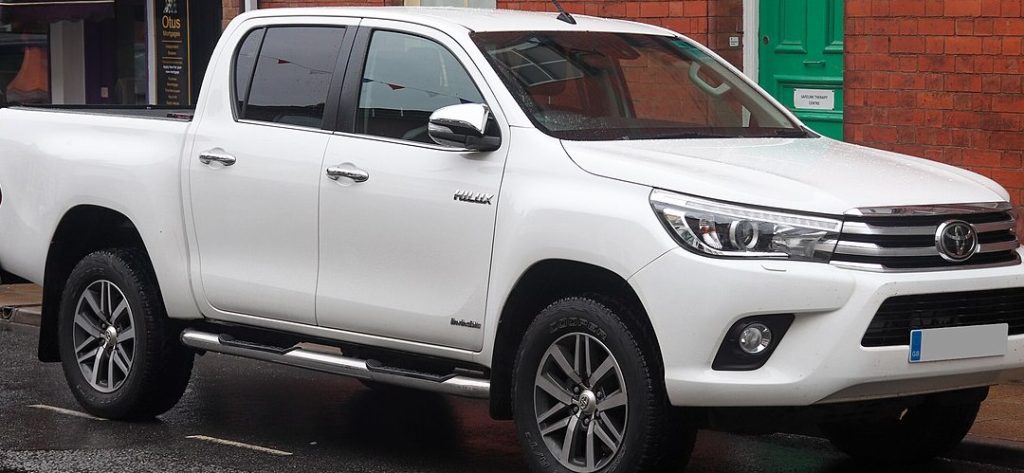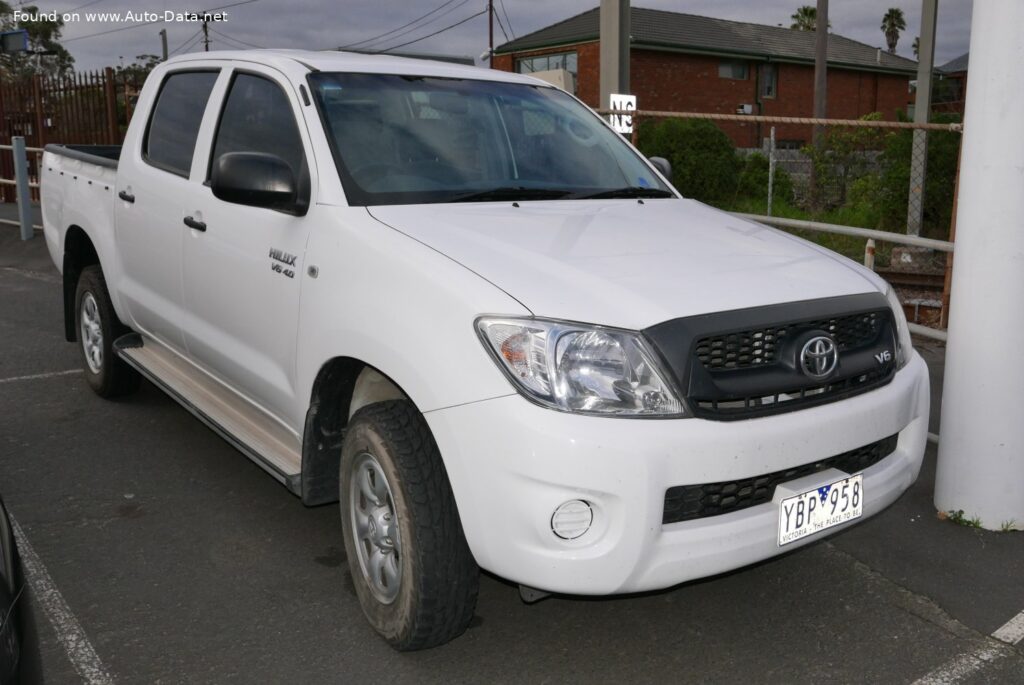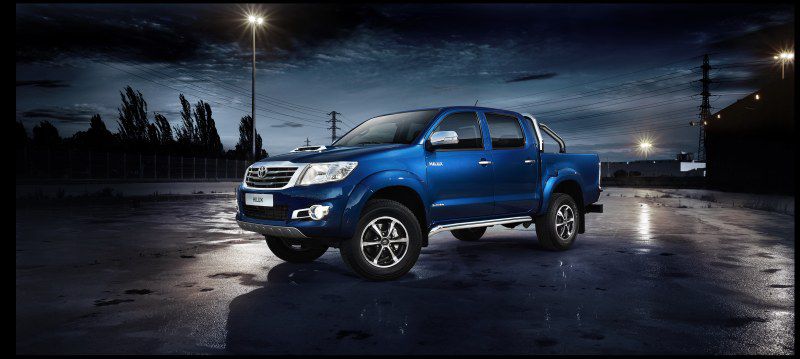
The Toyota Hilux Double Cab VII, specifically the facelifted version introduced in 2011, represents a significant iteration of Toyota’s globally renowned pickup truck. While not widely sold in the United States in this specific configuration, the Hilux holds immense popularity in markets like Europe, Australia, Asia, and Latin America, where robust and reliable work vehicles are in high demand. This generation, produced from 2011 to 2015, offered a blend of practicality, durability, and increasingly, comfort features, catering to both commercial and personal use. The 3.0 D-4D variant, equipped with a 171 horsepower diesel engine and four-wheel drive, was a common configuration, designed to tackle challenging terrains and heavy loads.
Toyota Hilux Double Cab VII (2011-2015): A Global Workhorse
The Hilux, in its various iterations, has built a legendary reputation for its near-indestructible nature. The seventh generation, and particularly the 2011 facelift, aimed to refine this reputation by improving ride quality, interior appointments, and safety features while retaining the core values of toughness and reliability. The Double Cab configuration, offering seating for five passengers, broadened the Hilux’s appeal beyond purely utilitarian applications, making it a viable family vehicle in many regions. The 3.0 D-4D engine was a key component of its success, providing a balance of power and fuel efficiency.
Engine & Performance
The heart of the 2011-2015 Toyota Hilux Double Cab 3.0 D-4D is the 1KD-FTV 3.0-liter inline-four cylinder diesel engine. This engine produces 171 horsepower at 3600 rpm and 360 Nm (265.52 lb.-ft.) of torque between 1400 and 3200 rpm. The engine utilizes a diesel commonrail fuel injection system and is equipped with a turbocharger and intercooler to enhance performance and efficiency. The transverse engine layout contributes to a more compact engine bay. Paired with a five-speed automatic transmission and a four-wheel-drive system, this powertrain delivers respectable performance. Acceleration from 0 to 100 km/h (0-62 mph) takes approximately 12 seconds, while 0 to 60 mph is achieved in around 11.4 seconds. The Hilux boasts a maximum speed of 175 km/h (108.74 mph). Fuel economy is rated at 8.6 l/100 km (27.4 US mpg) combined, with 10.9 l/100 km (21.6 US mpg) in urban settings and 7.3 l/100 km (32.2 US mpg) on the extra-urban cycle. The engine meets Euro 5 emission standards and incorporates a particulate filter to reduce harmful emissions.
Design & Features
The Hilux Double Cab VII is a five-door pickup truck with a crew cab configuration, providing comfortable seating for five occupants. The body-on-frame construction contributes to its robust nature and load-carrying capacity. The 2011 facelift brought subtle styling updates, including revised front fascia and interior enhancements. Key features include a spacious cabin, a practical cargo bed with a minimum volume of 900 liters (31.78 cu. ft.), and a robust four-wheel-drive system for off-road capability. Safety features, while not as comprehensive as modern vehicles, included ABS (Anti-lock Braking System). The Hilux is designed for practicality, with a maximum weight capacity of 2730 kg (6018.62 lbs.), a fuel tank capacity of 80 liters (21.13 US gal), and the ability to tow trailers up to 2500 kg (5511.56 lbs) with brakes. The vehicle’s dimensions are 5260 mm (207.09 in.) in length, 1835 mm (72.24 in.) in width, and 1850 mm (72.83 in.) in height, with a wheelbase of 3085 mm (121.46 in.).
Technical Specifications
| Brand | Toyota |
| Model | Hilux |
| Generation | Hilux Double Cab VII (facelift 2011) |
| Type (Engine) | 3.0 D-4D (171 Hp) 4WD Automatic |
| Start of production | 2011 |
| End of production | 2015 |
| Powertrain Architecture | Internal Combustion engine |
| Body type | Pick-up |
| Seats | 5 |
| Doors | 5 |
| Fuel consumption (urban) | 10.9 l/100 km (21.6 US mpg) |
| Fuel consumption (extra urban) | 7.3 l/100 km (32.2 US mpg) |
| Fuel consumption (combined) | 8.6 l/100 km (27.4 US mpg) |
| CO2 emissions | 227 g/km |
| Fuel Type | Diesel |
| Acceleration 0 – 100 km/h | 12 sec |
| Acceleration 0 – 62 mph | 12 sec |
| Acceleration 0 – 60 mph | 11.4 sec |
| Maximum speed | 175 km/h (108.74 mph) |
| Emission standard | Euro 5 |
| Power | 171 Hp @ 3600 rpm |
| Torque | 360 Nm @ 1400-3200 rpm (265.52 lb.-ft.) |
| Engine layout | Front, Transverse |
| Engine Model/Code | 1KD-FTV |
| Engine displacement | 2982 cm3 (181.97 cu. in.) |
| Number of cylinders | 4 |
| Engine configuration | Inline |
| Cylinder Bore | 96 mm (3.78 in.) |
| Piston Stroke | 103 mm (4.06 in.) |
| Compression ratio | 15:1 |
| Number of valves per cylinder | 4 |
| Fuel injection system | Diesel Commonrail |
| Engine aspiration | Turbocharger, Intercooler |
| Valvetrain | DOHC |
| Engine oil capacity | 6.9 l (7.29 US qt | 6.07 UK qt) |
| Coolant capacity | 10.3 l (10.88 US qt | 9.06 UK qt) |
| Max. weight | 2730 kg (6018.62 lbs.) |
| Trunk (boot) space – minimum | 900 l (31.78 cu. ft.) |
| Fuel tank capacity | 80 l (21.13 US gal | 17.6 UK gal) |
| Max. roof load | 50 kg (110.23 lbs.) |
| Permitted trailer load with brakes (12%) | 2500 kg (5511.56 lbs.) |
| Permitted trailer load without brakes | 750 kg (1653.47 lbs.) |
| Length | 5260 mm (207.09 in.) |
| Width | 1835 mm (72.24 in.) |
| Height | 1850 mm (72.83 in.) |
| Wheelbase | 3085 mm (121.46 in.) |
| Front track | 1540 mm (60.63 in.) |
| Rear track | 1540 mm (60.63 in.) |
| Minimum turning circle | 13.2 m (43.31 ft.) |
| Drive wheel | All wheel drive (4×4) |
| Number of gears and type of gearbox | 5 gears, automatic transmission |
| Front suspension | Double wishbone |
| Rear suspension | Leaf spring |
| Front brakes | Ventilated discs |
| Rear brakes | Drum |
| Assisting systems | ABS (Anti-lock braking system) |
| Steering type | Steering rack and pinion |
| Tires size | 255/70 R15C |
| Wheel rims size | 7J x 15 |
The Toyota Hilux Double Cab VII (2011-2015) 3.0 D-4D 4WD Automatic remains a popular choice in many parts of the world, valued for its reliability, durability, and practicality. While not a common sight on American roads, its global success is a testament to Toyota’s engineering prowess and its ability to create vehicles that meet the demanding needs of diverse markets.