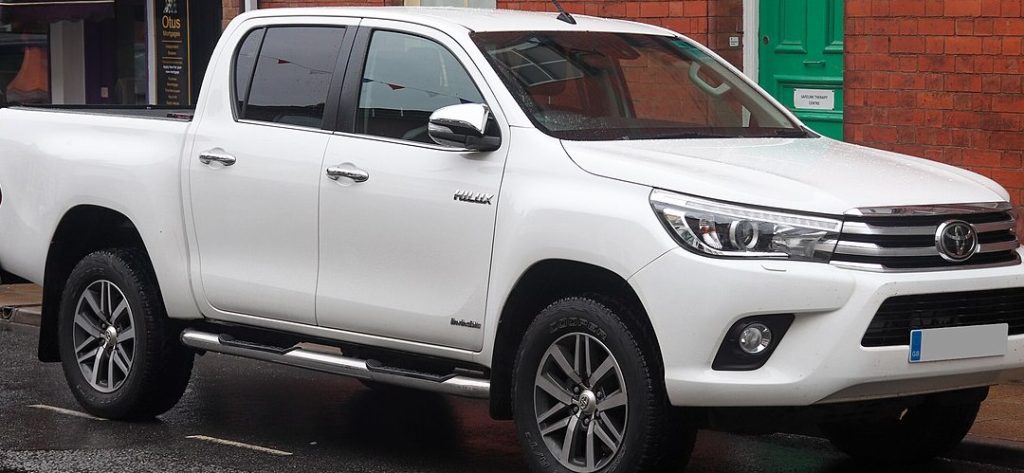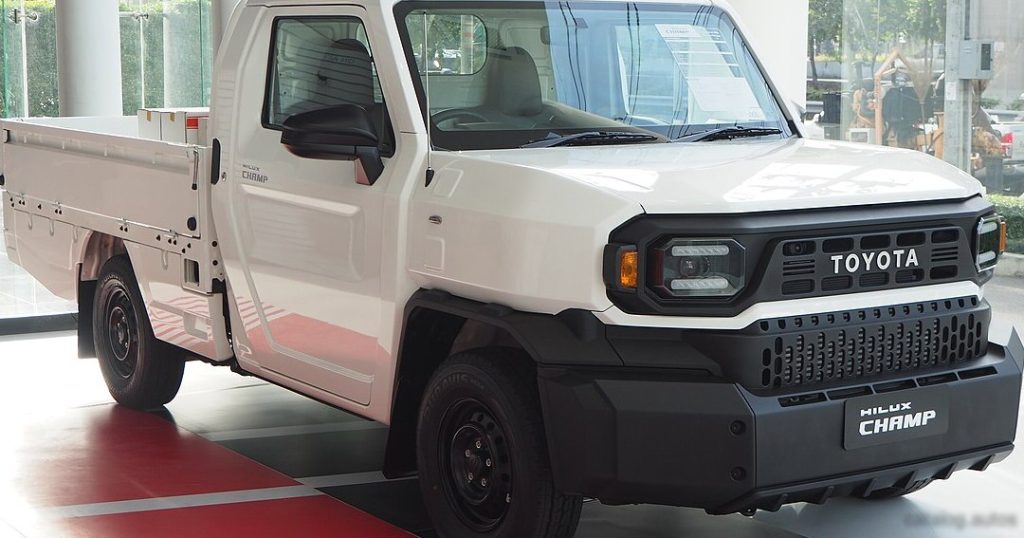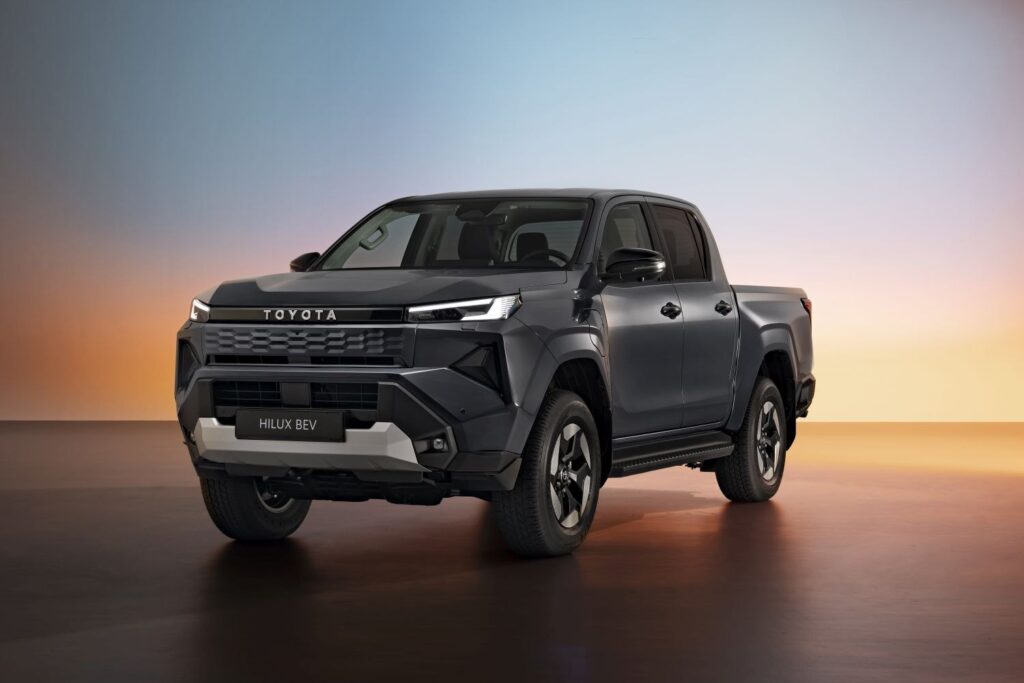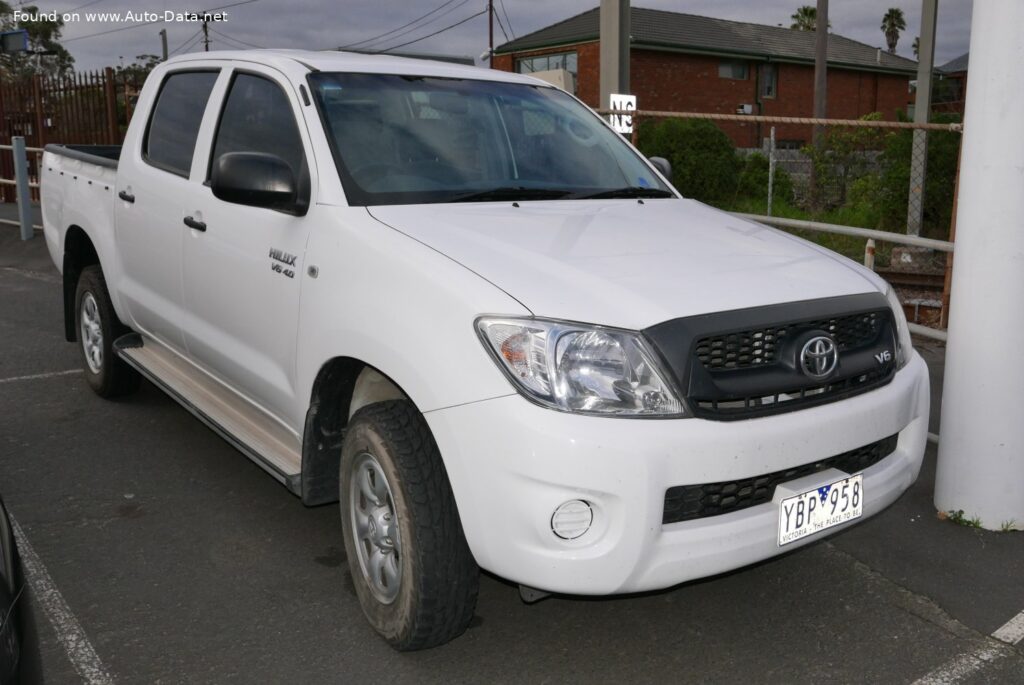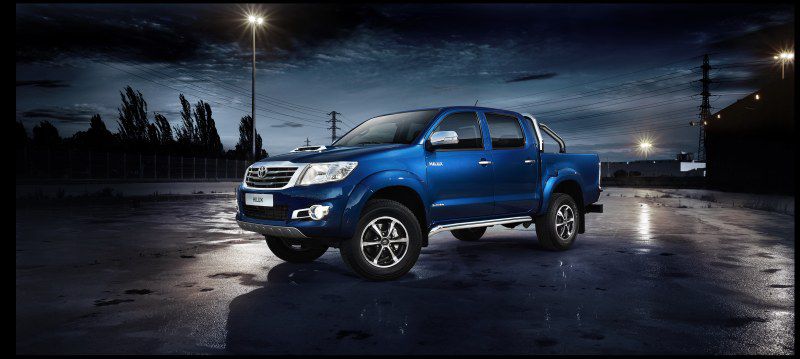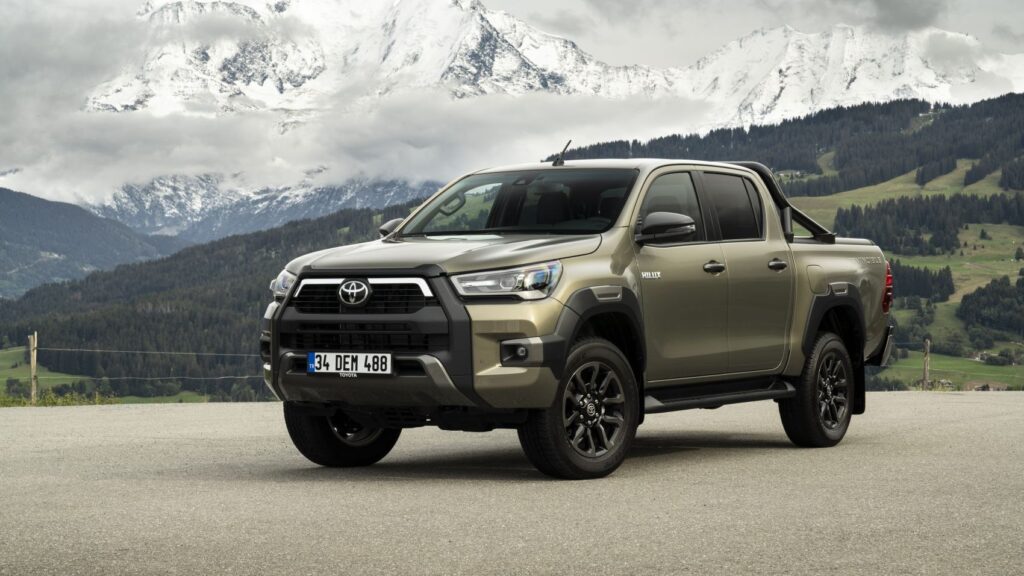
The Toyota Hilux Double Cab VIII, specifically the facelift model introduced in June 2020 and produced through February 2024, represents a significant iteration of Toyota’s globally renowned pickup truck. This version, powered by the 2.4 D-4D engine producing 150 horsepower, is primarily targeted towards markets outside of North America, where the Hilux has cultivated a reputation for rugged reliability and versatility. While not officially sold in the United States, the Hilux occupies a crucial segment in regions like Europe, Australia, South America, and Asia, serving as a workhorse for both commercial and personal use. The Double Cab configuration offers seating for five passengers, blending practicality with passenger comfort.
Toyota Hilux Double Cab VIII (2020-2024): A Detailed Overview
The Hilux has a long and storied history, dating back to 1968. The eighth generation, launched in 2016 and receiving a facelift in 2020, continued this legacy by building upon the strengths of its predecessors. The 2020 facelift brought styling updates, enhanced safety features, and improvements to the interior, aiming to maintain the Hilux’s competitive edge in a demanding market. This particular model, with its 2.4-liter diesel engine, is designed to balance fuel efficiency with sufficient power for typical pickup truck duties.
Engine & Performance
At the heart of the 2020-2024 Toyota Hilux Double Cab VIII is the 2.4 D-4D engine, designated as the 2GD-FTV. This inline four-cylinder diesel powerplant delivers 150 horsepower at 3400 rpm and a robust 400 Nm (295.02 lb.-ft.) of torque between 1600 and 2000 rpm. The engine utilizes a diesel commonrail fuel injection system and is equipped with a turbocharger and intercooler to optimize performance and efficiency. The engine’s longitudinal front-engine layout contributes to a balanced weight distribution. Acceleration from 0 to 100 km/h (0-62 mph) takes 13.2 seconds, while the 0-60 mph sprint is achieved in approximately 12.5 seconds. The Hilux achieves a maximum speed of 175 km/h (108.74 mph). The weight-to-power ratio is 13 kg/Hp, and the weight-to-torque ratio is 4.9 kg/Nm, indicating a reasonable balance between power and vehicle mass. The engine also incorporates a Start & Stop System and a particulate filter to reduce emissions.
Design & Features
The Toyota Hilux Double Cab VIII maintains the traditional pickup truck body style, characterized by a separate cabin and cargo bed. The Double Cab configuration provides seating for five occupants across two rows. The 2020 facelift brought subtle but noticeable changes to the front fascia, including a redesigned grille and headlights, giving the Hilux a more modern and aggressive appearance. The vehicle’s dimensions are substantial, measuring 5325 mm (209.65 in.) in length, 1855-1900 mm (73.03 – 74.8 in.) in width, and 1815 mm (71.46 in.) in height. A key feature is its impressive ground clearance of 293 mm (11.54 in.), enhancing its off-road capability. The Hilux boasts a fuel tank capacity of 80 liters (21.13 US gal), providing a substantial range. Its towing capacity is also noteworthy, with a maximum braked trailer load of 3000 kg (6613.87 lbs.) and an unbraked trailer load of 750 kg (1653.47 lbs.). Safety features include ABS (Anti-lock Braking System), contributing to enhanced braking performance.
Technical Specifications
| Brand | Toyota |
| Model | Hilux |
| Generation | Hilux Double Cab VIII (facelift 2020) |
| Type (Engine) | 2.4 D-4D (150 Hp) |
| Start of production | June, 2020 |
| End of production | February, 2024 |
| Powertrain Architecture | Internal Combustion engine |
| Body type | Pick-up |
| Seats | 5 |
| Doors | 4 |
| Combined fuel consumption (WLTP) | 8.8-9.8 l/100 km (26.7 – 24 US mpg, 32.1 – 28.8 UK mpg, 11.4 – 10.2 km/l) |
| CO2 emissions (WLTP) | 233-260 g/km |
| Fuel Type | Diesel |
| Acceleration 0 – 100 km/h | 13.2 sec |
| Acceleration 0 – 62 mph | 13.2 sec |
| Acceleration 0 – 60 mph | 12.5 sec |
| Maximum speed | 175 km/h (108.74 mph) |
| Weight-to-power ratio | 13 kg/Hp |
| Weight-to-torque ratio | 4.9 kg/Nm |
| Power | 150 Hp @ 3400 rpm |
| Power per litre | 62.7 Hp/l |
| Torque | 400 Nm @ 1600-2000 rpm (295.02 lb.-ft. @ 1600-2000 rpm) |
| Engine layout | Front, Longitudinal |
| Engine Model/Code | 2GD-FTV |
| Engine displacement | 2393 cm3 (146.03 cu. in.) |
| Number of cylinders | 4 |
| Engine configuration | Inline |
| Cylinder Bore | 92 mm (3.62 in.) |
| Piston Stroke | 90 mm (3.54 in.) |
| Compression ratio | 15.6:1 |
| Number of valves per cylinder | 4 |
| Fuel injection system | Diesel Commonrail |
| Engine aspiration | Turbocharger, Intercooler |
| Valvetrain | DOHC |
| Engine oil capacity | 7.5 l (7.93 US qt | 6.6 UK qt) |
| Coolant | 9.2 l (9.72 US qt | 8.09 UK qt) |
| Kerb Weight | 1955-2005 kg (4310.04 – 4420.27 lbs.) |
| Max. weight | 3050 kg (6724.1 lbs.) |
| Max load | 1045-1095 kg (2303.83 – 2414.06 lbs.) |
| Fuel tank capacity | 80 l (21.13 US gal | 17.6 UK gal) |
| Permitted trailer load with brakes (12%) | 3000 kg (6613.87 lbs.) |
| Permitted trailer load without brakes | 750 kg (1653.47 lbs.) |
| Length | 5325 mm (209.65 in.) |
| Width | 1855-1900 mm (73.03 – 74.8 in.) |
| Height | 1815 mm (71.46 in.) |
| Wheelbase | 3085 mm (121.46 in.) |
| Front track | 1535 mm (60.43 in.) |
| Rear (Back) track | 1550 mm (61.02 in.) |
| Ride height (ground clearance) | 293 mm (11.54 in.) |
| Drag coefficient (Cd) | 0.394 |
| Minimum turning circle (turning diameter) | 13.4 m (43.96 ft.) |
| Approach angle | 31° |
| Departure angle | 26° |
| Drivetrain Architecture | Rear wheel drive |
| Number of gears and type of gearbox | 6 gears, manual transmission |
| Front suspension | Double wishbone |
| Rear suspension | Leaf spring |
| Front brakes | Ventilated discs |
| Rear brakes | Drum |
| Steering type | Steering rack and pinion |
| Power steering | Hydraulic Steering |
| Tires size | 225/70 R17C; 265/65 R17; 265/60 R18 |
| Wheel rims size | 6J x 17; 7.5J x 17; 7.5J x 18 |
The Toyota Hilux Double Cab VIII (2020-2024) 2.4 D-4D continues to be a popular choice in its target markets, offering a compelling combination of durability, practicality, and reasonable efficiency. Its robust construction and capable powertrain make it well-suited for both demanding work applications and everyday use.