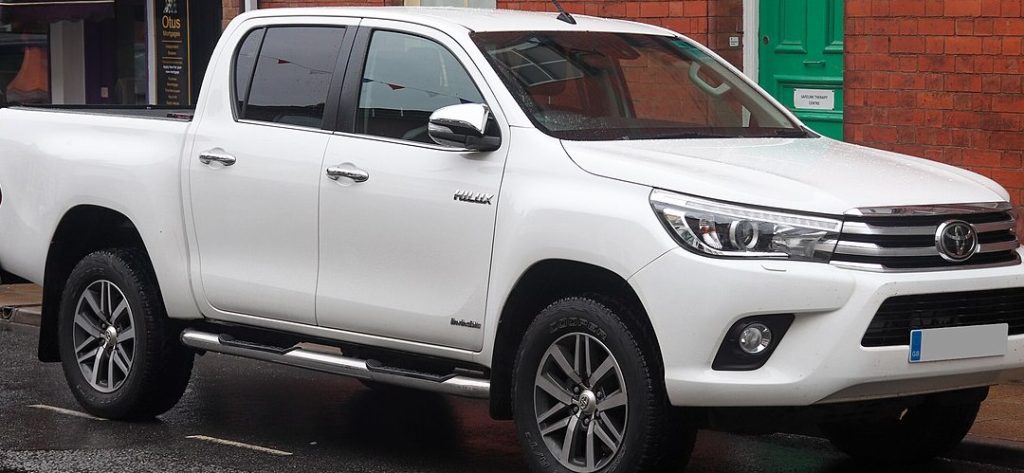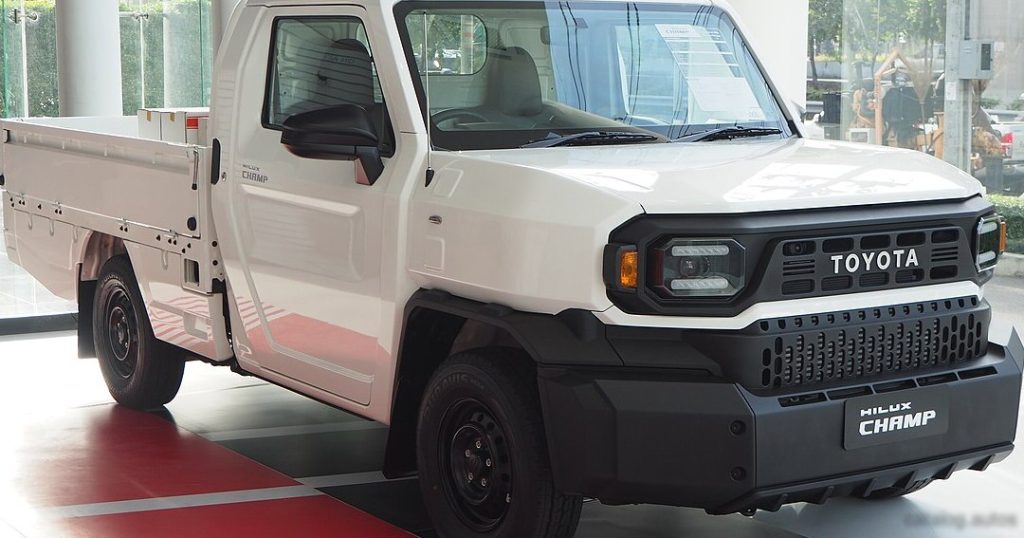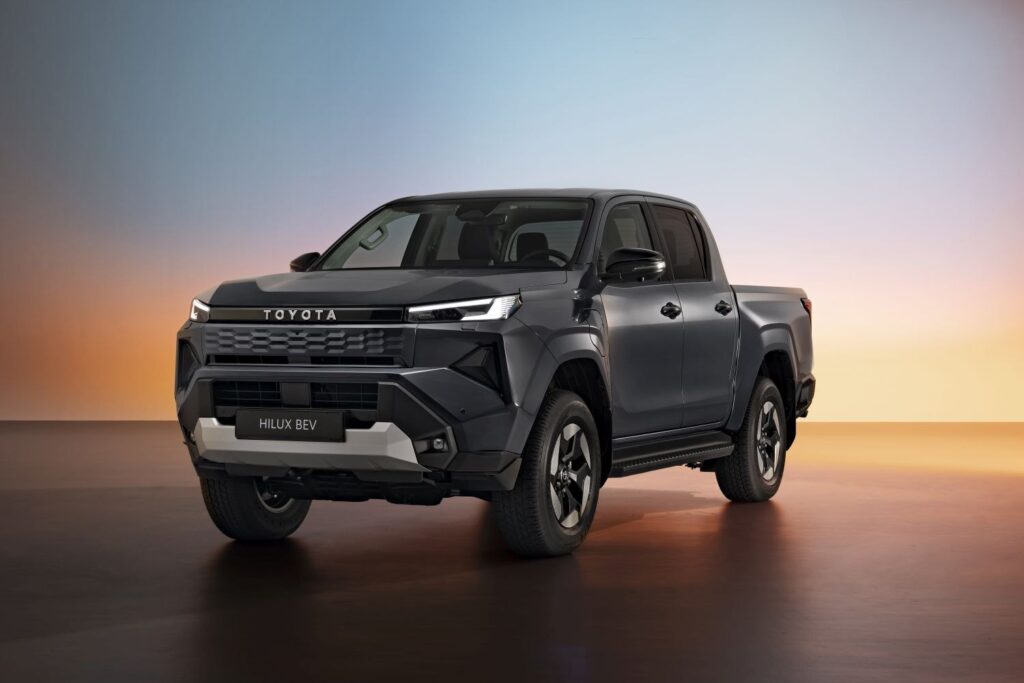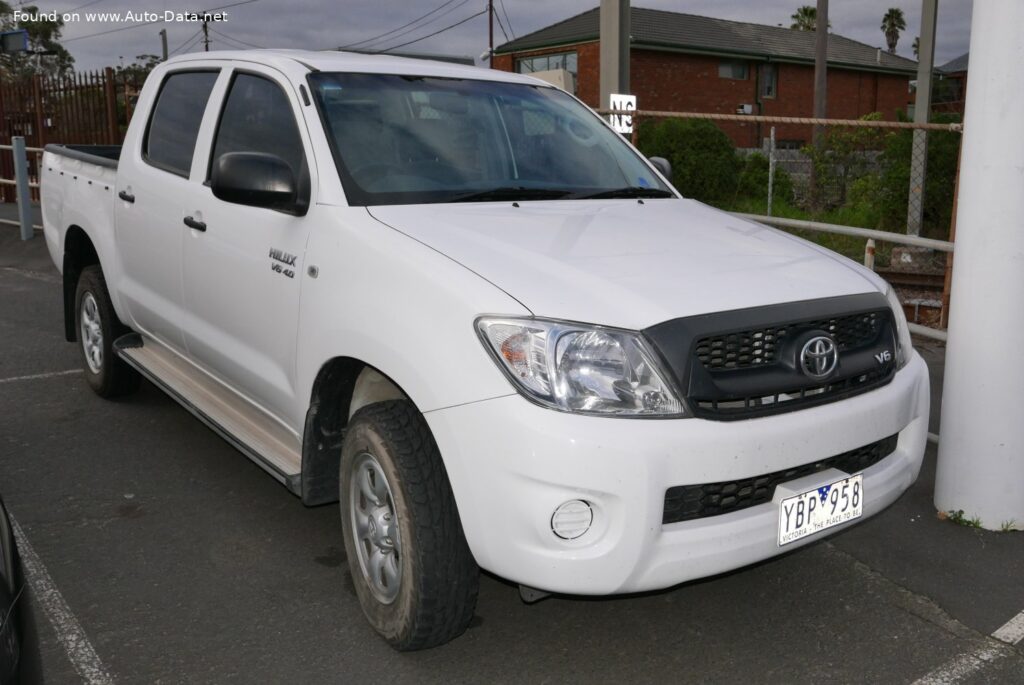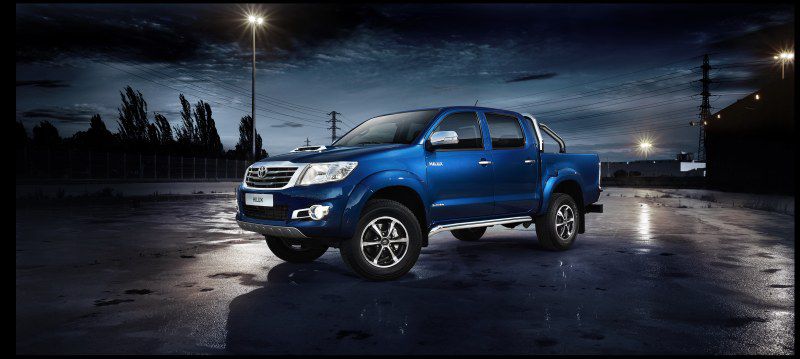
The Toyota Hilux Extra Cab VIII (facelift 2020) 2.8 D-4D 4×4 represents a significant iteration of Toyota’s globally renowned pickup truck. Introduced in June 2020 and continuing in production until February 2024, this model is part of the eighth generation of the Hilux, benefiting from a mid-cycle refresh that enhanced its capabilities and appeal. While the Hilux has a long and storied history, particularly in markets outside of North America, this version was engineered to meet increasingly stringent emissions standards and customer demands for both work and leisure applications. The Extra Cab configuration provides a compromise between the practicality of a full four-door cabin and the cargo-carrying capacity of a standard cab, making it a versatile option for a wide range of users.
Toyota Hilux Extra Cab VIII (facelift 2020): Overview
The Hilux, globally, is celebrated for its durability and reliability, often operating in demanding conditions where other vehicles struggle. The Extra Cab variant, specifically, caters to buyers needing occasional rear-seat access alongside a usable cargo bed. The 2020 facelift brought styling updates, improved technology, and refinements to the 2.8-liter diesel engine, boosting both power and efficiency. This model is primarily sold in markets like Europe, Australia, South Africa, and Asia, where pickup trucks are a dominant vehicle segment. In these regions, the Hilux competes with vehicles like the Ford Ranger, Isuzu D-Max, and Nissan Navara.
Engine & Performance
Powering the Hilux Extra Cab VIII (facelift 2020) 2.8 D-4D 4×4 is a 2.8-liter, inline-four cylinder diesel engine, designated the 1GD-FTV. This engine produces 204 horsepower at 3400 rpm and 420 Nm (309.78 lb.-ft.) of torque between 1400 and 3400 rpm. The engine features a turbocharger with intercooler and a diesel common rail fuel injection system, contributing to its responsive performance and relatively efficient fuel consumption. The engine’s longitudinal front-engine layout and a six-speed manual transmission deliver power to all four wheels via a part-time four-wheel-drive system. Acceleration from 0 to 100 km/h (0-62 mph) takes 10.1 seconds, while the 0-60 mph sprint is achieved in 9.6 seconds. The Hilux achieves a maximum speed of 175 km/h (108.74 mph). The weight-to-power ratio is 10.2 kg/Hp, and the weight-to-torque ratio is 5 kg/Nm, indicating a balanced powertrain.
Design & Features
The Hilux Extra Cab VIII (facelift 2020) maintains the traditional pickup truck body style, featuring a two-door configuration with a separate cargo bed. The “Extra Cab” designation signifies the inclusion of a small rear seating area, suitable for occasional passengers. The 2020 facelift brought revised front-end styling, including a new grille, headlights, and bumper, giving the Hilux a more modern and aggressive appearance. Inside, the cabin features improved materials and updated technology, including a touchscreen infotainment system. Safety features include ABS (Anti-lock Braking System) and a reinforced body structure. The vehicle’s high ride height (289 mm / 11.38 in) and approach/departure angles (31°/26°) enhance its off-road capability. The Hilux is designed to be a robust and practical vehicle, prioritizing functionality and durability over outright luxury.
Technical Specifications
| Brand | Toyota |
| Model | Hilux |
| Generation | Hilux Extra Cab VIII (facelift 2020) |
| Type (Engine) | 2.8 D-4D (204 Hp) 4×4 |
| Start of production | June, 2020 |
| End of production | February, 2024 |
| Powertrain Architecture | Internal Combustion engine |
| Body type | Pick-up |
| Seats | 4 |
| Doors | 2 |
| Combined fuel consumption (WLTP) | 7.8-8.9 l/100 km |
| Combined fuel consumption (US mpg) | 30.2 – 26.4 |
| CO2 emissions (WLTP) | 207-236 g/km |
| Fuel Type | Diesel |
| Acceleration 0 – 100 km/h | 10.1 sec |
| Acceleration 0 – 62 mph | 10.1 sec |
| Acceleration 0 – 60 mph | 9.6 sec |
| Maximum speed | 175 km/h (108.74 mph) |
| Weight-to-power ratio | 10.2 kg/Hp |
| Weight-to-torque ratio | 5 kg/Nm |
| Power | 204 Hp @ 3400 rpm |
| Torque | 420 Nm @ 1400-3400 rpm (309.78 lb.-ft. @ 1400-3400 rpm) |
| Engine layout | Front, Longitudinal |
| Engine Model/Code | 1GD-FTV |
| Engine displacement | 2755 cm3 (168.12 cu. in.) |
| Number of cylinders | 4 |
| Engine configuration | Inline |
| Cylinder Bore | 92 mm (3.62 in.) |
| Piston Stroke | 103.6 mm (4.08 in.) |
| Compression ratio | 15.6:1 |
| Number of valves per cylinder | 4 |
| Fuel injection system | Diesel Commonrail |
| Engine aspiration | Turbocharger, Intercooler |
| Valvetrain | DOHC |
| Engine oil capacity | 7.5 l (7.93 US qt | 6.6 UK qt) |
| Coolant | 9.2 l (9.72 US qt | 8.09 UK qt) |
| Kerb Weight | 2090-2300 kg (4607.66 – 5070.63 lbs.) |
| Max. weight | 3150 kg (6944.56 lbs.) |
| Max load | 850-1060 kg (1873.93 – 2336.9 lbs.) |
| Fuel tank capacity | 80 l (21.13 US gal | 17.6 UK gal) |
| Permitted trailer load with brakes (12%) | 3500 kg (7716.18 lbs.) |
| Permitted trailer load without brakes | 750 kg (1653.47 lbs.) |
| Length | 5325 mm (209.65 in.) |
| Width | 1855-1900 mm (73.03 – 74.8 in.) |
| Height | 1810 mm (71.26 in.) |
| Wheelbase | 3085 mm (121.46 in.) |
| Front track | 1535 mm (60.43 in.) |
| Rear (Back) track | 1550 mm (61.02 in.) |
| Ride height (ground clearance) | 289 mm (11.38 in.) |
| Drag coefficient (Cd) | 0.394 |
| Minimum turning circle (turning diameter) | 13.4 m (43.96 ft.) |
| Approach angle | 31° |
| Departure angle | 26° |
| Drivetrain Architecture | The Internal combustion engine (ICE) drives the rear wheels permanently, and the front wheels are driven through an electrically or mechanically operated clutch if necessary. |
| Drive wheel | All wheel drive (4×4) |
| Number of gears and type of gearbox | 6 gears, manual transmission |
| Front suspension | Double wishbone |
| Rear suspension | Leaf spring |
| Front brakes | Ventilated discs |
| Rear brakes | Drum |
| Steering type | Steering rack and pinion |
| Power steering | Hydraulic Steering |
| Tires size | 265/65 R17; 265/60 R18 |
| Wheel rims size | 7.5J x 17; 7.5J x 18 |