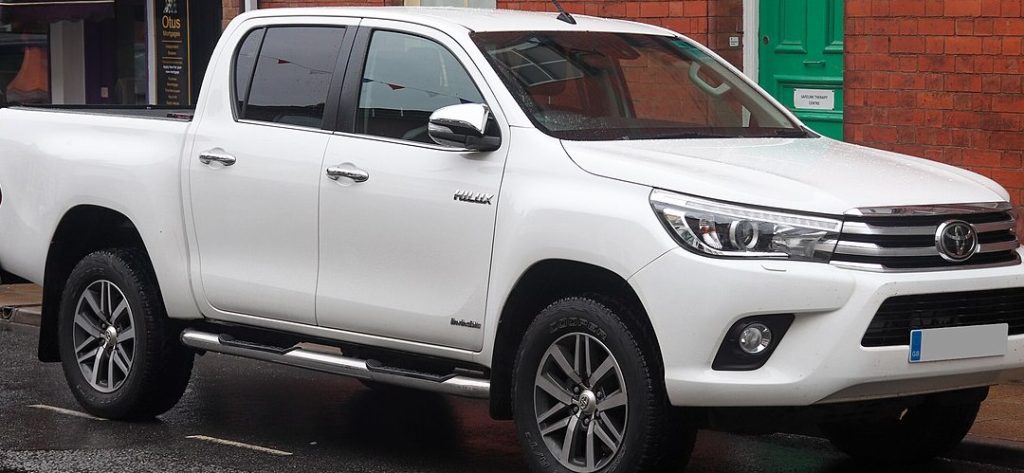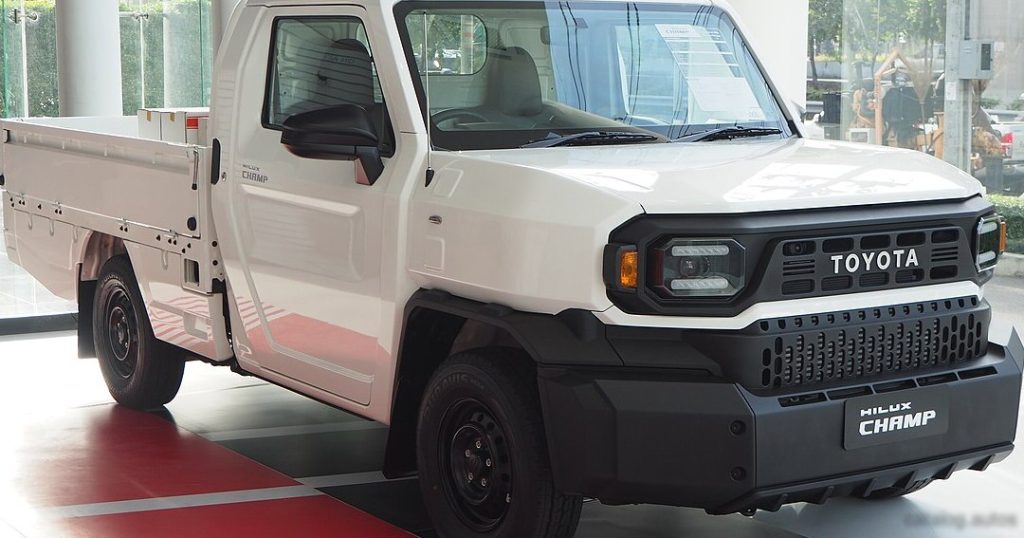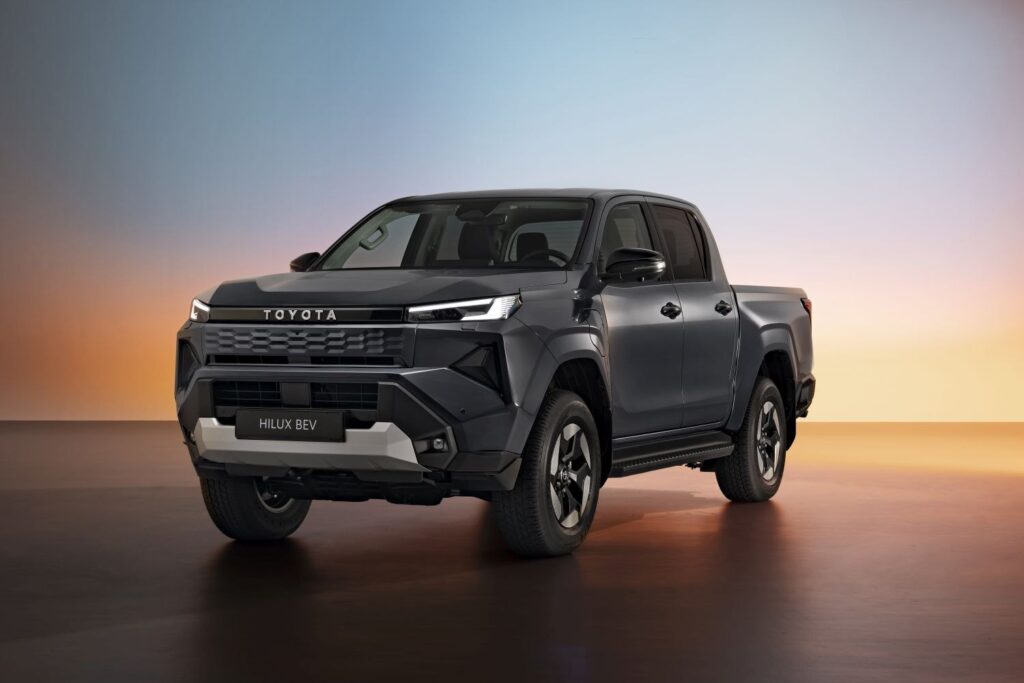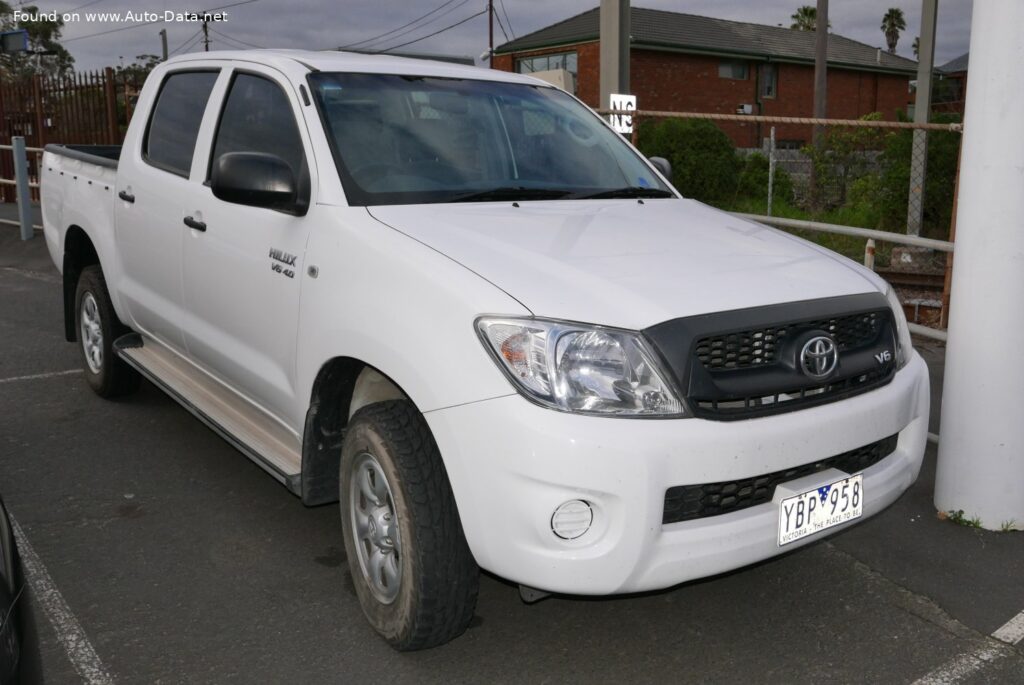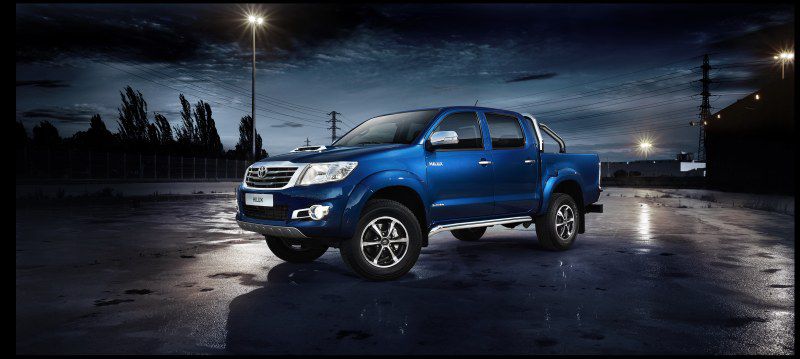
The Toyota Hilux Extra Cab VIII (facelift 2017) 2.8d 4×4 represents a significant iteration in Toyota’s globally renowned Hilux pickup truck lineage. Introduced in November 2017 and continuing through June 2020, this model served as a key offering in markets outside of North America, particularly in Europe, Australia, and Asia. The Hilux, celebrated for its durability and reliability, is a workhorse vehicle designed for both commercial and personal use, often favored in regions requiring robust off-road capability and load-carrying capacity. The Extra Cab configuration provides a compromise between the single cab’s practicality and the double cab’s passenger space, offering limited rear seating alongside a useful cargo bed.
Toyota Hilux Extra Cab VIII (facelift 2017): An Overview
The Hilux has a long and storied history, dating back to 1968. The eighth generation, launched in 2016, brought with it a substantial redesign focused on improving both on-road comfort and off-road performance. The 2017 facelift refined this further, with updates to the exterior styling, interior appointments, and safety features. This particular variant, the 2.8d 4×4, is powered by a diesel engine, offering a balance of power and fuel efficiency, making it suitable for a wide range of applications from agricultural work to recreational off-roading. It’s important to note that the Hilux is not officially sold in the United States, but is a very popular vehicle in many other parts of the world.
Engine & Performance
At the heart of the Hilux Extra Cab VIII 2.8d 4×4 lies the 1GD-FTV 2.8-liter inline-four cylinder diesel engine. This engine produces 177 horsepower at 3400 rpm and 420 Nm (309.78 lb.-ft.) of torque between 1400 and 2600 rpm. The engine utilizes a turbocharger with an intercooler and a diesel common rail fuel injection system, contributing to its responsive performance and relatively efficient fuel consumption. The longitudinal engine layout and the robust construction of the 1GD-FTV are hallmarks of Toyota’s diesel engineering. The power-to-weight ratio of 10.7 kg/Hp and 93.7 Hp/tonne demonstrates a respectable balance between engine output and vehicle mass. The torque-to-weight ratio of 4.5 kg/Nm and 222.2 Nm/tonne highlights the engine’s ability to handle heavy loads and challenging terrain. Power per liter is rated at 64.2 Hp/l. The engine is paired with a 6-speed manual transmission, providing the driver with full control over gear selection, crucial for off-road driving and towing.
Design & Features
The Toyota Hilux Extra Cab VIII (facelift 2017) is a two-door pickup truck with seating for four occupants. The “Extra Cab” designation indicates the presence of a small rear seat area, typically suitable for occasional passengers or cargo. The body-on-frame construction provides a solid foundation for both on-road and off-road driving. The exterior styling of the facelifted model features a more aggressive front grille, redesigned headlights, and updated bumpers. The vehicle’s dimensions – a height of 1810 mm (71.26 in.), a wheelbase of 3085 mm (121.46 in.), and a track width of 1535 mm (60.43 in) front and 1550 mm (61.02 in) rear – contribute to its stable handling and off-road capability. The Hilux boasts a kerb weight of 1890 kg (4166.74 lbs) and a maximum weight of 3050 kg (6724.1 lbs), allowing for a maximum payload of 1160 kg (2557.36 lbs). The vehicle is equipped with a double wishbone suspension system both front and rear, providing a comfortable ride and good handling characteristics. Braking is handled by ventilated discs at the front and drums at the rear, assisted by an Anti-lock Braking System (ABS). The Hilux’s 80-liter (21.13 US gal) fuel tank provides a substantial range, making it suitable for long journeys.
Technical Specifications
| General Information | |
| Brand | Toyota |
| Model | Hilux |
| Generation | Hilux Extra Cab VIII (facelift 2017) |
| Type (Engine) | 2.8d (177 Hp) 4×4 |
| Start of production | November, 2017 |
| End of production | June, 2020 |
| Powertrain Architecture | Internal Combustion engine |
| Body type | Pick-up |
| Seats | 4 |
| Doors | 2 |
| Performance Specs | |
| Fuel Type | Diesel |
| Weight-to-power ratio | 10.7 kg/Hp |
| Weight-to-torque ratio | 4.5 kg/Nm |
| Engine Specs | |
| Power | 177 Hp @ 3400 rpm |
| Power per litre | 64.2 Hp/l |
| Torque | 420 Nm @ 1400-2600 rpm / 309.78 lb.-ft. @ 1400-2600 rpm |
| Engine layout | Front, Longitudinal |
| Engine Model/Code | 1GD-FTV |
| Engine displacement | 2755 cm3 / 168.12 cu. in. |
| Number of cylinders | 4 |
| Engine configuration | Inline |
| Cylinder Bore | 92 mm / 3.62 in. |
| Piston Stroke | 103.6 mm / 4.08 in. |
| Compression ratio | 15.6:1 |
| Number of valves per cylinder | 4 |
| Fuel injection system | Diesel Commonrail |
| Engine aspiration | Turbocharger, Intercooler |
| Valvetrain | DOHC |
| Engine oil capacity | 7.5 l / 7.93 US qt | 6.6 UK qt |
| Coolant | 7.9 l / 8.35 US qt | 6.95 UK qt |
| Space, Volume and Weights | |
| Kerb Weight | 1890 kg / 4166.74 lbs |
| Max. weight | 3050 kg / 6724.1 lbs |
| Max load | 1160 kg / 2557.36 lbs |
| Fuel tank capacity | 80 l / 21.13 US gal | 17.6 UK gal |
| Permitted trailer load with brakes (12%) | 3500 kg / 7716.18 lbs |
| Permitted trailer load without brakes | 750 kg / 1653.47 lbs |
| Dimensions | |
| Height | 1810 mm / 71.26 in. |
| Wheelbase | 3085 mm / 121.46 in. |
| Front track | 1535 mm / 60.43 in. |
| Rear (Back) track | 1550 mm / 61.02 in. |
| Front overhang | 1000 mm / 39.37 in. |
| Drivetrain, Brakes and Suspension Specs | |
| Drive wheel | All wheel drive (4×4) |
| Number of gears and type of gearbox | 6 gears, manual transmission |
| Front suspension | Double wishbone |
| Rear suspension | Double wishbone |
| Front brakes | Ventilated discs |
| Rear brakes | Drum |
| Assisting systems | ABS (Anti-lock braking system) |
| Steering type | Steering rack and pinion |
| Power steering | Hydraulic Steering |
| Tires size | 265/65 R17 |
| Wheel rims size | 7.5J x 17 |