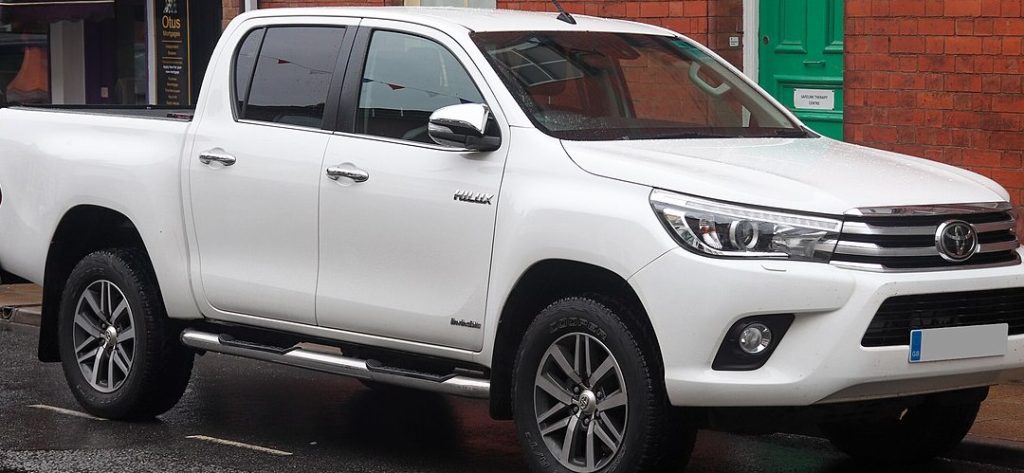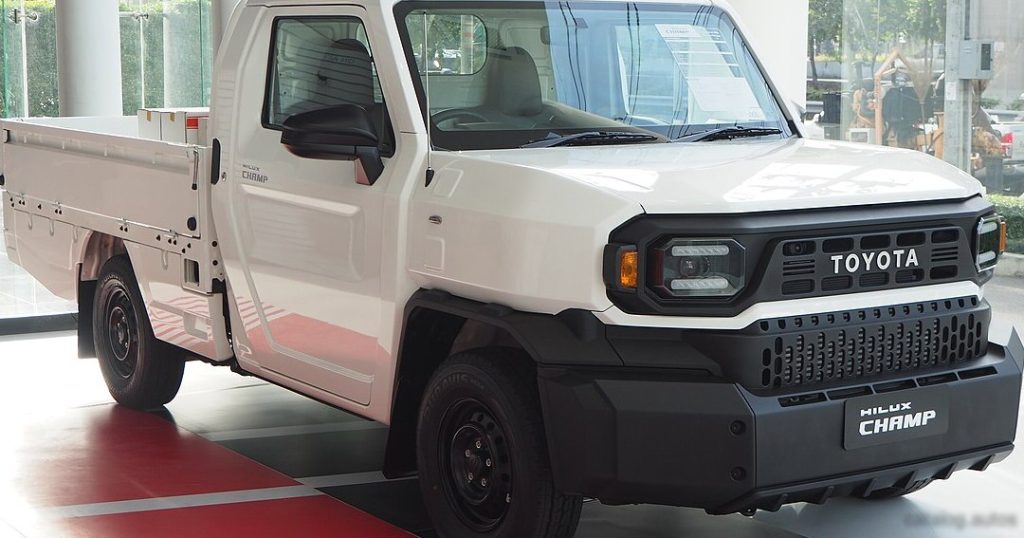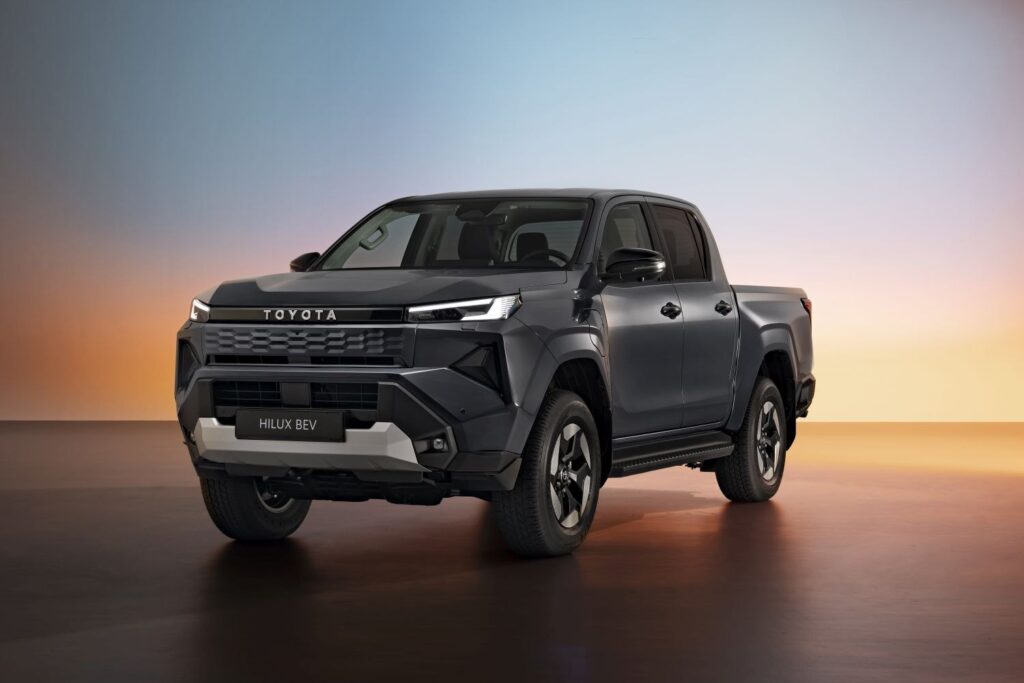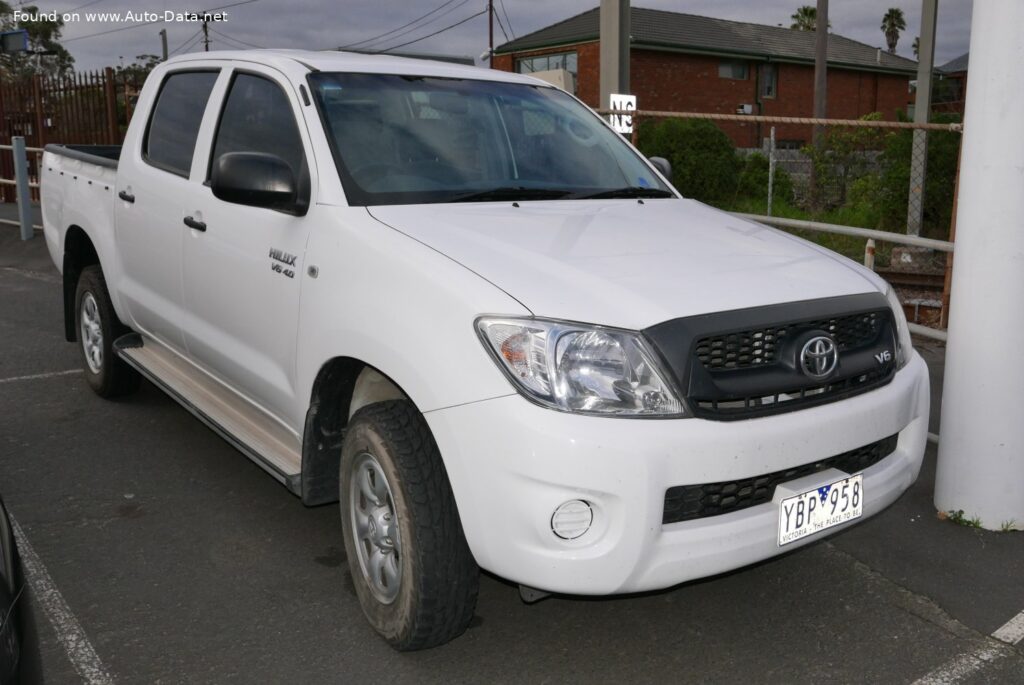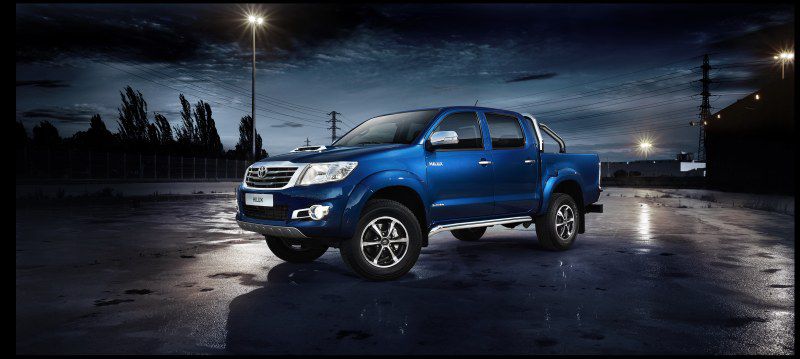
The Toyota Hilux Extra Cab VIII (facelift 2017) 2.8d 4×4 Automatic represents a significant iteration of Toyota’s globally renowned pickup truck. Introduced in November 2017 and continuing through June 2020, this version of the Hilux catered primarily to markets outside of North America, where the Hilux was not officially sold. Instead, it occupied a crucial role in regions like Europe, Australia, Asia, and South America, known for its rugged reliability and versatility. This particular model, the Extra Cab, offered a compromise between the single-cab workhorse and the full four-door configuration, providing limited rear seating and a longer bed for cargo. The 2.8d designation refers to its 2.8-liter diesel engine, producing 177 horsepower and paired with a six-speed automatic transmission, making it a popular choice for both commercial and personal use.
Toyota Hilux Extra Cab VIII (facelift 2017): An Overview
The Hilux has a long and storied history, dating back to 1968, and has become synonymous with durability and off-road capability. The eighth generation, launched in 2016, brought significant updates to the Hilux, including improved comfort, safety features, and engine technology. The 2017 facelift further refined the design and enhanced the overall driving experience. The Extra Cab configuration, with its two doors and limited rear seating, appealed to buyers who needed a balance between passenger capacity and cargo space. This model was designed to handle demanding conditions, making it a favorite among farmers, construction workers, and outdoor enthusiasts.
Engine & Performance
The heart of the Toyota Hilux Extra Cab VIII (facelift 2017) 2.8d is the 1GD-FTV 2.8-liter inline-four cylinder diesel engine. This engine delivers 177 horsepower at 3400 rpm and a substantial 450 Nm (331.9 lb.-ft.) of torque between 1600 and 2400 rpm. The engine utilizes a turbocharger with an intercooler and a diesel commonrail fuel injection system to optimize performance and fuel efficiency. The longitudinal engine layout contributes to a balanced weight distribution, enhancing handling and stability. The power-to-weight ratio of 10.7 kg/Hp and 93.4 Hp/tonne demonstrates a good balance between power and vehicle mass. The torque-to-weight ratio of 4.2 kg/Nm and 237.5 Nm/tonne highlights the engine’s ability to handle heavy loads and challenging terrain. The six-speed automatic transmission provides smooth and efficient gear changes, making it suitable for both on-road and off-road driving. Engine oil capacity is 7.5 liters (7.93 US qt | 6.6 UK qt) and coolant capacity is 7.9 liters (8.35 US qt | 6.95 UK qt).
Design & Features
The Toyota Hilux Extra Cab VIII (facelift 2017) is a classic pickup truck design, characterized by its robust build and functional aesthetics. The body type is a two-door pickup with seating for four passengers, although the rear seats are typically smaller and best suited for occasional use. The vehicle’s dimensions include a height of 1810 mm (71.26 in.), a wheelbase of 3085 mm (121.46 in.), a front track of 1535 mm (60.43 in.), and a rear track of 1550 mm (61.02 in.). The front overhang measures 1000 mm (39.37 in.). These dimensions contribute to the Hilux’s stable and capable handling. Key features include a robust suspension system – double wishbone both front and rear – designed to absorb impacts and provide a comfortable ride even on rough terrain. The braking system consists of ventilated discs at the front and drums at the rear, assisted by an Anti-lock Braking System (ABS) for enhanced safety. Power steering, utilizing a hydraulic system, provides responsive and precise steering control. The vehicle is equipped with tires sized 265/65 R17 or 265/60 R18, mounted on 7.5J x 17 or 7.5J x 18 wheel rims.
Technical Specifications
| General Information | |
| Brand | Toyota |
| Model | Hilux |
| Generation | Hilux Extra Cab VIII (facelift 2017) |
| Type (Engine) | 2.8d (177 Hp) 4×4 Automatic |
| Start of production | November, 2017 |
| End of production | June, 2020 |
| Powertrain Architecture | Internal Combustion engine |
| Body type | Pick-up |
| Seats | 4 |
| Doors | 2 |
| Performance Specs | |
| Fuel Type | Diesel |
| Weight-to-power ratio | 10.7 kg/Hp |
| Weight-to-torque ratio | 4.2 kg/Nm |
| Engine Specs | |
| Power | 177 Hp @ 3400 rpm |
| Power per litre | 64.2 Hp/l |
| Torque | 450 Nm @ 1600-2400 rpm / 331.9 lb.-ft. @ 1600-2400 rpm |
| Engine layout | Front, Longitudinal |
| Engine Model/Code | 1GD-FTV |
| Engine displacement | 2755 cm3 / 168.12 cu. in. |
| Number of cylinders | 4 |
| Engine configuration | Inline |
| Cylinder Bore | 92 mm / 3.62 in. |
| Piston Stroke | 103.6 mm / 4.08 in. |
| Compression ratio | 15.6:1 |
| Number of valves per cylinder | 4 |
| Fuel injection system | Diesel Commonrail |
| Engine aspiration | Turbocharger, Intercooler |
| Valvetrain | DOHC |
| Engine oil capacity | 7.5 l / 7.93 US qt | 6.6 UK qt |
| Coolant | 7.9 l / 8.35 US qt | 6.95 UK qt |
| Space, Volume and Weights | |
| Kerb Weight | 1895-2045 kg / 4177.76 – 4508.45 lbs. |
| Max. weight | 3050 kg / 6724.1 lbs. |
| Max load | 1005-1155 kg / 2215.65 – 2546.34 lbs. |
| Fuel tank capacity | 80 l / 21.13 US gal | 17.6 UK gal |
| Permitted trailer load with brakes (12%) | 3200 kg / 7054.79 lbs. |
| Permitted trailer load without brakes | 750 kg / 1653.47 lbs. |
| Dimensions | |
| Height | 1810 mm / 71.26 in. |
| Wheelbase | 3085 mm / 121.46 in. |
| Front track | 1535 mm / 60.43 in. |
| Rear (Back) track | 1550 mm / 61.02 in. |
| Front overhang | 1000 mm / 39.37 in. |
| Drivetrain, Brakes and Suspension Specs | |
| Drive wheel | All wheel drive (4×4) |
| Number of gears and type of gearbox | 6 gears, automatic transmission |
| Front suspension | Double wishbone |
| Rear suspension | Double wishbone |
| Front brakes | Ventilated discs |
| Rear brakes | Drum |
| Assisting systems | ABS (Anti-lock braking system) |
| Steering type | Steering rack and pinion |
| Power steering | Hydraulic Steering |
| Tires size | 265/65 R17; 265/60 R18 |
| Wheel rims size | 7.5J x 17; 7.5J x 18 |