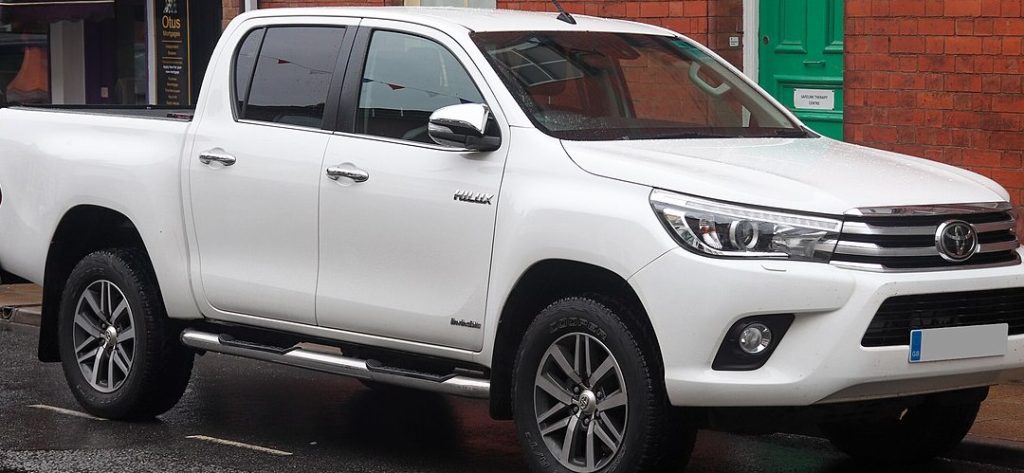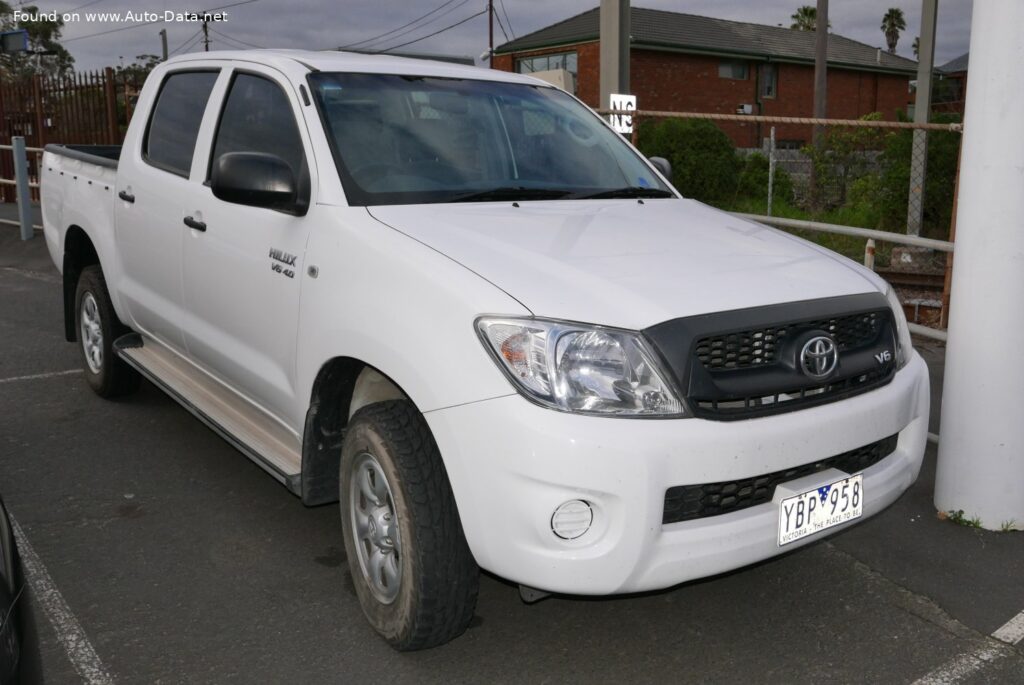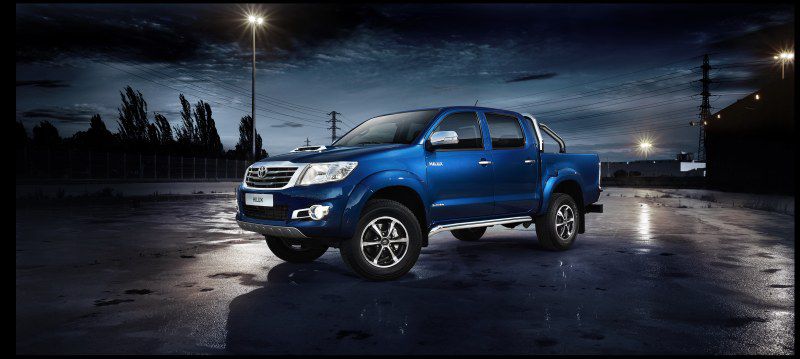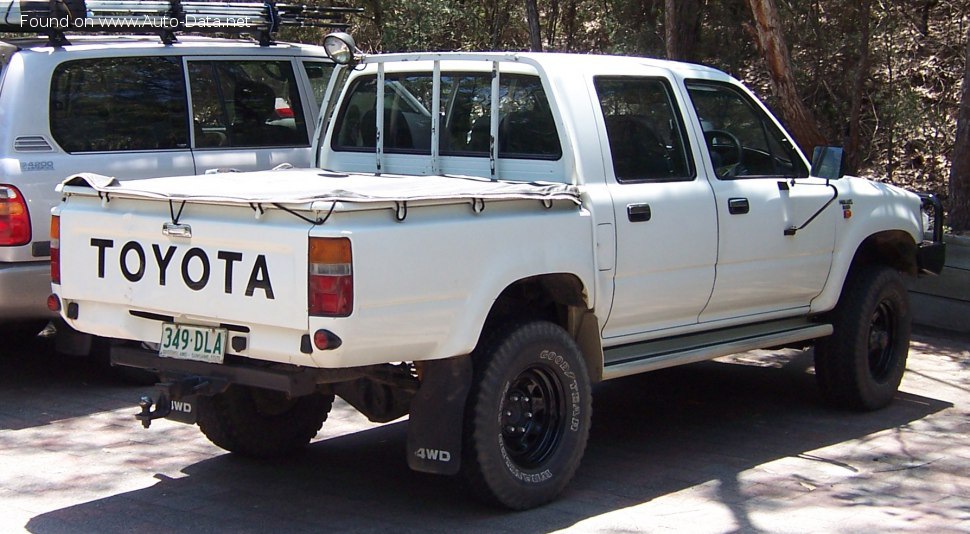
The Toyota Hilux Pick-Up 2.0 i (110 Hp), produced between 1997 and 2004, represents a significant iteration of Toyota’s globally renowned Hilux line. This particular generation, known as the Hilux Pick-Up, was primarily aimed at markets outside of North America, where the Hilux was not officially sold under that name during this period. Instead, Toyota offered the Tacoma as its compact pickup truck in the US. The Hilux Pick-Up 2.0 i served as a workhorse vehicle in numerous countries, prized for its reliability, durability, and affordability. It occupied the compact to mid-size pickup truck segment, competing with vehicles like the Nissan Navara and Mitsubishi L200 in international markets. This model offered a practical solution for both commercial and personal use, blending utility with Toyota’s reputation for dependable engineering.
Toyota Hilux Pick-Up 2.0 i: A Detailed Overview
The Hilux has a long and storied history, dating back to 1968. Throughout its various generations, the Hilux has earned a reputation for being virtually indestructible, a claim often put to the test in challenging environments worldwide. The 1997-2004 Hilux Pick-Up continued this tradition, offering a robust and capable vehicle designed to withstand demanding conditions. While not available in the United States under the Hilux name, its engineering principles and overall design influenced the development of the Tacoma, which shared many of the Hilux’s core strengths. The 2.0 i variant, with its 110 horsepower engine, provided a balance between fuel efficiency and sufficient power for everyday tasks and light-duty hauling.
Engine & Performance
The heart of the Toyota Hilux Pick-Up 2.0 i is the 1RZ-E inline four-cylinder gasoline engine. Displacing 1995 cm3 (121.74 cubic inches), this naturally aspirated engine produces 110 horsepower at 5200 rpm and 167 Nm (123.17 lb.-ft.) of torque at 2600 rpm. The engine utilizes a single-point fuel injection system and an overhead camshaft (OHC) valvetrain with two valves per cylinder. While not a powerhouse in terms of raw output, the 1RZ-E is known for its longevity and relatively simple maintenance requirements. The longitudinal engine layout contributes to a balanced weight distribution, enhancing handling and stability. Power is delivered to the rear wheels via a conventional drivetrain, making it a rear-wheel-drive vehicle. This configuration was typical for pickup trucks in many markets during this period, prioritizing simplicity and durability over advanced traction control systems. The engine’s power-to-weight ratio is 55.1 horsepower per liter, indicating a focus on efficiency rather than outright performance.
Design & Features
The Toyota Hilux Pick-Up 2.0 i features a traditional pickup truck body style with a separate cab and bed configuration. It’s a four-door model offering seating for five passengers. The design prioritizes functionality and practicality over stylistic flourishes. The vehicle’s dimensions – 4690 mm (184.65 in.) in length, 1690 mm (66.54 in.) in width, and 1650 mm (64.96 in.) in height – place it squarely in the compact to mid-size pickup truck category. The wheelbase measures 2850 mm (112.2 in.), providing a stable platform for both on-road and off-road driving. Front and rear track widths are 1410 mm (55.51 in.) and 1420 mm (55.91 in.) respectively.
Features of the Hilux Pick-Up 2.0 i were generally basic, reflecting its target market and price point. Standard equipment typically included a robust suspension system designed to handle rough terrain and heavy loads. Safety features were relatively limited by contemporary standards, often consisting of basic seatbelts and a sturdy chassis construction. The interior was functional and durable, with vinyl or cloth upholstery and minimal creature comforts. The focus was on providing a reliable and practical vehicle capable of withstanding the rigors of daily use. The Hilux Pick-Up’s appeal lay in its simplicity, dependability, and ability to perform a wide range of tasks, from hauling cargo to navigating challenging road conditions.
Technical Specifications
| Brand | Toyota |
| Model | Hilux |
| Generation | Hilux Pick-Up |
| Type (Engine) | 2.0 i (110 Hp) |
| Start of production | 1997 year |
| End of production | 2004 year |
| Powertrain Architecture | Internal Combustion engine |
| Body type | Pick-up |
| Seats | 5 |
| Doors | 4 |
| Fuel Type | Petrol (Gasoline) |
| Power | 110 Hp @ 5200 rpm |
| Power per litre | 55.1 Hp/l |
| Torque | 167 Nm @ 2600 rpm |
| Torque (lb.-ft.) | 123.17 lb.-ft. @ 2600 rpm |
| Engine layout | Front, Longitudinal |
| Engine Model/Code | 1RZ-E |
| Engine displacement | 1995 cm3 |
| Engine displacement (cu. in.) | 121.74 cu. in. |
| Number of cylinders | 4 |
| Engine configuration | Inline |
| Number of valves per cylinder | 2 |
| Fuel injection system | Single-point injection |
| Engine aspiration | Naturally aspirated engine |
| Valvetrain | OHC |
| Length | 4690 mm |
| Length (in.) | 184.65 in. |
| Width | 1690 mm |
| Width (in.) | 66.54 in. |
| Height | 1650 mm |
| Height (in.) | 64.96 in. |
| Wheelbase | 2850 mm |
| Wheelbase (in.) | 112.2 in. |
| Front track | 1410 mm |
| Front track (in.) | 55.51 in. |
| Rear (Back) track | 1420 mm |
| Rear (Back) track (in.) | 55.91 in. |
| Drivetrain Architecture | The Internal combustion engine (ICE) drives the rear wheels of the vehicle. |
| Drive wheel | Rear wheel drive |