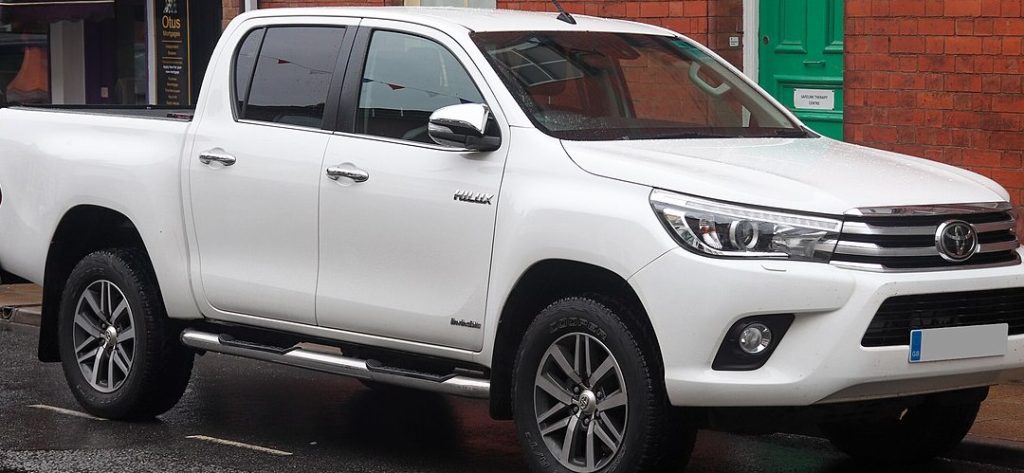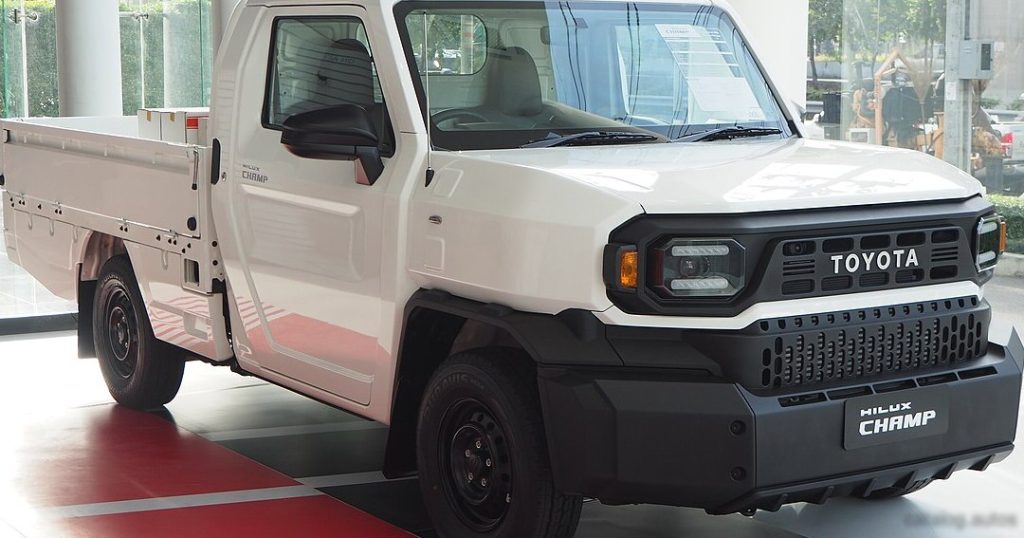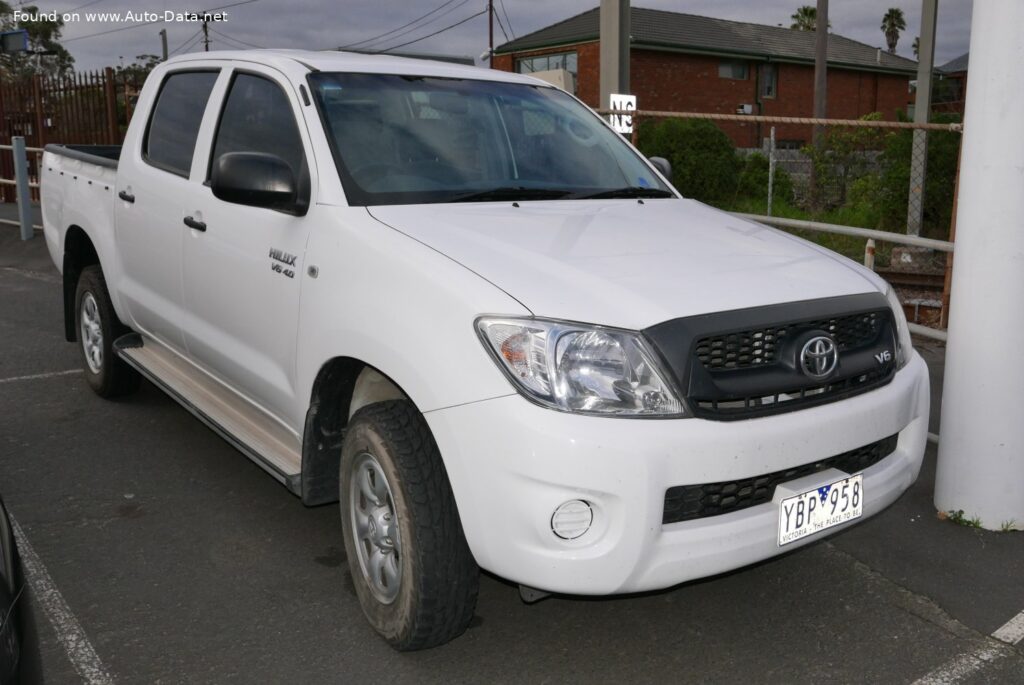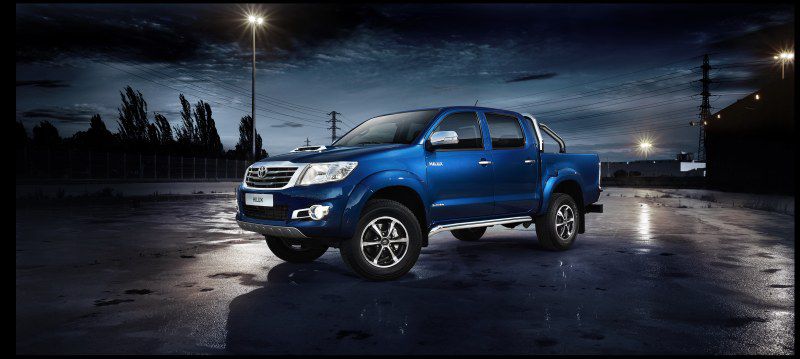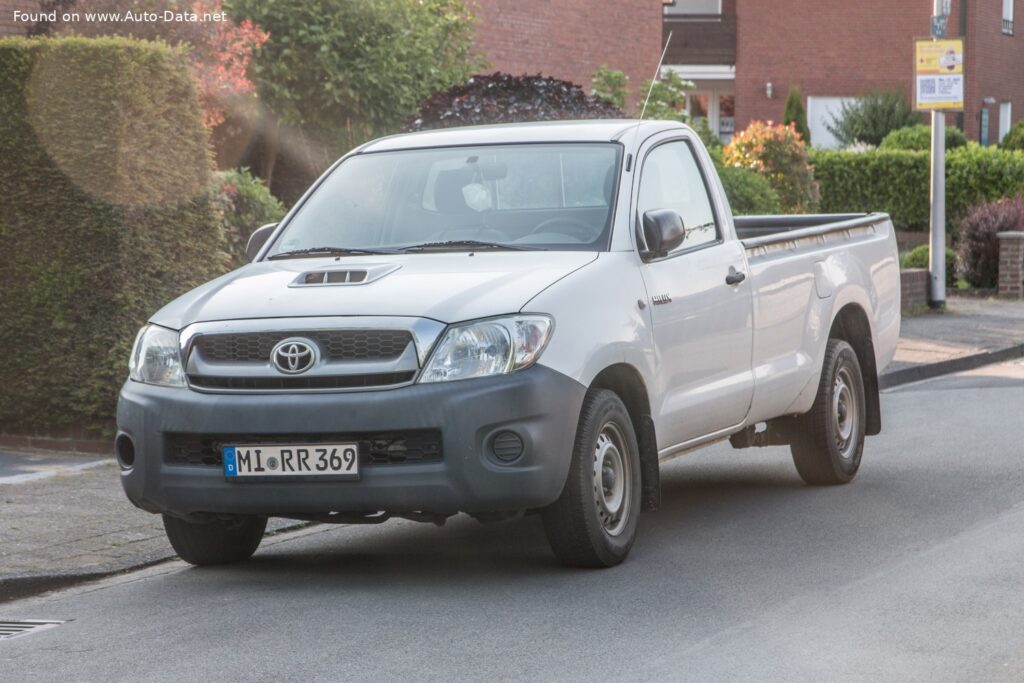
The Toyota Hilux is a globally recognized nameplate synonymous with durability and reliability. The Hilux Single Cab VII, particularly the facelifted version introduced in 2008, represents a significant iteration of this workhorse vehicle. Primarily sold in markets outside of North America – including Europe, Asia, Australia, and Latin America – the Hilux served as a crucial component of Toyota’s commercial vehicle lineup, offering a robust and practical solution for businesses, tradespeople, and individuals requiring a dependable pickup truck. This generation focused on refining the existing formula, improving efficiency, and enhancing overall comfort while maintaining the Hilux’s legendary toughness.
Toyota Hilux Single Cab VII (2008-2011): A Global Workhorse
The Hilux Single Cab VII, with its 2008 facelift, continued Toyota’s tradition of building exceptionally durable pickup trucks. While not officially sold in the United States, the Hilux held a dominant position in many international markets, particularly as a commercial vehicle. The “Single Cab” designation refers to the vehicle’s two-door configuration, prioritizing cargo space and utility over passenger capacity. The 2.5 D-4D engine variant, producing 120 horsepower, was a common choice for those seeking a balance between fuel economy and sufficient power for demanding tasks.
Engine & Performance
The heart of the 2008 Toyota Hilux Single Cab VII 2.5 D-4D is a 2.5-liter inline-four cylinder diesel engine, designated the 2KD-FTV. This engine produces 120 horsepower at 3600 rpm and 325 Nm (239.71 lb.-ft.) of torque at 2000 rpm. The engine utilizes a diesel common rail fuel injection system and is turbocharged with an intercooler, enhancing both power output and efficiency. The engine’s longitudinal front-engine layout contributes to a balanced weight distribution. Acceleration from 0 to 100 km/h (0-62 mph) takes approximately 13.5 seconds, while 0-60 mph is achieved in around 12.8 seconds. The Hilux achieves a maximum speed of 165 km/h (102.53 mph). Fuel economy figures, measured using the NEDC standard, are 7.4 l/100 km (31.8 US mpg) combined, 9.6 l/100 km (24.5 US mpg) in urban conditions, and 6.2 l/100 km (37.9 US mpg) on the extra-urban cycle. The engine meets Euro 4 emission standards.
Design & Features
The Hilux Single Cab VII maintains the traditional pickup truck silhouette, characterized by a separate cab and cargo bed. The two-door configuration provides a spacious cargo area, making it ideal for hauling materials and equipment. The 2008 facelift brought minor cosmetic updates, including revised front grille and headlight designs, and updated interior trim. The vehicle’s robust construction and high ground clearance (203 mm / 7.99 in) enable it to handle challenging terrain. The Hilux features a hydraulic power steering system and a five-speed manual transmission. Safety features, while relatively basic by modern standards, included an Anti-lock Braking System (ABS). The Hilux is capable of towing a braked trailer up to 1800 kg (3968.32 lbs) and an unbraked trailer up to 750 kg (1653.47 lbs). The maximum load capacity is 1080 kg (2380.99 lbs).
Technical Specifications
| Brand | Toyota |
| Model | Hilux |
| Generation | Hilux Single Cab VII (facelift 2008) |
| Type (Engine) | 2.5 D-4D (120 Hp) |
| Start of production | 2008 |
| End of production | 2011 |
| Powertrain Architecture | Internal Combustion engine |
| Body type | Pick-up |
| Seats | 2 |
| Doors | 2 |
| Fuel consumption (economy) – urban (NEDC) | 9.6 l/100 km (24.5 US mpg) |
| Fuel consumption (economy) – extra urban (NEDC) | 6.2 l/100 km (37.9 US mpg) |
| Fuel consumption (economy) – combined (NEDC) | 7.4 l/100 km (31.8 US mpg) |
| CO2 emissions (NEDC) | 197 g/km |
| Fuel Type | Diesel |
| Acceleration 0 – 100 km/h | 13.5 sec |
| Acceleration 0 – 62 mph | 13.5 sec |
| Acceleration 0 – 60 mph | 12.8 sec |
| Maximum speed | 165 km/h (102.53 mph) |
| Emission standard | Euro 4 |
| Weight-to-power ratio | 13.8 kg/Hp |
| Weight-to-torque ratio | 5.1 kg/Nm |
| Power | 120 Hp @ 3600 rpm |
| Torque | 325 Nm @ 2000 rpm (239.71 lb.-ft. @ 2000 rpm) |
| Engine layout | Front, Longitudinal |
| Engine Model/Code | 2KD-FTV |
| Engine displacement | 2494 cm3 (152.19 cu. in.) |
| Number of cylinders | 4 |
| Engine configuration | Inline |
| Cylinder Bore | 92 mm (3.62 in.) |
| Piston Stroke | 93.8 mm (3.69 in.) |
| Compression ratio | 17.4:1 |
| Number of valves per cylinder | 4 |
| Fuel injection system | Diesel Commonrail |
| Engine aspiration | Turbocharger, Intercooler |
| Valvetrain | DOHC |
| Engine oil capacity | 6.9 l (7.29 US qt | 6.07 UK qt) |
| Coolant | 9 l (9.51 US qt | 7.92 UK qt) |
| Kerb Weight | 1660 kg (3659.67 lbs.) |
| Max. weight | 2740 kg (6040.67 lbs.) |
| Max load | 1080 kg (2380.99 lbs.) |
| Fuel tank capacity | 80 l (21.13 US gal | 17.6 UK gal) |
| Max. roof load | 50 kg (110.23 lbs.) |
| Permitted trailer load with brakes (12%) | 1800 kg (3968.32 lbs.) |
| Permitted trailer load without brakes | 750 kg (1653.47 lbs.) |
| Permitted towbar download | 70 kg (154.32 lbs.) |
| Length | 5255 mm (206.89 in.) |
| Width | 1760 mm (69.29 in.) |
| Height | 1680 mm (66.14 in.) |
| Wheelbase | 3085 mm (121.46 in.) |
| Front track | 1510 mm (59.45 in.) |
| Rear (Back) track | 1510 mm (59.45 in.) |
| Ride height (ground clearance) | 203 mm (7.99 in.) |
| Minimum turning circle (turning diameter) | 12.6 m (41.34 ft.) |
| Drive wheel | Rear wheel drive |
| Number of gears and type of gearbox | 5 gears, manual transmission |
| Front suspension | Double wishbone, Transverse stabilizer |
| Rear suspension | Rigid axle suspension, Leaf spring |
| Front brakes | Ventilated discs |
| Rear brakes | Drum |
| Assisting systems | ABS (Anti-lock braking system) |
| Steering type | Steering rack and pinion |
| Power steering | Hydraulic Steering |
| Tires size | 205/70 R15 |
| Wheel rims size | 6J x 15 |
The Toyota Hilux Single Cab VII (2008-2011) 2.5 D-4D remains a popular choice in many parts of the world, celebrated for its reliability, durability, and practicality. Its simple yet effective design, combined with a robust diesel engine, ensures it continues to serve as a dependable workhorse for years to come.