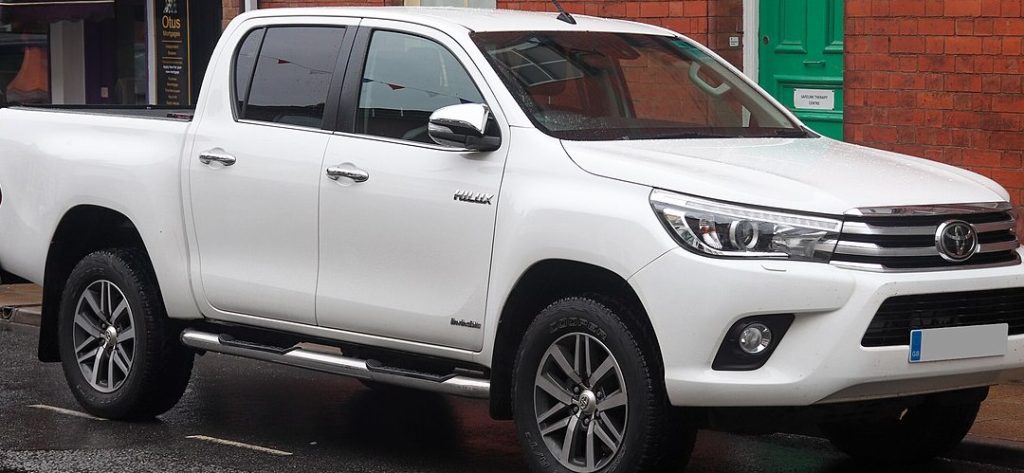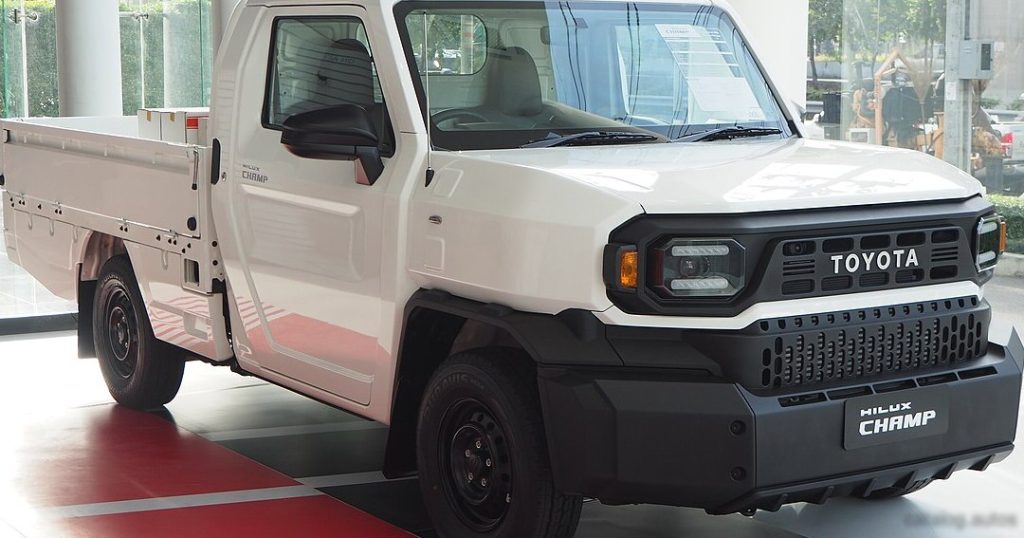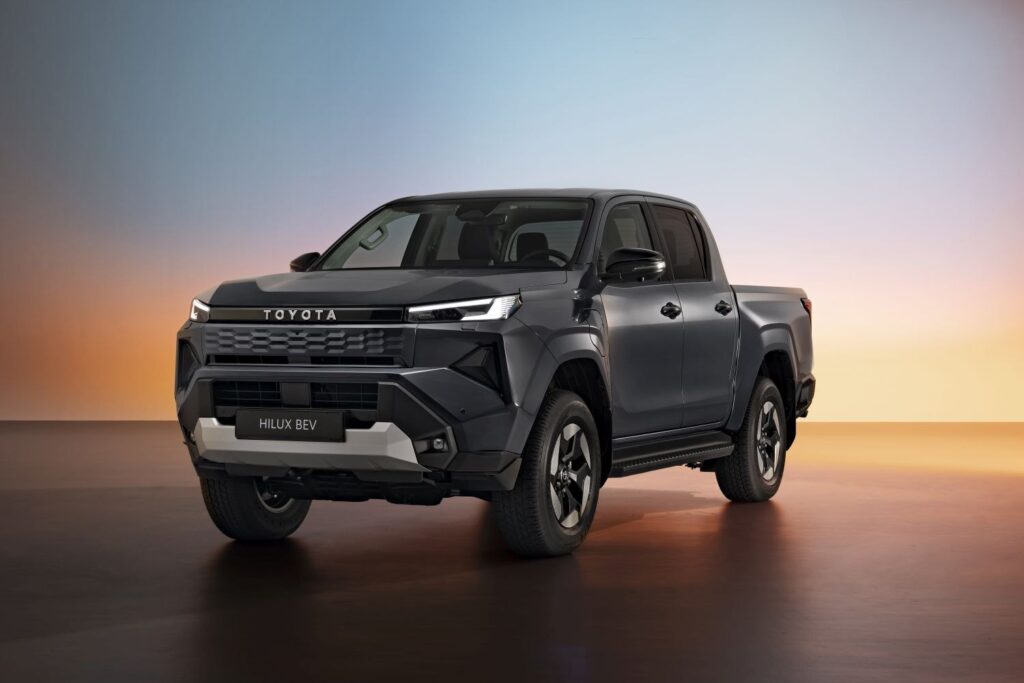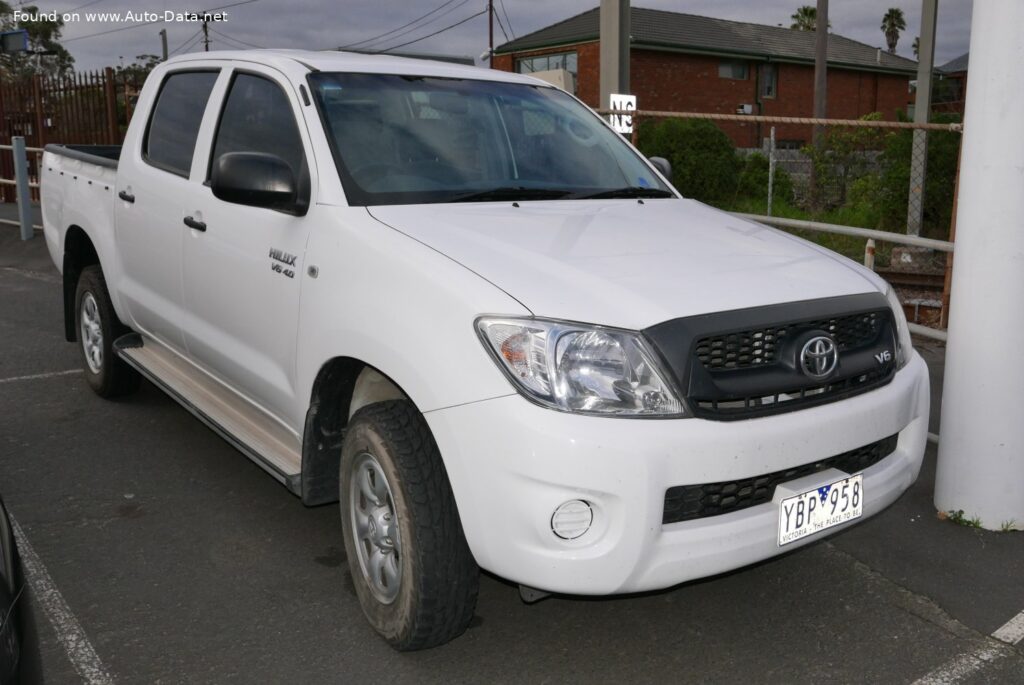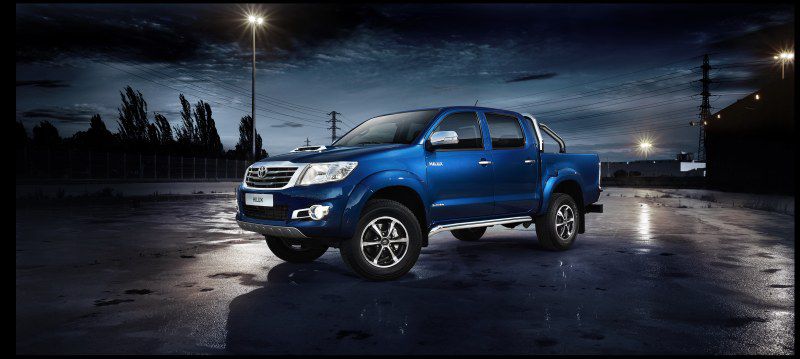
The Toyota Hilux Single Cab VIII (facelift 2020) 2.4 D-4D 4×4 represents a continuation of Toyota’s globally renowned Hilux pickup truck lineage. Introduced in June 2020 and continuing in production until February 2024, this iteration of the Hilux is primarily targeted towards commercial and utility users, particularly in markets outside of North America where single-cab pickups remain popular. While the Hilux is not officially sold in the United States, it holds a significant position as a workhorse vehicle in regions like Europe, Australia, Asia, and South America, known for its durability and off-road capability. The facelift brought minor cosmetic and technological updates to the eighth-generation Hilux, enhancing its appeal in a competitive segment.
Toyota Hilux Single Cab VIII (facelift 2020): Overview
The Hilux, globally, has a long and storied history dating back to 1968. The eighth generation, launched in 2016, significantly improved upon previous models in terms of refinement, technology, and overall capability. The 2020 facelift focused on enhancing the vehicle’s styling, safety features, and powertrain efficiency. The Single Cab configuration, with its two-seat layout, prioritizes cargo space and utility over passenger comfort, making it ideal for businesses and individuals requiring a robust and practical vehicle for work-related tasks. This model is built on a body-on-frame chassis, a traditional construction method favored for its strength and durability.
Engine & Performance
The Hilux Single Cab VIII (facelift 2020) 2.4 D-4D 4×4 is powered by Toyota’s 2GD-FTV 2.4-liter inline-four cylinder diesel engine. This engine produces 150 horsepower at 3400 rpm and 400 Nm (295 lb-ft) of torque between 1600 and 2000 rpm. The engine features a turbocharger with intercooler and a diesel common rail fuel injection system, contributing to its efficiency and responsiveness. Power is delivered to all four wheels via a six-speed manual transmission and a part-time four-wheel-drive system. Acceleration from 0 to 100 km/h (0-62 mph) takes 13.2 seconds, while 0-60 mph is achieved in approximately 12.5 seconds. The vehicle has a maximum speed of 170 km/h (105.63 mph). The weight-to-power ratio is 12 kg/Hp, and the weight-to-torque ratio is 4.5 kg/Nm, indicating a balance between power and weight suitable for its intended purpose. Combined fuel consumption, according to WLTP standards, ranges from 8.9 to 10.3 liters per 100 kilometers (26.4 to 22.8 US mpg).
Design & Features
The Hilux Single Cab VIII (facelift 2020) maintains the traditional pickup truck body style, characterized by a separate cabin and cargo bed. The single-cab configuration offers a spacious cargo bed, ideal for hauling materials and equipment. The 2020 facelift included subtle styling updates to the front fascia, including a revised grille and headlight design. The interior, while functional, is geared towards practicality rather than luxury. Standard features typically include air conditioning, a basic audio system, and power windows. Safety features, enhanced in the facelift, include ABS (Anti-lock Braking System) and other driver-assistance systems depending on the specific market. The vehicle’s robust construction and high ground clearance (277 mm / 10.91 in) contribute to its off-road capability. The approach angle is 30° and the departure angle is 25°, further enhancing its ability to navigate challenging terrain. The Hilux is designed to withstand demanding conditions, making it a reliable choice for work and adventure.
Technical Specifications
| Brand | Toyota |
| Model | Hilux |
| Generation | Hilux Single Cab VIII (facelift 2020) |
| Type (Engine) | 2.4 D-4D (150 Hp) 4×4 |
| Start of production | June, 2020 |
| End of production | February, 2024 |
| Powertrain Architecture | Internal Combustion engine |
| Body type | Pick-up |
| Seats | 2 |
| Doors | 2 |
| Combined fuel consumption (WLTP) | 8.9-10.3 l/100 km (26.4 – 22.8 US mpg) |
| CO2 emissions (WLTP) | 235-274 g/km |
| Fuel Type | Diesel |
| Acceleration 0 – 100 km/h | 13.2 sec |
| Acceleration 0 – 62 mph | 13.2 sec |
| Acceleration 0 – 60 mph | 12.5 sec |
| Maximum speed | 170 km/h (105.63 mph) |
| Weight-to-power ratio | 12 kg/Hp |
| Weight-to-torque ratio | 4.5 kg/Nm |
| Power | 150 Hp @ 3400 rpm |
| Torque | 400 Nm @ 1600-2000 rpm (295.02 lb.-ft. @ 1600-2000 rpm) |
| Engine layout | Front, Longitudinal |
| Engine Model/Code | 2GD-FTV |
| Engine displacement | 2393 cm3 (146.03 cu. in.) |
| Number of cylinders | 4 |
| Engine configuration | Inline |
| Cylinder Bore | 92 mm (3.62 in.) |
| Piston Stroke | 90 mm (3.54 in.) |
| Compression ratio | 15.6:1 |
| Number of valves per cylinder | 4 |
| Fuel injection system | Diesel Commonrail |
| Engine aspiration | Turbocharger, Intercooler |
| Valvetrain | DOHC |
| Engine oil capacity | 7.5 l (7.93 US qt | 6.6 UK qt) |
| Coolant | 9.2 l (9.72 US qt | 8.09 UK qt) |
| Kerb Weight | 1800-1850 kg (3968.32 – 4078.55 lbs.) |
| Fuel tank capacity | 80 l (21.13 US gal | 17.6 UK gal) |
| Permitted trailer load with brakes (12%) | 3500 kg (7716.18 lbs.) |
| Permitted trailer load without brakes | 750 kg (1653.47 lbs.) |
| Length | 5325 mm (209.65 in.) |
| Width | 1800 mm (70.87 in.) |
| Height | 1795 mm (70.67 in.) |
| Wheelbase | 3085 mm (121.46 in.) |
| Front track | 1495 mm (58.86 in.) |
| Rear (Back) track | 1510 mm (59.45 in.) |
| Ride height (ground clearance) | 277 mm (10.91 in.) |
| Drag coefficient (Cd) | 0.394 |
| Minimum turning circle (turning diameter) | 13.4 m (43.96 ft.) |
| Front suspension | Double wishbone |
| Rear suspension | Leaf spring |
| Front brakes | Ventilated discs |
| Rear brakes | Drum |
| Drive wheel | All wheel drive (4×4) |
| Number of gears and type of gearbox | 6 gears, manual transmission |
| Tires size | 225/70 R17C; 265/65 R17; 265/60 R18 |
| Wheel rims size | 6J x 17; 7.5J x 17; 7.5J x 18 |