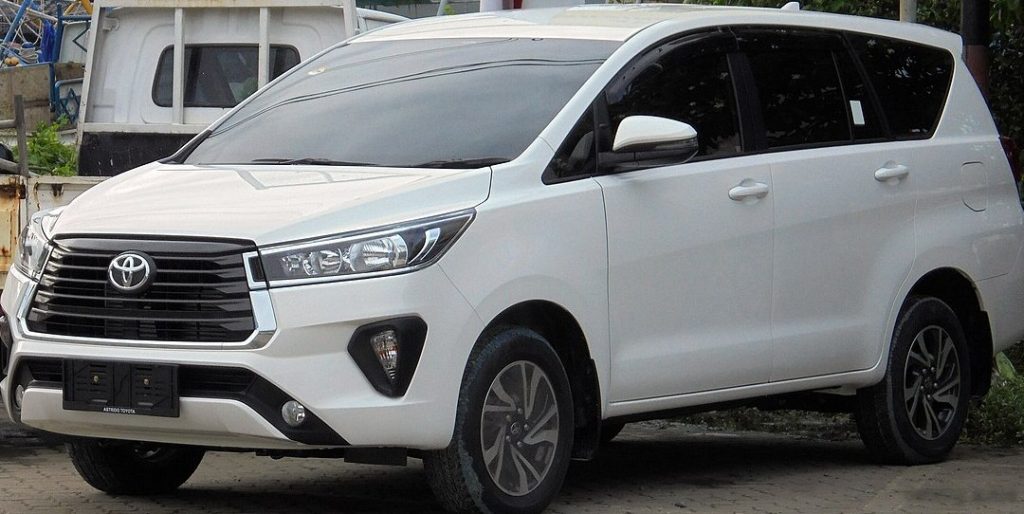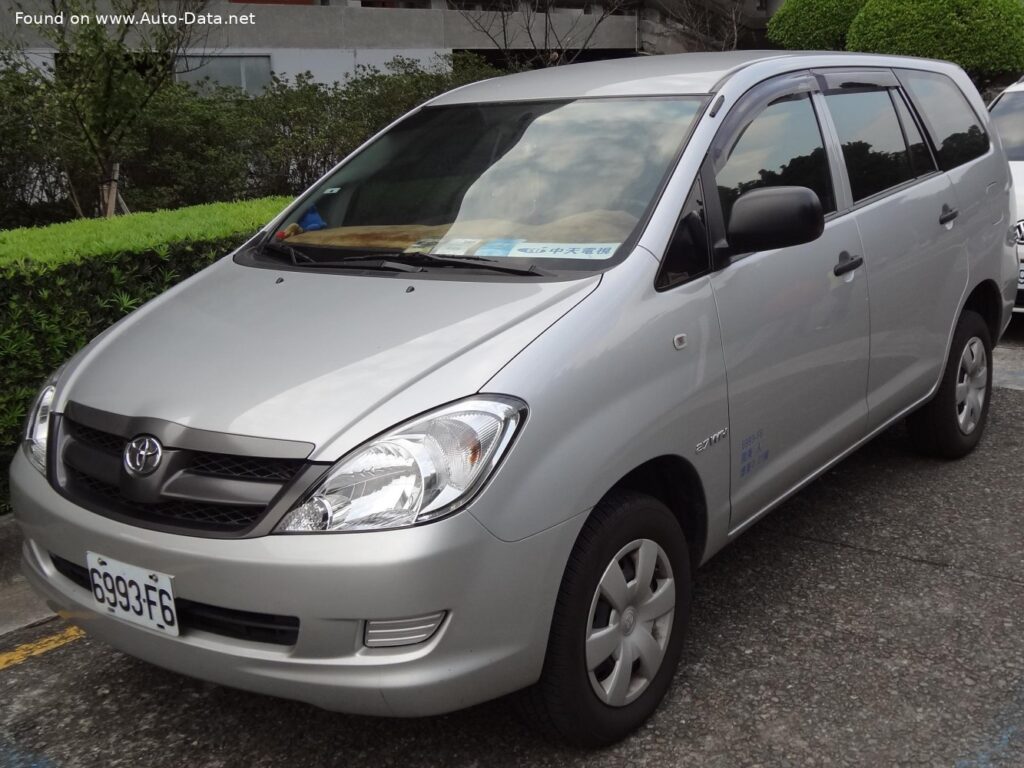
The Toyota Innova I 2.7, produced between 2004 and 2008, represents Toyota’s entry into the Asian Multi-Purpose Vehicle (MPV) market. While not officially sold in the United States, the Innova held significant popularity in Southeast Asia, India, and other developing markets where affordable, spacious, and reliable family transport was in high demand. It served as a crucial model for Toyota, bridging the gap between smaller, more basic vehicles and larger, more expensive offerings. The Innova I was designed to provide a comfortable and practical solution for families and businesses needing to transport up to seven passengers, often over challenging road conditions. It quickly became known for its durability and relatively low running costs, cementing Toyota’s reputation for reliability in these regions.
Toyota Innova I 2.7: A Detailed Overview
The Innova I was a significant departure from previous Toyota MPV offerings in these markets, moving towards a more modern and car-like design. It was built on a ladder-frame chassis, a common feature in vehicles designed for rugged use, but incorporated features aimed at improving ride comfort and handling. The 2.7-liter engine variant was positioned as the higher-performance option within the Innova range, offering a balance of power and fuel efficiency suitable for both urban and highway driving. The vehicle’s success stemmed from its ability to cater to the specific needs of its target market, offering a compelling package of practicality, reliability, and affordability.
Engine & Performance
The heart of the Toyota Innova I 2.7 is the 2TR-FE 2.7-liter inline-four cylinder gasoline engine. This naturally aspirated engine produces 163 horsepower at 5,200 rpm and 246 Newton-meters (181.44 lb.-ft.) of torque at 3,800 rpm. The engine utilizes a multi-port fuel injection system and a Double Overhead Camshaft (DOHC) valvetrain, contributing to its relatively smooth operation and respectable power output. The 2TR-FE is known for its durability and relatively simple design, making it easy to maintain and repair, a crucial factor in the vehicle’s target markets.
Power is delivered to the rear wheels via a four-speed automatic transmission. While not the most modern transmission technology, it provided a comfortable and convenient driving experience for the intended user base. The Innova I 2.7 boasts a weight-to-power ratio of 10.2 kg/Hp (97.9 Hp/tonne) and a weight-to-torque ratio of 6.8 kg/Nm (147.7 Nm/tonne), indicating a reasonable level of performance for its class and weight. The engine displacement of 2693 cm3 (164.34 cu. in.) provides a good balance between power and fuel consumption.
Design & Features
The Toyota Innova I is a five-door MPV designed to comfortably accommodate up to six passengers. Its body-on-frame construction provides a robust platform capable of handling varied road conditions. The exterior design, while functional, was relatively conservative, prioritizing practicality over stylistic flair. The interior focused on maximizing space and comfort, with a relatively simple dashboard layout and durable materials.
Key features included comfortable seating, air conditioning, and a basic audio system. Safety features, while not as comprehensive as those found in modern vehicles, included seatbelts for all passengers. The Innova I’s spacious interior and flexible seating arrangements made it ideal for families and businesses alike. The rear-wheel-drive configuration, while less common in modern passenger vehicles, contributed to its stability and load-carrying capacity. The large fuel tank capacity of 65 liters (17.17 US gal) provided a good driving range, reducing the frequency of refueling stops.
Technical Specifications
| Brand | Toyota |
| Model | Innova |
| Generation | Innova I |
| Type (Engine) | 2.7 (163 Hp) |
| Start of production | 2004 |
| End of production | 2008 |
| Powertrain Architecture | Internal Combustion engine |
| Body type | MPV |
| Seats | 6 |
| Doors | 5 |
| Fuel Type | Petrol (Gasoline) |
| Weight-to-power ratio | 10.2 kg/Hp |
| Weight-to-torque ratio | 6.8 kg/Nm |
| Power | 163 Hp @ 5200 rpm |
| Power per litre | 60.5 Hp/l |
| Torque | 246 Nm @ 3800 rpm |
| Torque (lb.-ft.) | 181.44 lb.-ft. @ 3800 rpm |
| Engine layout | Front, Longitudinal |
| Engine Model/Code | 2TR-FE |
| Engine displacement | 2693 cm3 |
| Engine displacement (cu. in.) | 164.34 cu. in. |
| Number of cylinders | 4 |
| Engine configuration | Inline |
| Number of valves per cylinder | 4 |
| Fuel injection system | Multi-port manifold injection |
| Engine aspiration | Naturally aspirated engine |
| Valvetrain | DOHC |
| Engine oil capacity | 5.6 l |
| Engine oil capacity (US qt) | 5.92 US qt |
| Engine oil capacity (UK qt) | 4.93 UK qt |
| Coolant capacity | 7 l |
| Coolant capacity (US qt) | 7.4 US qt |
| Coolant capacity (UK qt) | 6.16 UK qt |
| Kerb Weight | 1665 kg |
| Kerb Weight (lbs) | 3670.7 lbs |
| Fuel tank capacity | 65 l |
| Fuel tank capacity (US gal) | 17.17 US gal |
| Fuel tank capacity (UK gal) | 14.3 UK gal |
| Length | 4555 mm |
| Length (in) | 179.33 in |
| Width | 1770 mm |
| Width (in) | 69.69 in |
| Height | 1750 mm |
| Height (in) | 68.9 in |
| Wheelbase | 2750 mm |
| Wheelbase (in) | 108.27 in |
| Drivetrain Architecture | Rear wheel drive |
| Number of gears | 4 |
| Type of gearbox | automatic transmission |
The Toyota Innova I 2.7, while not a vehicle commonly found in North America, played a vital role in providing affordable and reliable transportation to families and businesses in Asia. Its robust construction, practical design, and dependable engine made it a popular choice in its target markets, solidifying Toyota’s position as a leading automotive manufacturer in the region. The Innova I laid the groundwork for subsequent generations of the Innova, which continue to be popular MPVs in many parts of the world today.