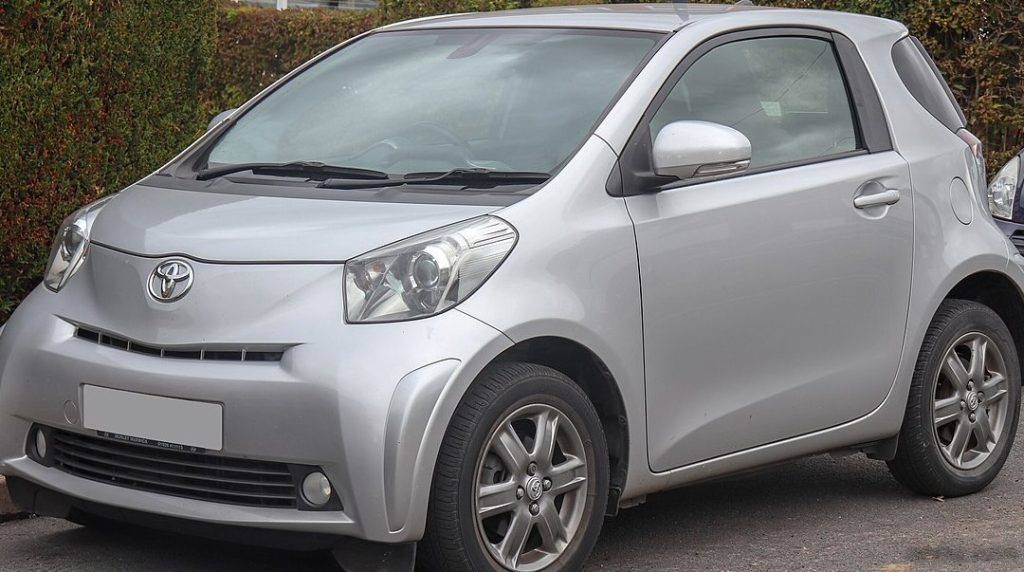
The Toyota iQ is a unique city car produced by Toyota from 2008 to 2015. While never officially sold in the United States, the iQ gained prominence in Europe and Japan as a premium subcompact designed for urban environments. Its defining characteristic was its remarkably small footprint combined with a cleverly packaged interior capable of seating four adults – a feat achieved through a minimalist dashboard and a unique asymmetrical design. The iQ represented Toyota’s attempt to redefine the small car segment, prioritizing space efficiency and a distinctive aesthetic over outright performance. This article details the 1.0 VVT-i version, equipped with a continuously variable transmission (CVT), which was a common configuration in many markets.
Toyota iQ 1.0 VVT-i: A Detailed Overview
The iQ’s development stemmed from Toyota’s desire to create a vehicle that was both highly maneuverable in congested city streets and surprisingly spacious for its size. It wasn’t intended to compete directly with mainstream superminis like the Ford Fiesta or Volkswagen Polo, but rather to offer a more premium and design-focused alternative. The 1.0 VVT-i model, powered by a small three-cylinder engine, focused on fuel efficiency and low running costs, making it an attractive option for urban commuters. The iQ’s styling, characterized by its short overhangs and distinctive front fascia, set it apart from conventional small cars.
Engine & Performance
The heart of the Toyota iQ 1.0 VVT-i is the 1KR-FE 998 cc (60.9 cubic inches) inline three-cylinder engine. This naturally aspirated engine produces 68 horsepower at 6000 rpm and 91 Nm (67.12 lb.-ft.) of torque at 4800 rpm. While not a powerhouse, the engine is surprisingly refined for its size and displacement. The power-to-weight ratio of 13 kg/Hp (76.7 Hp/tonne) and torque-to-weight ratio of 9.7 kg/Nm (102.7 Nm/tonne) contribute to adequate, if not exhilarating, performance. The engine is paired with a continuously variable transmission (CVT), which prioritizes fuel efficiency and smooth acceleration over sporty responsiveness. The iQ 1.0 VVT-i achieves a maximum speed of 150 km/h (93.21 mph). Fuel economy is a key strength, with combined cycle consumption rated at 4.7 l/100 km (50 US mpg, 60.1 UK mpg, 21.3 km/l). The engine meets Euro 4 emission standards.
Design & Features
The Toyota iQ is a three-door hatchback with a unique design philosophy. Its most notable feature is its compact dimensions – measuring just 2985 mm (117.52 in) in length and 1680 mm (66.14 in) in width. Despite its small size, the iQ is designed to accommodate four adults, albeit with limited rear legroom. This is achieved through a highly asymmetrical dashboard, which pushes the instrument panel further forward and allows for more space for the front passenger. The interior design is modern and minimalist, with a focus on functionality. Standard safety features included ABS (Anti-lock Braking System) and multiple airbags. The iQ’s trunk space is relatively small, offering 32 liters (1.13 cu. ft.) with the rear seats up and 238 liters (8.4 cu. ft.) with them folded down. The vehicle’s kerb weight is 886 kg (1953.3 lbs), with a maximum weight of 1210 kg (2667.59 lbs) and a maximum load capacity of 324 kg (714.3 lbs). The iQ features McPherson strut front suspension and a torsion beam rear suspension, providing a comfortable ride for city driving. Electric power steering contributes to ease of maneuverability.
Technical Specifications
| Brand | Toyota |
| Model | iQ |
| Generation | iQ |
| Type (Engine) | 1.0 VVT-i (68 Hp) CVT |
| Start of production | November, 2008 |
| End of production | December, 2015 |
| Powertrain Architecture | Internal Combustion engine |
| Body type | Hatchback |
| Seats | 4 |
| Doors | 3 |
| Fuel consumption (urban) | 5.7 l/100 km (41.3 US mpg, 49.6 UK mpg, 17.5 km/l) |
| Fuel consumption (extra urban) | 4.1 l/100 km (57.4 US mpg, 68.9 UK mpg, 24.4 km/l) |
| Fuel consumption (combined) | 4.7 l/100 km (50 US mpg, 60.1 UK mpg, 21.3 km/l) |
| Fuel Type | Petrol (Gasoline) |
| Maximum speed | 150 km/h (93.21 mph) |
| Emission standard | Euro 4 |
| Weight-to-power ratio | 13 kg/Hp |
| Weight-to-torque ratio | 9.7 kg/Nm |
| Power | 68 Hp @ 6000 rpm |
| Torque | 91 Nm @ 4800 rpm (67.12 lb.-ft. @ 4800 rpm) |
| Engine layout | Front, Transverse |
| Engine Model/Code | 1KR-FE |
| Engine displacement | 998 cm3 (60.9 cu. in.) |
| Number of cylinders | 3 |
| Engine configuration | Inline |
| Cylinder Bore | 71 mm (2.8 in.) |
| Piston Stroke | 84 mm (3.31 in.) |
| Compression ratio | 10.5:1 |
| Number of valves per cylinder | 4 |
| Fuel injection system | Multi-port manifold injection |
| Engine aspiration | Naturally aspirated engine |
| Valvetrain | DOHC |
| Engine oil capacity | 3.1 l (3.28 US qt | 2.73 UK qt) |
| Coolant | 4.5 l (4.76 US qt | 3.96 UK qt) |
| Kerb Weight | 886 kg (1953.3 lbs) |
| Max. weight | 1210 kg (2667.59 lbs) |
| Max load | 324 kg (714.3 lbs) |
| Trunk (boot) space – minimum | 32 l (1.13 cu. ft.) |
| Trunk (boot) space – maximum | 238 l (8.4 cu. ft.) |
| Fuel tank capacity | 32 l (8.45 US gal | 7.04 UK gal) |
| Length | 2985 mm (117.52 in.) |
| Width | 1680 mm (66.14 in.) |
| Height | 1500 mm (59.06 in.) |
| Wheelbase | 2000 mm (78.74 in.) |
| Minimum turning circle | 7.8 m (25.59 ft.) |
| Drivetrain Architecture | Front wheel drive |
| Front suspension | Independent type McPherson |
| Rear suspension | Torsion |
| Front brakes | Ventilated discs |
| Rear brakes | Disc |
| Steering type | Steering rack and pinion |
| Power steering | Electric Steering |
| Tires size | 175/65R15 |
In conclusion, the Toyota iQ 1.0 VVT-i was a unique and innovative city car that prioritized space efficiency, fuel economy, and distinctive styling. While not sold in the US market, it proved popular in Europe and Japan as a premium subcompact offering a compelling alternative to conventional small cars.