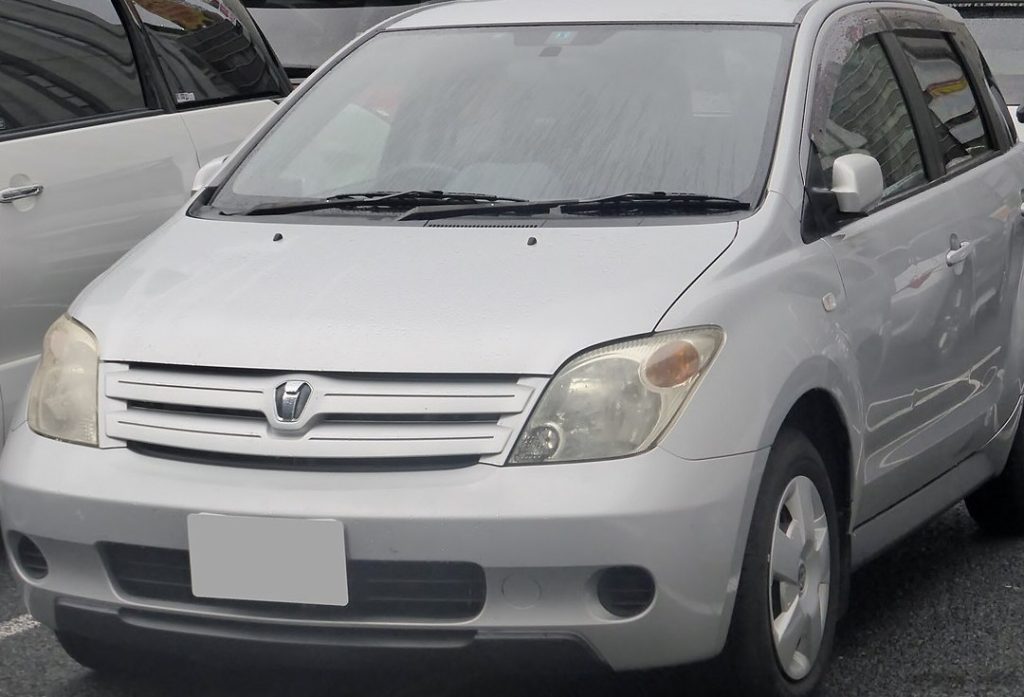
The Toyota Ist, known as the Toyota Echo in North America, was a subcompact car produced by Toyota from 2002 to 2007. Positioned as an entry-level vehicle, the Ist (and Echo) aimed to provide affordable and reliable transportation with a focus on fuel efficiency and practicality. While not directly sold as the “Ist” in the United States, the Echo served the same market segment, competing with vehicles like the Honda Civic, Nissan Sentra, and Ford Focus. The Ist was particularly popular in Japan and Europe, offering a unique, rounded design that distinguished it from more conventional subcompacts. This article details the specifications and characteristics of the 1.3i variant with an automatic transmission, a common configuration during its production run.
Toyota Ist 1.3i: An Overview
The first generation Toyota Ist, produced between 2002 and 2007, represented Toyota’s attempt to create a distinctive and youthful subcompact. The vehicle’s design, penned by designer Hiroshi Ozawa, was intentionally unconventional, featuring a rounded silhouette and a relatively tall cabin. This design maximized interior space within a small footprint. The 1.3i model, equipped with the 2NZ-FE engine and an automatic transmission, was a popular choice for urban drivers seeking a fuel-efficient and easy-to-maneuver vehicle. The Ist’s focus was on providing basic transportation with a degree of style and reliability, hallmarks of the Toyota brand.
Engine & Performance
The Toyota Ist 1.3i is powered by the 2NZ-FE 1.3-liter inline-four cylinder gasoline engine. This naturally aspirated engine produces 88 horsepower at 6000 rpm and 123 Nm (90.72 lb.-ft.) of torque at 4400 rpm. While not a performance-oriented engine, the 2NZ-FE is known for its durability and fuel efficiency. The engine features a double overhead camshaft (DOHC) valvetrain with four valves per cylinder and utilizes multi-port fuel injection. The weight-to-power ratio of 11.4 kg/Hp (88 Hp/tonne) and a weight-to-torque ratio of 8.1 kg/Nm (123 Nm/tonne) reflect the vehicle’s modest performance characteristics. The engine’s power output of 67.7 Hp per liter demonstrates a focus on maximizing efficiency from a small displacement. The engine is transversely mounted at the front of the vehicle, driving the front wheels through a four-speed automatic transmission.
Design & Features
The Toyota Ist is a five-door hatchback with seating for five passengers. Its distinctive rounded shape provides a surprisingly spacious interior for its exterior dimensions. The vehicle’s design prioritized interior volume over sleek aerodynamics. The Ist’s interior is functional and straightforward, with a focus on practicality. Safety features for the era included an Anti-lock Braking System (ABS), which was becoming increasingly common in this segment. The Ist’s relatively small size made it easy to park and maneuver in urban environments. The trunk offers a minimum capacity of 435 liters (15.36 cu. ft.), providing ample space for everyday cargo. The Ist’s design, while unconventional, proved popular with buyers seeking a vehicle that stood out from the crowd. The 15-inch wheel rims are fitted with 185/65 R15 tires.
Technical Specifications
| Brand | Toyota |
| Model | Ist |
| Generation | Ist |
| Type (Engine) | 1.3i (88 Hp) Automatic |
| Start of production | 2002 year |
| End of production | 2007 year |
| Powertrain Architecture | Internal Combustion engine |
| Body type | Hatchback |
| Seats | 5 |
| Doors | 5 |
| Fuel Type | Petrol (Gasoline) |
| Weight-to-power ratio | 11.4 kg/Hp |
| Power | 88 Hp @ 6000 rpm |
| Power per litre | 67.7 Hp/l |
| Torque | 123 Nm @ 4400 rpm |
| Torque (lb.-ft.) | 90.72 lb.-ft. @ 4400 rpm |
| Engine layout | Front, Transverse |
| Engine Model/Code | 2NZ-FE |
| Engine displacement | 1299 cm3 |
| Engine displacement (cu. in.) | 79.27 cu. in. |
| Number of cylinders | 4 |
| Engine configuration | Inline |
| Cylinder Bore | 75 mm |
| Cylinder Bore (in.) | 2.95 in. |
| Piston Stroke | 73.5 mm |
| Piston Stroke (in.) | 2.89 in. |
| Compression ratio | 10.5:1 |
| Number of valves per cylinder | 4 |
| Fuel injection system | Multi-port manifold injection |
| Engine aspiration | Naturally aspirated engine |
| Valvetrain | DOHC |
| Engine oil capacity | 3.7 l |
| Engine oil capacity (US qt) | 3.91 US qt |
| Engine oil capacity (UK qt) | 3.26 UK qt |
| Coolant | 4.4 l |
| Coolant (US qt) | 4.65 US qt |
| Coolant (UK qt) | 3.87 UK qt |
| Kerb Weight | 1000 kg |
| Kerb Weight (lbs.) | 2204.62 lbs. |
| Trunk (boot) space – minimum | 435 l |
| Trunk (boot) space – minimum (cu. ft.) | 15.36 cu. ft. |
| Fuel tank capacity | 45 l |
| Fuel tank capacity (US gal) | 11.89 US gal |
| Fuel tank capacity (UK gal) | 9.9 UK gal |
| Length | 3855 mm |
| Length (in.) | 151.77 in. |
| Width | 1695 mm |
| Width (in.) | 66.73 in. |
| Height | 1530 mm |
| Height (in.) | 60.24 in. |
| Wheelbase | 2370 mm |
| Wheelbase (in.) | 93.31 in. |
| Front track | 1455 mm |
| Front track (in.) | 57.28 in. |
| Rear (Back) track | 1435 mm |
| Rear (Back) track (in.) | 56.5 in. |
| Drivetrain Architecture | The Internal combustion engine (ICE) drives the front wheels of the vehicle. |
| Drive wheel | Front wheel drive |
| Number of gears and type of gearbox | 4 gears, automatic transmission |
| Front suspension | Independent, type McPherson with coil spring and anti-roll bar |
| Rear suspension | Rigid axle suspension |
| Front brakes | Ventilated discs |
| Rear brakes | Drum |
| Assisting systems | ABS (Anti-lock braking system) |
| Tires size | 185/65 R15 |
| Wheel rims size | 15 |
The Toyota Ist 1.3i, while not a groundbreaking vehicle, offered a compelling package of affordability, reliability, and practicality. Its unique design and efficient engine made it a popular choice in its target market, and it remains a recognizable and respected vehicle among subcompact car enthusiasts.