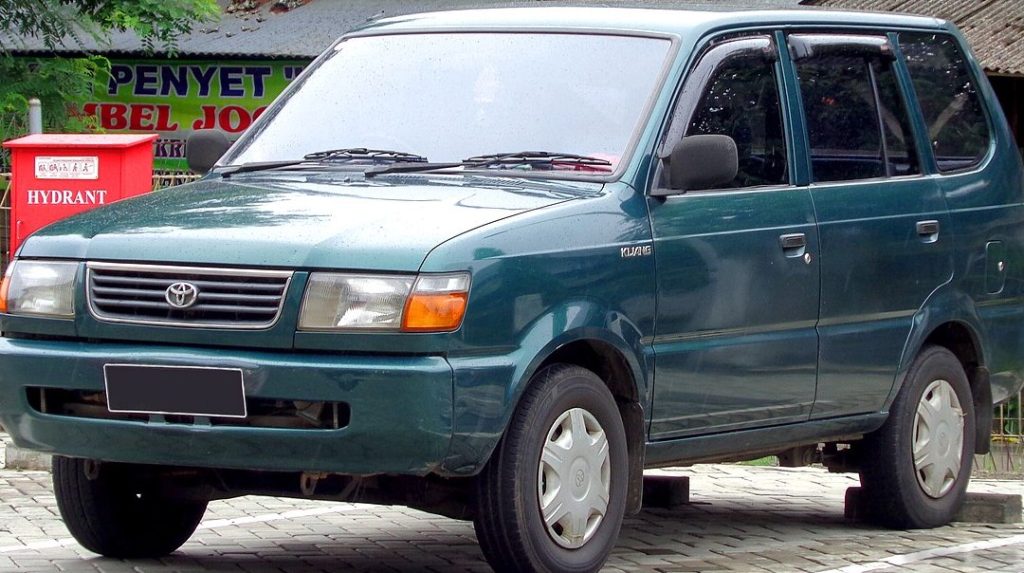
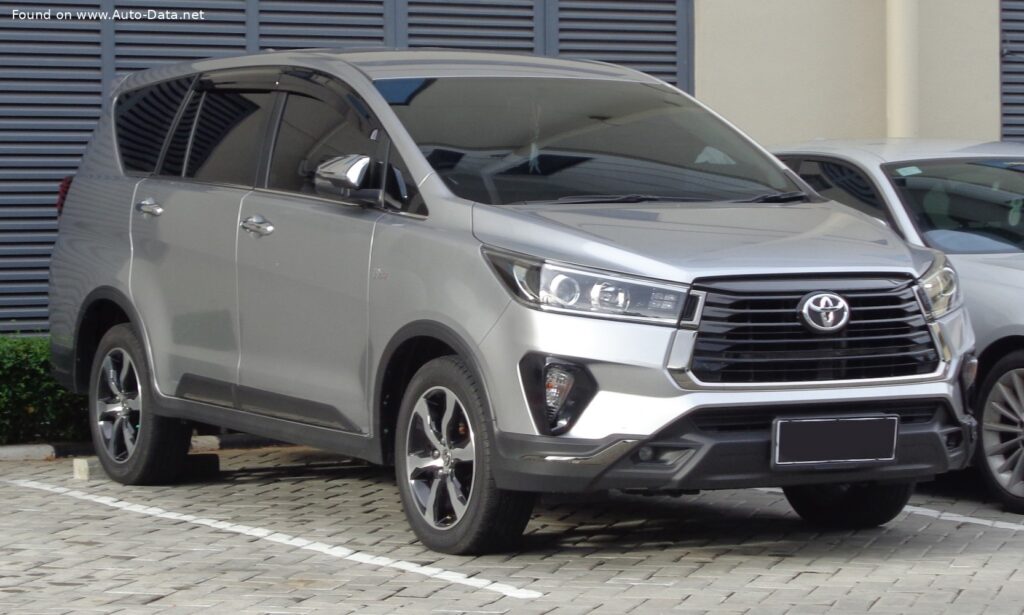
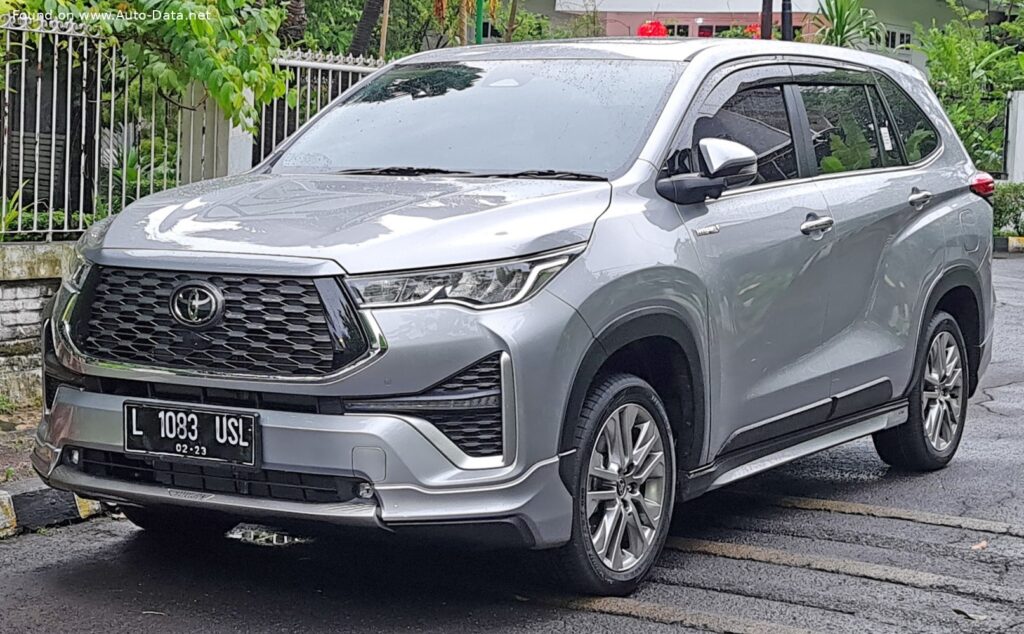
The Toyota Kijang Innova II 2.7i (166 Hp) is a rear-wheel-drive Multi-Purpose Vehicle (MPV) produced by Toyota between November 2015 and October 2020. This generation of the Innova, the second iteration of the model, was primarily aimed at the Southeast Asian market, particularly Indonesia, the Philippines, and Thailand, where MPVs represent a significant portion of vehicle sales. The Innova II offered a blend of practicality, comfort, and reliability, catering to families and commercial users alike. While not officially sold in the United States, understanding its specifications provides insight into the preferences and demands of the Asian automotive landscape. It served as a crucial model for Toyota in these regions, competing with offerings from Mitsubishi, Suzuki, and other regional manufacturers.
Toyota Kijang Innova II: An Overview
The Kijang Innova has a long history in Indonesia, originating as a rugged, utilitarian vehicle designed for transporting people and goods. Over successive generations, it evolved into a more refined and comfortable MPV. The Innova II represented a significant step forward in terms of design, features, and overall driving experience. It was positioned as a versatile vehicle capable of handling both daily commuting and long-distance travel, with seating configurations accommodating between seven and eight passengers. The 2.7i variant, equipped with the 2TR-FE engine, was a popular choice due to its balance of power and fuel efficiency.
Engine & Performance
The Toyota Kijang Innova II 2.7i is powered by the 2TR-FE 2.7-liter inline-four cylinder gasoline engine. This naturally aspirated engine produces 166 horsepower at 5200 rpm and 245 Nm (180.7 lb.-ft.) of torque at 4000 rpm. The engine features a Double Overhead Camshaft (DOHC) valvetrain with Toyota’s Variable Valve Timing-intelligent (D-VVT-i) system, optimizing performance and fuel economy across a wide range of engine speeds. The power-to-weight ratio of 10.4 kg/Hp (96.5 Hp/tonne) and torque-to-weight ratio of 7 kg/Nm (142.4 Nm/tonne) provide adequate performance for its intended purpose. The engine is mated to a 5-speed manual transmission, delivering power to the rear wheels. While not a performance-oriented vehicle, the 2.7i offered sufficient power for comfortable cruising and carrying a full load of passengers and cargo. The engine’s 2694 cm3 (164.4 cu. in.) displacement provides a good balance between responsiveness and fuel consumption.
Design & Features
The Kijang Innova II boasts a more modern and aerodynamic exterior design compared to its predecessor. The MPV’s body style prioritizes interior space and practicality. It features a spacious cabin with three rows of seating, offering ample legroom and headroom for passengers. The interior design emphasizes comfort and functionality, with features such as air conditioning, power windows, and a basic audio system. Safety features included Anti-lock Braking System (ABS) as standard equipment. The vehicle’s dimensions – 4735 mm (186.42 in.) in length, 1830 mm (72.05 in.) in width, and 1795 mm (70.67 in.) in height – contribute to its spaciousness and ease of maneuverability. The rear-wheel-drive configuration, while less common in modern passenger vehicles, was chosen for its durability and suitability for carrying heavy loads, a common requirement in its target markets. The 65-liter (17.17 US gal) fuel tank provides a reasonable driving range.
Technical Specifications
| Brand | Toyota |
| Model | Innova |
| Generation | Kijang Innova II |
| Type (Engine) | 2.7i (166 Hp) |
| Start of production | November, 2015 |
| End of production | October, 2020 |
| Powertrain Architecture | Internal Combustion engine |
| Body type | MPV |
| Seats | 7-8 |
| Doors | 5 |
| Fuel Type | Petrol (Gasoline) |
| Weight-to-power ratio | 10.4 kg/Hp |
| Weight-to-torque ratio | 7 kg/Nm |
| Power | 166 Hp @ 5200 rpm |
| Power per litre | 61.6 Hp/l |
| Torque | 245 Nm @ 4000 rpm |
| Torque (lb.-ft.) | 180.7 lb.-ft. @ 4000 rpm |
| Engine Model/Code | 2TR-FE |
| Engine displacement | 2694 cm3 |
| Engine displacement (cu. in.) | 164.4 cu. in. |
| Number of cylinders | 4 |
| Engine configuration | Inline |
| Number of valves per cylinder | 4 |
| Engine aspiration | Naturally aspirated engine |
| Valvetrain | DOHC, D-VVT-i |
| Engine oil capacity | 5.6 l |
| Engine oil capacity (US qt) | 5.92 US qt |
| Engine oil capacity (UK qt) | 4.93 UK qt |
| Coolant | 7 l |
| Coolant (US qt) | 7.4 US qt |
| Coolant (UK qt) | 6.16 UK qt |
| Kerb Weight | 1720-1730 kg |
| Kerb Weight (lbs.) | 3791.95 – 3814 lbs. |
| Max. weight | 2340-2380 kg |
| Max. weight (lbs.) | 5158.82 – 5247 lbs. |
| Max load | 620-650 kg |
| Max load (lbs.) | 1366.87 – 1433 lbs. |
| Fuel tank capacity | 65 l |
| Fuel tank capacity (US gal) | 17.17 US gal |
| Fuel tank capacity (UK gal) | 14.3 UK gal |
| Length | 4735 mm |
| Length (in.) | 186.42 in. |
| Width | 1830 mm |
| Width (in.) | 72.05 in. |
| Height | 1795 mm |
| Height (in.) | 70.67 in. |
| Wheelbase | 2750 mm |
| Wheelbase (in.) | 108.27 in. |
| Front track | 1540 mm |
| Front track (in.) | 60.63 in. |
| Rear track | 1540 mm |
| Rear track (in.) | 60.63 in. |
| Drivetrain Architecture | Rear wheel drive |
| Drive wheel | Rear wheel drive |
| Number of gears | 5 |
| Type of gearbox | manual transmission |
| Front suspension | Double wishbone |
| Rear suspension | Double wishbone |
| Front brakes | Disc |
| Rear brakes | Drum |
| Assisting systems | ABS (Anti-lock braking system) |
| Tires size | 205/65 R16 |
| Wheel rims size | 16 |
The Toyota Kijang Innova II 2.7i (166 Hp) remains a popular choice in its target markets due to its reliability, practicality, and affordability. While not available in the US market, it represents a significant example of Toyota’s engineering and adaptation to the specific needs of diverse automotive landscapes.