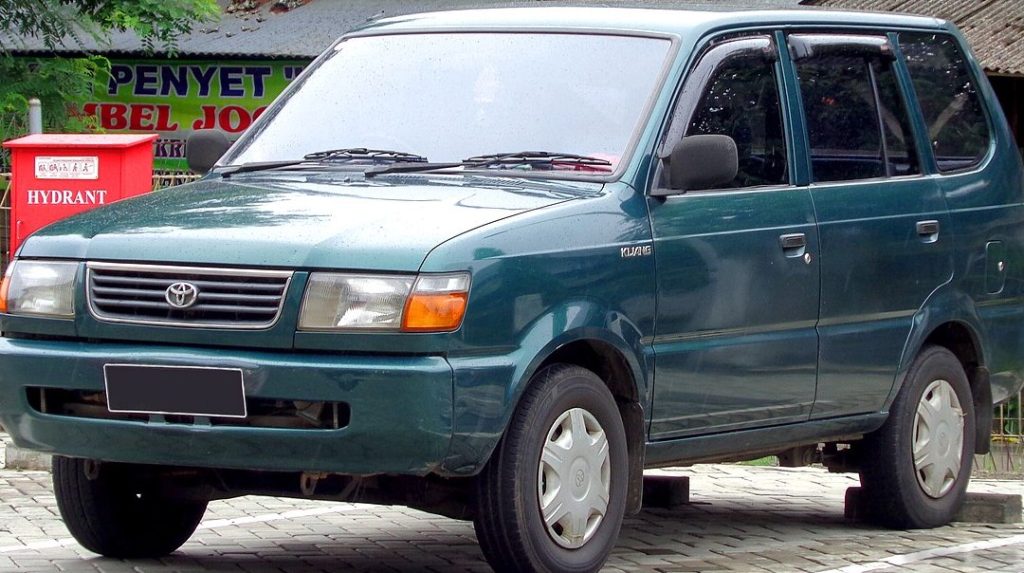
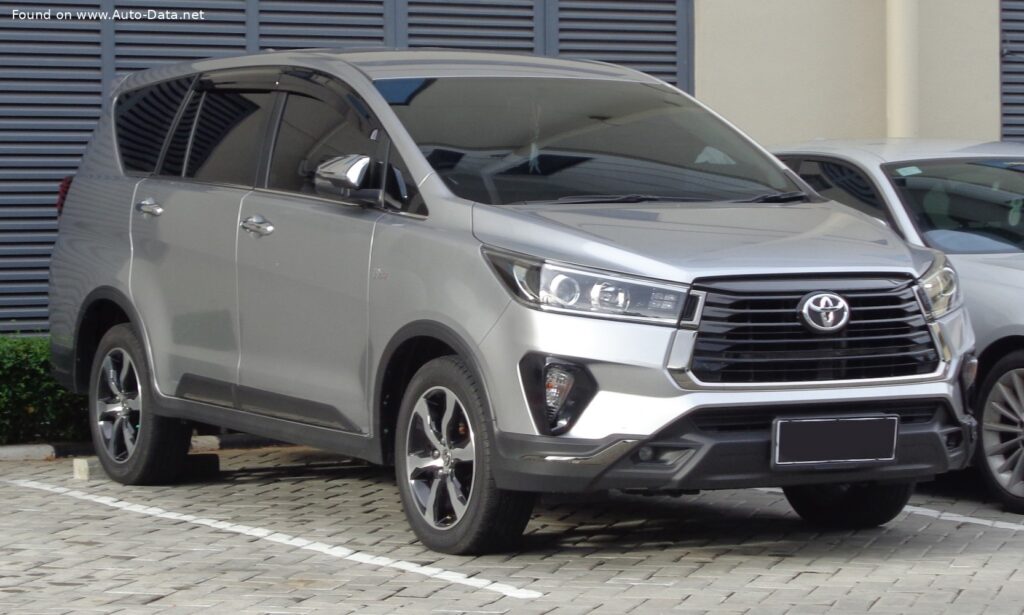
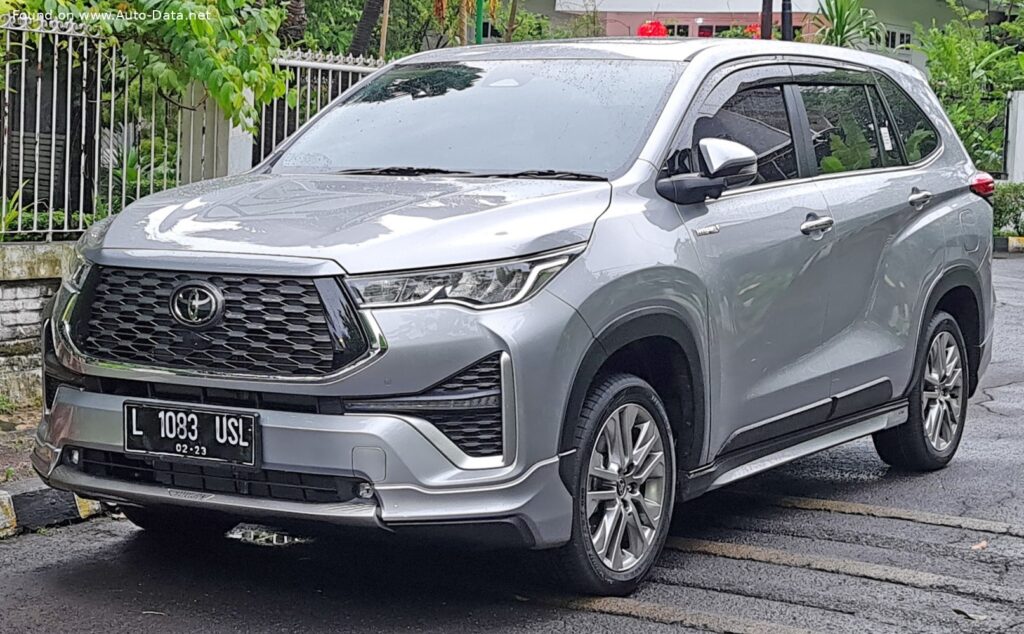
The Toyota Kijang Innova II 2.8d (174 Hp) Automatic, produced between 2015 and 2020, represents a significant iteration in Toyota’s long-running Kijang series. While not officially sold in the United States, the Innova holds a prominent position in the Southeast Asian automotive market as a versatile and practical Multi-Purpose Vehicle (MPV). It caters to families and commercial users alike, offering a blend of passenger comfort, cargo capacity, and reliability. The “II” designation signifies the second generation of the Innova, building upon the success of its predecessor with updated styling, improved features, and enhanced mechanicals. This model is particularly notable for its diesel engine option, providing a balance of fuel efficiency and torque suitable for diverse driving conditions.
Toyota Kijang Innova II: A Regional Workhorse
The Kijang nameplate has a rich history in Indonesia, dating back to 1976. Initially conceived as a rugged, utilitarian vehicle for transporting goods and people, the Kijang evolved over the decades to become a more refined and comfortable MPV. The Innova, introduced in 2004, marked a substantial leap forward in terms of design and technology. The Kijang Innova II, launched in 2015, continued this trend, offering a more sophisticated package aimed at a broader customer base. In markets like Indonesia, the Philippines, and Thailand, the Innova competes with other MPVs such as the Mitsubishi Xpander and the Honda Mobilio, often serving as a family vehicle, a tourist shuttle, or even a taxi.
Engine & Performance
The heart of the Kijang Innova II 2.8d Automatic is the 1GD-FTV 2.8-liter inline-four cylinder diesel engine. This engine produces 174 horsepower at 3400 rpm and 360 Nm (265.52 lb.-ft.) of torque between 1200 and 3400 rpm. The engine utilizes a diesel commonrail fuel injection system and is equipped with a turbocharger and intercooler to optimize performance and efficiency. This configuration delivers a strong low-end torque curve, making it well-suited for carrying passengers and cargo, even on inclines. The power-to-weight ratio is approximately 95.6 horsepower per tonne, while the torque-to-weight ratio stands at 197.8 Nm per tonne. The engine is paired with a six-speed automatic transmission, providing smooth and efficient gear changes. The engine’s displacement is 2755 cm3 (168.12 cu. in.), and it features a Double Overhead Camshaft (DOHC) valvetrain with four valves per cylinder.
Design & Features
The Toyota Kijang Innova II is a five-door MPV designed to accommodate between seven and eight passengers, depending on the configuration. Its body style is characterized by a relatively long wheelbase (2750 mm / 108.27 in.) and a spacious interior. The vehicle’s dimensions are 4735 mm (186.42 in.) in length, 1830 mm (72.05 in.) in width, and 1795 mm (70.67 in.) in height. The Innova II features a double wishbone suspension system both front and rear, designed to provide a comfortable ride and stable handling. Braking duties are handled by disc brakes at the front and drum brakes at the rear, supplemented by an Anti-lock Braking System (ABS) for enhanced safety. Standard tire sizes range from 205/65 R16 to 215/55 R17, mounted on 16 or 17-inch wheel rims. Interior features typically include air conditioning, power windows, and a basic audio system. Later models may include more advanced features like touchscreen infotainment systems and rear parking sensors. Safety features, while varying by trim level and market, generally include airbags and seatbelts for all passengers.
Technical Specifications
| General Information | |
| Brand | Toyota |
| Model | Innova |
| Generation | Kijang Innova II |
| Type (Engine) | 2.8d (174 Hp) Automatic |
| Start of production | November, 2015 |
| End of production | October, 2020 |
| Powertrain Architecture | Internal Combustion engine |
| Body type | MPV |
| Seats | 7-8 |
| Doors | 5 |
| Performance Specs | |
| Fuel Type | Diesel |
| Weight-to-power ratio | 10.5 kg/Hp |
| Weight-to-torque ratio | 5.1 kg/Nm |
| Engine Specs | |
| Power | 174 Hp @ 3400 rpm |
| Power per litre | 63.2 Hp/l |
| Torque | 360 Nm @ 1200-3400 rpm |
| Torque (lb.-ft.) | 265.52 lb.-ft. @ 1200-3400 rpm |
| Engine Model/Code | 1GD-FTV |
| Engine displacement | 2755 cm3 |
| Engine displacement (cu. in.) | 168.12 cu. in. |
| Number of cylinders | 4 |
| Engine configuration | Inline |
| Number of valves per cylinder | 4 |
| Fuel injection system | Diesel Commonrail |
| Engine aspiration | Turbocharger, Intercooler |
| Valvetrain | DOHC |
| Engine oil capacity | 7.5 l |
| Engine oil capacity (US qt) | 7.93 US qt |
| Engine oil capacity (UK qt) | 6.6 UK qt |
| Coolant capacity | 9.1 l |
| Coolant capacity (US qt) | 9.62 US qt |
| Coolant capacity (UK qt) | 8.01 UK qt |
| Space, Volume and Weights | |
| Kerb Weight | 1820-1870 kg |
| Kerb Weight (lbs.) | 4012.41 – 4122.64 lbs. |
| Max. weight | 2450-2480 kg |
| Max. weight (lbs.) | 5401.33 – 5467.46 lbs. |
| Max load | 610-630 kg |
| Max load (lbs.) | 1344.82 – 1388.91 lbs. |
| Fuel tank capacity | 55 l |
| Fuel tank capacity (US gal) | 14.53 US gal |
| Fuel tank capacity (UK gal) | 12.1 UK gal |
| Dimensions | |
| Length | 4735 mm |
| Length (in.) | 186.42 in. |
| Width | 1830 mm |
| Width (in.) | 72.05 in. |
| Height | 1795 mm |
| Height (in.) | 70.67 in. |
| Wheelbase | 2750 mm |
| Wheelbase (in.) | 108.27 in. |
| Front track | 1530-1540 mm |
| Front track (in.) | 60.24 – 60.63 in. |
| Rear track | 1530-1540 mm |
| Rear track (in.) | 60.24 – 60.63 in. |
| Drivetrain, Brakes and Suspension | |
| Drivetrain Architecture | Rear wheel drive |
| Drive wheel | Rear wheel drive |
| Number of gears | 6 |
| Type of gearbox | automatic transmission |
| Front suspension | Double wishbone |
| Rear suspension | Double wishbone |
| Front brakes | Disc |
| Rear brakes | Drum |
| Assisting systems | ABS (Anti-lock braking system) |
| Tires size | 205/65 R16; 215/55 R17 |
| Wheel rims size | 16; 17 |