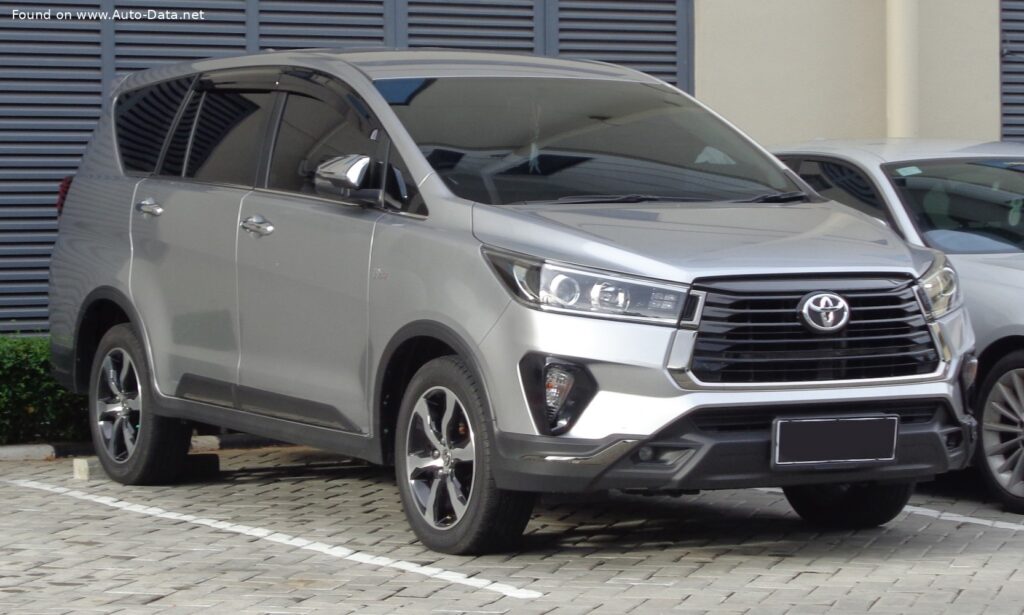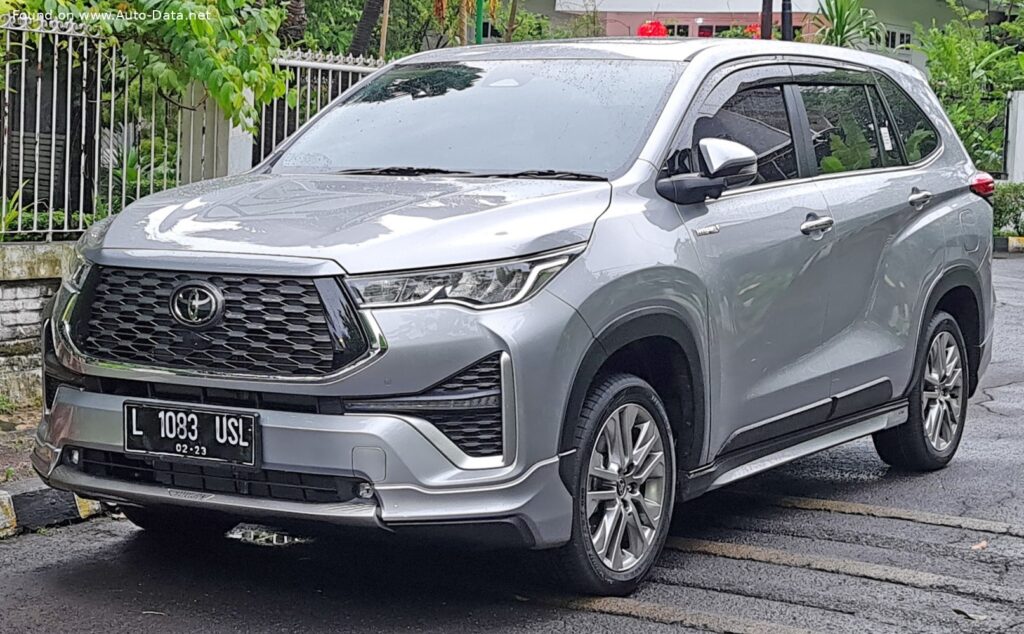
The Toyota Kijang Innova Zenix III 2.0 D-4S (174 Hp) CVT represents the third generation of the Innova, a Multi-Purpose Vehicle (MPV) primarily marketed in Southeast Asia, particularly Indonesia, Thailand, and the Philippines. While not officially sold in the United States, the Innova holds a significant position in its target markets as a versatile and family-oriented vehicle, often favored for its spaciousness, reliability, and affordability. The Zenix designation signifies a substantial redesign and technological upgrade over its predecessors, focusing on improved fuel efficiency and a more refined driving experience. This generation, launched in November 2022, continues the Kijang’s long-standing tradition as a practical and dependable transportation solution for families and businesses.
Toyota Kijang Innova Zenix III: An Overview
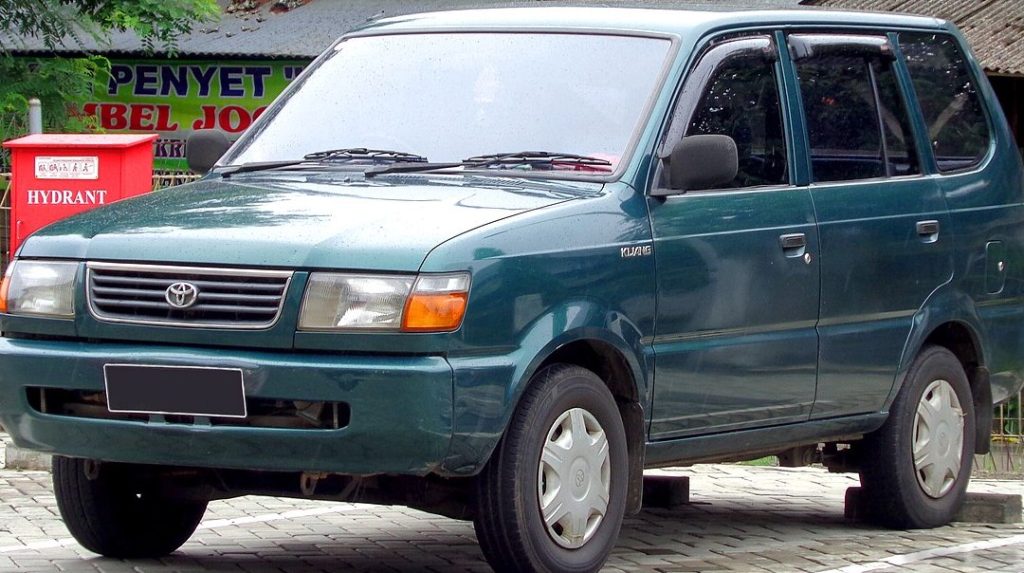
The Kijang Innova Zenix III builds upon the legacy of the Kijang, a nameplate that dates back to 1976. Originally a rugged, utilitarian vehicle, the Kijang evolved over the decades into the more comfortable and feature-rich MPV it is today. The Zenix III represents a significant leap forward, incorporating Toyota’s latest technologies and design philosophies. It caters to a market segment that demands practicality, space, and reliability, often serving as a family vehicle, people carrier, or even a small business transport solution. The 2.0 D-4S CVT model is a key variant, offering a balance of performance and fuel economy.
Engine & Performance
Powering the Toyota Kijang Innova Zenix III 2.0 D-4S CVT is a 1.987-liter (121.25 cubic inches) inline-four cylinder gasoline engine. This engine, designated M20A-FKS, produces 174 horsepower at 6,600 rpm and 205 Nm (151.2 lb.-ft.) of torque between 4,500 and 4,900 rpm. The engine utilizes a combination of direct injection and multi-port manifold injection – Toyota’s D-4S technology – to optimize combustion efficiency and power delivery. The engine’s naturally aspirated configuration, coupled with the Dual VVT-i (Variable Valve Timing-intelligence) system, contributes to a responsive and relatively fuel-efficient driving experience. Power is delivered to the front wheels via a Continuously Variable Transmission (CVT), which provides smooth and seamless gear changes. The inclusion of a Start & Stop System further enhances fuel economy during city driving. The power-to-weight ratio is 87.6 horsepower per liter, indicating a reasonably efficient engine for its class.
Design & Features
The Toyota Kijang Innova Zenix III boasts a modern and aerodynamic exterior design. Its MPV body style prioritizes interior space and passenger comfort. The vehicle offers seating for six to seven passengers, depending on the configuration. The Zenix III features a more sophisticated front fascia compared to previous generations, with a prominent grille and sleek headlights. Inside, the cabin is designed with practicality and comfort in mind, offering ample legroom and headroom for all occupants. While specific features vary depending on trim level, the Zenix III typically includes features such as air conditioning, power windows, and a modern infotainment system. Safety features are also a priority, with standard equipment including ABS (Anti-lock Braking System) and a robust chassis designed to protect occupants in the event of a collision. The vehicle’s dimensions – 4,755 mm (187.2 in) in length, 1,850 mm (72.83 in) in width, and 1,795 mm (70.67 in) in height – provide a spacious and comfortable interior without being overly cumbersome to maneuver.
Technical Specifications
| General Information | |
| Brand | Toyota |
| Model | Innova |
| Generation | Kijang Innova Zenix III |
| Type (Engine) | 2.0 D-4S (174 Hp) CVT |
| Start of production | November, 2022 |
| Powertrain Architecture | Internal Combustion engine |
| Body type | MPV |
| Seats | 6-7 |
| Doors | 5 |
| Performance Specs | |
| Fuel Type | Petrol (Gasoline) |
| Power | 174 Hp @ 6600 rpm |
| Power per litre | 87.6 Hp/l |
| Torque | 205 Nm @ 4500-4900 rpm |
| Torque (lb.-ft.) | 151.2 lb.-ft. @ 4500-4900 rpm |
| Engine Specs | |
| Engine layout | Front, Transverse |
| Engine Model/Code | M20A-FKS |
| Engine displacement | 1987 cm3 |
| Engine displacement (cu. in.) | 121.25 cu. in. |
| Number of cylinders | 4 |
| Engine configuration | Inline |
| Cylinder Bore | 80.5 mm |
| Cylinder Bore (in.) | 3.17 in. |
| Piston Stroke | 97.6 mm |
| Piston Stroke (in.) | 3.84 in. |
| Compression ratio | 13:1 |
| Number of valves per cylinder | 4 |
| Fuel injection system | Direct injection and Multi-port manifold injection |
| Engine aspiration | Naturally aspirated engine |
| Valvetrain | DOHC, Dual VVT-i |
| Engine systems | Start & Stop System |
| Space, Volume and Weights | |
| Fuel tank capacity | 52 l |
| Fuel tank capacity (US gal) | 13.74 US gal |
| Fuel tank capacity (UK gal) | 11.44 UK gal |
| Dimensions | |
| Length | 4755 mm |
| Length (in.) | 187.2 in. |
| Width | 1850 mm |
| Width (in.) | 72.83 in. |
| Height | 1795 mm |
| Height (in.) | 70.67 in. |
| Wheelbase | 2850 mm |
| Wheelbase (in.) | 112.2 in. |
| Front track | 1560 mm |
| Front track (in.) | 61.42 in. |
| Rear track | 1580 mm |
| Rear track (in.) | 62.2 in. |
| Ride height (ground clearance) | 185 mm |
| Ride height (ground clearance) (in.) | 7.28 in. |
| Drivetrain, Brakes and Suspension | |
| Drivetrain Architecture | The Internal combustion engine (ICE) drives the front wheels of the vehicle. |
| Drive wheel | Front wheel drive |
| Number of gears and type of gearbox | automatic transmission CVT |
| Front suspension | Independent type McPherson, Transverse stabilizer |
| Rear suspension | Transverse stabilizer, Torsion |
| Front brakes | Disc |
| Rear brakes | Disc |
| Assisting systems | ABS (Anti-lock braking system) |
| Steering type | Steering rack and pinion |
| Power steering | Electric Steering |
| Tires size | 205/65 R16; 215/60 R17 |
| Wheel rims size | 16; 17 |
The Toyota Kijang Innova Zenix III 2.0 D-4S CVT continues to be a popular choice in its target markets, offering a compelling combination of practicality, reliability, and modern features. While not available in the US, it represents a significant segment of the global automotive market and showcases Toyota’s commitment to providing versatile transportation solutions for diverse needs.