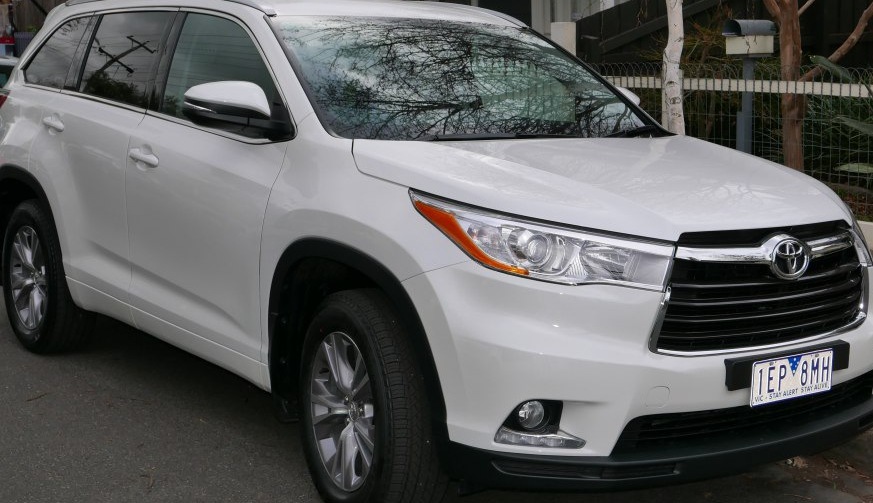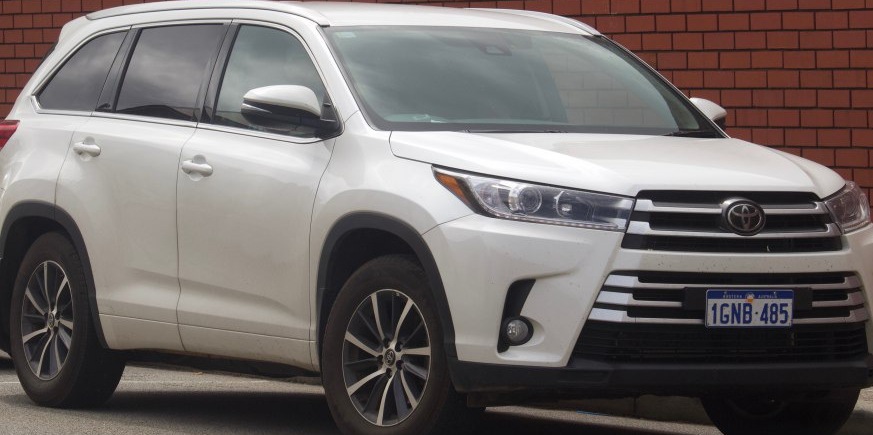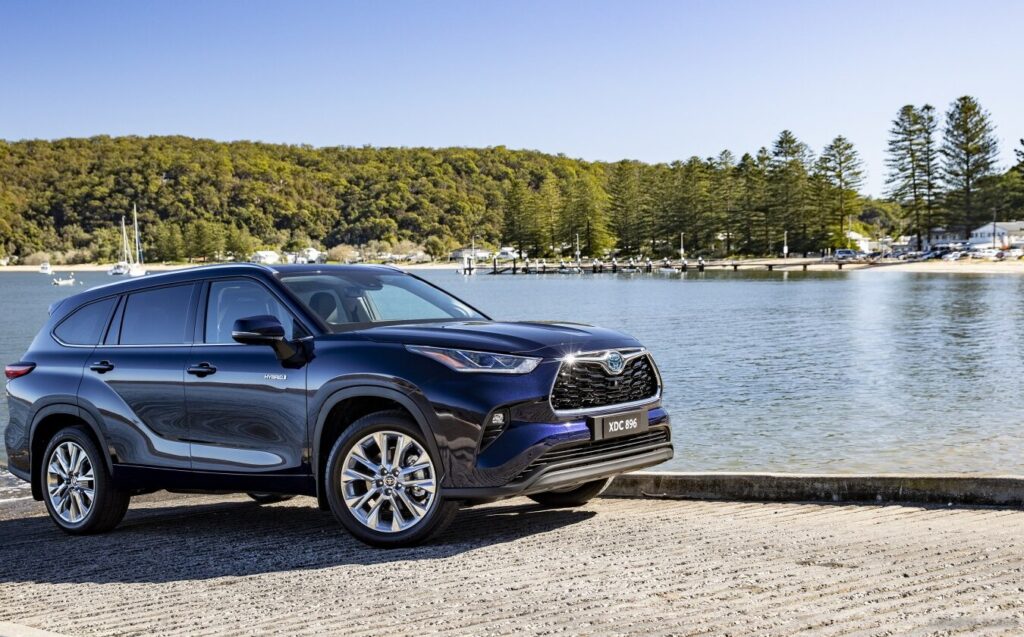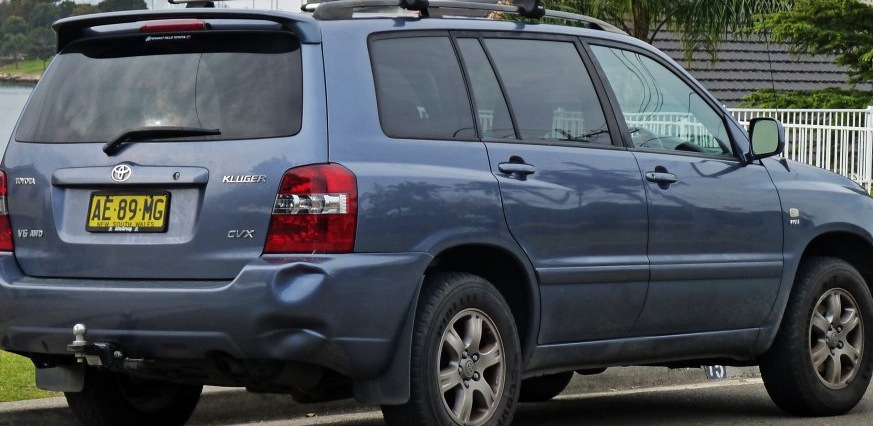
The Toyota Kluger, known as the Highlander in North America, first appeared in 2000 as Toyota’s entry into the mid-size SUV segment. The Kluger I, produced from November 2000 to May 2007, was initially offered with a range of engines, including a 2.4-liter 16-valve four-cylinder producing 160 horsepower. This variant, paired exclusively with a four-speed automatic transmission and all-wheel drive, represented the entry point into the Kluger lineup in many markets, particularly Australia and Asia. It aimed to provide a more affordable and fuel-efficient option compared to the larger V6 models, appealing to families seeking a practical and reliable SUV.
Technical Specifications
| Brand | Toyota |
| Model | Kluger |
| Generation | Kluger I |
| Type (Engine) | 2.4 16V (160 Hp) |
| Start of production | November, 2000 |
| End of production | May, 2007 |
| Powertrain Architecture | Internal Combustion engine |
| Body type | SUV |
| Seats | 5 |
| Doors | 5 |
| Fuel Type | Petrol (Gasoline) |
| Maximum speed | 180 km/h (111.85 mph) |
| Weight-to-power ratio | 10.4 kg/Hp, 96.4 Hp/tonne |
| Weight-to-torque ratio | 7.5 kg/Nm, 133.1 Nm/tonne |
| Power | 160 Hp @ 5600 rpm |
| Power per litre | 67.7 Hp/l |
| Torque | 221 Nm @ 4000 rpm (163 lb.-ft. @ 4000 rpm) |
| Engine layout | Front, Transverse |
| Engine Model/Code | 2AZ-FE |
| Engine displacement | 2364 cm3 (144.26 cu. in.) |
| Number of cylinders | 4 |
| Engine configuration | Inline |
| Cylinder Bore | 88.5 mm (3.48 in.) |
| Piston Stroke | 96 mm (3.78 in.) |
| Compression ratio | 9.6:1 |
| Number of valves per cylinder | 4 |
| Fuel injection system | Multi-port manifold injection |
| Engine aspiration | Naturally aspirated engine |
| Valvetrain | DOHC |
| Engine oil capacity | 4.3 l (4.54 US qt | 3.78 UK qt) |
| Coolant | 6.4 l (6.76 US qt | 5.63 UK qt) |
| Kerb Weight | 1660 kg (3659.67 lbs.) |
| Max. weight | 1935 kg (4265.94 lbs.) |
| Max load | 275 kg (606.27 lbs.) |
| Fuel tank capacity | 72 l (19.02 US gal | 15.84 UK gal) |
| Length | 4685 mm (184.45 in.) |
| Width | 1825 mm (71.85 in.) |
| Height | 1720 mm (67.72 in.) |
| Wheelbase | 2715 mm (106.89 in.) |
| Front track | 1575 mm (62.01 in.) |
| Rear (Back) track | 1555 mm (61.22 in.) |
| Drive wheel | All wheel drive (4×4) |
| Number of gears and type of gearbox | 4 gears, automatic transmission |
| Front suspension | Wishbone |
| Rear suspension | Coil spring |
| Front brakes | Ventilated discs |
| Rear brakes | Disc |
| Assisting systems | ABS (Anti-lock braking system) |
| Steering type | Steering rack and pinion |
| Power steering | Hydraulic Steering |
| Tires size | 215/70 R16 S |
Powertrain & Engine Architecture
The heart of this Kluger variant is the 2AZ-FE engine, a 2.4-liter inline-four cylinder. This engine utilizes a double overhead camshaft (DOHC) valvetrain with four valves per cylinder, contributing to its relatively efficient operation. Fuel delivery is managed by a multi-port fuel injection system. The 2AZ-FE is known for its durability and relatively simple design, making it a cost-effective engine to maintain. The four-speed automatic transmission, while not as sophisticated as modern transmissions with more gears, was a common choice for this class of vehicle at the time. It provided smooth, if not particularly sporty, shifts. The transmission was designed to prioritize fuel economy and comfort over outright performance.
Driving Characteristics
The 160 horsepower and 163 lb.-ft. of torque offered by the 2.4-liter engine, coupled with the all-wheel-drive system and the weight of the Kluger (approximately 3660 lbs), resulted in adequate, but not exhilarating, performance. Acceleration was modest, and overtaking required careful planning. The four-speed automatic transmission, while smooth, lacked the responsiveness of more modern gearboxes. Compared to the V6-powered Kluger models, this variant felt noticeably slower. However, the 2.4L engine offered better fuel economy, making it a more practical choice for daily commuting. The all-wheel-drive system provided enhanced traction in inclement weather, a significant benefit for drivers in regions with snow or rain.
Equipment & Trim Levels
The 2.4-liter Kluger typically came with a fairly basic level of equipment, positioning it as the entry-level model. Standard features generally included air conditioning, power windows and locks, and an AM/FM radio. Higher trim levels, often denoted by different model names or option packages, added features such as alloy wheels, upgraded audio systems, and optional third-row seating (though the 2.4L was often limited to five seats). Interior upholstery was typically cloth, and the dashboard featured a functional, if somewhat plain, design. Optional extras could include a sunroof, cruise control, and upgraded sound systems.
Chassis & Braking
The Kluger I utilized a traditional SUV chassis with a body-on-frame construction. The front suspension employed a wishbone design, while the rear suspension featured coil springs. This setup provided a comfortable ride, but handling was not particularly sharp. The braking system consisted of ventilated discs at the front and solid discs at the rear. Anti-lock brakes (ABS) were standard, enhancing safety. The relatively modest weight of the 2.4-liter model, compared to the V6 variants, helped to mitigate some of the limitations of the braking system.
Market Reception & Comparison
The 2.4-liter Kluger received mixed reviews. Critics generally praised its fuel efficiency and affordability, but noted its lack of power compared to the V6 models. It was seen as a sensible choice for buyers prioritizing practicality and value over performance. Compared to competitors like the Honda CR-V and Toyota RAV4, the Kluger offered more interior space and a more rugged appearance, but lacked the sporty driving dynamics of some rivals. The 2.4L engine’s fuel economy was a key selling point, particularly in markets where gasoline prices were high. Reliability was generally considered to be excellent, consistent with Toyota’s reputation.
Legacy
The 2.4-liter Kluger I has proven to be a relatively reliable vehicle in the used car market. The 2AZ-FE engine is known for its longevity, and with proper maintenance, can reach high mileage. While not a performance standout, the 2.4L Kluger remains a popular choice for budget-conscious buyers seeking a spacious and dependable SUV. Parts availability is generally good, and maintenance costs are reasonable. However, potential buyers should be aware of the age of the vehicle and the potential for wear and tear on components such as the suspension and brakes. The Kluger I, particularly the 2.4L variant, helped establish Toyota as a major player in the mid-size SUV segment, paving the way for the continued success of the Highlander/Kluger in subsequent generations.