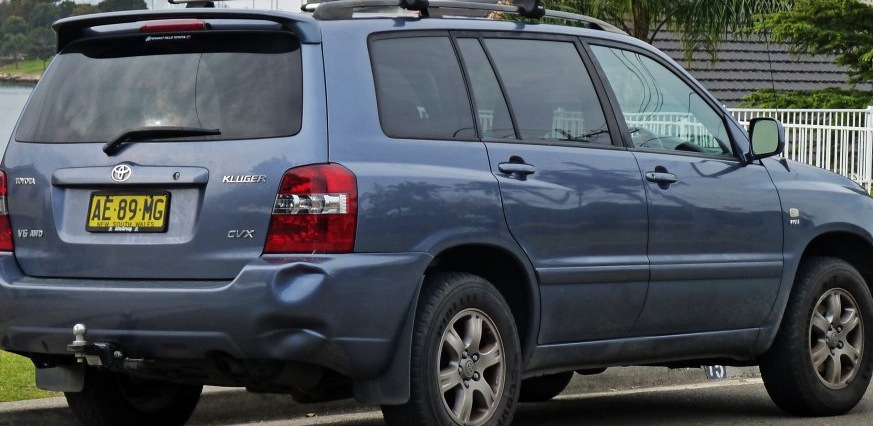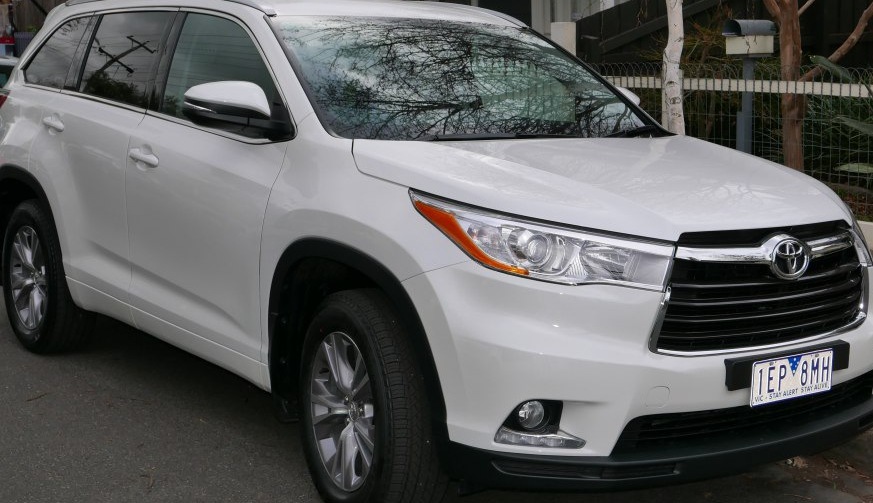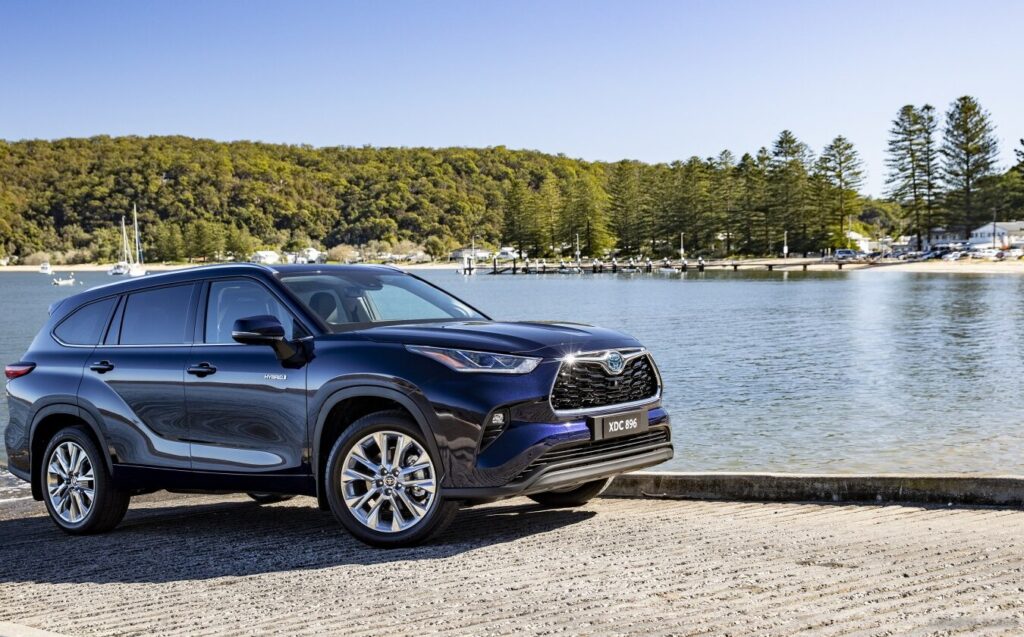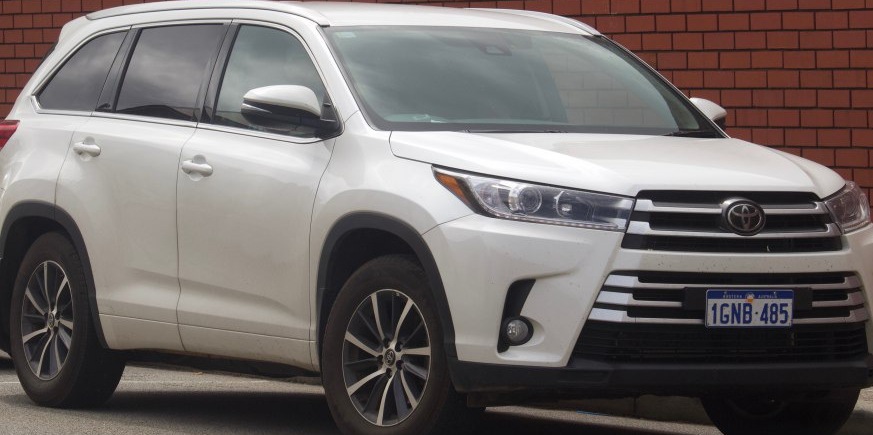
The Toyota Kluger, known as the Highlander in North America, is a mid-size crossover SUV produced by Toyota since 2000. The third generation, launched in 2013 and receiving a significant facelift in 2016, represented a substantial evolution in terms of styling, interior refinement, and technology. This article focuses specifically on the 2016-2019 facelifted Kluger equipped with the 3.5-liter V6 engine paired with an eight-speed automatic transmission. This configuration was positioned as the premium offering within the Kluger lineup, appealing to buyers prioritizing power and a more refined driving experience compared to the four-cylinder options.
Technical Specifications
| Brand | Toyota |
| Model | Kluger |
| Generation | Kluger III (facelift 2016) |
| Type (Engine) | 3.5 V6 (296 Hp) Automatic |
| Start of production | 2016 |
| End of production | 2019 |
| Powertrain Architecture | Internal Combustion engine |
| Body type | SUV |
| Seats | 7 |
| Doors | 5 |
| Fuel consumption (combined) | 9.1-9.3 l/100 km (25.8 – 25.3 US mpg) |
| Fuel Type | Petrol (Gasoline) |
| Weight-to-power ratio | 6.7 kg/Hp, 149.5 Hp/tonne |
| Weight-to-torque ratio | 5.7 kg/Nm, 176.8 Nm/tonne |
| Power | 296 Hp @ 6600 rpm |
| Power per litre | 85.6 Hp/l |
| Torque | 350 Nm @ 4700 rpm (258.15 lb.-ft. @ 4700 rpm) |
| Engine layout | Front, Transverse |
| Engine Model/Code | 2GR-FKS |
| Engine displacement | 3456 cm3 (210.9 cu. in.) |
| Number of cylinders | 6 |
| Engine configuration | V-engine |
| Cylinder Bore | 94 mm (3.7 in.) |
| Piston Stroke | 83 mm (3.27 in.) |
| Compression ratio | 11.8:1 |
| Number of valves per cylinder | 4 |
| Fuel injection system | Multi-port manifold injection |
| Engine aspiration | Naturally aspirated engine |
| Valvetrain | DOHC, D-VVT-i |
| Engine oil capacity | 5.5 l (5.81 US qt | 4.84 UK qt) |
| Coolant | 11.9 l (12.57 US qt | 10.47 UK qt) |
| Kerb Weight | 1980-2025 kg (4365.15 – 4464.36 lbs.) |
| Max. weight | 2690 kg (5930.43 lbs.) |
| Max load | 665-710 kg (1466.07 – 1565.28 lbs.) |
| Trunk (boot) space – minimum | 529 l (18.68 cu. ft.) |
| Fuel tank capacity | 72 l (19.02 US gal | 15.84 UK gal) |
| Permitted trailer load with brakes (12%) | 2000 kg (4409.25 lbs.) |
| Length | 4890 mm (192.52 in.) |
| Width | 1925 mm (75.79 in.) |
| Height | 1730 mm (68.11 in.) |
| Wheelbase | 2790 mm (109.84 in.) |
| Ride height (ground clearance) | 201 mm (7.91 in.) |
| Minimum turning circle | 11.8 m (38.71 ft.) |
| Approach angle | 18.0° |
| Departure angle | 23.1° |
| Drivetrain Architecture | The Internal combustion engine (ICE) drives the front wheels of the vehicle. |
| Drive wheel | Front wheel drive |
| Number of gears and type of gearbox | 8 gears, automatic transmission |
| Front suspension | Independent type McPherson |
| Rear suspension | Double wishbone |
| Front brakes | Ventilated discs |
| Rear brakes | Disc |
| Assisting systems | ABS (Anti-lock braking system) |
| Steering type | Steering rack and pinion |
| Power steering | Electric Steering |
| Wheel rims size | 18; 19 |
INTRODUCTION
The 2016 facelift of the Toyota Kluger III brought with it revised styling, enhanced safety features, and an updated interior. The 3.5-liter V6 engine, coupled with the new eight-speed automatic transmission, was the top-tier powertrain option. This combination aimed to provide a balance of strong performance, reasonable fuel economy, and a comfortable driving experience for families. The Kluger, in this configuration, competed directly with other mid-size SUVs like the Honda Pilot, Nissan Pathfinder, and Ford Explorer in the North American market, and similar vehicles in other regions.
Powertrain & Engine Architecture
The heart of this Kluger variant is the 2GR-FKS 3.5-liter dual VVT-i V6 engine. This engine utilizes a 60-degree V-angle configuration, contributing to a smoother power delivery and reduced vibrations. The 2GR-FKS features Toyota’s D-4S fuel injection system, combining direct injection and port injection for optimal combustion efficiency and power output. Direct injection improves fuel atomization and allows for a higher compression ratio, while port injection helps cool the intake charge and reduces knocking. The engine produces 296 horsepower at 6,600 rpm and 263 lb-ft of torque at 4,700 rpm.
The eight-speed automatic transmission (8AT) replaced the previous six-speed unit, offering closer gear ratios for improved acceleration and fuel efficiency. The 8AT is electronically controlled and features a torque converter lock-up clutch to minimize slippage and enhance fuel economy during cruising. The transmission is designed for smooth and responsive shifting, contributing to a more refined driving experience. While all-wheel drive was available as an option, this specific configuration is often found in front-wheel drive form.
Driving Characteristics
The 3.5L V6 and 8-speed automatic combination delivers brisk acceleration for a mid-size SUV. The Kluger feels noticeably more responsive than versions equipped with the base four-cylinder engine. The eight-speed transmission keeps the engine in its optimal power band, providing ample power for merging onto highways and overtaking maneuvers. The front-wheel drive configuration contributes to slightly better fuel economy, but it does mean that traction in inclement weather may be reduced compared to all-wheel drive models. The steering is light and precise, making the Kluger easy to maneuver in urban environments. However, it doesn’t offer the same level of feedback as some sportier SUVs.
Equipment & Trim Levels
The 3.5L V6 Automatic Kluger typically came with a generous level of standard equipment. This included features like tri-zone automatic climate control, a touchscreen infotainment system with navigation, a rearview camera, and Toyota Safety Sense P – a suite of advanced safety technologies including pre-collision system with pedestrian detection, lane departure alert with steering assist, automatic high beams, and dynamic radar cruise control. Higher trim levels added features such as leather upholstery, heated and ventilated front seats, a panoramic sunroof, and a premium audio system. Optional extras included rear-seat entertainment systems and advanced parking assist features.
Chassis & Braking
The Kluger utilizes a front independent McPherson strut suspension and a rear double-wishbone suspension. This setup provides a comfortable ride quality, absorbing bumps and irregularities in the road surface effectively. Stabilizer bars are fitted to both the front and rear axles to reduce body roll during cornering. Braking duties are handled by ventilated discs at the front and solid discs at the rear. The ABS (Anti-lock Braking System) helps maintain steering control during emergency braking situations. The Kluger’s chassis is designed to prioritize comfort and practicality over sporty handling.
Market Reception & Comparison
The Kluger 3.5L V6 Automatic was generally well-received by automotive critics. It was praised for its smooth and powerful engine, comfortable ride, spacious interior, and comprehensive safety features. Compared to the four-cylinder Kluger, the V6 offered a significant performance upgrade, making it a more enjoyable vehicle to drive. However, the V6 also came with a higher price tag and slightly lower fuel economy. Compared to competitors like the Honda Pilot and Nissan Pathfinder, the Kluger was often seen as offering a more refined interior and a more comfortable ride.
Legacy
The 2GR-FKS engine has proven to be a reliable and durable powerplant. While not without its minor issues (such as potential oil consumption in some early models), it generally enjoys a good reputation for longevity. The eight-speed automatic transmission has also proven to be relatively trouble-free. On the used car market, Klugers equipped with the 3.5L V6 engine tend to command a higher price than those with the four-cylinder engine, reflecting their superior performance and desirability. These models continue to be a popular choice for families seeking a spacious, comfortable, and reliable SUV.