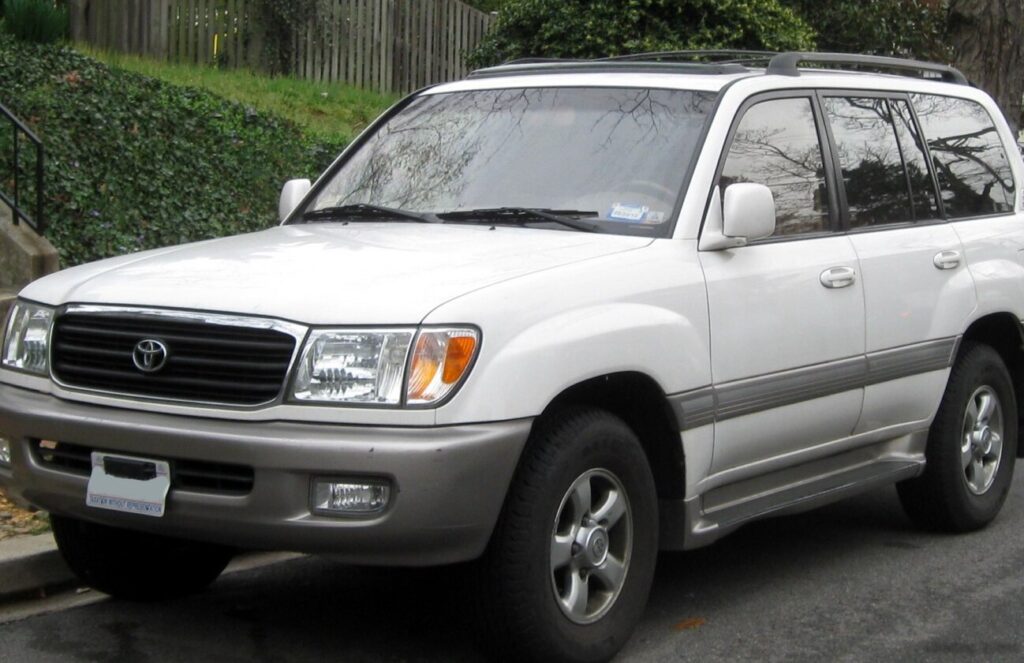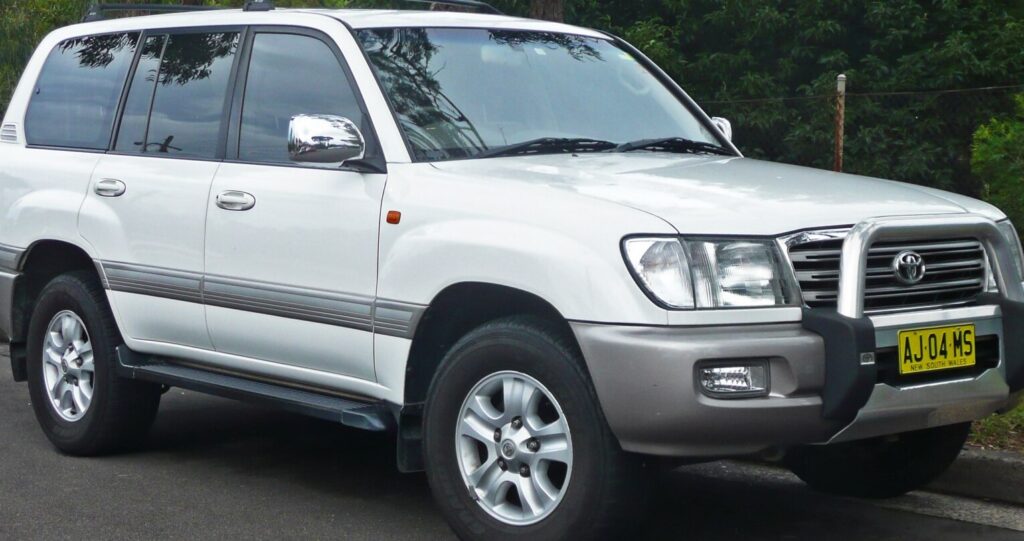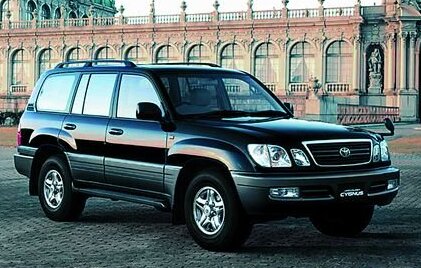
The Toyota Land Cruiser Cygnus 4.7 i V8 (235 Hp) 4WD ECT-i was a luxury-oriented variant of the Land Cruiser, produced between 1998 and 2000. Positioned as a more upscale offering within the J80 series Land Cruiser lineup, the Cygnus was primarily marketed in Japan, offering a blend of off-road capability with a significantly more refined interior and features than the standard Land Cruiser. It represented Toyota’s attempt to cater to a segment desiring both ruggedness and luxury in a full-size SUV. The “ECT-i” designation refers to the electronically controlled transmission with intelligence, a feature of the automatic gearbox.
Technical Specifications
| Brand | Toyota |
| Model | Land Cruiser |
| Generation | Land Cruiser Cygnus |
| Type (Engine) | 4.7 i V8 (235 Hp) 4WD ECT-i |
| Start of production | 1998 |
| End of production | 2000 |
| Powertrain Architecture | Internal Combustion engine |
| Body type | SUV |
| Seats | 8 |
| Doors | 5 |
| Fuel Type | Petrol (Gasoline) |
| Weight-to-power ratio | 10.5 kg/Hp, 95.1 Hp/tonne |
| Weight-to-torque ratio | 5.7 kg/Nm, 175.7 Nm/tonne |
| Power | 235 Hp @ 4800 rpm |
| Power per litre | 50.4 Hp/l |
| Torque | 434 Nm @ 3600 rpm, 320.1 lb.-ft. @ 3600 rpm |
| Engine layout | Front, Longitudinal |
| Engine Model/Code | 2UZ-FE |
| Engine displacement | 4663 cm3, 284.55 cu. in. |
| Number of cylinders | 8 |
| Engine configuration | V-engine |
| Cylinder Bore | 94 mm, 3.7 in. |
| Piston Stroke | 84 mm, 3.31 in. |
| Compression ratio | 9.6:1 |
| Number of valves per cylinder | 4 |
| Fuel injection system | Multi-port manifold injection |
| Engine aspiration | Naturally aspirated engine |
| Valvetrain | DOHC |
| Engine oil capacity | 6.8 l, 7.19 US qt | 5.98 UK qt |
| Coolant | 14.8 l, 15.64 US qt | 13.02 UK qt |
| Kerb Weight | 2470 kg, 5445.42 lbs |
| Max. weight | 2910 kg, 6415.45 lbs |
| Max load | 440 kg, 970.03 lbs |
| Fuel tank capacity | 96 l, 25.36 US gal | 21.12 UK gal |
| Length | 4890 mm, 192.52 in |
| Width | 1940 mm, 76.38 in |
| Height | 1890 mm, 74.41 in |
| Wheelbase | 2850 mm, 112.2 in |
| Front track | 1620 mm, 63.78 in |
| Rear (Back) track | 1615 mm, 63.58 in |
| Ride height (ground clearance) | 220 mm, 8.66 in |
| Minimum turning circle (turning diameter) | 11.8 m, 38.71 ft |
| Drivetrain Architecture | The Internal combustion engine (ICE) drives permanently the four wheels of the vehicle. |
| Drive wheel | All wheel drive (4×4) |
| Number of gears and type of gearbox | 5 gears, automatic transmission ECT-i |
| Front suspension | Coil spring, Double wishbone, Transverse stabilizer |
| Rear suspension | Rigid axle suspension, Coil spring |
| Front brakes | Ventilated discs |
| Rear brakes | Ventilated discs |
| Assisting systems | ABS (Anti-lock braking system) |
| Steering type | Steering rack and pinion |
| Tires size | 275/70 R16 |
| Wheel rims size | 8J x 16 |
Powertrain & Engine Architecture
The heart of the Cygnus 4.7 i was the 2UZ-FE 4.7-liter V8 engine. This engine, a member of Toyota’s UZ engine family, was known for its durability and smooth operation. It featured a cast-iron block and aluminum cylinder heads, utilizing a double overhead camshaft (DOHC) valvetrain with four valves per cylinder. Fuel delivery was handled by a multi-port fuel injection system. The 2UZ-FE produced 235 horsepower at 4,800 rpm and 434 Nm (320.1 lb-ft) of torque at 3,600 rpm. The engine’s longitudinal mounting allowed for a traditional front-engine, rear-wheel-drive layout, with the four-wheel-drive system engaged as needed. The ECT-i automatic transmission, a 5-speed unit, was specifically tuned to provide smooth shifts and optimize fuel efficiency, though it prioritized comfort over outright performance.
Driving Characteristics
The combination of the 4.7L V8 and the 5-speed automatic transmission resulted in a driving experience geared towards comfortable cruising rather than sporty acceleration. While the engine provided ample torque for towing and off-road situations, the automatic transmission’s programming emphasized smooth shifts and fuel economy. Compared to the manual transmission options available on other Land Cruiser trims, the automatic version felt less responsive. The gear ratios were optimized for highway driving, making it a capable long-distance vehicle. However, the added weight of the Cygnus, combined with the automatic transmission, meant that acceleration was noticeably slower than lighter, manually-equipped Land Cruisers. The 4WD system provided excellent traction in various conditions, but the Cygnus was primarily intended for on-road luxury with occasional off-road excursions.
Equipment & Trim Levels
The Land Cruiser Cygnus distinguished itself from other J80 Land Cruisers through its significantly upgraded interior. Standard features included leather upholstery, woodgrain trim, power-adjustable front seats, a premium sound system, and automatic climate control. The Cygnus also featured enhanced sound insulation, contributing to a quieter cabin experience. Optional extras included a navigation system, a rear entertainment system, and upgraded audio components. The overall aesthetic was focused on providing a luxurious and comfortable environment for both the driver and passengers. The Cygnus was typically equipped with alloy wheels and exterior trim details that further emphasized its premium positioning.
Chassis & Braking
The Cygnus utilized a robust body-on-frame construction, typical of the Land Cruiser lineage. The front suspension featured a coil spring, double wishbone setup with a transverse stabilizer bar, while the rear suspension employed a rigid axle with coil springs. This configuration provided a comfortable ride quality while maintaining off-road capability. Braking duties were handled by ventilated disc brakes on all four wheels, coupled with an Anti-lock Braking System (ABS) for enhanced safety. The steering system was a rack and pinion setup, providing precise and responsive steering control. The Cygnus’s suspension was tuned to prioritize ride comfort, resulting in a slightly softer and more forgiving ride compared to more performance-oriented SUVs.
Market Reception & Comparison
The Land Cruiser Cygnus was well-received in the Japanese market as a luxurious and capable SUV. Critics praised its comfortable interior, smooth ride, and reliable powertrain. However, some reviewers noted that the automatic transmission detracted from the overall driving experience, particularly for those seeking a more engaging driving feel. Compared to the standard Land Cruiser, the Cygnus offered a significant upgrade in terms of interior refinement and features, justifying its higher price point. Compared to other luxury SUVs of the era, such as the Lexus LX (which shared many components with the Land Cruiser), the Cygnus offered a more rugged and utilitarian aesthetic. Fuel economy was typical for a large V8 SUV of the time, averaging around 13-16 mpg in mixed driving conditions.
Legacy
The 2UZ-FE engine, found in the Land Cruiser Cygnus, has earned a reputation for exceptional reliability and longevity. Many examples of this engine have surpassed 300,000 miles with proper maintenance. The ECT-i automatic transmission, while not as sporty as some alternatives, has also proven to be durable. Today, the Land Cruiser Cygnus is a sought-after vehicle in the used car market, particularly among enthusiasts who appreciate its combination of luxury, capability, and reliability. Its relatively limited production run and unique features contribute to its collectibility. While maintenance costs can be higher than more common SUVs due to its age and complexity, the Cygnus remains a testament to Toyota’s engineering prowess and commitment to building long-lasting vehicles.