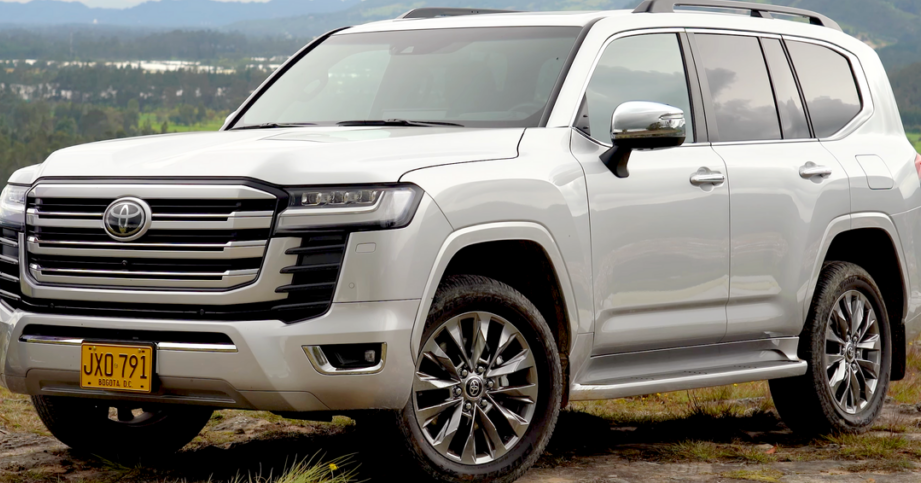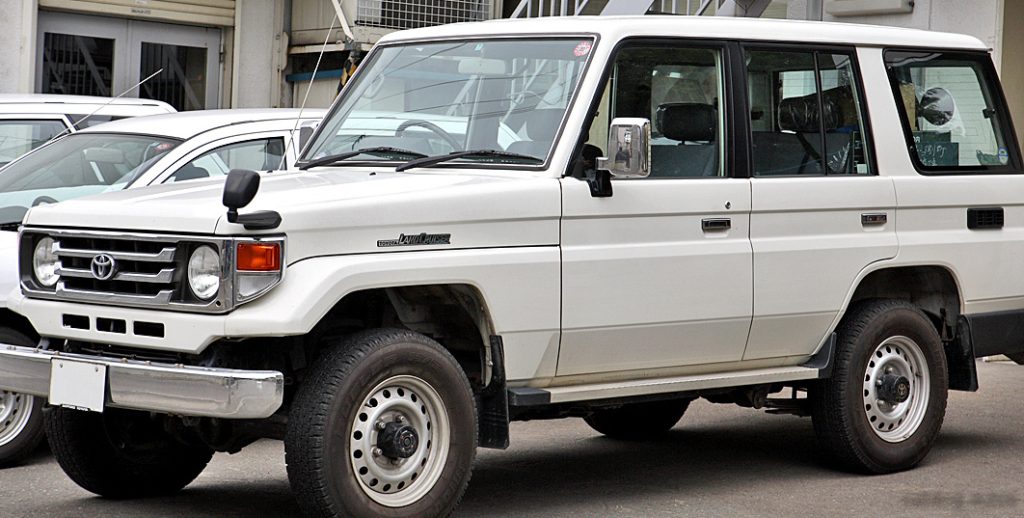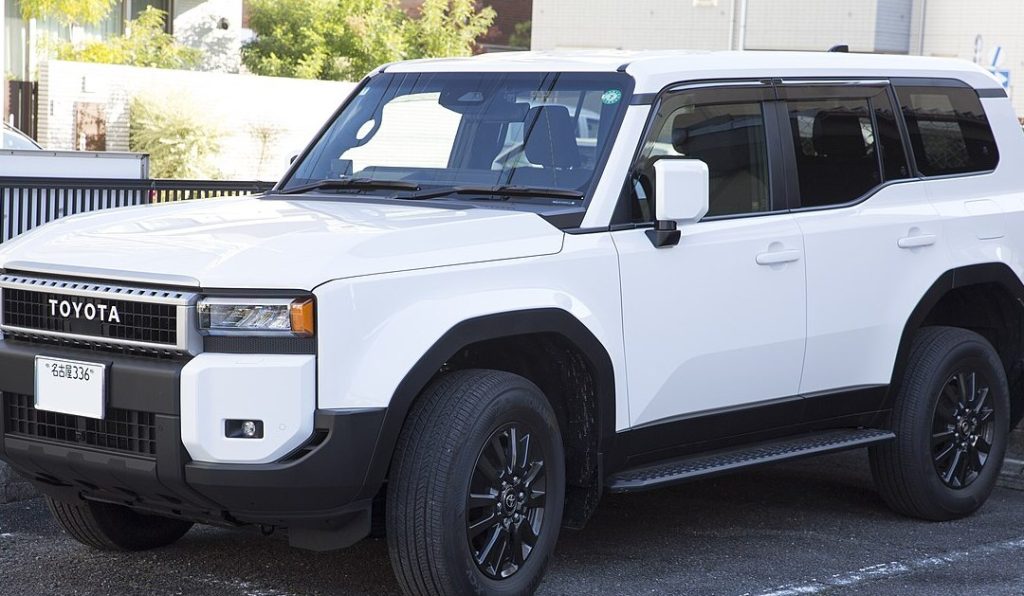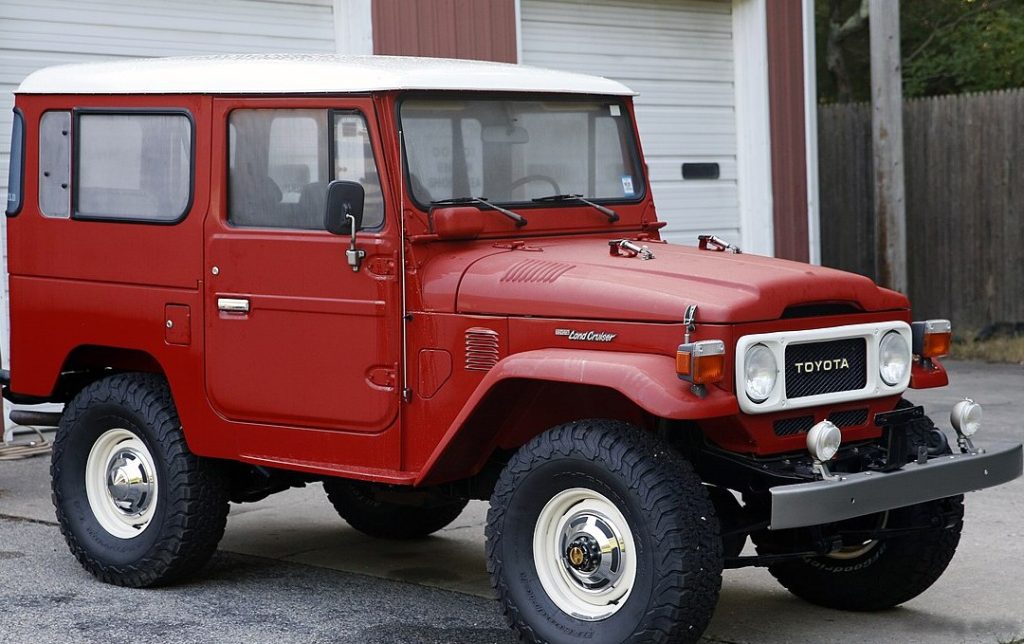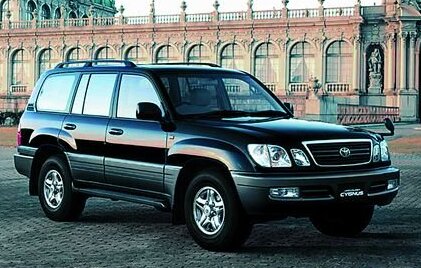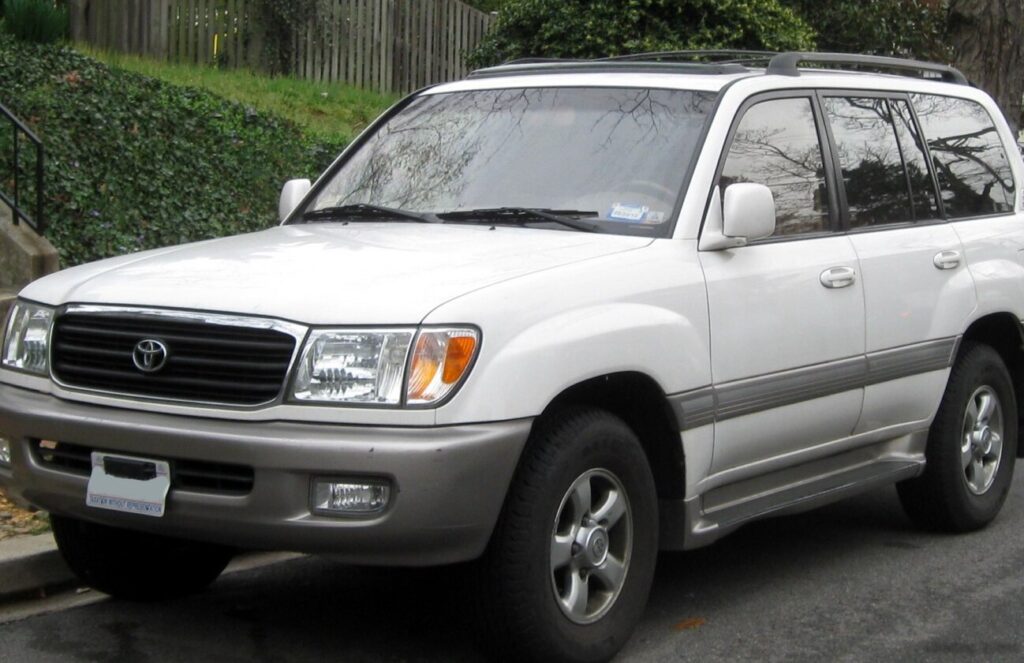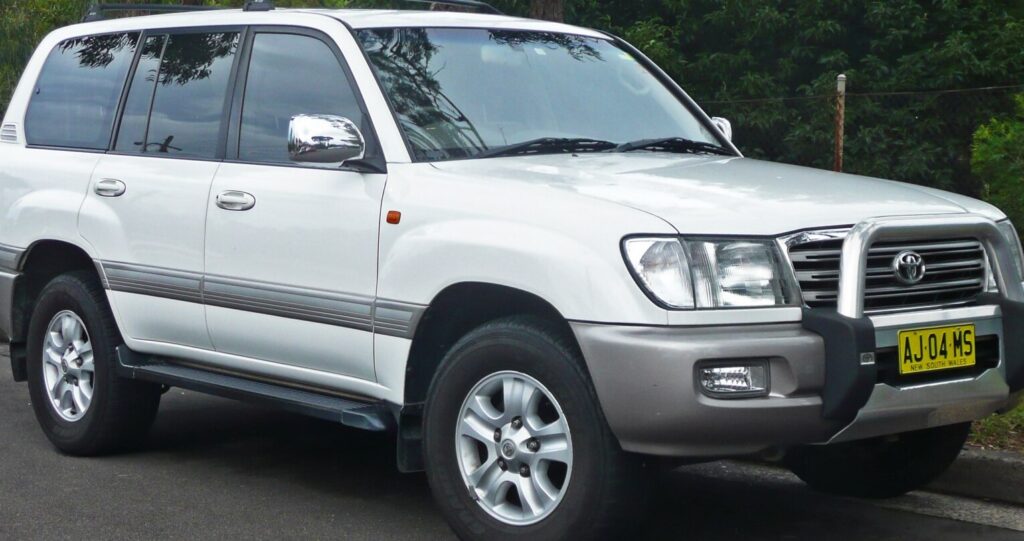
The Toyota Land Cruiser J100, specifically the facelifted model produced from 2002 to 2005 for the US market, represented a significant evolution in Toyota’s long-standing tradition of building capable and luxurious off-road vehicles. This generation, internally designated J100, moved away from the more utilitarian focus of its predecessors, embracing a higher level of refinement and on-road comfort while retaining its legendary off-road prowess. The 4.7-liter V8 engine paired with a four-speed automatic transmission was a popular configuration, positioned as a mid-range offering within the J100 lineup, appealing to buyers seeking a balance of power, luxury, and towing capacity. It sat above the base inline-six models and below the more powerful 5.7-liter V8 variants.
Technical Specifications
| Brand | Toyota |
| Model | Land Cruiser |
| Generation | Land Cruiser (J100, facelift 2002) |
| Type (Engine) | 4.7 V8 32V (235 Hp) 4WD Automatic (USA) |
| Start of production | 2002 |
| End of production | 2005 |
| Powertrain Architecture | Internal Combustion engine |
| Body type | SUV |
| Seats | 8 |
| Doors | 5 |
| Fuel consumption (urban) | 18.1 l/100 km (13 US mpg, 15.6 UK mpg, 5.5 km/l) |
| Fuel consumption (extra urban) | 14.7 l/100 km (16 US mpg, 19.2 UK mpg, 6.8 km/l) |
| Fuel consumption (combined) | 16.6 l/100 km (14.2 US mpg, 17 UK mpg, 6 km/l) |
| Fuel Type | Petrol (Gasoline) |
| Acceleration 0 – 100 km/h | 11.2 sec |
| Acceleration 0 – 62 mph | 11.2 sec |
| Acceleration 0 – 60 mph | 10.6 sec |
| Maximum speed | 175 km/h (108.74 mph) |
| Weight-to-power ratio | 10.4 kg/Hp, 96.1 Hp/tonne |
| Weight-to-torque ratio | 5.6 kg/Nm, 177.5 Nm/tonne |
| Power | 235 Hp @ 4800 rpm |
| Power per litre | 50.4 Hp/l |
| Torque | 434 Nm @ 3400 rpm (320.1 lb.-ft. @ 3400 rpm) |
| Engine layout | Front, Longitudinal |
| Engine Model/Code | 2UZ-FE |
| Engine displacement | 4664 cm3 (284.61 cu. in.) |
| Number of cylinders | 8 |
| Engine configuration | V-engine |
| Cylinder Bore | 94 mm (3.7 in.) |
| Piston Stroke | 84 mm (3.31 in.) |
| Compression ratio | 9.6:1 |
| Number of valves per cylinder | 4 |
| Fuel injection system | Multi-port manifold injection |
| Engine aspiration | Naturally aspirated engine |
| Valvetrain | DOHC |
| Engine oil capacity | 6.8 l (7.19 US qt | 5.98 UK qt) |
| Coolant | 14.8 l (15.64 US qt | 13.02 UK qt) |
| Kerb Weight | 2445 kg (5390.3 lbs.) |
| Max. weight | 3112 kg (6860.79 lbs.) |
| Max load | 667 kg (1470.48 lbs.) |
| Trunk (boot) space – minimum | 589 l (20.8 cu. ft.) |
| Trunk (boot) space – maximum | 2571 l (90.79 cu. ft.) |
| Fuel tank capacity | 96 l (25.36 US gal | 21.12 UK gal) |
| Length | 4890 mm (192.52 in.) |
| Width | 1940 mm (76.38 in.) |
| Height | 1859 mm (73.19 in.) |
| Wheelbase | 2850 mm (112.2 in.) |
| Front track | 1620 mm (63.78 in.) |
| Rear (Back) track | 1615 mm (63.58 in.) |
| Minimum turning circle | 12.1 m (39.7 ft.) |
| Drivetrain Architecture | All wheel drive (4×4) |
| Number of gears | 5 |
| Type of gearbox | automatic transmission |
| Front suspension | Double wishbone, Trailing arm |
| Rear suspension | Rigid axle suspension, Coil spring |
| Front brakes | Ventilated discs |
| Rear brakes | Ventilated discs |
| Assisting systems | ABS (Anti-lock braking system) |
| Steering type | Steering rack and pinion |
| Power steering | Hydraulic Steering |
| Tires size | 275/65 R17 |
Powertrain & Engine Architecture
The heart of this Land Cruiser variant is the 2UZ-FE 4.7-liter V8 engine. This engine, a member of Toyota’s UZ engine family, is renowned for its durability and smooth operation. It features a cast-iron block and aluminum cylinder heads, incorporating dual overhead camshafts (DOHC) and four valves per cylinder. The 2UZ-FE utilizes a multi-port fuel injection system, delivering fuel directly to each intake port for optimized combustion. The engine produces 235 horsepower at 4,800 rpm and 320 lb-ft of torque at 3,400 rpm. The four-speed automatic transmission (A750F) was chosen for its robustness and ability to handle the engine’s torque output, making it suitable for both on-road cruising and off-road conditions. While not the most modern transmission by today’s standards, it was considered reliable and provided adequate performance for the vehicle’s intended use.
Driving Characteristics
The 4.7-liter V8 and four-speed automatic combination delivered a comfortable and capable driving experience. Acceleration, while not sporty, was adequate for highway merging and passing maneuvers. The automatic transmission’s gear ratios were tuned for a balance of fuel efficiency and towing capacity. Compared to the manual transmission options, the automatic offered greater convenience, particularly in urban driving. However, it did result in a slight decrease in fuel economy and a less engaging driving experience. Against the 5.7-liter V8 models, this variant offered a noticeable difference in power and acceleration, but at a lower price point. The 4.7L provided a more manageable and economical option for those who didn’t require the ultimate in towing or off-road performance.
Equipment & Trim Levels
The 2002-2005 Land Cruiser J100 with the 4.7 V8 and automatic transmission typically came well-equipped, reflecting its positioning as a luxury SUV. Standard features included leather upholstery, power-adjustable front seats, a premium sound system, automatic climate control, and woodgrain interior trim. Optional extras included a navigation system, rear seat entertainment, and a sunroof. The trim level often dictated the availability of certain features, with higher trims offering more luxurious appointments and advanced technology.
Chassis & Braking
The J100 Land Cruiser featured a robust body-on-frame construction, providing excellent durability and off-road capability. The suspension system consisted of double wishbones and a trailing arm setup at the front, and a rigid axle with coil springs at the rear. This configuration provided a comfortable ride on paved roads while maintaining ample articulation for off-road excursions. Braking duties were handled by ventilated disc brakes on all four wheels, coupled with an Anti-lock Braking System (ABS) for enhanced safety. The steering system utilized a hydraulic rack-and-pinion setup, offering precise and responsive steering control.
Market Reception & Comparison
The Land Cruiser J100, including the 4.7 V8 automatic variant, was generally well-received by critics and consumers alike. It was praised for its luxurious interior, comfortable ride, and legendary reliability. Fuel economy, however, was a common criticism, with the 4.7-liter V8 returning relatively low MPG figures compared to some of its competitors. Compared to other trims in the lineup, the 4.7-liter V8 offered a compelling balance of performance, luxury, and price. It appealed to buyers who wanted a capable and comfortable SUV without the higher cost and fuel consumption of the 5.7-liter models.
Legacy
The 2UZ-FE engine, in particular, has earned a reputation for exceptional longevity and reliability. Many Land Cruisers equipped with this engine have surpassed 200,000 or even 300,000 miles with proper maintenance. In the used car market, the 2002-2005 Land Cruiser J100 with the 4.7 V8 automatic remains a desirable vehicle, commanding relatively high prices due to its reputation for reliability and capability. While newer SUVs offer more advanced technology and features, the J100 continues to be a popular choice for those seeking a durable, comfortable, and capable off-road vehicle.