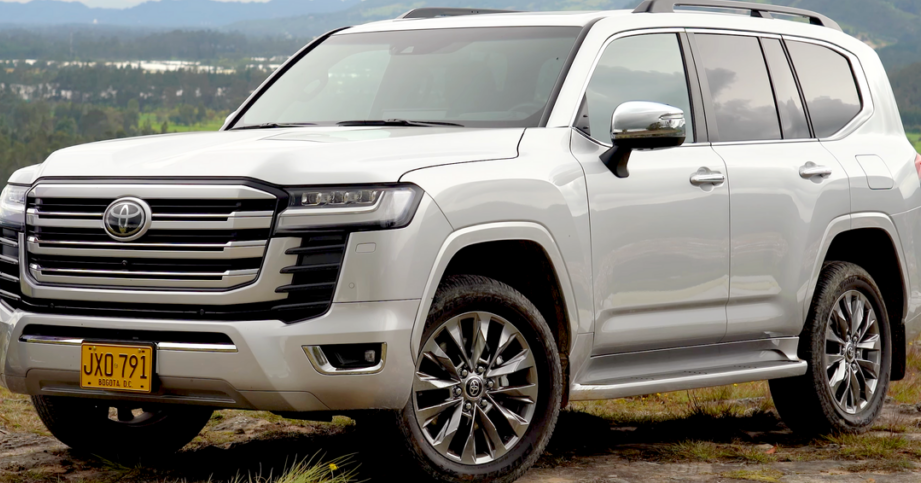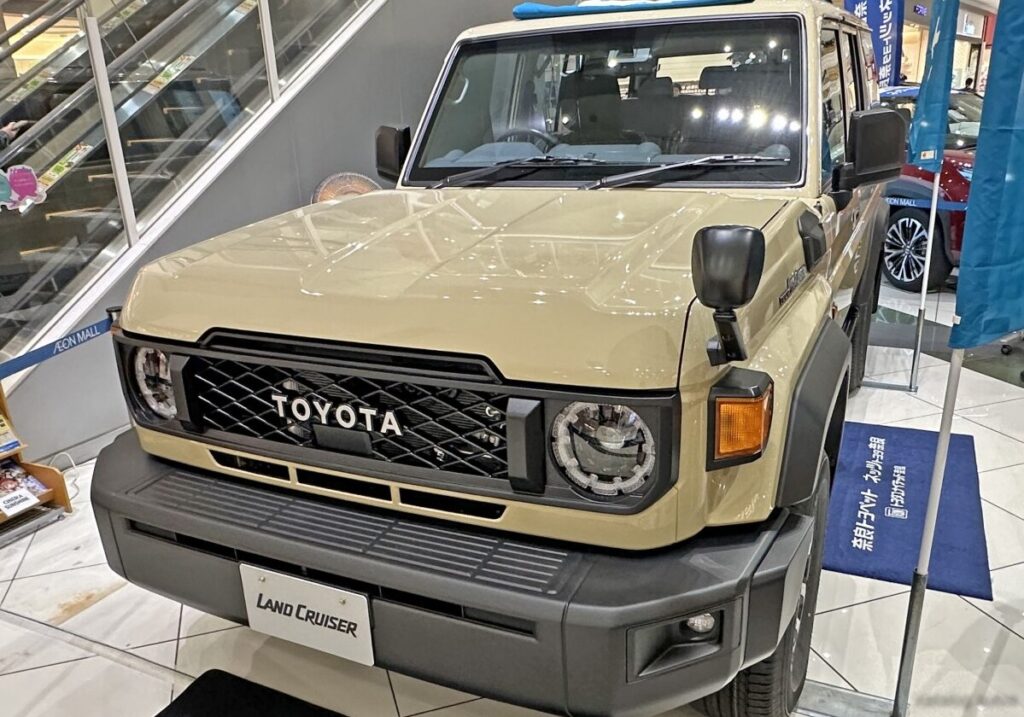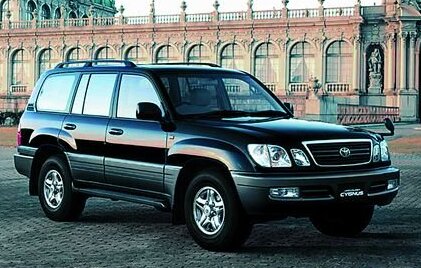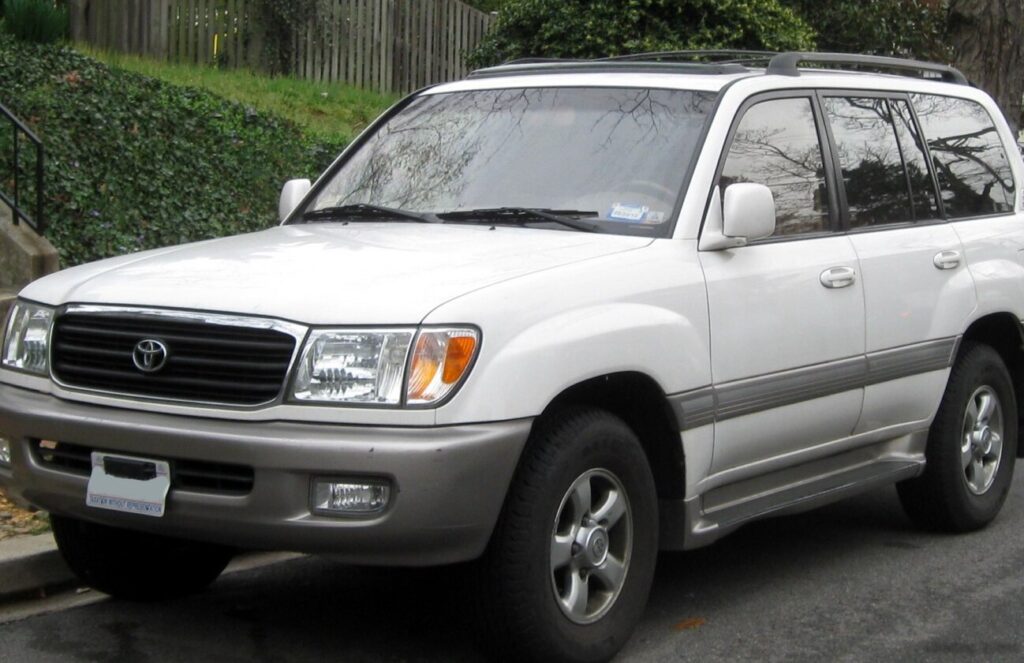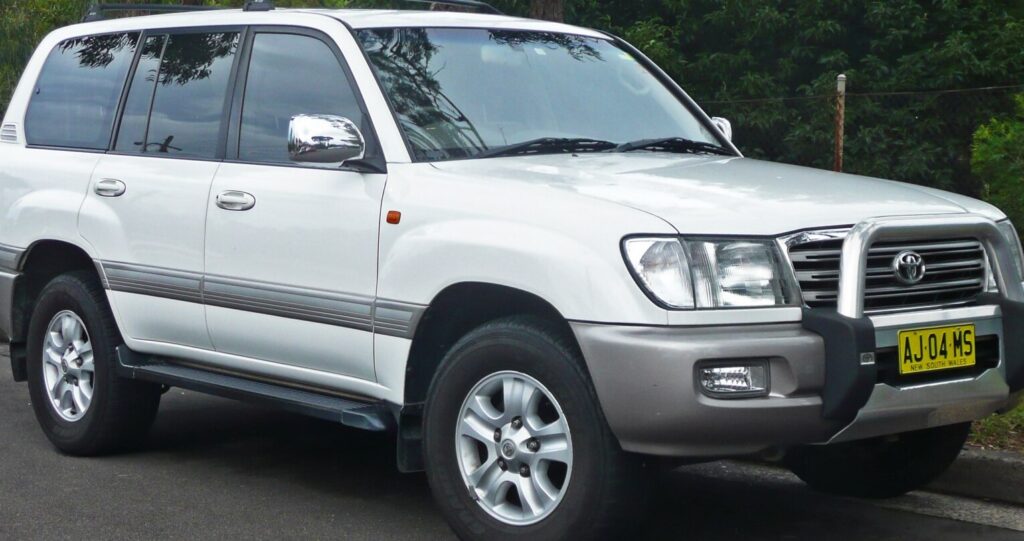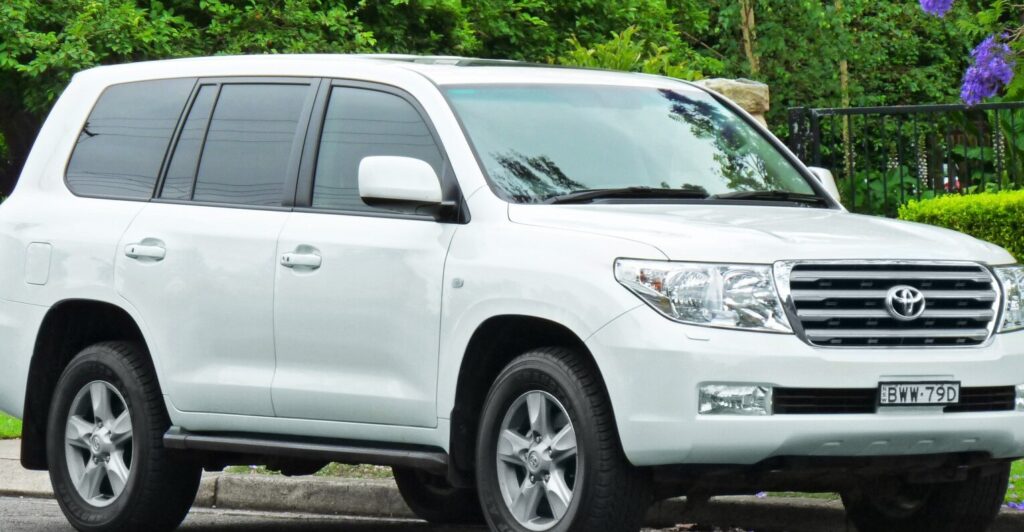
The Toyota Land Cruiser J200, produced from 2007 to 2012 in this specific configuration, represents a significant evolution in Toyota’s long-standing tradition of building capable and luxurious off-road vehicles. This variant, equipped with a 4.5-liter V8 diesel engine producing 235 horsepower and paired with a six-speed automatic transmission, was primarily aimed at markets outside of North America, where diesel engines held a stronger preference. Positioned as a mid-range offering within the J200 lineup, it balanced performance, fuel efficiency, and a comfortable driving experience, appealing to buyers seeking a versatile SUV for both on-road touring and moderate off-road adventures. The J200 series itself was built on the robust 1HX0 platform, known for its durability and refinement.
Technical Specifications
| Brand | Toyota |
| Model | Land Cruiser |
| Generation | Land Cruiser (J200) |
| Type (Engine) | 4.5D V8 (235 Hp) Automatic |
| Start of production | 2007 |
| End of production | 2012 |
| Powertrain Architecture | Internal Combustion engine |
| Body type | SUV |
| Seats | 7-8 |
| Doors | 5 |
| Fuel consumption (urban) | 12 l/100 km (19.6 US mpg, 23.5 UK mpg, 8.3 km/l) |
| Fuel consumption (extra urban) | 9.1 l/100 km (25.8 US mpg, 31 UK mpg, 11 km/l) |
| Fuel consumption (combined) | 10.2 l/100 km (23.1 US mpg, 27.7 UK mpg, 9.8 km/l) |
| Fuel Type | Diesel |
| Acceleration 0 – 100 km/h | 8.6 sec |
| Acceleration 0 – 62 mph | 8.6 sec |
| Acceleration 0 – 60 mph | 8.2 sec |
| Maximum speed | 210 km/h (130.49 mph) |
| Emission standard | Euro 4 |
| Weight-to-power ratio | 11.1 kg/Hp, 89.7 Hp/tonne |
| Weight-to-torque ratio | 4.3 kg/Nm, 234.7 Nm/tonne |
| Power | 235 Hp @ 3200 rpm |
| Torque | 615 Nm @ 1800-2200 rpm (453.6 lb.-ft. @ 1800-2200 rpm) |
| Engine layout | Front, Longitudinal |
| Engine Model/Code | 1VD-FTV |
| Engine displacement | 4461 cm3 (272.23 cu. in.) |
| Number of cylinders | 8 |
| Engine configuration | V-engine |
| Cylinder Bore | 86 mm (3.39 in.) |
| Piston Stroke | 96 mm (3.78 in.) |
| Compression ratio | 16.8:1 |
| Number of valves per cylinder | 4 |
| Fuel injection system | Diesel Commonrail |
| Engine aspiration | Twin-Turbo, Intercooler |
| Valvetrain | DOHC |
| Engine oil capacity | 9.2 l (9.72 US qt | 8.09 UK qt) |
| Coolant | 14.8 l (15.64 US qt | 13.02 UK qt) |
| Kerb Weight | 2620-2665 kg (5776.11 – 5875.32 lbs.) |
| Max. weight | 3300-3350 kg (7275.25 – 7385.49 lbs.) |
| Max load | 680-685 kg (1499.14 – 1510.17 lbs.) |
| Fuel tank capacity | 93 l (24.57 US gal | 20.46 UK gal) |
| Permitted trailer load with brakes (12%) | 3500 kg (7716.18 lbs.) |
| Permitted trailer load without brakes | 750 kg (1653.47 lbs.) |
| Length | 4950 mm (194.88 in.) |
| Width | 1970 mm (77.56 in.) |
| Height | 1905 mm (75 in.) |
| Wheelbase | 2850 mm (112.2 in.) |
| Front track | 1640 mm (64.57 in.) |
| Rear track | 1635 mm (64.37 in.) |
| Front overhang | 930 mm (36.61 in.) |
| Rear overhang | 1170 mm (46.06 in.) |
| Ride height (ground clearance) | 225 mm (8.86 in.) |
| Drag coefficient (Cd) | 0.35 |
| Minimum turning circle | 11.8 m (38.71 ft.) |
| Approach angle | 30° |
| Departure angle | 21° |
| Ramp-over angle | 20° |
| Wading depth | 700 mm (27.56 in.) |
| Drivetrain Architecture | All wheel drive (4×4). ICE drives permanently the four wheels. |
| Number of gears | 6 |
| Gearbox type | Automatic transmission |
| Front suspension | Coil spring, Double wishbone, Transverse stabilizer |
| Rear suspension | Rigid axle suspension, Transverse stabilizer, Coil spring |
| Front brakes | Ventilated discs |
| Rear brakes | Ventilated discs |
| Assisting systems | ABS (Anti-lock braking system) |
| Steering type | Steering rack and pinion |
| Power steering | Hydraulic |
| Tires size | 285/65 R17; 285/60 R18 |
| Wheel rims size | 8J x 17; 8J x 18 |
Powertrain & Engine Architecture
The heart of this Land Cruiser variant is the 1VD-FTV, a 4.5-liter V8 diesel engine. This engine utilizes a common rail direct injection system, delivering fuel at extremely high pressure for improved combustion efficiency and reduced emissions. The twin-turbocharger setup, featuring a conventional turbocharger and a smaller, high-response turbo, minimizes turbo lag and provides a broad torque curve. The engine also incorporates an intercooler to further enhance performance by cooling the intake air. The DOHC (Double Overhead Camshaft) valvetrain, with four valves per cylinder, optimizes airflow for increased power output. Paired with this engine is a six-speed automatic transmission, designed to handle the engine’s substantial torque and provide smooth, comfortable shifting. This transmission was known for its reliability, though some owners reported occasional slow downshifts.
Driving Characteristics
The 4.5D V8 automatic Land Cruiser offers a compelling blend of power and refinement. While not as overtly sporty as some of its gasoline-powered counterparts, the 615 Nm (453.6 lb-ft) of torque available from 1800-2200 rpm provides ample pulling power for towing, off-roading, and effortless highway cruising. The automatic transmission, while smooth, is geared more towards comfort and efficiency than outright acceleration. Compared to the more powerful 4.7-liter gasoline V8, this diesel variant offers superior fuel economy and a more relaxed driving experience. Against the 3.0-liter diesel variants, the V8 provides a noticeable increase in power and refinement, albeit at a higher price point. The gear ratios are optimized for maintaining low engine speeds at highway speeds, contributing to a quiet and comfortable ride.
Equipment & Trim Levels
The 4.5D V8 automatic typically came well-equipped, reflecting the Land Cruiser’s positioning as a luxury SUV. Standard features generally included leather upholstery, automatic climate control, a premium audio system, power-adjustable front seats, and a sunroof. Optional extras often included a navigation system, rear-seat entertainment, and upgraded interior trim materials. The trim level could vary depending on the specific market, but generally offered a balance of comfort and convenience features. The interior design focused on durability and practicality, with easy-to-clean surfaces and ample storage space.
Chassis & Braking
The J200 Land Cruiser features a robust body-on-frame construction, providing excellent durability and off-road capability. The suspension system consists of a double wishbone setup at the front and a rigid axle with coil springs at the rear. Both axles are equipped with a transverse stabilizer bar to reduce body roll during cornering. Braking duties are handled by ventilated disc brakes on all four wheels, providing ample stopping power. The ABS (Anti-lock Braking System) enhances safety by preventing wheel lockup during hard braking. The steering system utilizes a hydraulic power steering rack and pinion for precise and responsive handling.
Market Reception & Comparison
The 4.5D V8 automatic Land Cruiser was generally well-received by automotive critics, particularly in markets where diesel engines were popular. It was praised for its comfortable ride, spacious interior, and strong towing capacity. Fuel economy was a significant advantage over the gasoline-powered models, making it an attractive option for long-distance travelers. Compared to other large SUVs, the Land Cruiser stood out for its exceptional off-road capability and legendary reliability. However, some critics noted that the automatic transmission could feel sluggish at times, and the vehicle’s size could make it challenging to maneuver in tight urban environments.
Legacy
The 1VD-FTV engine, when properly maintained, has proven to be remarkably durable and reliable. The six-speed automatic transmission has also demonstrated good longevity. In the used car market, the J200 Land Cruiser 4.5D V8 automatic remains a sought-after vehicle, particularly among those seeking a capable and luxurious SUV with a proven track record. Regular maintenance, including timely oil changes and filter replacements, is crucial for ensuring the long-term health of this powertrain. While parts availability can vary depending on location, the Land Cruiser’s widespread popularity ensures that replacement components are generally accessible. The J200 continues to be a testament to Toyota’s commitment to building vehicles that stand the test of time.