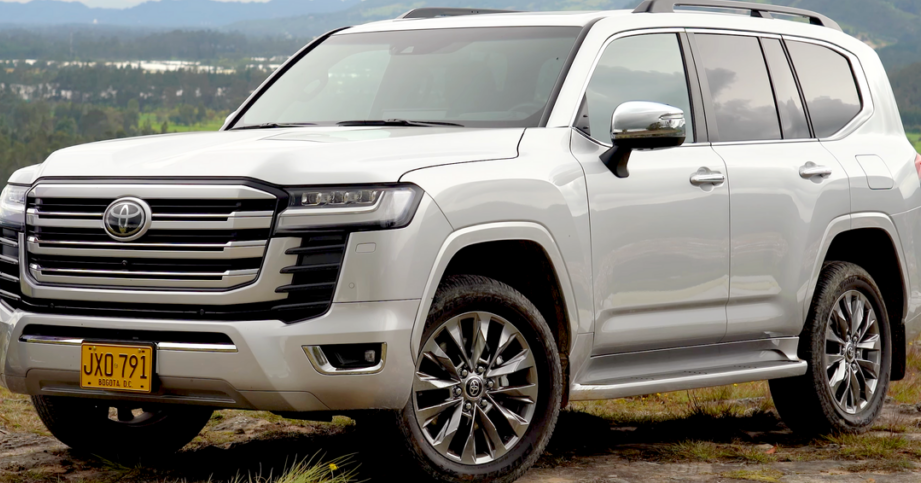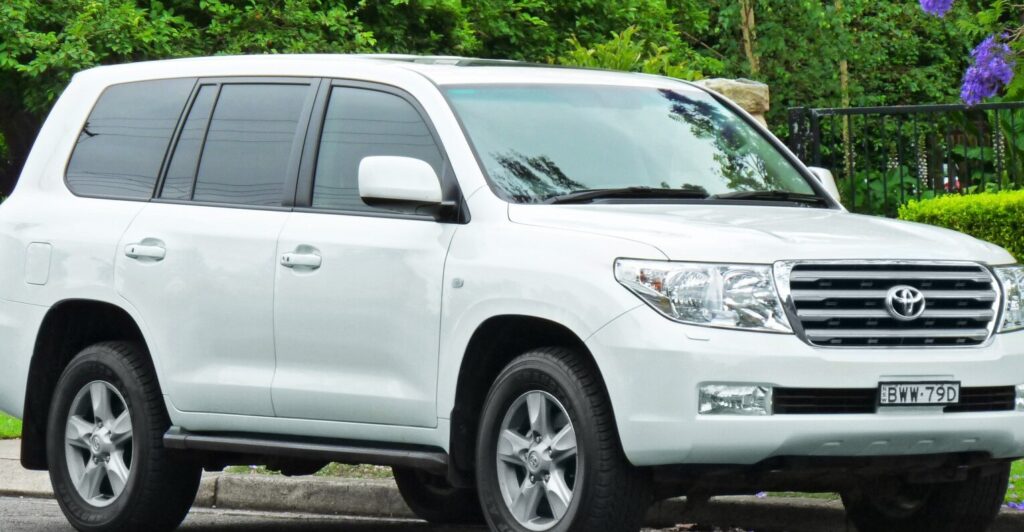
The Toyota Land Cruiser J200, specifically the 5.7-liter V8 4×4 variant with the ECT-i automatic transmission, represents a significant iteration in the long and storied history of Toyota’s iconic off-road vehicle. Produced from 2007 to 2012 in this configuration, this model aimed to blend luxurious comfort with legendary Land Cruiser capability, primarily targeting markets outside of North America where larger, body-on-frame SUVs remained highly popular. It sat at the top of the J200 lineup, offering the most powerful engine option and a premium experience focused on both on-road refinement and serious off-road prowess. This version was never officially sold in the United States during these years, making it a sought-after import for enthusiasts.
Technical Specifications
| Brand | Toyota |
| Model | Land Cruiser |
| Generation | Land Cruiser (J200) |
| Type (Engine) | 5.7 V8 (381 Hp) 4×4 ECT-i |
| Start of production | 2007 |
| End of production | 2012 |
| Powertrain Architecture | Internal Combustion engine |
| Body type | SUV |
| Seats | 8 |
| Doors | 5 |
| Fuel consumption (urban) | 18.1 l/100 km (13 US mpg) |
| Fuel consumption (extra urban) | 13.1 l/100 km (18 US mpg) |
| Fuel Type | Petrol (Gasoline) |
| Emission standard | ULEV-II |
| Weight-to-power ratio | 6.9 kg/Hp |
| Weight-to-torque ratio | 4.8 kg/Nm |
| Power | 381 Hp @ 5600 rpm |
| Torque | 544 Nm @ 3600 rpm (401.23 lb.-ft. @ 3600 rpm) |
| Engine layout | Front, Longitudinal |
| Engine Model/Code | 3UR-FE |
| Engine displacement | 5663 cm3 (345.58 cu. in.) |
| Number of cylinders | 8 |
| Engine configuration | V-engine |
| Cylinder Bore | 94 mm (3.7 in.) |
| Piston Stroke | 102 mm (4.02 in.) |
| Number of valves per cylinder | 4 |
| Fuel injection system | Multi-port manifold injection |
| Engine aspiration | Naturally aspirated engine |
| Valvetrain | DOHC, VVT-i |
| Engine oil capacity | 7 l (7.4 US qt | 6.16 UK qt) |
| Coolant capacity | 15.4 l (16.27 US qt | 13.55 UK qt) |
| Kerb Weight | 2615 kg (5765.09 lbs.) |
| Max. weight | 3300 kg (7275.25 lbs.) |
| Max load | 685 kg (1510.17 lbs.) |
| Trunk (boot) space – minimum | 456 l (16.1 cu. ft.) |
| Trunk (boot) space – maximum | 2313 l (81.68 cu. ft.) |
| Fuel tank capacity | 93 l (24.57 US gal | 20.46 UK gal) |
| Permitted trailer load with brakes (12%) | 3719 kg (8198.99 lbs.) |
| Length | 4950 mm (194.88 in.) |
| Width | 1971 mm (77.6 in.) |
| Height | 1880 mm (74.02 in.) |
| Wheelbase | 2850 mm (112.2 in.) |
| Front track | 1641 mm (64.61 in.) |
| Rear track | 1636 mm (64.41 in.) |
| Ride height (ground clearance) | 226 mm (8.9 in.) |
| Minimum turning circle | 11.8 m (38.71 ft.) |
| Approach angle | 30° |
| Departure angle | 20° |
| Ramp-over angle | 21° |
| Drivetrain Architecture | All wheel drive (4×4) |
| Number of gears | 6 |
| Type of gearbox | Automatic transmission ECT-i |
| Front suspension | Coil spring, Double wishbone, Transverse stabilizer |
| Rear suspension | Rigid axle suspension, Transverse stabilizer, Coil spring |
| Front brakes | Ventilated discs |
| Rear brakes | Ventilated discs |
| Assisting systems | ABS (Anti-lock braking system) |
| Steering type | Steering rack and pinion |
| Power steering | Hydraulic Steering |
| Tires size | 285/60 R18 |
| Wheel rims size | 8J x 18 |
Powertrain & Engine Architecture
The heart of this Land Cruiser variant is the 3UR-FE 5.7-liter V8 engine. This naturally aspirated powerplant is a robust and relatively simple design, prioritizing reliability and low-end torque over outright horsepower figures. It features a cast-iron block and aluminum cylinder heads, incorporating Toyota’s VVT-i (Variable Valve Timing-intelligent) system for optimized performance and efficiency across the rev range. The multi-port fuel injection system delivers fuel directly to each cylinder, contributing to smooth operation. The 3UR-FE produces 381 horsepower at 5,600 rpm and a substantial 401 lb-ft of torque at 3,600 rpm. This torque output is crucial for off-road driving and towing. Paired with the engine is Toyota’s ECT-i (Electronically Controlled Transmission – intelligent) 6-speed automatic transmission. This transmission is designed for smooth shifts and adapts to driving conditions, offering both a ‘Drive’ and manual shift mode. The transmission’s gear ratios are tuned for a balance of acceleration and fuel economy, though the Land Cruiser’s substantial weight inevitably impacts the latter.
Driving Characteristics
The 5.7L V8 and automatic transmission combination delivers a driving experience that prioritizes effortless power and comfort. While not a sports car, the Land Cruiser accelerates briskly, and the automatic transmission provides smooth, almost imperceptible shifts. Compared to the smaller 4.0L inline-six engine offered in some markets, the V8 provides significantly more power and torque, making highway merging and overtaking much easier. Compared to a manual transmission equipped J200, the automatic offers less driver engagement but greater convenience, particularly in urban environments or challenging off-road situations. The ECT-i transmission’s programming is geared towards relaxed cruising, with relatively conservative shift points. The Land Cruiser’s substantial weight is always noticeable, but the V8’s torque helps to mitigate this, providing strong pulling power even at lower speeds.
Equipment & Trim Levels
The 5.7L V8 variant typically represented the highest trim level available in many markets. Standard features included leather upholstery, woodgrain interior trim, a premium audio system, automatic climate control, power-adjustable front seats, and a sunroof. Depending on the region, features like navigation, rear-seat entertainment systems, and advanced safety technologies (such as adaptive cruise control and lane departure warning) were often included or available as options. The interior was designed for comfort and luxury, with ample space for passengers and cargo. Exterior features typically included alloy wheels, chrome accents, and fog lights.
Chassis & Braking
The J200 Land Cruiser utilizes a traditional body-on-frame construction, providing exceptional durability and off-road capability. The suspension consists of a double-wishbone setup at the front and a rigid axle with coil springs at the rear. Both axles are equipped with transverse stabilizers to reduce body roll. Braking duties are handled by ventilated disc brakes on all four wheels, providing ample stopping power despite the vehicle’s weight. An Anti-lock Braking System (ABS) is standard, enhancing safety during emergency braking situations. The robust chassis and suspension are designed to withstand demanding off-road conditions, while still providing a reasonably comfortable ride on paved roads.
Market Reception & Comparison
The 5.7L V8 Land Cruiser J200 was generally well-received by automotive critics, who praised its luxurious interior, powerful engine, and exceptional off-road capability. However, its fuel economy was often criticized, as expected for a vehicle of its size and weight. Compared to other large SUVs of the era, such as the Range Rover and the Mercedes-Benz GL-Class, the Land Cruiser offered a more rugged and utilitarian character, prioritizing durability and off-road performance over outright luxury. Its reliability was also a significant selling point, as Toyota has a long-standing reputation for building dependable vehicles.
Legacy
The 5.7L V8-powered Land Cruiser J200 has proven to be a remarkably durable and reliable vehicle. Even with high mileage, many examples remain in excellent condition, a testament to Toyota’s engineering and build quality. On the used car market, these Land Cruisers command a premium price, reflecting their desirability and reputation for longevity. The 3UR-FE engine is known for its robustness and relatively simple maintenance requirements. While fuel economy remains a concern, the Land Cruiser’s combination of luxury, capability, and reliability ensures its continued popularity among enthusiasts and those seeking a truly capable and long-lasting SUV.