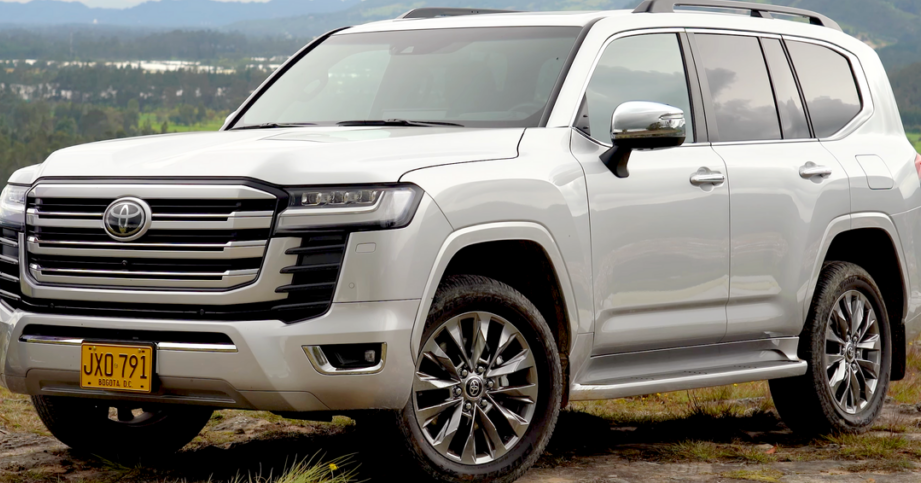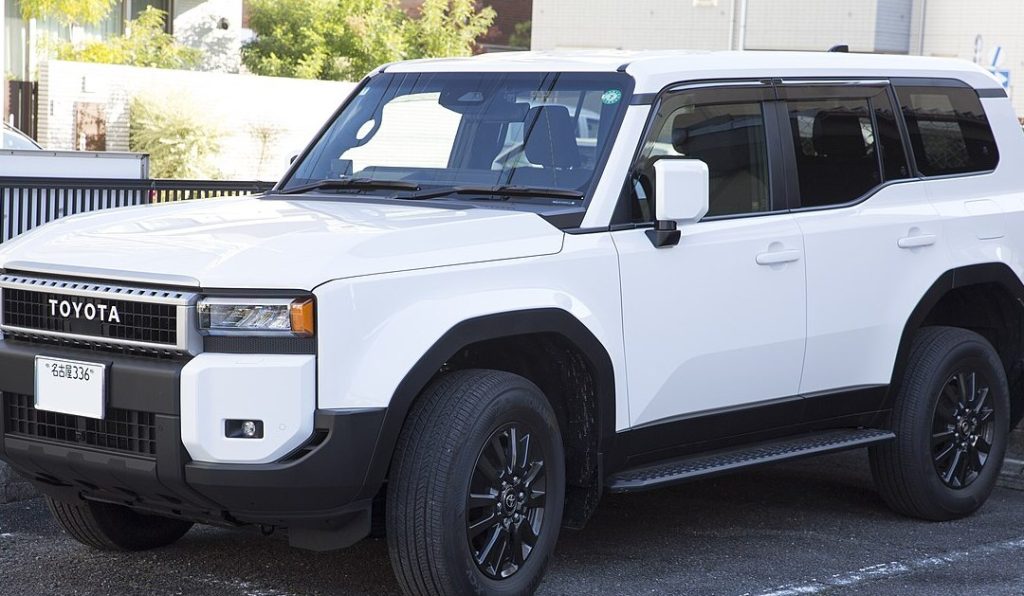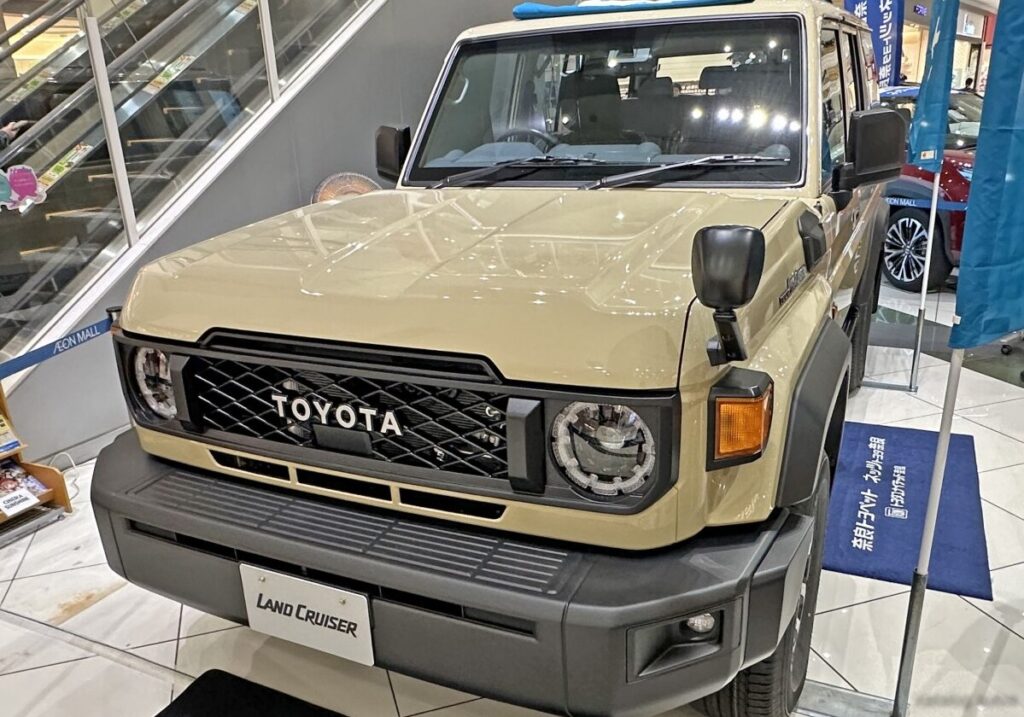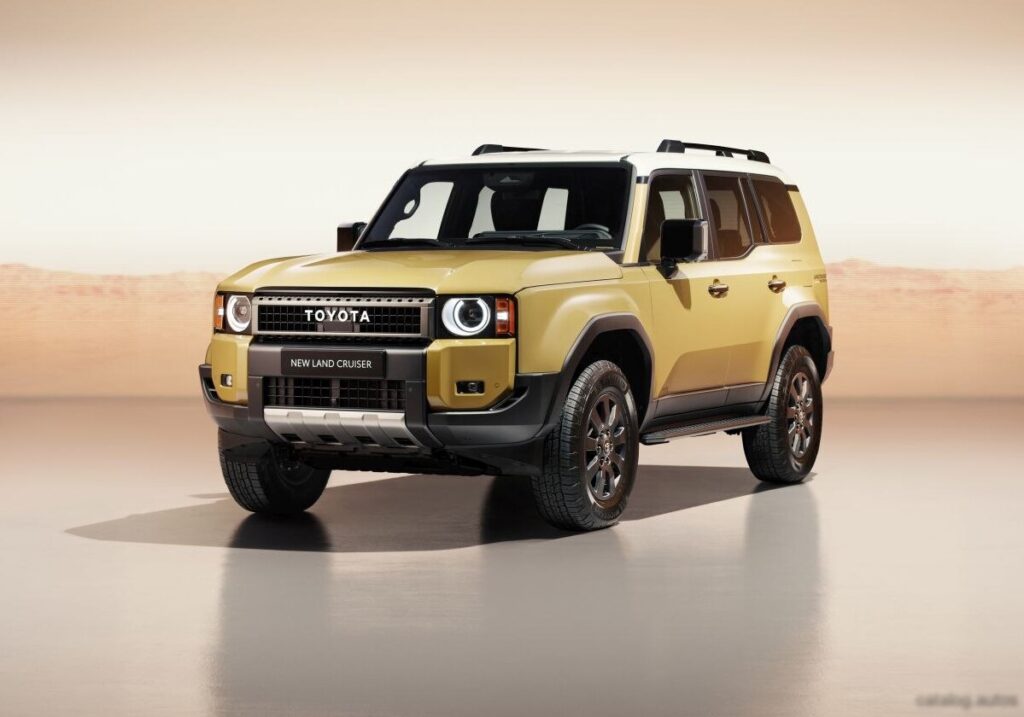
The Toyota Land Cruiser J250 2.4 i-FORCE MAX, introduced for the 2024 model year, represents a significant evolution in Toyota’s iconic off-road SUV lineage. This variant, equipped with a full hybrid powertrain, aims to balance traditional Land Cruiser capability with improved fuel efficiency and modern technology. Positioned as a mid-to-upper trim level within the J250 range, it offers a compelling alternative to the base gasoline engine while providing a step below the potentially more luxurious and higher-priced trims. The J250 series itself marks a departure from the previous 200-series, adopting a more refined and approachable design while retaining the ruggedness expected of a Land Cruiser.
Technical Specifications
| Brand | Toyota |
| Model | Land Cruiser |
| Generation | Land Cruiser (J250) |
| Type (Engine) | 2.4 i-FORCE MAX (326 Hp) Full Hybrid 4WD ECT-i |
| Start of production | 2024 |
| Powertrain Architecture | FHEV (Full Hybrid Electric Vehicle) |
| Body type | SUV |
| Seats | 5 |
| Doors | 5 |
| Fuel consumption (economy) – urban (EPA) | 10.7 l/100 km (22 US mpg, 26.4 UK mpg, 9.3 km/l) |
| Fuel consumption (economy) – extra urban (EPA) | 9.4 l/100 km (25 US mpg, 30.1 UK mpg, 10.6 km/l) |
| Fuel consumption (economy) – combined (EPA) | 10.2 l/100 km (23.1 US mpg, 27.7 UK mpg, 9.8 km/l) |
| Fuel Type | Petrol (Gasoline) |
| Emission standard | BIN 125 |
| Weight-to-power ratio | 7 kg/Hp, 142.7 Hp/tonne |
| Weight-to-torque ratio | 3.6 kg/Nm, 275.7 Nm/tonne |
| Gross battery capacity | 1.87 kWh |
| Battery voltage | 288 V |
| Battery technology | Nickel-metal hydride (NiMH) |
| Electric motor power | 48 Hp |
| Electric motor location | Integrated into the transmission |
| System power | 326 Hp @ 6000 rpm |
| System torque | 630 Nm @ 1700 rpm (464.66 lb.-ft. @ 1700 rpm) |
| Engine layout | Front, Longitudinal |
| Number of cylinders | 4 |
| Engine configuration | Inline |
| Number of valves per cylinder | 4 |
| Fuel injection system | Direct injection and Multi-port manifold injection |
| Engine aspiration | Turbocharger, Intercooler |
| Valvetrain | DVVT, VVT-i |
| Engine systems | Start & Stop System |
| Kerb Weight | 2285 kg (5037.56 lbs.) |
| Max. weight | 3100 kg (6834.33 lbs.) |
| Max load | 815 kg (1796.77 lbs.) |
| Trunk (boot) space – minimum | 1062 l (37.5 cu. ft.) |
| Fuel tank capacity | 68 l (17.96 US gal | 14.96 UK gal) |
| Permitted trailer load with brakes (12%) | 2722 kg (6000.98 lbs.) |
| Length | 4923 mm (193.82 in.) |
| Width | 1979 mm (77.91 in.) |
| Width including mirrors | 2139 mm (84.21 in.) |
| Height | 1933 mm (76.1 in.) |
| Wheelbase | 2850 mm (112.2 in.) |
| Ride height (ground clearance) | 203 mm (7.99 in.) |
| Minimum turning circle (turning diameter) | 12.2 m (40.03 ft.) |
| Approach angle | 31° |
| Departure angle | 17° |
| Drivetrain Architecture | The Internal combustion engine (ICE) and the electric motor permanently drive the four wheels of the car with the ability to work in full electric or mixed mode. |
| Drive wheel | All wheel drive (4×4) |
| Number of gears and type of gearbox | 8 gears, automatic transmission ECT-i |
| Front suspension | Coil spring, Double wishbone, Transverse stabilizer |
| Rear suspension | Rigid axle suspension |
| Front brakes | Ventilated discs, 431.8 mm |
| Rear brakes | Ventilated discs, 431.8 mm |
| Assisting systems | ABS (Anti-lock braking system) |
| Steering type | Steering rack and pinion |
| Power steering | Electric Steering |
| Tires size | 245/70 R18; 265/70 R18; 265/60 R20 |
| Wheel rims size | 18; 20 |
Powertrain & Engine Architecture
At the heart of the 2.4 i-FORCE MAX is a 2.4-liter turbocharged inline-four cylinder engine. This engine utilizes both direct injection and multi-port fuel injection, optimizing combustion efficiency and power delivery. Toyota’s Dynamic Variable Valve Timing with intelligence (VVT-i) and Dual VVT-i systems further refine engine performance across the rev range. The engine is paired with a 48-horsepower electric motor integrated into the eight-speed automatic transmission (ECT-i). This configuration allows for electric-only driving at low speeds and provides supplemental power during acceleration. The nickel-metal hydride (NiMH) battery pack, with a capacity of 1.87 kWh, stores the electrical energy. The hybrid system operates seamlessly, prioritizing fuel efficiency while providing the robust power output of 326 horsepower and 630 Nm (464.66 lb.-ft.) of torque. The engine code specifics are still emerging, but it builds upon Toyota’s established hybrid technology.
Driving Characteristics
The 2.4 i-FORCE MAX Land Cruiser offers a noticeably different driving experience compared to older Land Cruisers or even the base gasoline engine variant. The electric motor provides instant torque, resulting in brisk acceleration, particularly from a standstill. The eight-speed automatic transmission is well-tuned, offering smooth shifts and keeping the engine in its optimal power band. While not a sports car, the hybrid powertrain delivers ample power for highway passing and tackling challenging terrain. The hybrid system’s ability to operate in electric-only mode enhances fuel economy in urban environments. Compared to a potential diesel offering (not currently available in the US market), this hybrid provides a quieter and more refined driving experience, albeit with potentially less low-end torque for extreme off-roading. The weight of the hybrid components does add to the overall vehicle weight, but the increased power output largely mitigates any noticeable performance deficit.
Equipment & Trim Levels
The 2.4 i-FORCE MAX trim typically includes a generous array of standard features. These commonly include a premium audio system, leather upholstery, heated and ventilated front seats, a large touchscreen infotainment system with smartphone integration (Apple CarPlay and Android Auto), and a comprehensive suite of advanced driver-assistance systems (ADAS) such as adaptive cruise control, lane departure alert, and automatic emergency braking. Optional extras often include a panoramic sunroof, upgraded interior trim materials, and advanced off-road features like a multi-terrain select system and electronic locking rear differential. The dashboard configuration is modern and driver-focused, with a blend of physical controls and touchscreen functionality.
Chassis & Braking
The J250 Land Cruiser utilizes a robust body-on-frame construction, providing excellent durability and off-road capability. The suspension system features coil springs with a double-wishbone setup at the front and a rigid axle suspension at the rear. A transverse stabilizer bar helps to minimize body roll during cornering. Braking duties are handled by ventilated discs on all four wheels, measuring 431.8 mm in diameter. The anti-lock braking system (ABS) is standard, enhancing braking performance and stability. The chassis is designed to withstand the stresses of off-road driving while providing a comfortable ride on paved roads.
Market Reception & Comparison
Initial reception of the J250 Land Cruiser, particularly the 2.4 i-FORCE MAX variant, has been positive. Critics praise the blend of modern technology, refined driving experience, and traditional Land Cruiser capability. The fuel economy figures, while not class-leading, are a significant improvement over previous generations. Compared to the base gasoline engine, the hybrid offers a noticeable performance boost and improved fuel efficiency. The hybrid powertrain positions this trim as a strong competitor to other mid-size and full-size SUVs offering similar levels of luxury and off-road prowess. Reliability is expected to be high, consistent with Toyota’s reputation, although long-term data is still emerging.
Legacy
The 2.4 i-FORCE MAX powertrain represents a pivotal step in the Land Cruiser’s evolution. By embracing hybrid technology, Toyota is addressing growing concerns about fuel efficiency and emissions while maintaining the Land Cruiser’s legendary off-road capabilities. The long-term reliability of this powertrain is anticipated to be excellent, building upon Toyota’s proven hybrid technology. In the used car market, this variant is likely to hold its value well, appealing to buyers seeking a capable, reliable, and fuel-efficient SUV with a prestigious lineage. The J250, and specifically this hybrid trim, is poised to become a significant chapter in the Land Cruiser’s storied history.