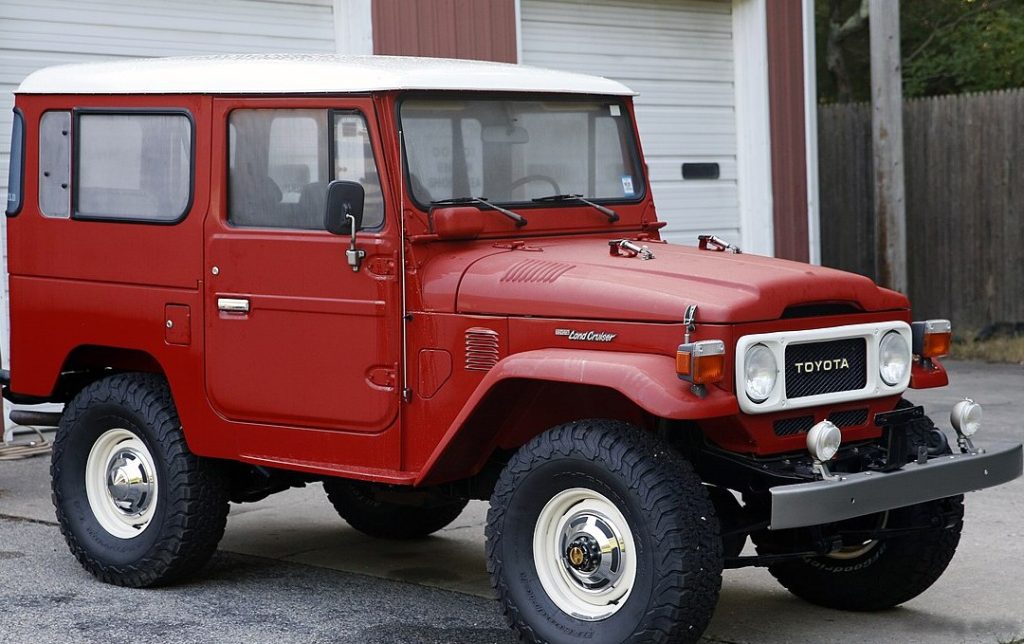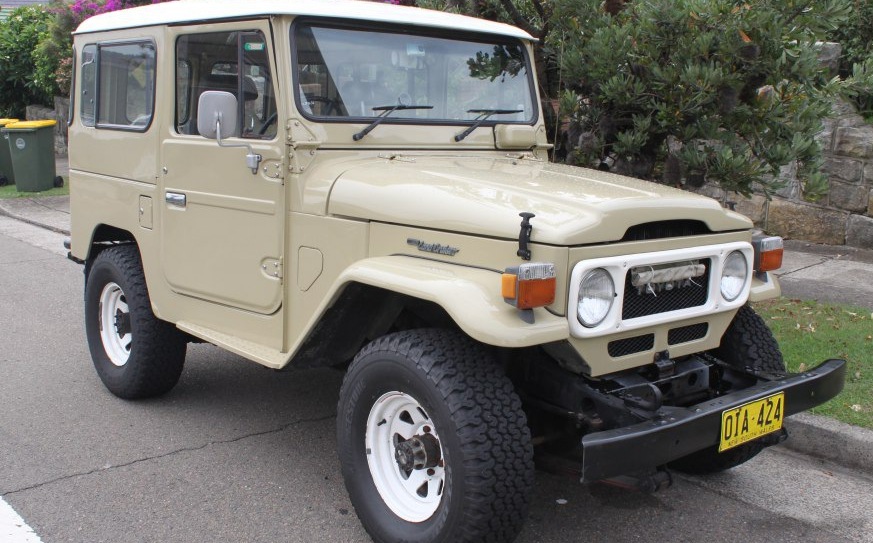
The Toyota Land Cruiser J40, specifically the hardtop variant equipped with the 4.2-liter 2F inline-six engine producing 135 horsepower, represents a pivotal point in the Land Cruiser’s evolution. Produced from 1975 to 1983, this iteration bridged the gap between the rugged, utilitarian origins of the J40 series and the increasing demands for comfort and practicality in a four-wheel-drive vehicle. It was a mainstay in many markets, particularly in Australia, South America, and parts of Asia, offering a robust and reliable off-road solution. This model occupied a middle ground in the J40 lineup, offering more refinement than the soft-top versions but remaining a thoroughly capable off-roader, unlike later, more luxury-focused Land Cruisers.
Technical Specifications
| Brand | Toyota |
| Model | Land Cruiser |
| Generation | Land Cruiser (J40) Hard top |
| Type (Engine) | 4.2 (135 Hp) 4WD |
| Start of production | 1975 |
| End of production | 1983 |
| Powertrain Architecture | Internal Combustion engine |
| Body type | Off-road vehicle |
| Seats | 4 |
| Doors | 2 |
| Fuel Type | Petrol (Gasoline) |
| Maximum speed | 130 km/h (80.78 mph) |
| Weight-to-power ratio | 12.7 kg/Hp, 78.9 Hp/tonne |
| Weight-to-torque ratio | 6.3 kg/Nm, 158.5 Nm/tonne |
| Power | 135 Hp @ 3600 rpm |
| Power per litre | 31.9 Hp/l |
| Torque | 271 Nm @ 1800 rpm (199.88 lb.-ft. @ 1800 rpm) |
| Engine layout | Front, Longitudinal |
| Engine Model/Code | 2F |
| Engine displacement | 4230 cm3 (258.13 cu. in.) |
| Number of cylinders | 6 |
| Engine configuration | Inline |
| Cylinder Bore | 94 mm (3.7 in.) |
| Piston Stroke | 101.6 mm (4 in.) |
| Compression ratio | 7.8:1 |
| Fuel injection system | Carburettor |
| Engine aspiration | Naturally aspirated engine |
| Valvetrain | OHV |
| Engine oil capacity | 8.1 l (8.56 US qt | 7.13 UK qt) |
| Coolant | 18.8 l (19.87 US qt | 16.54 UK qt) |
| Kerb Weight | 1710 kg (3769.9 lbs.) |
| Max. weight | 2300 kg (5070.63 lbs.) |
| Max load | 590 kg (1300.73 lbs.) |
| Fuel tank capacity | 62 l (16.38 US gal | 13.64 UK gal) |
| Length | 3870 mm (152.36 in.) |
| Width | 1665 mm (65.55 in.) |
| Height | 1930 mm (75.98 in.) |
| Wheelbase | 2285 mm (89.96 in.) |
| Front track | 1415 mm (55.71 in.) |
| Rear (Back) track | 1400 mm (55.12 in.) |
| Front overhang | 705 mm (27.76 in.) |
| Rear overhang | 880 mm (34.65 in.) |
| Ride height (ground clearance) | 200 mm (7.87 in.) |
| Minimum turning circle (turning diameter) | 10.6 m (34.78 ft.) |
| Drive wheel | All wheel drive (4×4) |
| Number of gears and type of gearbox | 4 gears, manual transmission |
| Front suspension | Rigid axle suspension, Leaf spring |
| Rear suspension | Rigid axle suspension, Leaf spring |
| Front brakes | Drum |
| Rear brakes | Drum |
| Steering type | Cone worm with recirculation balls |
Powertrain & Engine Architecture
The heart of this Land Cruiser variant is the 2F inline-six engine. This 4.2-liter (4230 cc) engine, a hallmark of Toyota’s durability, features a cast iron block and head. It utilizes a single carburetor for fuel delivery, a relatively simple system contributing to its reliability, though at the expense of some fuel efficiency compared to later fuel-injected engines. The engine employs an overhead valve (OHV) valvetrain, a design choice prioritizing robustness over high-revving performance. The 2F engine is known for its low-end torque, making it well-suited for off-road conditions and hauling loads. The four-speed manual transmission was the standard offering, providing a direct connection to the engine’s power. The transmission’s gear ratios were optimized for both on-road cruising and low-speed rock crawling, a testament to the Land Cruiser’s dual-purpose nature.
Driving Characteristics
The 135 horsepower and 271 Nm (199.88 lb-ft) of torque delivered by the 4.2-liter engine, coupled with the four-speed manual transmission, resulted in a driving experience that prioritized capability over outright speed. Acceleration was modest, but the engine’s strong low-end torque allowed for confident climbing and maneuvering in challenging terrain. Compared to the later, more powerful engines offered in the J40 series, this variant felt less strained during prolonged off-road use. The manual transmission provided precise control, essential for navigating difficult obstacles. While not as refined as more modern vehicles, the Land Cruiser J40 offered a surprisingly comfortable ride, thanks to its long-travel suspension and relatively soft leaf springs. The steering, though not power-assisted, was direct and provided good feedback.
Equipment & Trim Levels
The J40 Hardtop 4.2 was generally equipped with basic, functional features. Standard equipment included steel wheels, vinyl upholstery, and a simple dashboard layout. The hardtop provided protection from the elements and offered a more secure cabin compared to the soft-top models. Optional extras included a winch, upgraded suspension components, and auxiliary lighting. Interior trim levels were relatively sparse, focusing on durability rather than luxury. The emphasis was on providing a practical and reliable vehicle capable of withstanding harsh conditions.
Chassis & Braking
The Land Cruiser J40 utilized a robust body-on-frame construction, providing exceptional strength and durability. The chassis was designed to withstand significant torsional stress, essential for off-road driving. Both the front and rear suspension systems employed leaf springs and rigid axles, a proven configuration for off-road capability. Braking was handled by drum brakes on all four wheels, adequate for the vehicle’s weight and intended use, but lacking the stopping power of more modern disc brake systems. The steering system utilized a cone worm and recirculation balls mechanism, providing a direct but somewhat heavy steering feel.
Market Reception & Comparison
The Land Cruiser J40 Hardtop 4.2 was well-received in markets where a rugged, reliable, and affordable four-wheel-drive vehicle was in demand. Critics praised its durability, off-road capability, and simple mechanical design. Compared to other trims in the J40 lineup, such as those equipped with smaller engines, the 4.2-liter variant offered significantly more power and torque, making it better suited for towing and tackling challenging terrain. While fuel economy was not a strong point, the Land Cruiser’s reliability and longevity often outweighed this concern for buyers. It was often compared to the Land Rover Series II/III and the early Nissan Patrol, generally holding its own in terms of durability and off-road performance.
Legacy
The Toyota Land Cruiser J40 Hardtop 4.2 has earned a legendary reputation for its reliability and longevity. Many examples are still in use today, a testament to the quality of its construction and the durability of the 2F engine. In the used car market, these Land Cruisers are highly sought after by enthusiasts and collectors, commanding premium prices. The 2F engine, in particular, is known for its ability to withstand years of abuse and still run reliably. While maintenance can be relatively straightforward due to the engine’s simple design, finding parts can sometimes be a challenge. The J40 remains a popular choice for restoration projects and off-road adventures, cementing its place as a true icon in the world of four-wheel-drive vehicles.