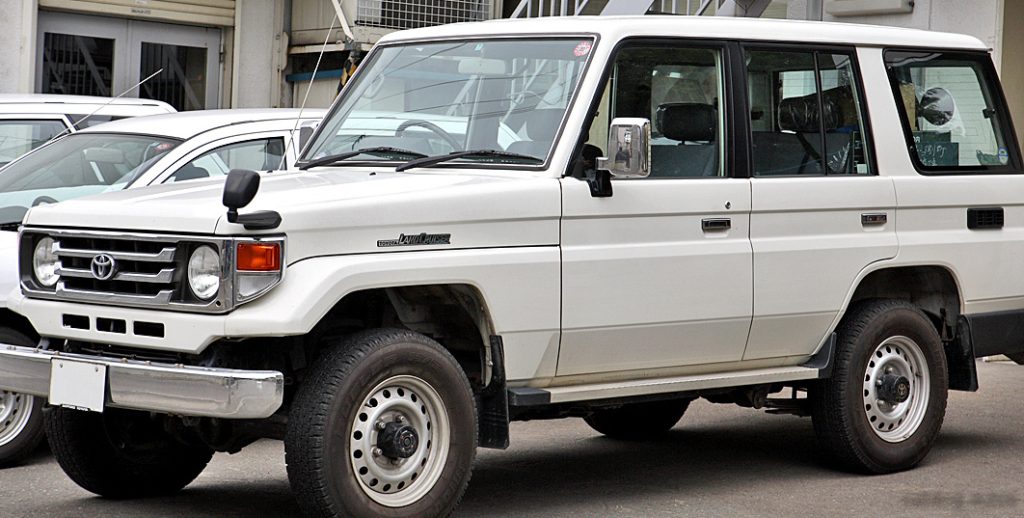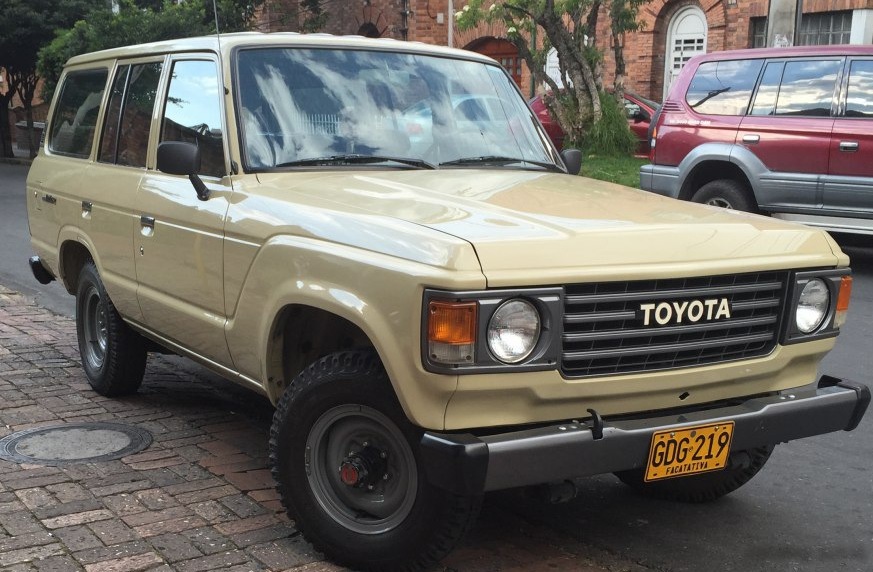
The Toyota Land Cruiser J60, produced from 1985 to 1989, represented a significant evolution in Toyota’s legendary off-road vehicle lineage. This generation, often referred to as the “60-Series,” was designed to balance rugged capability with a growing demand for on-road comfort. The 4.0-liter (3955 cc) variant, producing 150 horsepower, occupied a key position in the lineup, offering a robust and reliable powertrain for both domestic Japanese markets and export, particularly to Australia, Europe, and parts of the Middle East. It was positioned as a step up from the smaller engine options, catering to buyers needing more power for towing, hauling, and tackling challenging terrain. This model year marked a transition towards more sophisticated features while retaining the Land Cruiser’s core values of durability and off-road prowess.
Technical Specifications
| Brand | Toyota |
| Model | Land Cruiser |
| Generation | Land Cruiser (J60) Wagon |
| Type (Engine) | 4.0 (150 Hp) 4WD |
| Start of production | 1985 |
| End of production | 1989 |
| Powertrain Architecture | Internal Combustion engine |
| Body type | SUV |
| Seats | 5 |
| Doors | 5 |
| Fuel Type | Petrol (Gasoline) |
| Weight-to-power ratio | 13.1 kg/Hp, 76.3 Hp/tonne |
| Weight-to-torque ratio | 6.9 kg/Nm, 144.5 Nm/tonne |
| Power | 150 Hp @ 4200 rpm |
| Power per litre | 37.9 Hp/l |
| Torque | 284 Nm @ 2200 rpm, 209.47 lb.-ft. @ 2200 rpm |
| Engine layout | Front, Longitudinal |
| Engine Model/Code | 3F |
| Engine displacement | 3955 cm3, 241.35 cu. in. |
| Number of cylinders | 6 |
| Engine configuration | Inline |
| Cylinder Bore | 94 mm, 3.7 in. |
| Piston Stroke | 95 mm, 3.74 in. |
| Compression ratio | 8.1:1 |
| Number of valves per cylinder | 2 |
| Fuel injection system | Multi-port manifold injection |
| Engine aspiration | Naturally aspirated engine |
| Valvetrain | OHV |
| Engine oil capacity | 7.8 l, 8.24 US qt | 6.86 UK qt |
| Coolant | 19.5 l, 20.61 US qt | 17.16 UK qt |
| Kerb Weight | 1965 kg, 4332.08 lbs. |
| Max. weight | 2810 kg, 6194.99 lbs. |
| Max load | 845 kg, 1862.91 lbs. |
| Trunk (boot) space – maximum | 2775 l, 98 cu. ft. |
| Fuel tank capacity | 90 l, 23.78 US gal | 19.8 UK gal |
| Length | 4675 mm, 184.06 in. |
| Width | 1800 mm, 70.87 in. |
| Height | 1825 mm, 71.85 in. |
| Wheelbase | 2730 mm, 107.48 in. |
| Front track | 1475 mm, 58.07 in. |
| Rear (Back) track | 1460 mm, 57.48 in. |
| Front overhang | 725 mm, 28.54 in. |
| Rear overhang | 1220 mm, 48.03 in. |
| Ride height (ground clearance) | 225 mm, 8.86 in. |
| Minimum turning circle (turning diameter) | 13.4 m, 43.96 ft. |
| Drivetrain Architecture | The Internal combustion engine (ICE) drives the rear wheels permanently, and the front wheels are driven through an electrically or mechanically operated clutch if necessary. |
| Drive wheel | All wheel drive (4×4) |
| Number of gears and type of gearbox | 5 gears, manual transmission |
| Front suspension | Leaf spring |
| Rear suspension | Leaf spring |
| Front brakes | Ventilated discs |
| Rear brakes | Drum |
| Steering type | Cone worm with recirculation balls |
Powertrain & Engine Architecture
The heart of the J60 4.0 was the 3F inline-six engine. This 3.955-liter (241.35 cubic inch) gasoline engine was a naturally aspirated, overhead valve (OHV) design. It utilized a multi-port fuel injection system, a significant upgrade from the carburetors found in earlier Land Cruiser models, improving fuel efficiency and responsiveness. The 3F engine was known for its robust construction and relatively simple design, contributing to its legendary reliability. The 150 horsepower peak was achieved at 4200 rpm, while the 284 Nm (209.47 lb-ft) of torque was readily available at 2200 rpm, making it well-suited for off-road driving and towing. The engine’s longitudinal mounting and rear-wheel-drive bias, coupled with a part-time four-wheel-drive system, provided excellent traction in various conditions. The 5-speed manual transmission was the standard offering for this variant, providing drivers with full control over the engine’s power band.
Driving Characteristics
The Land Cruiser J60 4.0 with a manual transmission offered a driving experience that prioritized capability over outright speed. While 150 horsepower might seem modest by modern standards, the engine’s substantial torque output provided ample pulling power, especially at lower engine speeds. The 5-speed manual gearbox allowed drivers to keep the engine in its optimal power range for various driving situations. Compared to the smaller 2.4-liter engine options, the 4.0-liter provided a noticeably more relaxed driving experience, particularly when fully loaded or tackling steep inclines. It wasn’t a sports car by any means; acceleration was deliberate, and the leaf spring suspension resulted in a somewhat firm ride. However, this setup contributed to the vehicle’s exceptional durability and off-road performance. The manual transmission offered a more engaging driving experience than any potential automatic option, giving the driver greater control over gear selection and engine braking.
Equipment & Trim Levels
The J60 Land Cruiser 4.0 was typically equipped with functional, rather than luxurious, features. Standard equipment generally included basic instrumentation, vinyl or cloth upholstery, and a simple audio system. Air conditioning was often an optional extra, as were power windows and central locking. The interior design was utilitarian, prioritizing durability and ease of cleaning. Trim levels varied depending on the market, but generally focused on adding convenience features rather than significant performance upgrades. The focus was on providing a reliable and capable vehicle, rather than a lavishly appointed one. Exterior features typically included steel wheels, basic bumpers, and minimal chrome trim.
Chassis & Braking
The J60 Land Cruiser utilized a body-on-frame construction, providing exceptional strength and durability. The suspension system consisted of leaf springs at both the front and rear, offering a robust and reliable setup capable of handling heavy loads and rough terrain. Front brakes were ventilated discs, providing adequate stopping power, while the rear brakes were drums. The steering system employed a cone worm and recirculation ball mechanism, offering precise control but requiring a fair amount of effort. The chassis was designed to prioritize off-road capability, resulting in a relatively high center of gravity and a noticeable amount of body roll on paved roads. Ground clearance was a generous 225 mm (8.86 inches), allowing the vehicle to navigate obstacles with ease.
Market Reception & Comparison
The Land Cruiser J60 4.0 was generally well-received by automotive critics and buyers alike. It was praised for its exceptional reliability, off-road capability, and robust construction. Compared to other SUVs of the era, the Land Cruiser stood out for its ruggedness and durability. While its on-road ride quality wasn’t as refined as some competitors, its ability to conquer challenging terrain made it a favorite among adventurers and those living in remote areas. The 4.0-liter engine was considered a significant improvement over the smaller engine options, providing ample power for most tasks. Fuel economy, however, was not a strong point, typical for a vehicle of this size and capability.
Legacy
The Toyota Land Cruiser J60 4.0 has earned a well-deserved reputation as one of the most reliable and durable SUVs ever built. Many examples are still in use today, a testament to their robust construction and simple design. The 3F engine is known for its longevity, and with proper maintenance, can continue to provide years of reliable service. In the used car market, J60 Land Cruisers are highly sought after by enthusiasts and collectors, particularly those in well-maintained condition. The combination of off-road capability, reliability, and a growing classic status has made the J60 4.0 a highly desirable vehicle, ensuring its place in automotive history.