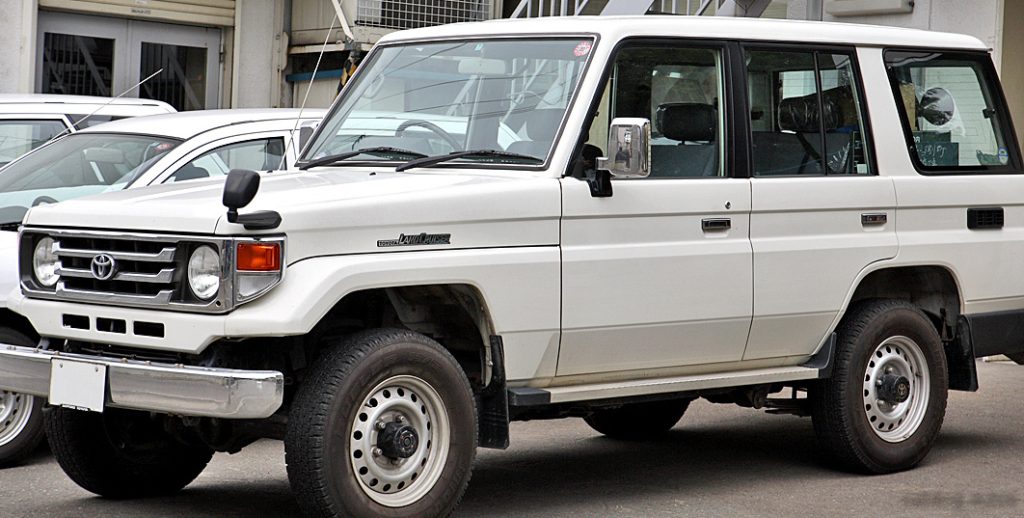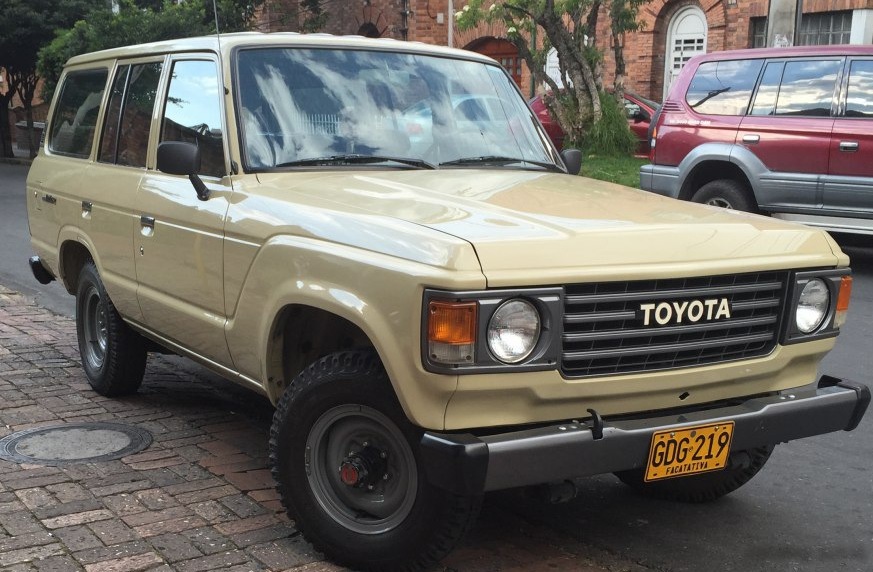
The Toyota Land Cruiser J60, produced from 1980 to 1989, represented a significant evolution in Toyota’s legendary off-road vehicle lineage. The wagon variant, particularly the 4.0 Diesel model with 101 horsepower, occupied a unique position within the J60 range. Introduced as a more comfortable and family-oriented alternative to the shorter wheelbase models, the J60 wagon aimed to balance off-road capability with on-road refinement. This specific diesel configuration, produced from 1980-1985, was a mainstay in many markets outside of North America, where the gasoline engines were more prevalent. It was designed for utility, durability, and long-distance travel, becoming a popular choice for both private owners and commercial operators.
Technical Specifications
| Brand | Toyota |
| Model | Land Cruiser |
| Generation | Land Cruiser (J60) Wagon |
| Type (Engine) | 4.0 Diesel (101 Hp) 4WD |
| Start of production | 1980 year |
| End of production | 1985 year |
| Powertrain Architecture | Internal Combustion engine |
| Body type | SUV |
| Seats | 6 |
| Doors | 5 |
| Fuel Type | Diesel |
| Weight-to-power ratio | 19.9 kg/Hp, 50.2 Hp/tonne |
| Weight-to-torque ratio | 8.7 kg/Nm, 115.4 Nm/tonne |
| Power | 101 Hp @ 3500 rpm |
| Power per litre | 25.4 Hp/l |
| Torque | 232 Nm @ 1800 rpm (171.11 lb.-ft. @ 1800 rpm) |
| Engine layout | Front, Longitudinal |
| Engine Model/Code | 2H |
| Engine displacement | 3980 cm3 (242.87 cu. in.) |
| Number of cylinders | 6 |
| Engine configuration | Inline |
| Cylinder Bore | 91 mm (3.58 in.) |
| Piston Stroke | 102 mm (4.02 in.) |
| Compression ratio | 19.9:1 |
| Number of valves per cylinder | 2 |
| Fuel injection system | Precombustion chamber injection |
| Engine aspiration | Naturally aspirated engine |
| Valvetrain | OHV |
| Engine oil capacity | 9.7 l (10.25 US qt | 8.53 UK qt) |
| Coolant | 15.4 l (16.27 US qt | 13.55 UK qt) |
| Kerb Weight | 2010 kg (4431.29 lbs.) |
| Max. weight | 2730 kg (6018.62 lbs.) |
| Max load | 720 kg (1587.33 lbs.) |
| Trunk (boot) space – maximum | 2775 l (98 cu. ft.) |
| Fuel tank capacity | 90 l (23.78 US gal | 19.8 UK gal) |
| Length | 4750 mm (187.01 in.) |
| Width | 1800 mm (70.87 in.) |
| Height | 1845 mm (72.64 in.) |
| Wheelbase | 2730 mm (107.48 in.) |
| Front track | 1475 mm (58.07 in.) |
| Rear (Back) track | 1460 mm (57.48 in.) |
| Front overhang | 725 mm (28.54 in.) |
| Rear overhang | 1295 mm (50.98 in.) |
| Ride height (ground clearance) | 230 mm (9.06 in.) |
| Minimum turning circle (turning diameter) | 13.4 m (43.96 ft.) |
| Drivetrain Architecture | The Internal combustion engine (ICE) drives the rear wheels permanently, and the front wheels are driven through an electrically or mechanically operated clutch if necessary. |
| Drive wheel | All wheel drive (4×4) |
| Number of gears and type of gearbox | 5 gears, manual transmission |
| Front suspension | Leaf spring |
| Rear suspension | Leaf spring |
| Front brakes | Disc |
| Rear brakes | Drum |
| Steering type | Cone worm with recirculation balls |
Powertrain & Engine Architecture
The heart of this Land Cruiser variant was the 2H inline-six diesel engine, displacing 3.98 liters. This engine was renowned for its robustness and longevity, characteristics crucial for the demanding conditions the Land Cruiser was often subjected to. The 2H utilized a precombustion chamber injection system, a common diesel technology of the era, which improved combustion efficiency and reduced engine noise compared to direct injection systems. The engine produced 101 horsepower at 3500 rpm and 232 Nm (171.11 lb-ft) of torque at 1800 rpm. The engine featured an overhead valve (OHV) valvetrain, a relatively simple and reliable design. The 5-speed manual transmission was the standard offering, providing a good balance between fuel economy and usability. The transmission was directly connected to a robust, part-time four-wheel-drive system.
Driving Characteristics
The 101 hp diesel engine, coupled with the five-speed manual transmission, delivered a driving experience focused on torque and durability rather than outright speed. Acceleration was modest, but the engine’s strong low-end torque made it well-suited for off-road driving and towing. The gear ratios were optimized for climbing steep inclines and navigating challenging terrain. Compared to the gasoline-powered Land Cruisers of the same generation, the diesel offered significantly better fuel economy and a more relaxed driving experience at cruising speeds. However, it lacked the responsiveness and higher top speed of the gasoline engines. The manual transmission provided the driver with full control over the engine’s power delivery, a preference for many off-road enthusiasts.
Equipment & Trim Levels
The J60 Wagon 4.0 Diesel was typically equipped with basic, utilitarian features. Standard equipment included vinyl or cloth upholstery, a simple dashboard layout, and manually operated windows and locks. Air conditioning was often an optional extra, as were power steering and upgraded audio systems. The interior prioritized functionality and durability over luxury. Trim levels were relatively limited, with most variations stemming from optional equipment packages. The focus was on providing a reliable and capable vehicle rather than a lavishly appointed one.
Chassis & Braking
The J60 Wagon featured a body-on-frame construction, providing exceptional strength and durability. The suspension utilized leaf springs at both the front and rear, a design choice that prioritized load-carrying capacity and off-road articulation. Front brakes were discs, while the rear brakes were drums. This configuration was typical for vehicles of this era and weight class. The steering system employed a cone worm and recirculation ball mechanism, providing a robust and reliable steering feel, although it lacked the precision of more modern steering systems. The vehicle’s high ground clearance (230mm / 9.06 inches) was a key asset for off-road capability.
Market Reception & Comparison
The Land Cruiser J60 Wagon 4.0 Diesel was well-received in markets where diesel engines were popular, such as Europe, Australia, and parts of Asia. Critics praised its durability, off-road capability, and fuel efficiency. Compared to other trims in the J60 lineup, the diesel variant appealed to buyers who prioritized practicality and long-term reliability over performance. The gasoline engines offered more power and refinement, but at the cost of fuel economy and longevity. The diesel was often favored by those who used their Land Cruisers for work or long-distance travel.
Legacy
The Toyota Land Cruiser J60 4.0 Diesel has earned a reputation as one of the most reliable and durable vehicles ever produced. The 2H engine is known for its ability to withstand extreme conditions and accumulate high mileage with minimal maintenance. Today, these vehicles are highly sought after by collectors and off-road enthusiasts. While finding well-maintained examples can be challenging, the J60’s robust construction and simple mechanical design make it a relatively easy vehicle to repair and maintain. The 4.0 Diesel variant remains a testament to Toyota’s commitment to building vehicles that can withstand the test of time, and continues to be a capable and dependable off-road machine.