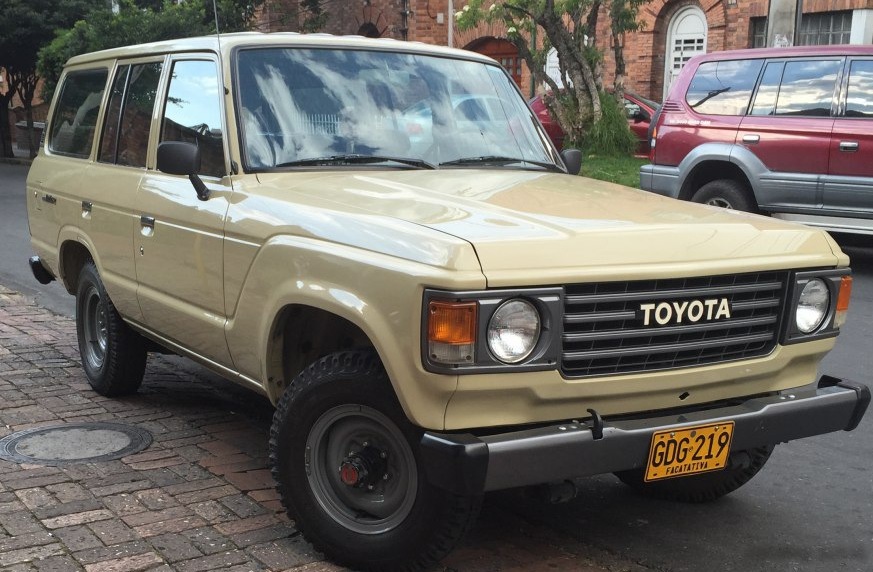
The Toyota Land Cruiser J60, produced from 1980 to 1989, represented a significant evolution in Toyota’s legendary off-road vehicle lineage. This generation, known for its robust construction and dependable performance, was designed to appeal to a broader market while maintaining the Land Cruiser’s reputation for durability. Within the J60 range, the 4.0 Turbo-D (136 Hp) 4WD Automatic variant occupied a unique position, offering a blend of diesel efficiency, respectable power, and the convenience of an automatic transmission. This model was particularly popular in markets outside of North America, where diesel engines were favored for their fuel economy and torque characteristics. It served as a versatile vehicle, capable of both demanding off-road excursions and comfortable on-road travel.
Technical Specifications
| Brand | Toyota |
| Model | Land Cruiser |
| Generation | Land Cruiser (J60) Wagon |
| Type | 4.0 Turbo-D (136 Hp) 4WD Automatic |
| Start of production | 1980 |
| End of production | 1989 |
| Powertrain Architecture | Internal Combustion engine |
| Body type | SUV |
| Seats | 6 |
| Doors | 5 |
| Fuel Type | Diesel |
| Weight-to-power ratio | 16.1 kg/Hp |
| Hp/tonne | 62.2 Hp/tonne |
| Weight-to-torque ratio | 6.9 kg/Nm |
| Nm/tonne | 144.2 Nm/tonne |
| Power | 136 Hp @ 3500 rpm |
| Power per litre | 34.2 Hp/l |
| Torque | 315 Nm @ 1800 rpm (232.33 lb.-ft. @ 1800 rpm) |
| Engine layout | Front, Longitudinal |
| Engine Model/Code | 12H-T |
| Engine displacement | 3980 cm3 (242.87 cu. in.) |
| Number of cylinders | 6 |
| Engine configuration | Inline |
| Cylinder Bore | 91 mm (3.58 in.) |
| Piston Stroke | 102 mm (4.02 in.) |
| Compression ratio | 18.6:1 |
| Number of valves per cylinder | 2 |
| Fuel injection system | Precombustion chamber injection |
| Engine aspiration | Turbocharger |
| Valvetrain | OHV |
| Engine oil capacity | 9.7 l (10.25 US qt | 8.53 UK qt) |
| Coolant capacity | 15.4 l (16.27 US qt | 13.55 UK qt) |
| Kerb Weight | 2185 kg (4817.1 lbs.) |
| Max. weight | 2810 kg (6194.99 lbs.) |
| Max load | 625 kg (1377.89 lbs.) |
| Trunk (boot) space – maximum | 2775 l (98 cu. ft.) |
| Fuel tank capacity | 90 l (23.78 US gal | 19.8 UK gal) |
| Length | 4750 mm (187.01 in.) |
| Width | 1800 mm (70.87 in.) |
| Height | 1825 mm (71.85 in.) |
| Wheelbase | 2730 mm (107.48 in.) |
| Front track | 1475 mm (58.07 in.) |
| Rear (Back) track | 1460 mm (57.48 in.) |
| Front overhang | 725 mm (28.54 in.) |
| Rear overhang | 1295 mm (50.98 in.) |
| Ride height (ground clearance) | 225 mm (8.86 in.) |
| Minimum turning circle | 13.4 m (43.96 ft.) |
| Drivetrain Architecture | All wheel drive (4×4) |
| Number of gears | 4 |
| Gearbox type | automatic transmission |
| Front suspension | Leaf spring |
| Rear suspension | Leaf spring |
| Front brakes | Ventilated discs, 302 mm |
| Rear brakes | Drum, 295 mm |
| Steering type | Cone worm with recirculation balls |
Powertrain & Engine Architecture
The heart of the J60 4.0 Turbo-D was the 12H-T inline-six diesel engine, displacing 3.98 liters. This engine utilized a precombustion chamber injection system, a common design for diesel engines of the era, which improved combustion efficiency and reduced engine noise. The addition of a turbocharger significantly boosted power output to 136 horsepower at 3500 rpm and 315 Nm (232.33 lb-ft) of torque at 1800 rpm. This torque figure was particularly important for off-road driving, providing ample low-end grunt for navigating challenging terrain. The engine featured an overhead valve (OHV) valvetrain, a relatively simple and robust design. The automatic transmission was a four-speed unit, offering convenience but sacrificing some of the efficiency and control of a manual gearbox.
Driving Characteristics
The 4.0 Turbo-D Automatic Land Cruiser offered a unique driving experience. While not as quick or responsive as the gasoline-powered versions, it excelled in providing smooth, effortless cruising and impressive off-road capability. The automatic transmission, while convenient, did result in some power loss and a less direct connection to the engine. The gear ratios were optimized for torque delivery, making it well-suited for towing and climbing steep inclines. Compared to the manual transmission versions, the automatic felt more relaxed on the highway but less engaging for spirited driving. The turbocharger provided a noticeable boost in power, but there was some turbo lag, requiring drivers to anticipate acceleration.
Equipment & Trim Levels
The J60 4.0 Turbo-D Automatic typically came with a fairly basic level of equipment, reflecting its utilitarian focus. Standard features generally included power steering, a basic audio system, and cloth upholstery. Air conditioning was often an optional extra, as were power windows and central locking. The interior was functional and durable, designed to withstand the rigors of off-road use. Trim levels varied depending on the market, but generally, this variant sat in the mid-range of the J60 lineup, offering a good balance of features and affordability.
Chassis & Braking
The J60 Land Cruiser featured a robust body-on-frame construction, providing excellent durability and off-road capability. The suspension consisted of leaf springs at both the front and rear, offering a comfortable ride and good articulation for off-road use. Braking duties were handled by ventilated discs at the front and drum brakes at the rear. While adequate for most situations, the braking system wasn’t particularly powerful by modern standards. The steering system utilized a cone worm with recirculation balls, providing a solid and reliable feel.
Market Reception & Comparison
The J60 4.0 Turbo-D Automatic was well-received in markets where diesel engines were popular, such as Europe, Australia, and parts of Asia. Critics praised its fuel efficiency, torque, and off-road capability. However, some noted the automatic transmission’s impact on performance and the relatively basic interior. Compared to the gasoline-powered Land Cruisers, the diesel offered superior fuel economy and torque, making it a more practical choice for long-distance travel and heavy-duty work. Compared to other diesel SUVs of the era, the Land Cruiser stood out for its legendary reliability and durability.
Legacy
The Toyota Land Cruiser J60 4.0 Turbo-D Automatic has earned a reputation as a remarkably reliable and long-lasting vehicle. Many examples are still in use today, testament to Toyota’s engineering prowess. The 12H-T engine, while not without its quirks, is known for its durability and relatively simple maintenance requirements. In the used car market, these Land Cruisers are highly sought after by enthusiasts and off-road adventurers. While finding parts can sometimes be a challenge, the Land Cruiser’s robust construction and readily available aftermarket support ensure that it will continue to be a capable and dependable vehicle for years to come. The J60 solidified the Land Cruiser’s reputation as the gold standard for off-road vehicles, a legacy that continues to this day.