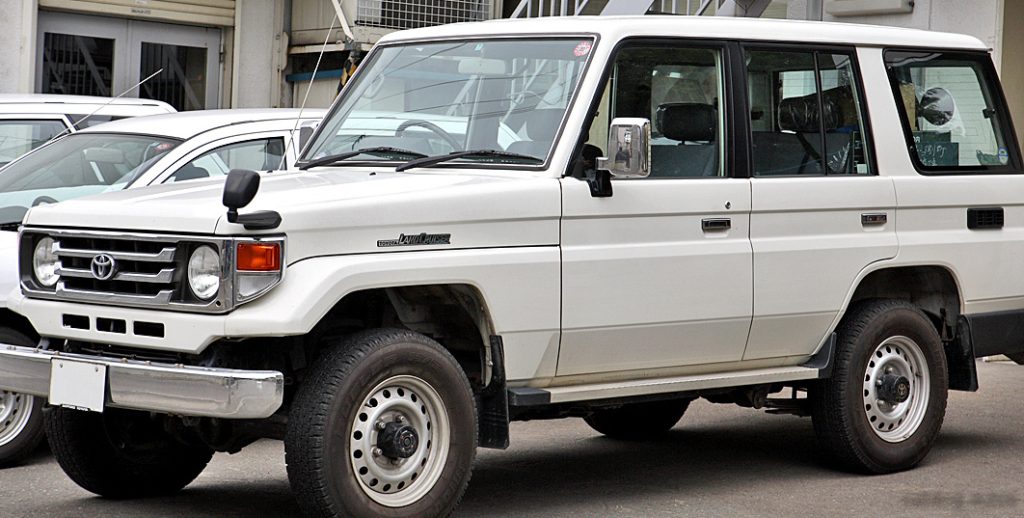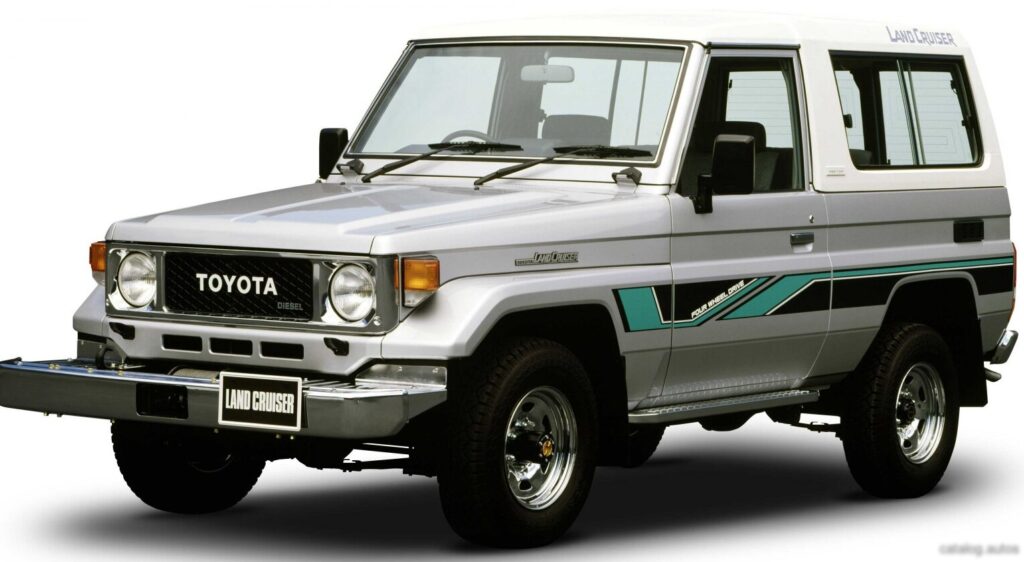
The Toyota Land Cruiser J70 series, produced from 1984 to 1998, represented a significant evolution in Toyota’s legendary off-road vehicle lineage. Within this generation, the LJ70 variant, equipped with the 2.4-liter diesel engine (designated 2L), offered a robust and economical option, particularly popular in markets outside of North America where diesel engines were favored. This specific configuration, producing 72 horsepower, was a mainstay of the J70 lineup during its initial production run from 1984-1985, serving as a workhorse for agricultural, commercial, and recreational purposes. The J70 series, known for its body-on-frame construction and exceptional durability, cemented the Land Cruiser’s reputation as an almost indestructible vehicle.
Technical Specifications
| Brand | Toyota |
| Model | Land Cruiser |
| Generation | Land Cruiser (J70, J73) |
| Type (Engine) | 2.4 D (LJ70) (72 Hp) 4WD |
| Start of production | 1984 |
| End of production | 1985 |
| Powertrain Architecture | Internal Combustion engine |
| Body type | Off-road vehicle |
| Seats | 5 |
| Doors | 3 |
| Fuel Type | Diesel |
| Power | 72 Hp @ 4000 rpm |
| Power per litre | 29.4 Hp/l |
| Torque | 155 Nm @ 2200 rpm (114.32 lb.-ft. @ 2200 rpm) |
| Engine layout | Front, Longitudinal |
| Engine Model/Code | 2L |
| Engine displacement | 2446 cm3 (149.26 cu. in.) |
| Number of cylinders | 4 |
| Engine configuration | Inline |
| Cylinder Bore | 92 mm (3.62 in.) |
| Piston Stroke | 92 mm (3.62 in.) |
| Compression ratio | 22.3:1 |
| Number of valves per cylinder | 2 |
| Fuel injection system | Precombustion chamber injection |
| Engine aspiration | Naturally aspirated engine |
| Valvetrain | SOHC |
| Engine oil capacity | 5.1 l (5.39 US qt | 4.49 UK qt) |
| Fuel tank capacity | 90 l (23.78 US gal | 19.8 UK gal) |
| Length | 3975 mm (156.5 in.) |
| Width | 1690 mm (66.54 in.) |
| Height | 1870 mm (73.62 in.) |
| Wheelbase | 2310 mm (90.94 in.) |
| Minimum turning circle | 11 m (36.09 ft.) |
| Drivetrain Architecture | The Internal combustion engine (ICE) drives the rear wheels permanently, and the front wheels are driven through an electrically or mechanically operated clutch if necessary. |
| Drive wheel | All wheel drive (4×4) |
| Number of gears | 5 gears, manual transmission |
| Front suspension | Leaf spring |
| Rear suspension | Leaf spring |
| Front brakes | Ventilated discs |
| Rear brakes | Drum |
| Steering type | Cone worm with recirculation balls |
Introduction
The LJ70, produced between 1984 and 1985, was an early iteration of the J70 Land Cruiser. It was primarily aimed at markets in Asia, Africa, Australia, and parts of Europe, where its rugged simplicity and fuel efficiency were highly valued. Positioned as the entry-level Land Cruiser, the 2.4D offered a more affordable alternative to the gasoline-powered models and later, more powerful diesel variants. The J70 series, unlike its predecessor (the J60), adopted a more angular and utilitarian design, emphasizing functionality over luxury. The LJ70’s three-door configuration and relatively compact size made it particularly suitable for navigating narrow rural roads and challenging terrain.
Powertrain & Engine Architecture
The heart of the LJ70 was the 2L diesel engine, a 2.4-liter inline-four cylinder unit. This engine utilized a precombustion chamber injection system, a common design for diesel engines of the era. This system involved injecting fuel into a small precombustion chamber within the cylinder head, which then ignited the main combustion chamber. The 2L engine featured a single overhead camshaft (SOHC) valvetrain, operating two valves per cylinder. Its robust construction and relatively low compression ratio (22.3:1) contributed to its longevity and ability to run on lower-quality fuel. The 5-speed manual transmission was standard, providing a wide range of gear ratios optimized for both on-road cruising and low-speed off-road crawling. The transmission was directly connected to the transfer case, enabling seamless switching between two-wheel drive and four-wheel drive modes.
Driving Characteristics
The 72 horsepower output of the 2.4D engine in the LJ70 resulted in modest, but adequate, performance. Acceleration was slow, particularly when fully loaded, and highway speeds required careful planning. However, the engine’s strong low-end torque (155 Nm / 114.32 lb-ft) made it exceptionally capable off-road. The manual transmission allowed for precise control over gear selection, enabling the driver to maintain optimal engine speed for various terrains. Compared to later, more powerful Land Cruiser variants (like those with the 3.0-liter diesel), the LJ70 prioritized durability and fuel economy over outright speed. The leaf spring suspension, while providing a comfortable ride on smooth surfaces, could feel somewhat stiff and bouncy on rough terrain.
Equipment & Trim Levels
The LJ70 2.4D was typically equipped with basic, utilitarian features. Standard equipment included steel wheels, vinyl or cloth upholstery, a simple dashboard layout, and minimal sound insulation. Power steering and air conditioning were often optional extras, depending on the market. The interior was designed for practicality and ease of cleaning, reflecting the vehicle’s intended use as a workhorse. Trim levels were generally limited, with most LJ70s featuring a fairly consistent level of equipment. Optional extras could include a winch, roof rack, and upgraded tires.
Chassis & Braking
The LJ70 Land Cruiser utilized a traditional body-on-frame construction, providing exceptional strength and durability. The chassis was designed to withstand significant torsional stress, making it ideal for off-road use. The suspension consisted of leaf springs at both the front and rear, offering a robust and reliable setup. Braking duties were handled by ventilated discs at the front and drum brakes at the rear. The steering system employed a cone worm and recirculation balls mechanism, providing a relatively direct steering feel, although it required considerable effort at low speeds.
Market Reception & Comparison
The LJ70 2.4D was well-received in markets where diesel engines were popular and affordability was a key consideration. Critics praised its ruggedness, reliability, and fuel efficiency. However, its lack of power and relatively basic features were often noted. Compared to the gasoline-powered Land Cruiser variants, the 2.4D offered significantly better fuel economy, making it a more economical choice for long-distance travel or heavy-duty work. Compared to later diesel models within the J70 series (such as the 3.0-liter variants), the 2.4D offered a lower purchase price but sacrificed performance.
Legacy
The LJ70 2.4D Land Cruiser has earned a reputation as an exceptionally durable and reliable vehicle. Many examples are still in use today, often having accumulated hundreds of thousands of kilometers. The 2L diesel engine is known for its longevity and relatively simple maintenance requirements. In the used car market, LJ70s in good condition command a premium, particularly among enthusiasts and those seeking a rugged and dependable off-road vehicle. While not as sought-after as some of the more powerful or luxurious Land Cruiser variants, the LJ70 2.4D remains a testament to Toyota’s commitment to building vehicles that can withstand the test of time. Its simplicity and robust construction make it a favorite among those who value practicality and durability above all else.