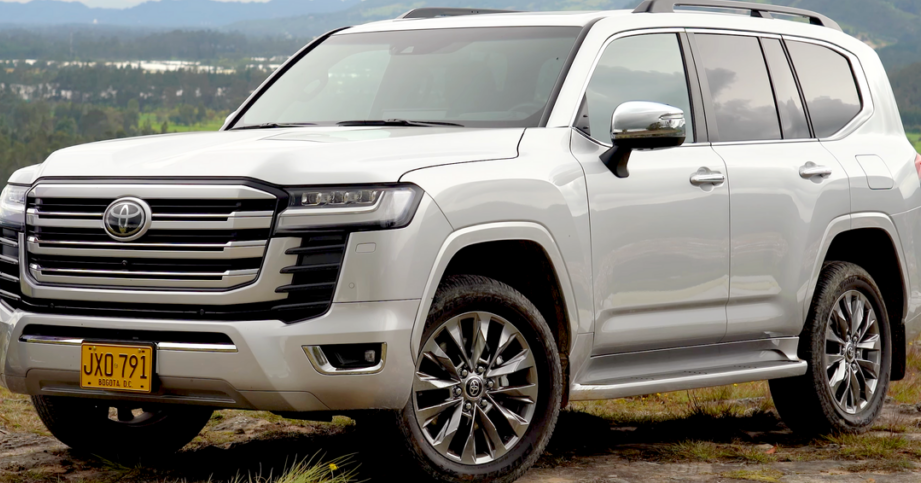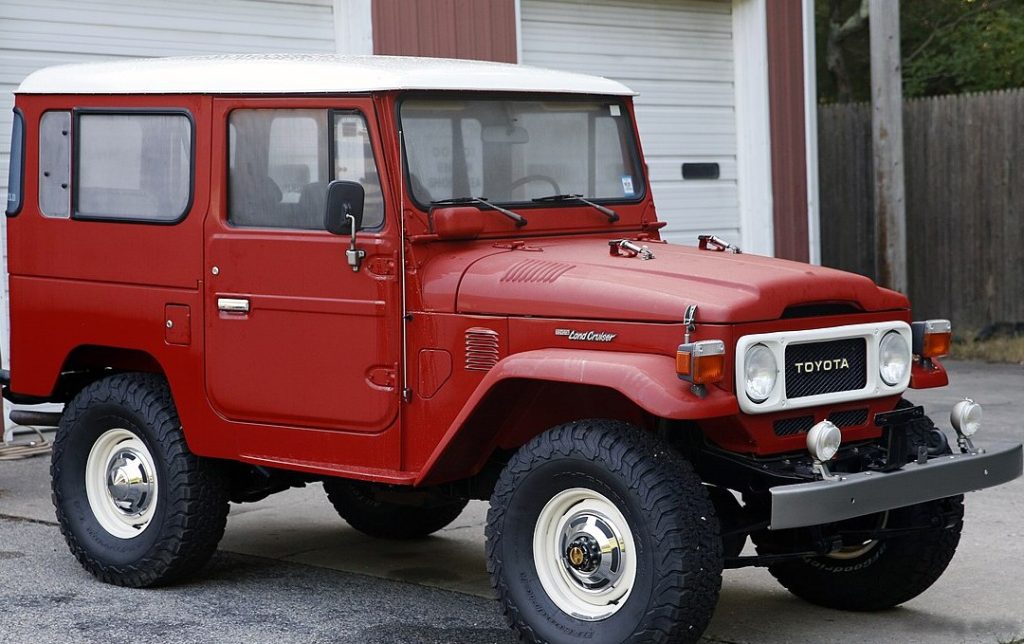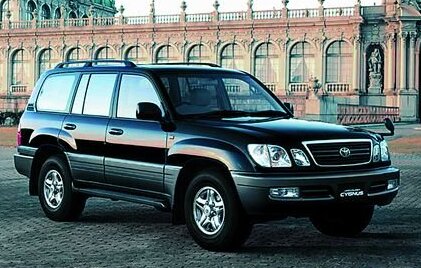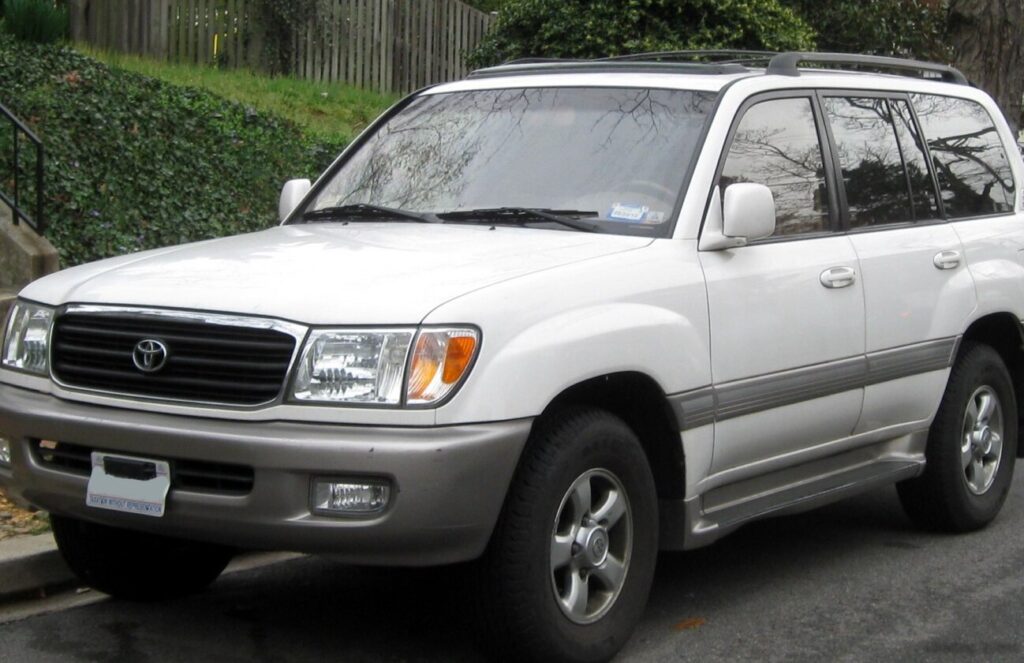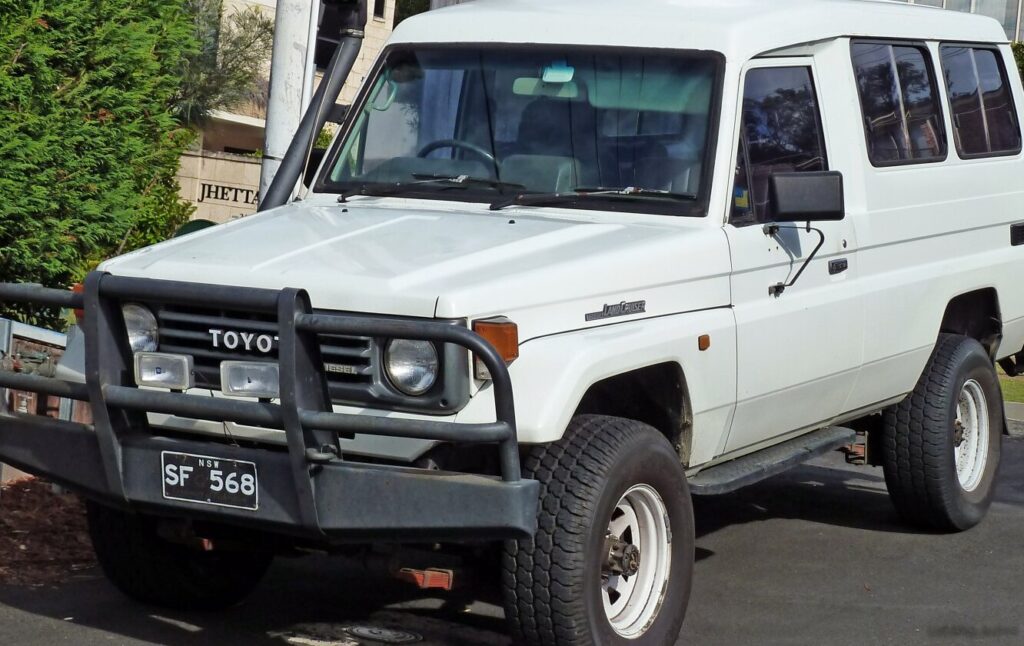
The Toyota Land Cruiser J75 series, produced from 1989 to 1998, represented a significant evolution of Toyota’s legendary off-road vehicle. The 3.5 D (PZJ75) variant, powered by the 1PZ engine and producing 115 horsepower, was a mainstay of the range, particularly in markets outside of North America where demand for rugged, dependable diesel-powered 4x4s remained strong. This model occupied a crucial position as a workhorse vehicle, favored for its durability and capability in challenging terrains. Production of the PZJ75 specifically ran from 1990 to 1996, bridging the gap between the more utilitarian early J70s and the later, more refined models.
Technical Specifications
| Brand | Toyota |
| Model | Land Cruiser |
| Generation | Land Cruiser (J75) |
| Type | 3.5 D (PZJ75) (115 Hp) 4WD |
| Start of production | 1990 |
| End of production | 1996 |
| Powertrain Architecture | Internal Combustion engine |
| Body type | Off-road vehicle |
| Seats | 6 |
| Doors | 3 |
| Fuel Type | Diesel |
| Power | 115 Hp @ 4000 rpm |
| Power per litre | 33.2 Hp/l |
| Torque | 238 Nm @ 2400 rpm / 175.54 lb.-ft. @ 2400 rpm |
| Engine layout | Front, Longitudinal |
| Engine Model/Code | 1PZ |
| Engine displacement | 3469 cm3 / 211.69 cu. in. |
| Number of cylinders | 5 |
| Engine configuration | Inline |
| Cylinder Bore | 94 mm / 3.7 in. |
| Piston Stroke | 100 mm / 3.94 in. |
| Compression ratio | 22.7:1 |
| Number of valves per cylinder | 2 |
| Fuel injection system | Precombustion chamber injection |
| Engine aspiration | Naturally aspirated engine |
| Valvetrain | SOHC |
| Engine oil capacity | 9 l / 9.51 US qt | 7.92 UK qt |
| Coolant | 10.3 l / 10.88 US qt | 9.06 UK qt |
| Fuel tank capacity | 90 l / 23.78 US gal | 19.8 UK gal |
| Length | 4885 mm / 192.32 in. |
| Width | 1690 mm / 66.54 in. |
| Height | 1895 mm / 74.61 in. |
| Wheelbase | 2980 mm / 117.32 in. |
| Front track | 1415 mm / 55.71 in. |
| Rear track | 1410 mm / 55.51 in. |
| Drivetrain Architecture | Part-time 4WD |
| Drive wheel | All wheel drive (4×4) |
| Number of gears | 5 |
| Gearbox type | Manual transmission |
| Front suspension | Leaf spring |
| Rear suspension | Leaf spring |
| Front brakes | Ventilated discs |
| Rear brakes | Drum |
| Steering type | Cone worm with recirculation balls |
Powertrain & Engine Architecture
The heart of the PZJ75 was the 1PZ engine, a 3.5-liter inline-five cylinder diesel. This engine was known for its robustness and relatively simple design, prioritizing reliability over outright performance. The 1PZ utilized a precombustion chamber injection system, a common diesel technology of the era. This system involved injecting fuel into a precombustion chamber connected to the main cylinder, promoting more complete combustion and reducing engine noise. The single overhead camshaft (SOHC) valvetrain kept the engine relatively compact. The engine’s 22.7:1 compression ratio was typical for indirect injection diesels, contributing to its fuel efficiency but also requiring robust engine components. The five-speed manual transmission was the standard offering, chosen for its durability and suitability for off-road driving. The transmission was directly connected to the transfer case, enabling the driver to switch between two-wheel drive, four-wheel drive high range, and four-wheel drive low range.
Driving Characteristics
The 115 horsepower and 238 Nm (175.54 lb-ft) of torque delivered by the 1PZ engine provided adequate, though not exhilarating, performance. The PZJ75 wasn’t built for speed; its strength lay in its ability to tackle difficult terrain at low speeds. The manual transmission’s gear ratios were optimized for low-end torque, allowing the vehicle to crawl over obstacles with ease. Compared to later Land Cruisers with more powerful engines, the PZJ75 felt comparatively sluggish on paved roads, particularly when fully loaded. However, its simplicity and robust drivetrain made it a highly capable off-road performer. The relatively low gearing also meant that engine RPMs were higher at highway speeds, contributing to a noisier driving experience.
Equipment & Trim Levels
The PZJ75 was generally equipped with basic, utilitarian features. Interior appointments were functional rather than luxurious. Standard features typically included vinyl or cloth upholstery, a simple dashboard layout, and basic instrumentation. Air conditioning was often an optional extra, as were power windows and central locking. The focus was on providing a durable and practical vehicle, rather than one laden with creature comforts. Trim levels were relatively limited, with most variations stemming from optional equipment packages. The three-door body style meant limited rear passenger space, but the vehicle could accommodate up to six occupants with the rear bench seat in use.
Chassis & Braking
The J75 chassis was a body-on-frame construction, providing exceptional strength and durability. Both the front and rear suspension utilized leaf springs, a design choice prioritizing load-carrying capacity and off-road robustness over ride comfort. The front suspension featured a stabilizer bar to reduce body roll. Braking duties were handled by ventilated discs at the front and drum brakes at the rear. The steering system employed a cone worm and recirculation ball mechanism, providing a direct, though somewhat heavy, steering feel. The robust chassis and suspension were designed to withstand the stresses of off-road use and heavy loads.
Market Reception & Comparison
The PZJ75 3.5 D was well-received in markets where diesel-powered 4x4s were popular, such as Australia, Africa, and parts of Europe and Asia. Critics praised its reliability, durability, and off-road capability. Compared to the gasoline-powered Land Cruisers, the diesel variant offered significantly better fuel economy, making it a more practical choice for long-distance travel and demanding work applications. Compared to other diesel 4x4s of the era, such as the Nissan Patrol, the Land Cruiser was often seen as offering a superior level of refinement and build quality. However, the 1PZ engine’s lower power output meant it wasn’t as quick or refined as some of its competitors.
Legacy
The Toyota Land Cruiser J75 series, and the PZJ75 3.5 D variant in particular, has earned a reputation for exceptional longevity and reliability. Many examples are still in use today, often having accumulated hundreds of thousands of kilometers. The 1PZ engine is known for its ability to withstand abuse and continue running with minimal maintenance. In the used car market, well-maintained PZJ75s command a premium due to their reputation for durability and off-road capability. While not as sought-after as some of the more modern Land Cruiser models, the J75 remains a popular choice for those seeking a rugged, dependable, and capable off-road vehicle. Its simple design and robust construction make it relatively easy to maintain and repair, even in remote locations.