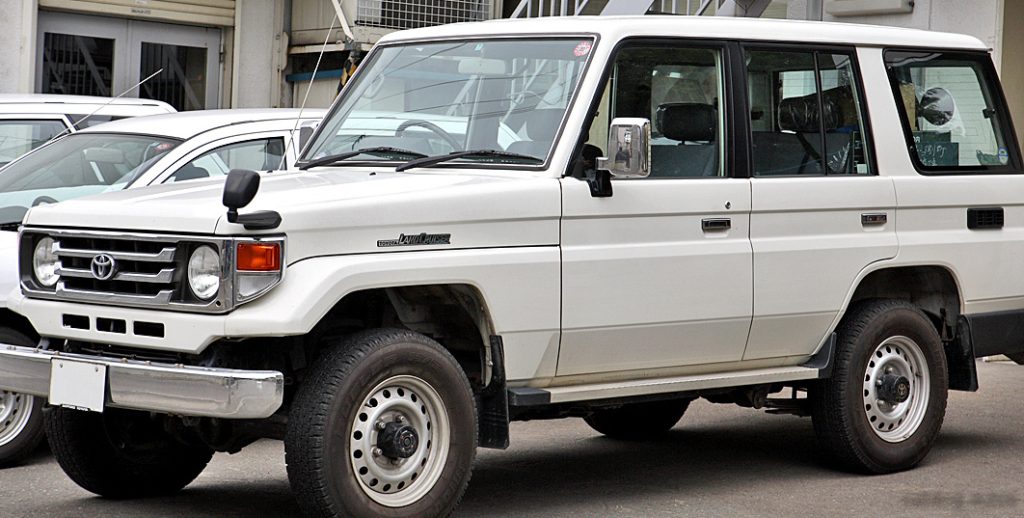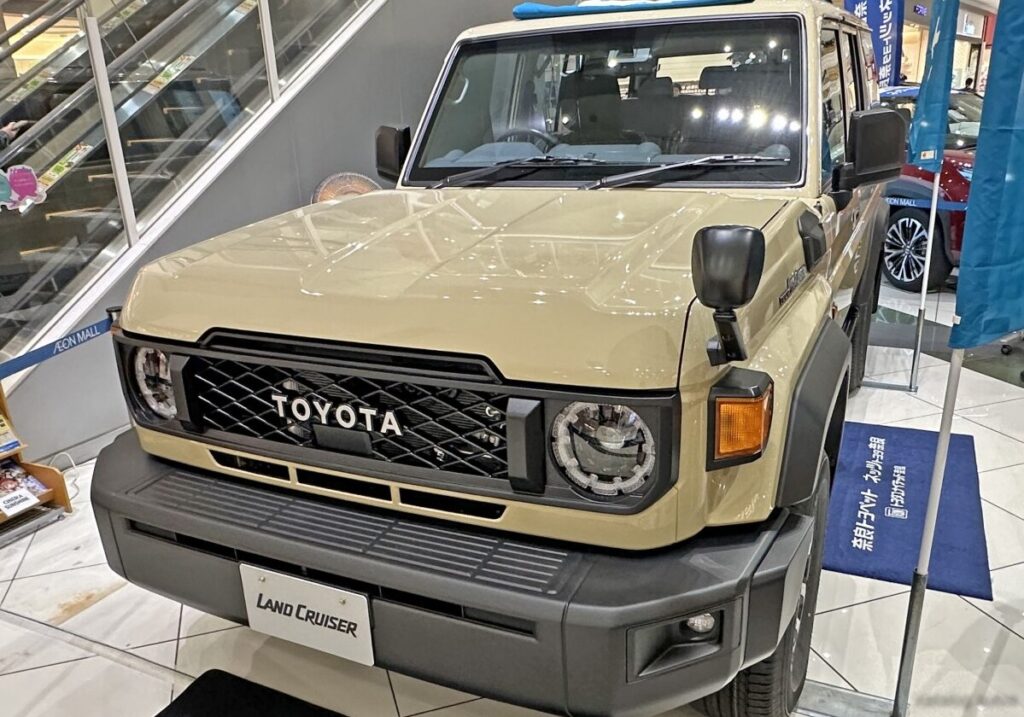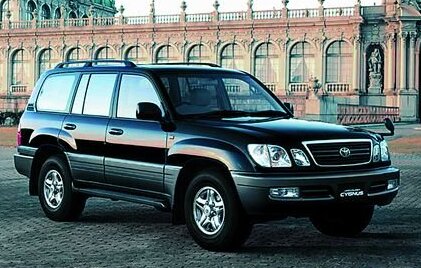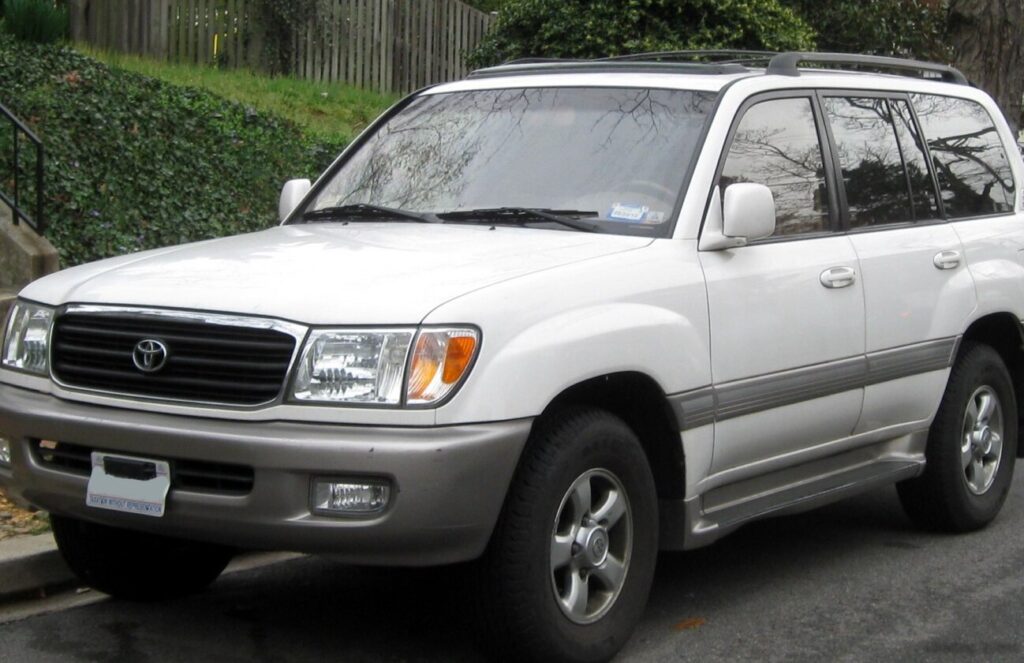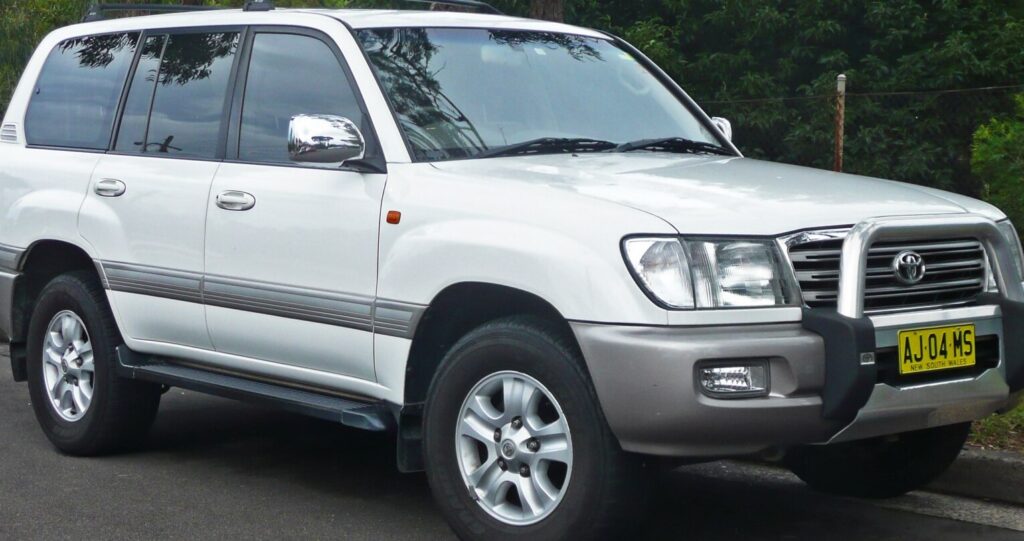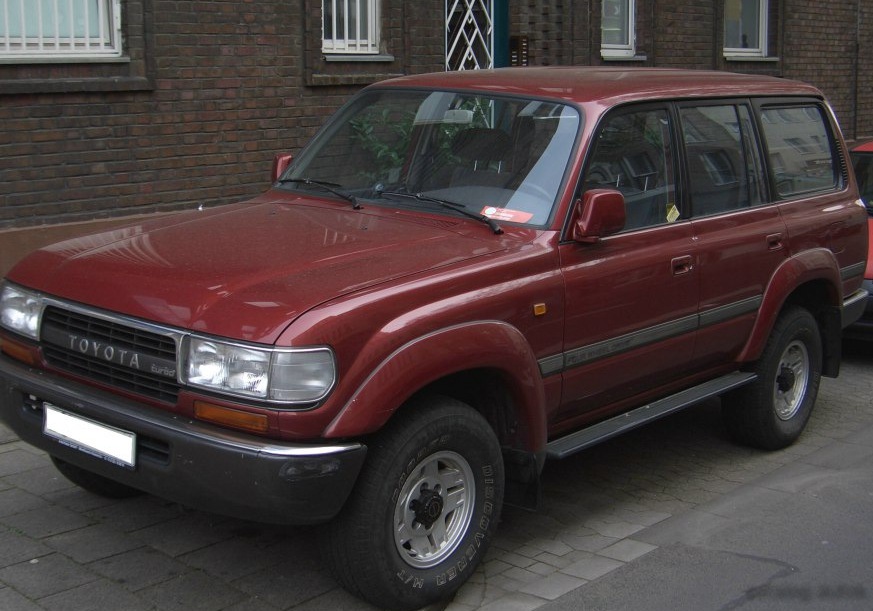
The Toyota Land Cruiser J80, produced from 1989 to 1997, represented a significant leap forward in refinement and capability for Toyota’s legendary off-road vehicle. The 4.2 TD variant, available primarily from 1990 to 1995 in many markets, offered a diesel-powered option aimed at buyers needing robust performance and fuel economy for long-distance travel and demanding conditions. This model occupied a middle ground in the J80 lineup, positioned below the gasoline-powered inline-six and V8 options, but above the smaller displacement diesel engines. It was particularly popular in Europe, Australia, and parts of Asia where diesel fuel was readily available and valued for its efficiency.
Technical Specifications
| Brand | Toyota |
| Model | Land Cruiser |
| Generation | Land Cruiser (J80) |
| Type (Engine) | 4.2 TD (167 Hp) 4WD |
| Start of production | 1990 year |
| End of production | 1995 year |
| Powertrain Architecture | Internal Combustion engine |
| Body type | SUV |
| Seats | 5 |
| Doors | 5 |
| Fuel consumption (economy) – urban | 16.3 l/100 km (14.4 US mpg, 17.3 UK mpg, 6.1 km/l) |
| Fuel consumption (economy) – extra urban | 14.3 l/100 km (16.4 US mpg, 19.8 UK mpg, 7 km/l) |
| Fuel consumption (economy) – combined | 15.4 l/100 km (15.3 US mpg, 18.3 UK mpg, 6.5 km/l) |
| Fuel Type | Diesel |
| Acceleration 0 – 100 km/h | 16 sec |
| Acceleration 0 – 62 mph | 16 sec |
| Acceleration 0 – 60 mph | 15.2 sec |
| Maximum speed | 165 km/h (102.53 mph) |
| Weight-to-power ratio | 13.7 kg/Hp, 72.7 Hp/tonne |
| Weight-to-torque ratio | 6.4 kg/Nm, 156.8 Nm/tonne |
| Power | 167 Hp @ 3600 rpm |
| Power per litre | 40.1 Hp/l |
| Torque | 360 Nm @ 1800 rpm (265.52 lb.-ft. @ 1800 rpm) |
| Engine layout | Front, Longitudinal |
| Engine Model/Code | 1HD-T |
| Engine displacement | 4164 cm3 (254.1 cu. in.) |
| Number of cylinders | 6 |
| Engine configuration | Inline |
| Cylinder Bore | 94 mm (3.7 in.) |
| Piston Stroke | 100 mm (3.94 in.) |
| Compression ratio | 18.6:1 |
| Number of valves per cylinder | 2 |
| Fuel injection system | Direct injection |
| Engine aspiration | Turbocharger, Intercooler |
| Valvetrain | OHC |
| Engine oil capacity | 9.3 l (9.83 US qt | 8.18 UK qt) |
| Coolant | 12 l (12.68 US qt | 10.56 UK qt) |
| Kerb Weight | 2296 kg (5061.81 lbs.) |
| Max. weight | 2960 kg (6525.68 lbs.) |
| Max load | 664 kg (1463.87 lbs.) |
| Trunk (boot) space – minimum | 830 l (29.31 cu. ft.) |
| Trunk (boot) space – maximum | 1370 l (48.38 cu. ft.) |
| Fuel tank capacity | 95 l (25.1 US gal | 20.9 UK gal) |
| Max. roof load | 200 kg (440.92 lbs.) |
| Permitted trailer load with brakes (12%) | 2960 kg (6525.68 lbs.) |
| Permitted trailer load without brakes | 750 kg (1653.47 lbs.) |
| Length | 4780 mm (188.19 in.) |
| Width | 1900 mm (74.8 in.) |
| Height | 1890 mm (74.41 in.) |
| Wheelbase | 2850 mm (112.2 in.) |
| Front track | 1575 mm (62.01 in.) |
| Rear (Back) track | 1580 mm (62.2 in.) |
| Ride height (ground clearance) | 220 mm (8.66 in.) |
| Minimum turning circle | 12.8 m (41.99 ft.) |
| Approach angle | 37° |
| Departure angle | 25° |
| Drivetrain Architecture | The Internal combustion engine (ICE) drives permanently the four wheels of the vehicle. |
| Drive wheel | All wheel drive (4×4) |
| Number of gears and type of gearbox | 5 gears, manual transmission |
| Front suspension | Dependent spring suspension with anti-roll bar |
| Rear suspension | dependent spring suspension, Transverse stabilizer |
| Front brakes | Ventilated discs |
| Rear brakes | Ventilated discs |
| Steering type | Cone worm with recirculation balls |
| Power steering | Hydraulic Steering |
| Tires size | 265/75 R15 |
| Wheel rims size | 7J x 15 |
Powertrain & Engine Architecture
The heart of the 4.2 TD Land Cruiser is the 1HD-T engine, a 4.2-liter (4164cc) inline-six cylinder diesel. This engine is renowned for its durability and relatively simple mechanical design. The 1HD-T utilizes direct injection, meaning fuel is injected directly into the combustion chamber, improving efficiency and reducing emissions compared to indirect injection systems. A turbocharger with an intercooler significantly boosts power output, bringing it to 167 horsepower at 3600 rpm and 360 Nm (265.52 lb-ft) of torque at 1800 rpm. The engine features an overhead camshaft (OHC) valvetrain with two valves per cylinder. The 5-speed manual transmission was standard, providing a robust and reliable means of transferring power to all four wheels. The transmission’s gear ratios were geared towards low-end torque, prioritizing off-road capability and towing capacity over outright acceleration.
Driving Characteristics
The 4.2 TD Land Cruiser, with its manual transmission, offered a driving experience focused on capability rather than speed. Acceleration from 0-60 mph took around 15.2 seconds, and top speed was limited to approximately 102.53 mph. However, these figures don’t fully represent the vehicle’s strengths. The engine’s substantial torque, available from low RPMs, made it exceptionally capable off-road and when towing. The manual transmission allowed for precise control in challenging terrain. Compared to the gasoline-powered Land Cruisers, the 4.2 TD offered significantly better fuel economy, although still relatively high by modern standards (around 15-18 mpg combined). The 4.2 TD was noticeably slower than the gasoline inline-six or V8 versions, but its superior fuel economy and durability made it a popular choice for those prioritizing long-term reliability and cost-effectiveness.
Equipment & Trim Levels
The 4.2 TD Land Cruiser typically came with a fairly basic level of equipment, reflecting its focus on functionality and durability. Standard features generally included power steering, air conditioning, and a basic audio system. Interior upholstery was typically cloth, and the dashboard featured a functional, utilitarian design. Optional extras could include power windows, power door locks, and upgraded audio systems. Trim levels varied by market, but generally, the 4.2 TD was positioned as a mid-range offering, bridging the gap between the base model and the more luxurious gasoline-powered variants.
Chassis & Braking
The J80 Land Cruiser featured a robust body-on-frame construction, providing excellent durability and off-road capability. The suspension utilized a dependent spring setup with anti-roll bars on both the front and rear axles. This configuration provided a comfortable ride on paved roads while maintaining excellent articulation for off-road use. Braking was handled by ventilated discs on all four wheels, providing adequate stopping power for the vehicle’s weight. The steering system employed a cone worm and recirculation ball mechanism, offering precise control but requiring a relatively large turning radius.
Market Reception & Comparison
The 4.2 TD Land Cruiser was generally well-received by critics and buyers alike. It was praised for its durability, off-road capability, and fuel economy. However, some reviewers noted its relatively slow acceleration and basic interior compared to other SUVs on the market. Compared to the gasoline-powered Land Cruisers, the 4.2 TD offered a more affordable entry point and significantly better fuel economy, making it a popular choice for those who prioritized practicality and long-term cost of ownership. Against competitors like the Nissan Patrol, the Land Cruiser 4.2 TD was often seen as offering a more refined driving experience and a stronger reputation for reliability.
Legacy
The 1HD-T engine, found in the 4.2 TD Land Cruiser, has earned a legendary reputation for its longevity and reliability. Many examples of this engine are still in service today, having accumulated hundreds of thousands of miles. The J80 Land Cruiser, in general, is highly sought after by enthusiasts and collectors. The 4.2 TD variant, while not as common as the gasoline models, is particularly valued for its fuel efficiency and robust powertrain. In the used car market, well-maintained examples of the 4.2 TD Land Cruiser command a premium price, reflecting their enduring appeal and reputation for reliability. The 1HD-T engine remains a popular choice for engine swaps and restorations, further cementing its legacy as one of Toyota’s most durable and capable engines.