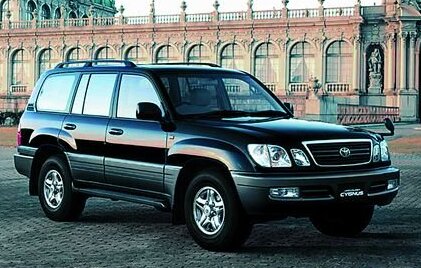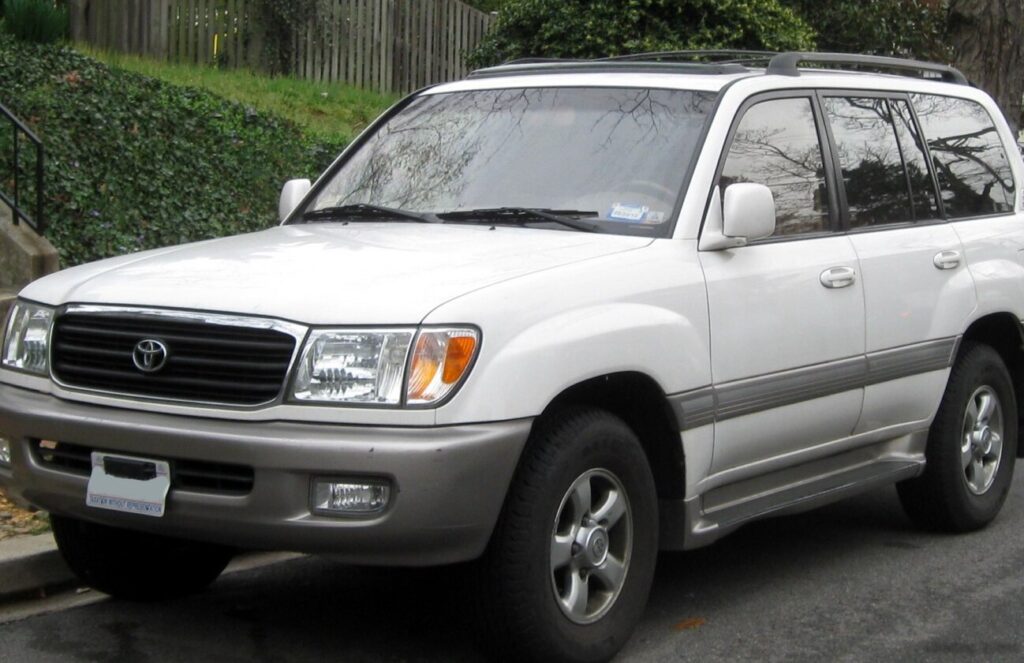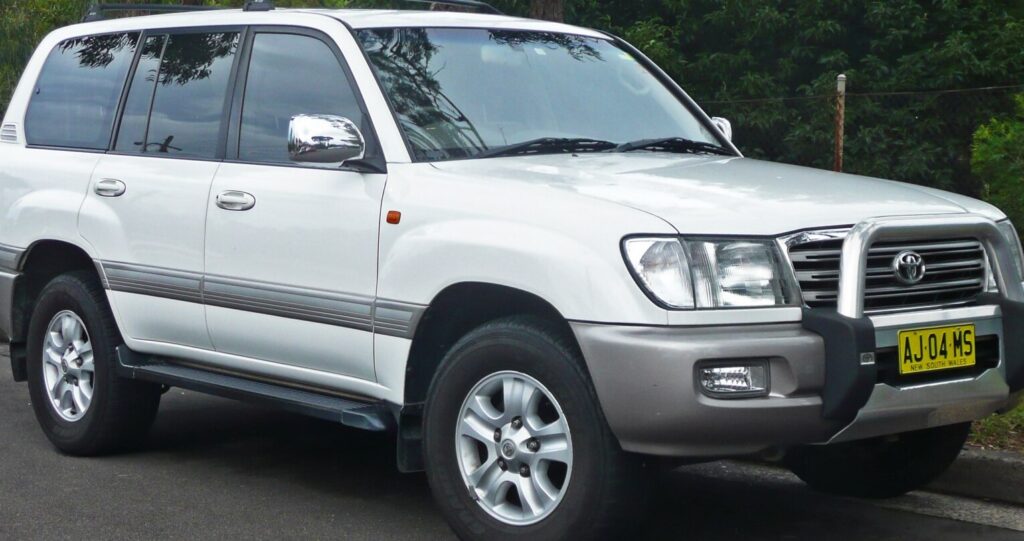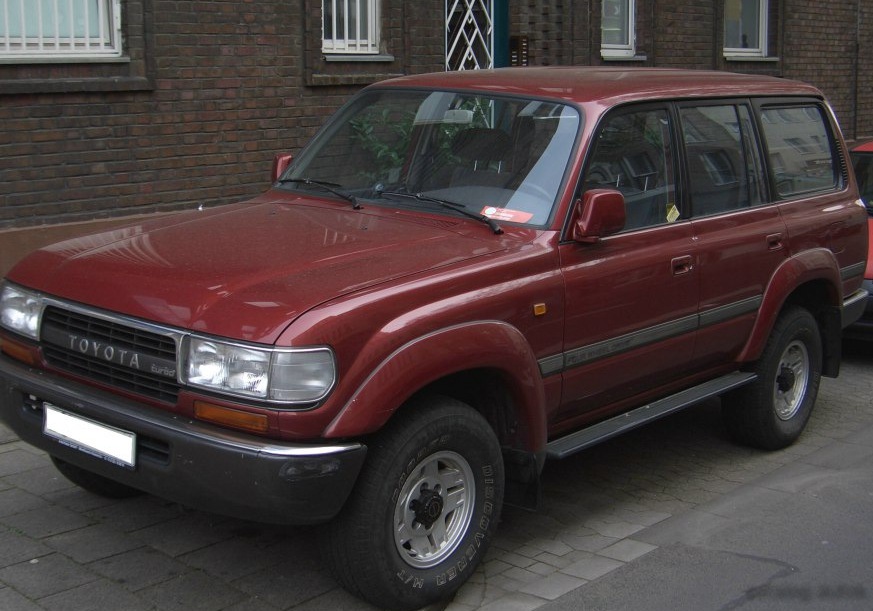
The Toyota Land Cruiser J80, produced from 1989 to 1997, represented a significant leap forward in refinement and capability for Toyota’s legendary off-road vehicle. The 4.2 TD 24V (170 Hp) 4WD variant, available primarily between 1995 and 1996, occupied a specific niche within the J80 lineup, offering a balance of diesel fuel efficiency, robust torque, and full-time four-wheel drive. This model was particularly popular in European and Australian markets where diesel engines were favored for their long-distance capabilities and fuel economy. It served as a workhorse for those needing a capable and reliable vehicle for towing, overlanding, or simply navigating challenging terrain.
Technical Specifications
| Brand | Toyota |
| Model | Land Cruiser |
| Generation | Land Cruiser (J80) |
| Type (Engine) | 4.2 TD 24V (170 Hp) 4WD |
| Start of production | 1995 |
| End of production | 1996 |
| Powertrain Architecture | Internal Combustion engine |
| Body type | SUV |
| Seats | 5 |
| Doors | 5 |
| Fuel consumption (combined) | 11.2 l/100 km (21 US mpg, 25.2 UK mpg, 8.9 km/l) |
| Fuel Type | Diesel |
| Acceleration 0 – 100 km/h | 12.7 sec |
| Acceleration 0 – 62 mph | 12.7 sec |
| Acceleration 0 – 60 mph | 12.1 sec |
| Maximum speed | 170 km/h (105.63 mph) |
| Weight-to-power ratio | 12.9 kg/Hp, 77.3 Hp/tonne |
| Weight-to-torque ratio | 5.8 kg/Nm, 172.7 Nm/tonne |
| Power | 170 Hp @ 3600 rpm |
| Power per litre | 40.8 Hp/l |
| Torque | 380 Nm @ 2500 rpm (280.27 lb.-ft. @ 2500 rpm) |
| Engine layout | Front, Longitudinal |
| Engine Model/Code | 1HD-FT |
| Engine displacement | 4164 cm3 (254.1 cu. in.) |
| Number of cylinders | 6 |
| Engine configuration | Inline |
| Cylinder Bore | 94 mm (3.7 in.) |
| Piston Stroke | 100 mm (3.94 in.) |
| Compression ratio | 18.6:1 |
| Number of valves per cylinder | 4 |
| Fuel injection system | Direct injection |
| Engine aspiration | Turbocharger |
| Valvetrain | OHV |
| Engine oil capacity | 9.7 l (10.25 US qt | 8.53 UK qt) |
| Kerb Weight | 2200 kg (4850.17 lbs.) |
| Max. weight | 3060 kg (6746.15 lbs.) |
| Max load | 860 kg (1895.98 lbs.) |
| Trunk (boot) space – minimum | 832 l (29.38 cu. ft.) |
| Trunk (boot) space – maximum | 1368 l (48.31 cu. ft.) |
| Fuel tank capacity | 95 l (25.1 US gal | 20.9 UK gal) |
| Length | 4820 mm (189.76 in.) |
| Width | 1930 mm (75.98 in.) |
| Height | 1890 mm (74.41 in.) |
| Wheelbase | 2850 mm (112.2 in.) |
| Front track | 1595 mm (62.8 in.) |
| Rear (Back) track | 1600 mm (62.99 in.) |
| Drivetrain Architecture | All wheel drive (4×4). ICE drives permanently the four wheels. |
| Number of gears and type of gearbox | 5 gears, manual transmission |
Powertrain & Engine Architecture
The heart of the J80 4.2 TD was the 1HD-FT engine, a 4.2-liter inline-six cylinder diesel. This engine was a robust and overbuilt design, known for its longevity and ability to withstand high mileage. The ‘FT’ designation indicated a factory-fitted turbocharger and intercooler, significantly boosting power and torque compared to naturally aspirated versions. The 1HD-FT utilized direct injection, injecting fuel directly into the combustion chamber for improved efficiency and reduced emissions (for the time). The engine employed an overhead valve (OHV) valvetrain, a simpler and more durable design than overhead camshafts. The five-speed manual transmission was the only gearbox option for this variant, providing a direct connection to the engine’s power and allowing for precise control in off-road situations.
Driving Characteristics
The 170 hp and 380 Nm (280 lb-ft) of torque delivered by the 4.2 TD provided a respectable, if not exhilarating, driving experience. Acceleration was adequate, taking around 12.7 seconds to reach 62 mph, but the engine’s strength lay in its mid-range torque. This made it a capable tower and provided effortless cruising at highway speeds. Compared to the gasoline-powered J80 variants, the diesel offered significantly better fuel economy, around 21 mpg combined. The manual transmission allowed drivers to fully utilize the engine’s torque band, but it lacked the refinement of more modern automatic transmissions. Compared to the later 1FZ-FE inline-six gasoline engine, the 1HD-FT traded outright power for fuel efficiency and durability.
Equipment & Trim Levels
The 4.2 TD typically came with a fairly basic level of equipment, reflecting its positioning as a more utilitarian variant. Standard features generally included power steering, air conditioning, and a basic audio system. Interior upholstery was typically cloth, and the dashboard featured a functional, no-frills design. Optional extras included power windows, central locking, and a sunroof. The focus was on durability and practicality rather than luxury. Trim levels varied by market, but generally, the 4.2 TD sat below the higher-specification gasoline models in terms of standard features.
Chassis & Braking
The J80 chassis was a body-on-frame construction, providing exceptional strength and off-road capability. The 4.2 TD variant utilized a dependent spring suspension with anti-roll bars front and rear, offering a comfortable ride on paved roads while maintaining excellent articulation for off-road use. Braking consisted of ventilated discs at the front and discs at the rear, providing adequate stopping power for the vehicle’s weight. ABS (Anti-lock braking system) was often included as standard equipment, enhancing safety in slippery conditions.
Market Reception & Comparison
The Land Cruiser J80 4.2 TD was well-received in markets where diesel engines were popular. Critics praised its reliability, durability, and fuel efficiency. However, some noted its relatively slow acceleration and lack of refinement compared to more modern SUVs. Compared to the gasoline-powered J80 variants, the diesel offered superior fuel economy and torque, making it a better choice for long-distance travel and towing. Compared to other diesel-powered SUVs of the era, such as the Nissan Patrol, the Land Cruiser was often considered to be more refined and reliable.
Legacy
The 1HD-FT engine has earned a reputation as one of the most durable and reliable diesel engines ever produced. Many examples are still in service today, having accumulated hundreds of thousands of miles. The J80 4.2 TD remains a popular choice among off-road enthusiasts and overlanders due to its ruggedness and capability. In the used car market, well-maintained examples command a premium price, reflecting their enduring appeal and reputation for reliability. While not as sought after as some of the more powerful J80 variants, the 4.2 TD represents a sweet spot for those seeking a capable, reliable, and fuel-efficient classic SUV.