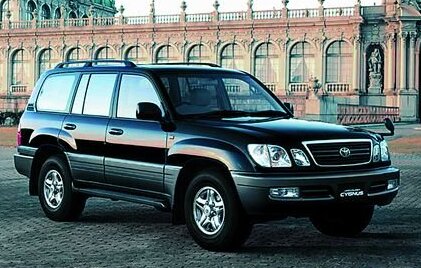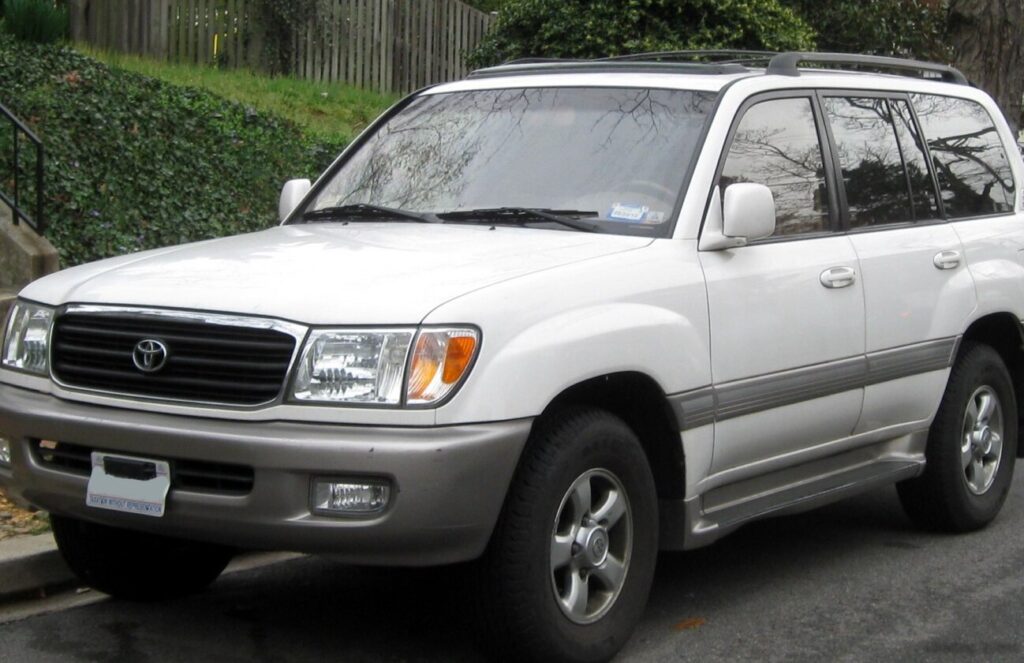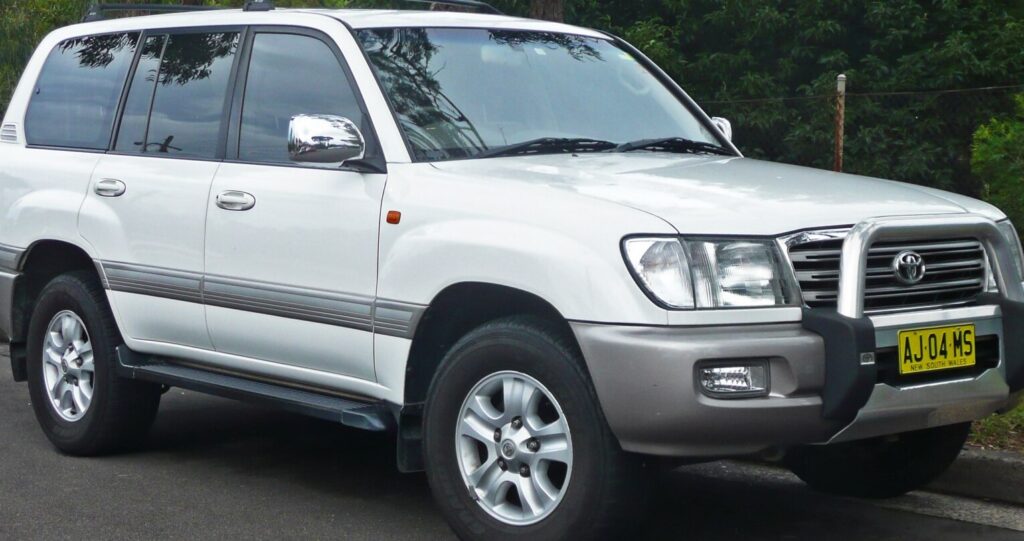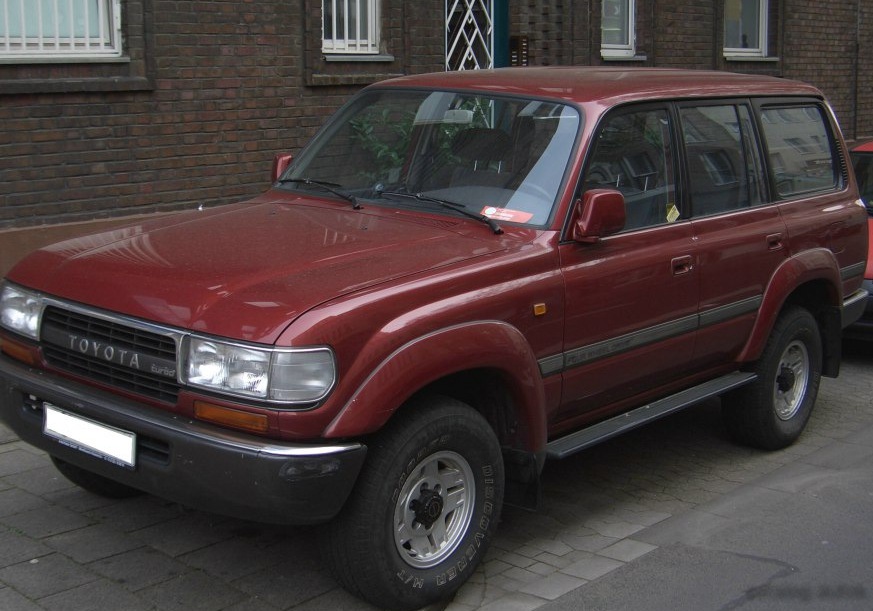
The Toyota Land Cruiser J80, produced from 1989 to 1997, represented a significant leap forward in refinement and capability for Toyota’s legendary off-road vehicle. The 4.5 24V (FZJ80) variant, powered by the 1FZ-F inline-six engine and paired with a four-speed automatic transmission, was a key part of the J80 lineup, particularly in markets outside of North America. This configuration offered a balance of power, comfort, and reliability, appealing to buyers seeking a robust and luxurious SUV. Production of this specific variant ran from 1990 to 1996, establishing itself as a cornerstone of the J80 generation.
Technical Specifications
| Brand | Toyota |
| Model | Land Cruiser |
| Generation | Land Cruiser (J80) |
| Type (Engine) | 4.5 24V (FZJ80) (190 Hp) |
| Start of production | 1990 year |
| End of production | 1996 year |
| Powertrain Architecture | Internal Combustion engine |
| Body type | SUV |
| Seats | 7 |
| Doors | 5 |
| Fuel consumption (economy) – combined | 17 l/100 km |
| Fuel consumption (economy) – combined | 13.8 US mpg |
| Fuel consumption (economy) – combined | 16.6 UK mpg |
| Fuel consumption (economy) – combined | 5.9 km/l |
| Fuel Type | Petrol (Gasoline) |
| Acceleration 0 – 100 km/h | 12 sec |
| Acceleration 0 – 62 mph | 12 sec |
| Acceleration 0 – 60 mph | 11.4 sec |
| Maximum speed | 170 km/h |
| Maximum speed | 105.63 mph |
| Weight-to-power ratio | 12.7 kg/Hp |
| Weight-to-power ratio | 78.8 Hp/tonne |
| Weight-to-torque ratio | 6.6 kg/Nm |
| Weight-to-torque ratio | 150.6 Nm/tonne |
| Power | 190 Hp |
| Power per litre | 42.4 Hp/l |
| Torque | 363 Nm |
| Torque | 267.74 lb.-ft. |
| Engine layout | Front, Longitudinal |
| Engine Model/Code | 1FZ-F |
| Engine displacement | 4477 cm3 |
| Engine displacement | 273.2 cu. in. |
| Number of cylinders | 6 |
| Engine configuration | Inline |
| Cylinder Bore | 100 mm |
| Cylinder Bore | 3.94 in. |
| Piston Stroke | 95 mm |
| Piston Stroke | 3.74 in. |
| Compression ratio | 8.1:1 |
| Number of valves per cylinder | 4 |
| Fuel injection system | Carburettor |
| Engine aspiration | Naturally aspirated engine |
| Valvetrain | DOHC |
| Engine oil capacity | 7.4 l |
| Engine oil capacity | 7.82 US qt |
| Engine oil capacity | 6.51 UK qt |
| Kerb Weight | 2410 kg |
| Kerb Weight | 5313.14 lbs. |
| Max. weight | 3060 kg |
| Max. weight | 6746.15 lbs. |
| Max load | 650 kg |
| Max load | 1433 lbs. |
| Trunk (boot) space – minimum | 832 l |
| Trunk (boot) space – minimum | 29.38 cu. ft. |
| Trunk (boot) space – maximum | 1368 l |
| Trunk (boot) space – maximum | 48.31 cu. ft. |
| Fuel tank capacity | 95 l |
| Fuel tank capacity | 25.1 US gal |
| Fuel tank capacity | 20.9 UK gal |
| Length | 4820 mm |
| Length | 189.76 in. |
| Width | 1930 mm |
| Width | 75.98 in. |
| Height | 1890 mm |
| Height | 74.41 in. |
| Wheelbase | 2850 mm |
| Wheelbase | 112.2 in. |
| Front track | 1595 mm |
| Front track | 62.8 in. |
| Rear (Back) track | 1600 mm |
| Rear (Back) track | 62.99 in. |
| Drive wheel | All wheel drive (4×4) |
| Number of gears and type of gearbox | 4 gears, automatic transmission |
| Front suspension | Dependent spring suspension with anti-roll bar |
| Rear suspension | dependent spring suspension, Transverse stabilizer |
| Front brakes | Ventilated discs |
| Rear brakes | Disc |
| Assisting systems | ABS (Anti-lock braking system) |
| Steering type | Cone worm with recirculation balls |
| Power steering | Hydraulic Steering |
| Tires size | 275/70 R16 T |
Powertrain & Engine Architecture
The heart of the FZJ80 is the 1FZ-F, a 4.5-liter inline-six cylinder gasoline engine. This engine is renowned for its durability and smooth power delivery. The 1FZ-F utilizes a single overhead camshaft (SOHC) design, with two valves per cylinder. While not a cutting-edge design by the 1990s, it prioritized reliability over outright performance. Fuel delivery was managed by a carburetor, a relatively simple system that contributed to the engine’s robustness. The engine produces 190 horsepower and 363 Nm (267.74 lb-ft) of torque. The four-speed automatic transmission, while providing convenience, was not known for its efficiency or responsiveness compared to manual transmissions available in other markets. It was a fairly conventional automatic for the time, focusing on smooth shifts rather than aggressive performance.
Driving Characteristics
The 190 hp and automatic transmission combination in the FZJ80 resulted in a driving experience geared towards comfortable cruising and moderate off-road capability. Acceleration was adequate, with a 0-60 mph time of around 11.4 seconds, but it wasn’t a particularly quick vehicle. The automatic transmission’s gear ratios were optimized for torque multiplication, making it well-suited for tackling challenging terrain, but less ideal for spirited on-road driving. Compared to the manual transmission versions, the automatic felt noticeably slower and less engaging. The 1FZ-F engine, however, provided ample low-end torque, making it easy to maintain speed on inclines and navigate difficult obstacles.
Equipment & Trim Levels
The FZJ80, even in its base automatic configuration, was well-equipped for its time. Standard features typically included air conditioning, power windows and locks, and a basic audio system. Interior upholstery was usually cloth, though leather was available as an option. Higher trim levels added features like power-adjustable seats, a sunroof, and upgraded audio systems. The dashboard layout was functional and straightforward, prioritizing usability over aesthetics. Optional extras included a rear air conditioning system, cruise control, and a limited-slip differential.
Chassis & Braking
The J80 Land Cruiser featured a robust body-on-frame construction, providing excellent durability and off-road capability. The suspension utilized a dependent spring setup with anti-roll bars, offering a comfortable ride on paved roads while maintaining ample articulation for off-road excursions. Braking consisted of ventilated discs at the front and discs at the rear, with ABS (Anti-lock Braking System) as a standard safety feature. The steering system was a cone worm with recirculation balls, providing a stable and predictable feel, though it required a fair amount of effort at low speeds.
Market Reception & Comparison
The FZJ80 4.5 24V Automatic was generally well-received as a capable and reliable SUV. Critics praised its build quality, comfortable ride, and off-road prowess. However, the automatic transmission was often criticized for its lack of responsiveness and fuel inefficiency. Compared to other trims, such as those with the 1FZ-FE engine (producing more horsepower) or the diesel variants, the 190 hp automatic offered a more accessible price point but sacrificed some performance. Fuel economy was a notable drawback, averaging around 13.8 US mpg.
Legacy
The Toyota Land Cruiser J80, and specifically the FZJ80 4.5 24V Automatic, has earned a reputation for exceptional longevity and reliability. Many examples are still on the road today, often with high mileage and minimal maintenance. The 1FZ-F engine is particularly well-regarded for its durability, and parts availability remains relatively good. In the used car market, these Land Cruisers command a premium due to their reputation for reliability and their enduring appeal as a capable and comfortable off-road vehicle. While not the fastest or most fuel-efficient SUV of its era, the FZJ80 4.5 24V Automatic remains a highly sought-after vehicle for those seeking a robust and dependable 4×4.