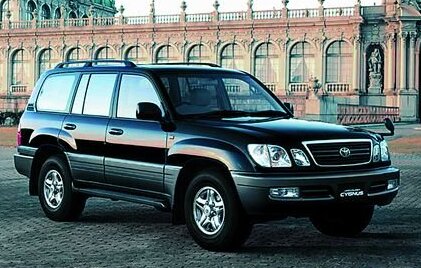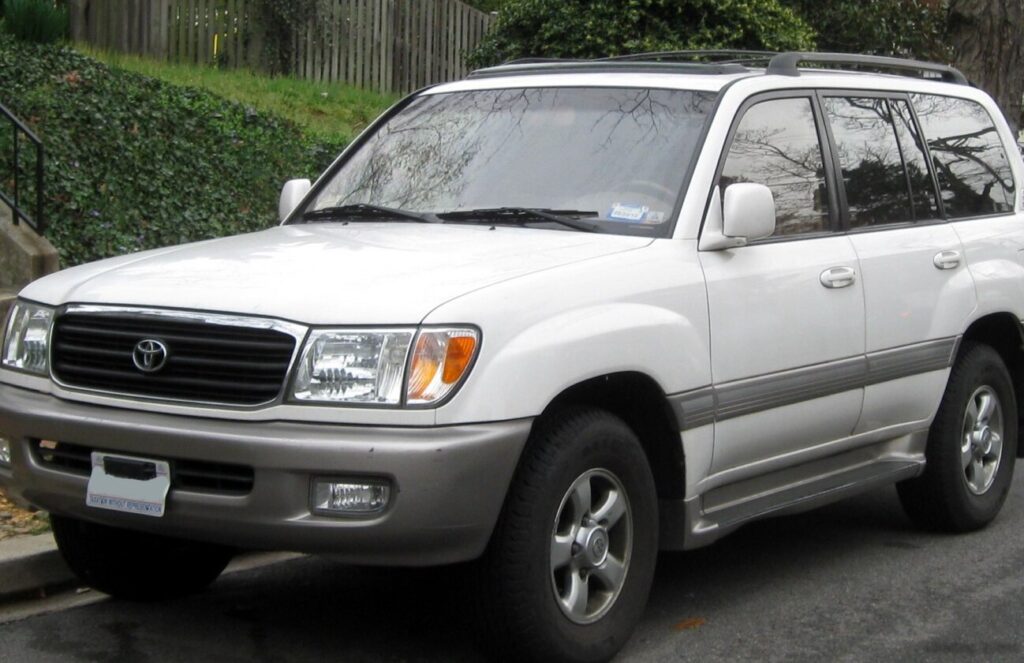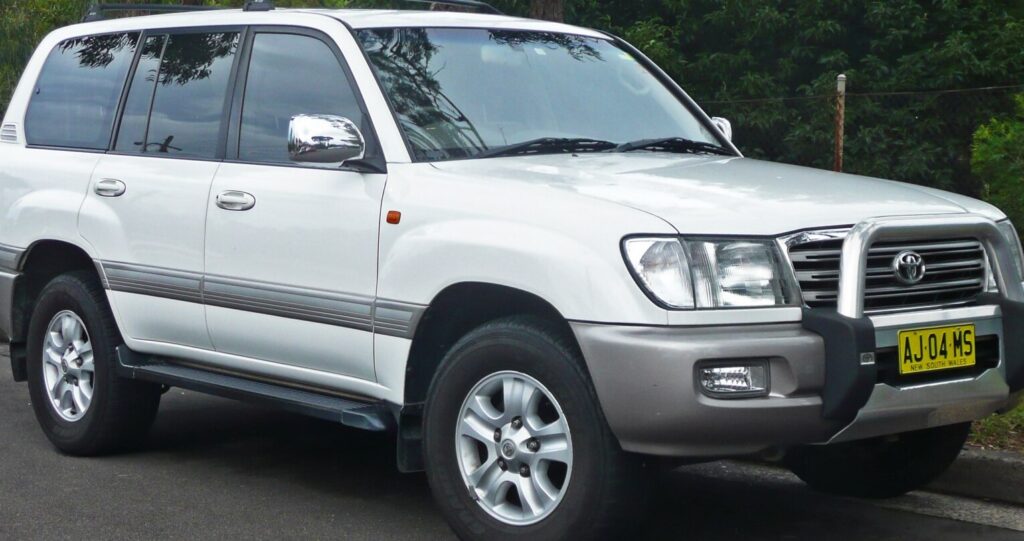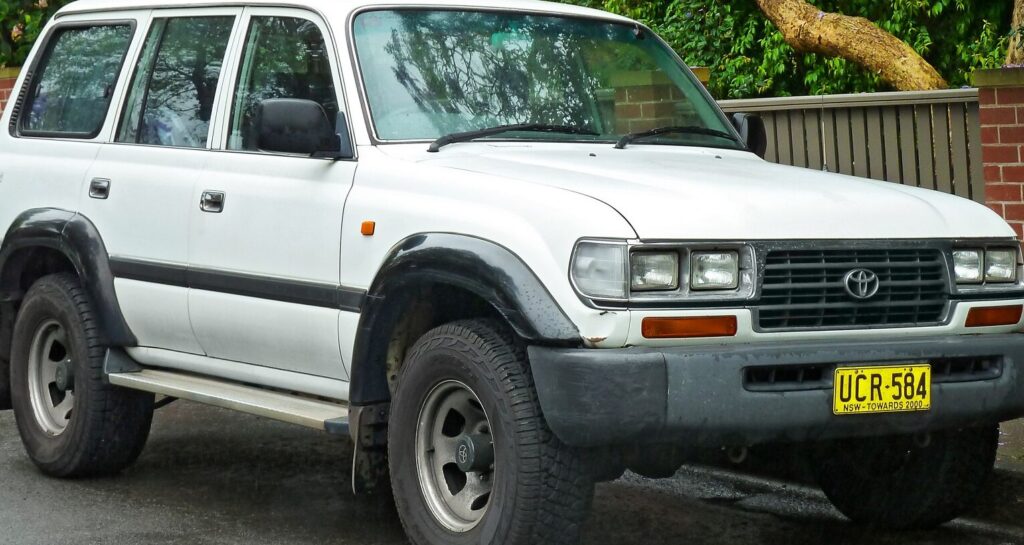
The Toyota Land Cruiser J80, particularly the facelifted version produced from 1995 to 1998, represents a pivotal point in the lineage of this iconic off-road vehicle. The 4.2 TD variant, equipped with the 1HD-FT engine producing 170 horsepower, was a significant offering in many international markets, though less common in the United States due to emissions regulations and the preference for gasoline engines in the North American SUV segment. This model year saw refinements to the J80, solidifying its reputation for durability, capability, and a comfortable ride, making it a popular choice for both overland adventures and family transportation. The 4.2 TD positioned itself as a robust, torque-rich alternative to the gasoline-powered Land Cruisers, appealing to buyers prioritizing towing capacity and fuel efficiency for long-distance travel.
Technical Specifications
| Brand | Toyota |
| Model | Land Cruiser |
| Generation | Land Cruiser (J80, facelift 1995) |
| Type (Engine) | 4.2 TD (170 Hp) 4WD |
| Start of production | 1995 |
| End of production | December, 1998 |
| Powertrain Architecture | Internal Combustion engine |
| Body type | SUV |
| Seats | 8 |
| Doors | 5 |
| Fuel Type | Diesel |
| Emission standard | Euro 3 |
| Weight-to-power ratio | 12.6 kg/Hp, 79.6 Hp/tonne |
| Weight-to-torque ratio | 5.6 kg/Nm, 178 Nm/tonne |
| Power | 170 Hp @ 3600 rpm |
| Power per litre | 40.8 Hp/l |
| Torque | 380 Nm @ 3600 rpm, 280.27 lb.-ft. @ 3600 rpm |
| Engine layout | Front, Longitudinal |
| Engine Model/Code | 1HD-FT |
| Engine displacement | 4164 cm3, 254.1 cu. in. |
| Number of cylinders | 6 |
| Engine configuration | Inline |
| Cylinder Bore | 94 mm, 3.7 in. |
| Piston Stroke | 100 mm, 3.94 in. |
| Compression ratio | 18.6:1 |
| Number of valves per cylinder | 4 |
| Fuel injection system | Direct injection |
| Engine aspiration | Turbocharger |
| Valvetrain | SOHC |
| Engine oil capacity | 9.3 l, 9.83 US qt | 8.18 UK qt |
| Coolant | 11 l, 11.62 US qt | 9.68 UK qt |
| Kerb Weight | 2135 kg, 4706.87 lbs. |
| Max. weight | 3060 kg, 6746.15 lbs. |
| Max load | 925 kg, 2039.28 lbs. |
| Fuel tank capacity | 95 l, 25.1 US gal | 20.9 UK gal |
| Max. roof load | 200 kg, 440.92 lbs. |
| Permitted trailer load with brakes (12%) | 3500 kg, 7716.18 lbs. |
| Permitted trailer load without brakes | 750 kg, 1653.47 lbs. |
| Length | 4890 mm, 192.52 in. |
| Width | 1940 mm, 76.38 in. |
| Height | 1875 mm, 73.82 in. |
| Wheelbase | 2850 mm, 112.2 in. |
| Front track | 1620 mm, 63.78 in. |
| Rear (Back) track | 1615 mm, 63.58 in. |
| Minimum turning circle (turning diameter) | 11 m, 36.09 ft. |
| Drivetrain Architecture | The Internal combustion engine (ICE) drives permanently the four wheels of the vehicle. |
| Drive wheel | All wheel drive (4×4) |
| Number of gears and type of gearbox | 5 gears, manual transmission |
| Front suspension | Dependent spring suspension with anti-roll bar |
| Rear suspension | dependent spring suspension, Transverse stabilizer |
| Front brakes | Ventilated discs |
| Rear brakes | Disc |
| Assisting systems | ABS (Anti-lock braking system) |
| Tires size | 275/70 R16 |
| Wheel rims size | 8Jx 16 |
Powertrain & Engine Architecture
The heart of the 1995-1998 Land Cruiser 4.2 TD is the 1HD-FT engine, a 4.2-liter inline-six cylinder diesel. This engine is a direct descendant of Toyota’s long-running HD series of diesel engines, renowned for their robustness and longevity. The ‘FT’ designation indicates the addition of a turbocharger and intercooler, significantly boosting power and torque compared to naturally aspirated versions. The 1HD-FT utilizes a direct injection system, injecting fuel directly into the combustion chamber for improved efficiency and reduced emissions. The engine features a single overhead camshaft (SOHC) valvetrain, operating four valves per cylinder. This configuration, combined with the turbocharging, allowed for a relatively high compression ratio of 18.6:1, contributing to the engine’s substantial torque output. The five-speed manual transmission was standard, providing a robust and reliable means of transferring power to all four wheels.
Driving Characteristics
The 4.2 TD Land Cruiser offered a distinctly different driving experience compared to its gasoline counterparts. While lacking the outright acceleration of the petrol engines, the diesel provided a broad, flat torque curve, making it exceptionally capable in off-road situations and when towing. The manual transmission, while requiring more driver involvement than an automatic, allowed for precise control over gear selection, particularly useful when navigating challenging terrain. The gear ratios were optimized for low-speed torque, enabling the Land Cruiser to crawl over obstacles with ease. On the road, the 4.2 TD felt composed and stable, though the engine could be somewhat noisy compared to modern diesel engines. The turbo lag was noticeable, but once spooled up, the engine delivered strong and consistent power.
Equipment & Trim Levels
The Land Cruiser J80, even in its base 4.2 TD configuration, was well-equipped for its time. Standard features typically included power windows and locks, air conditioning, and a basic audio system. Interior upholstery was generally cloth, though leather options were available. The dashboard layout was functional and straightforward, prioritizing usability over aesthetics. Optional extras included a sunroof, upgraded audio systems, and various off-road accessories such as a winch and auxiliary lighting. The 4.2 TD trim often catered to buyers who prioritized functionality and durability over luxury, making it a popular choice for those who intended to use their Land Cruiser for work or adventure.
Chassis & Braking
The Land Cruiser J80 utilized a body-on-frame construction, providing exceptional strength and durability. The suspension system consisted of dependent spring suspension with anti-roll bars both front and rear. This setup prioritized off-road capability and load-carrying capacity over on-road handling finesse. The front brakes were ventilated discs, providing ample stopping power, while the rear brakes were discs. An Anti-lock Braking System (ABS) was standard, enhancing safety and control during emergency braking situations. The robust chassis and suspension allowed the Land Cruiser to handle significant loads and navigate rough terrain with confidence.
Market Reception & Comparison
The 4.2 TD Land Cruiser was generally well-received in markets where diesel engines were popular, particularly in Europe, Australia, and parts of Asia. Critics praised its durability, off-road capability, and fuel efficiency. Compared to the gasoline-powered Land Cruisers, the 4.2 TD offered superior torque and fuel economy, making it a more practical choice for long-distance travel and towing. However, it was often criticized for its relatively slow acceleration and engine noise. Compared to other diesel-powered SUVs of the time, such as the Mitsubishi Pajero or Nissan Patrol, the Land Cruiser was often seen as the more refined and reliable option.
Legacy
The 1HD-FT engine, found in the 1995-1998 Land Cruiser 4.2 TD, has earned a legendary reputation for its reliability and longevity. Many examples of this engine are still in service today, having accumulated hundreds of thousands of miles. The Land Cruiser J80, as a whole, is highly sought after in the used car market, particularly well-maintained examples. The 4.2 TD variant, while less common than its gasoline counterparts, is prized by enthusiasts for its robust engine and exceptional off-road capability. Its enduring popularity is a testament to Toyota’s engineering prowess and the Land Cruiser’s unwavering commitment to durability and reliability.