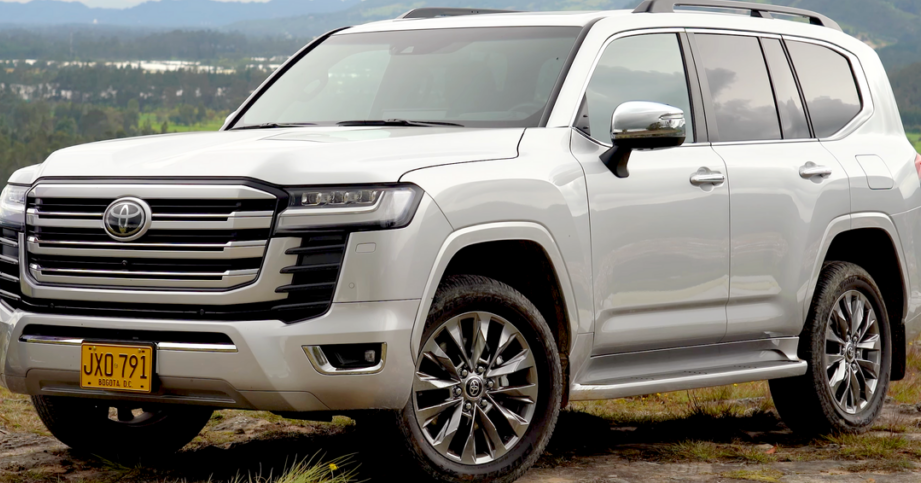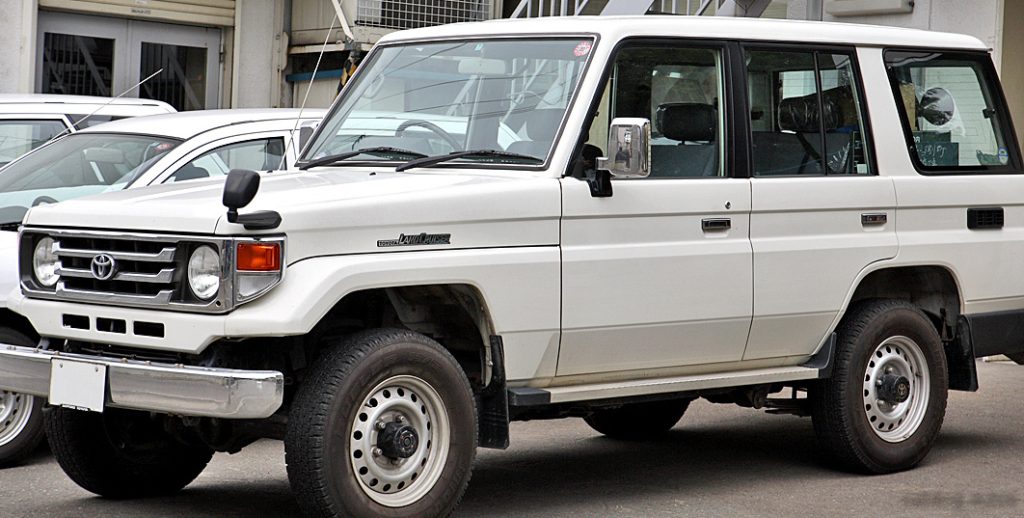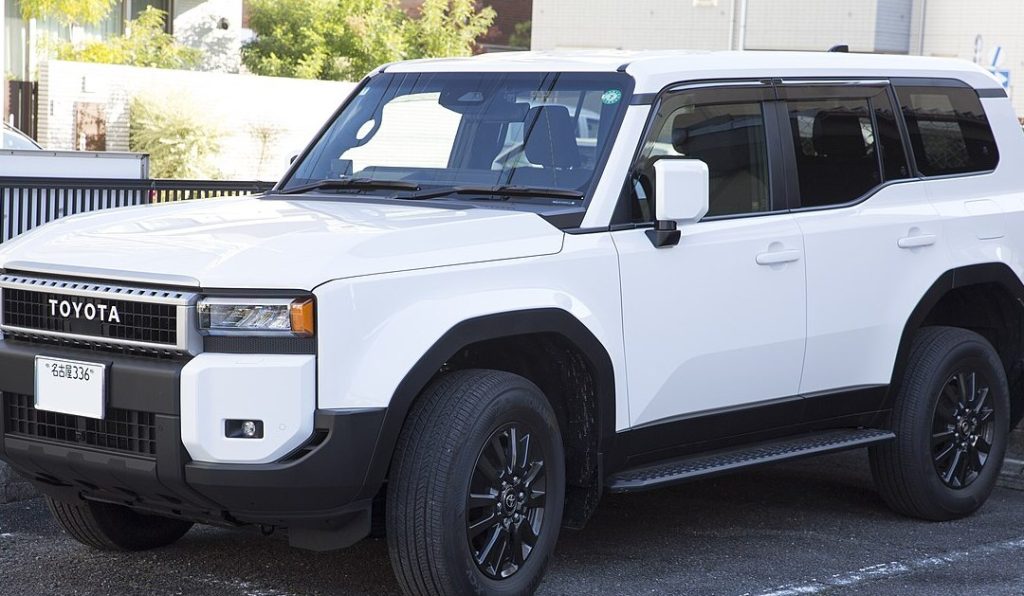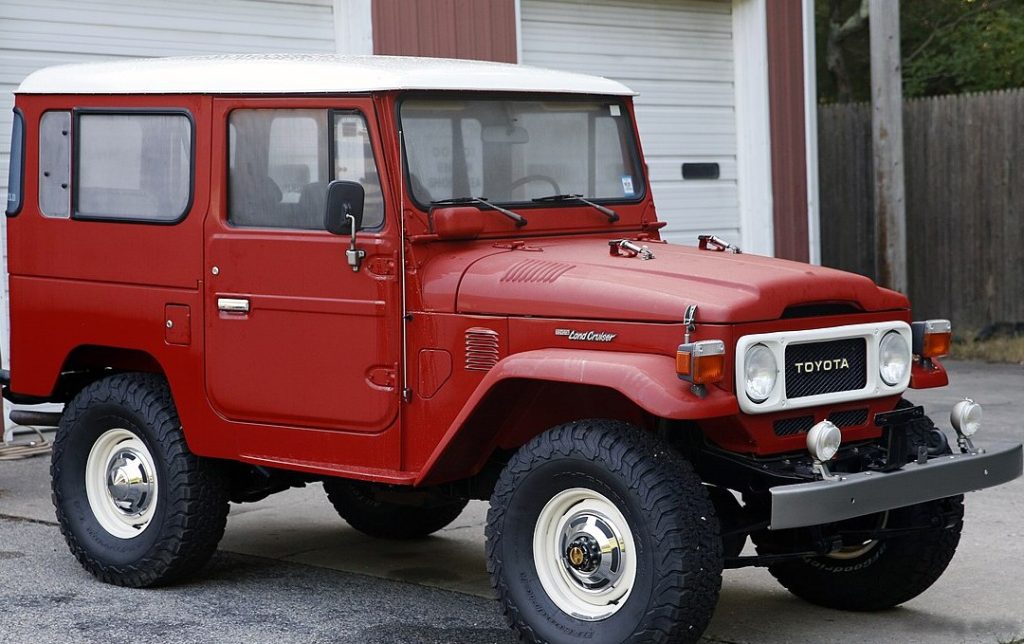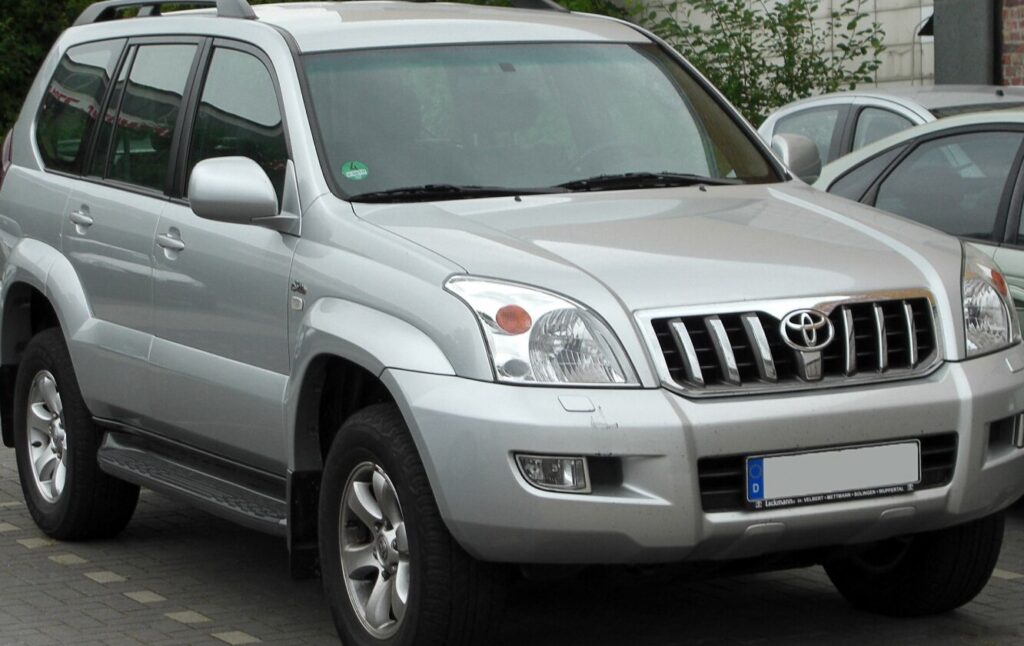
The Toyota Land Cruiser Prado (J120) 2.7i 16V 4WD ECT-E, produced between 2004 and 2007, represents a significant iteration in the Prado lineage, blending robust off-road capability with increased refinement and comfort. Positioned as a mid-range offering within the J120 series – which spanned from smaller 2.4L engines to larger 4.0L V6 options – the 2.7L variant aimed to provide a balance between affordability, fuel efficiency, and adequate performance for both on-road driving and moderate off-road excursions. This model was particularly popular in markets outside of North America, where the Prado was sold alongside the larger Land Cruiser 200 series.
Technical Specifications
| Brand | Toyota |
| Model | Land Cruiser Prado |
| Generation | Land Cruiser Prado (J120) |
| Type (Engine) | 2.7 i 16V (163 Hp) 4WD ECT-E |
| Start of production | 2004 |
| End of production | 2007 |
| Powertrain Architecture | Internal Combustion engine |
| Body type | SUV |
| Seats | 5-8 |
| Doors | 5 |
| Fuel Type | Petrol (Gasoline) |
| Weight-to-power ratio | 11.5 kg/Hp, 86.7 Hp/tonne |
| Weight-to-torque ratio | 7.6 kg/Nm, 130.9 Nm/tonne |
| Power | 163 Hp @ 5200 rpm |
| Power per litre | 60.5 Hp/l |
| Torque | 246 Nm @ 3800 rpm (181.44 lb.-ft. @ 3800 rpm) |
| Engine layout | Front, Longitudinal |
| Engine Model/Code | 2TR-FE |
| Engine displacement | 2694 cm3 (164.4 cu. in.) |
| Number of cylinders | 4 |
| Engine configuration | Inline |
| Cylinder Bore | 95 mm (3.74 in.) |
| Piston Stroke | 95 mm (3.74 in.) |
| Compression ratio | 9.6:1 |
| Number of valves per cylinder | 4 |
| Fuel injection system | Multi-port manifold injection |
| Engine aspiration | Naturally aspirated engine |
| Valvetrain | DOHC |
| Engine oil capacity | 5.8 l (6.13 US qt | 5.1 UK qt) |
| Coolant | 7.1 l (7.5 US qt | 6.25 UK qt) |
| Kerb Weight | 1880-1920 kg (4144.69 – 4232.88 lbs.) |
| Max. weight | 2360 kg (5202.91 lbs.) |
| Max load | 440-480 kg (970.03 – 1058.22 lbs.) |
| Trunk (boot) space – minimum | 620 l (21.9 cu. ft.) |
| Trunk (boot) space – maximum | 1850 l (65.33 cu. ft.) |
| Fuel tank capacity | 87 l (22.98 US gal | 19.14 UK gal) |
| Max. roof load | 80 kg (176.37 lbs.) |
| Permitted trailer load with brakes (12%) | 2800 kg (6172.94 lbs.) |
| Permitted trailer load without brakes | 750 kg (1653.47 lbs.) |
| Permitted towbar download | 130 kg (286.6 lbs.) |
| Length | 4715 mm (185.63 in.) |
| Width | 1875 mm (73.82 in.) |
| Height | 1870 mm (73.62 in.) |
| Wheelbase | 2790 mm (109.84 in.) |
| Front track | 1575 mm (62.01 in.) |
| Rear (Back) track | 1575 mm (62.01 in.) |
| Ride height (ground clearance) | 220 mm (8.66 in.) |
| Minimum turning circle (turning diameter) | 11.4 m (37.4 ft.) |
| Approach angle | 33° |
| Departure angle | 28° |
| Ramp-over (brakeover) angle | 21° |
| Drivetrain Architecture | The Internal combustion engine (ICE) drives permanently the four wheels of the vehicle. |
| Drive wheel | All wheel drive (4×4) |
| Number of gears and type of gearbox | 4 gears, automatic transmission ECT-E |
| Front suspension | Double wishbone |
| Rear suspension | Rigid axle suspension, Coil spring |
| Front brakes | Ventilated discs |
| Rear brakes | Ventilated discs |
| Assisting systems | ABS (Anti-lock braking system) |
| Steering type | Steering rack and pinion |
| Tires size | 265/65 R17 |
| Wheel rims size | 7.5J x 17 |
INTRODUCTION
The J120 Land Cruiser Prado, launched in 2002, represented a move towards greater on-road comfort and refinement compared to its predecessors, while still retaining the legendary Land Cruiser off-road prowess. The 2.7i 16V 4WD ECT-E variant, available from 2004 to 2007, served as an entry point into the Prado range for many buyers. It was designed to appeal to families and individuals seeking a reliable, capable SUV for everyday use, with the added benefit of four-wheel drive for occasional off-road adventures. The “ECT-E” designation refers to the electronically controlled transmission, a four-speed automatic.
Powertrain & Engine Architecture
At the heart of the 2.7i Prado lies the 2TR-FE engine, a 2.7-liter (2694 cc) inline-four cylinder gasoline engine. This engine utilizes a double overhead camshaft (DOHC) valvetrain with four valves per cylinder, contributing to its relatively efficient operation. Fuel delivery is managed by a multi-port fuel injection system. The 2TR-FE is known for its durability and relatively simple design, making it a cost-effective engine to maintain. The engine produces 163 horsepower at 5200 rpm and 246 Nm (181.44 lb-ft) of torque at 3800 rpm. Paired with this engine is a four-speed automatic transmission (ECT-E), chosen for its ease of use and suitability for a wider range of drivers. While not offering the most advanced gear ratios, it provided smooth shifts and adequate performance for typical driving conditions.
Driving Characteristics
The 2.7L Prado with the four-speed automatic delivers a driving experience focused on comfort and usability rather than outright performance. Acceleration is adequate for everyday driving, but it won’t provide the briskness of the larger V6 engines offered in the Prado lineup. The automatic transmission, while smooth, can feel somewhat dated compared to modern six- or eight-speed automatics, and may exhibit some hunting for the right gear when climbing hills or under heavy load. The 4WD system, selectable via a rotary dial, provides good traction in slippery conditions and allows for moderate off-road capability. However, the 2.7L engine’s torque output means it’s not ideally suited for challenging off-road terrain where low-end grunt is essential. Compared to the manual transmission versions, the automatic sacrifices some responsiveness, but gains in convenience.
Equipment & Trim Levels
The 2.7i Prado typically came equipped with a reasonable level of standard features, including air conditioning, power windows and locks, and an audio system. Higher trim levels offered options such as leather upholstery, sunroof, and upgraded audio systems. Safety features generally included ABS brakes and airbags. Interior appointments were generally functional and durable, prioritizing practicality over luxury. The Prado’s spacious interior could comfortably accommodate five adults, with an optional third-row seat available to increase seating capacity to seven or eight, though the third row is best suited for children.
Chassis & Braking
The J120 Prado utilizes a body-on-frame construction, providing a robust and durable platform for both on- and off-road driving. The front suspension consists of a double wishbone setup, while the rear utilizes a rigid axle with coil springs. This configuration provides a good balance between ride comfort and off-road capability. Braking duties are handled by ventilated disc brakes on all four wheels, providing adequate stopping power for the vehicle’s weight. ABS (Anti-lock Braking System) is standard, enhancing safety during emergency braking situations.
Market Reception & Comparison
The 2.7i Prado was generally well-received as a practical and reliable SUV, particularly in markets where fuel economy and affordability were key considerations. Critics noted its comfortable ride, spacious interior, and capable 4WD system. However, some reviewers found the engine to be underpowered, especially when fully loaded or towing a trailer. Compared to the 4.0L V6 models, the 2.7i offered significantly lower fuel consumption but at the expense of performance. Against competitors like the Mitsubishi Pajero and Nissan Patrol, the Prado offered a more refined interior and a reputation for exceptional reliability.
Legacy
The 2TR-FE engine, found in the 2.7i Prado, has proven to be remarkably durable and reliable over the long term. With proper maintenance, these engines can easily exceed 200,000 miles. The J120 Prado, in general, enjoys a strong reputation for longevity and dependability, making it a popular choice in the used car market. While not the fastest or most luxurious SUV in its class, the 2.7i Prado remains a highly capable and practical vehicle, offering a compelling combination of comfort, reliability, and off-road capability. Its simplicity and robust construction continue to appeal to buyers seeking a dependable SUV that can handle a variety of tasks.