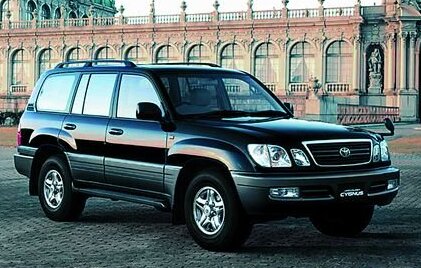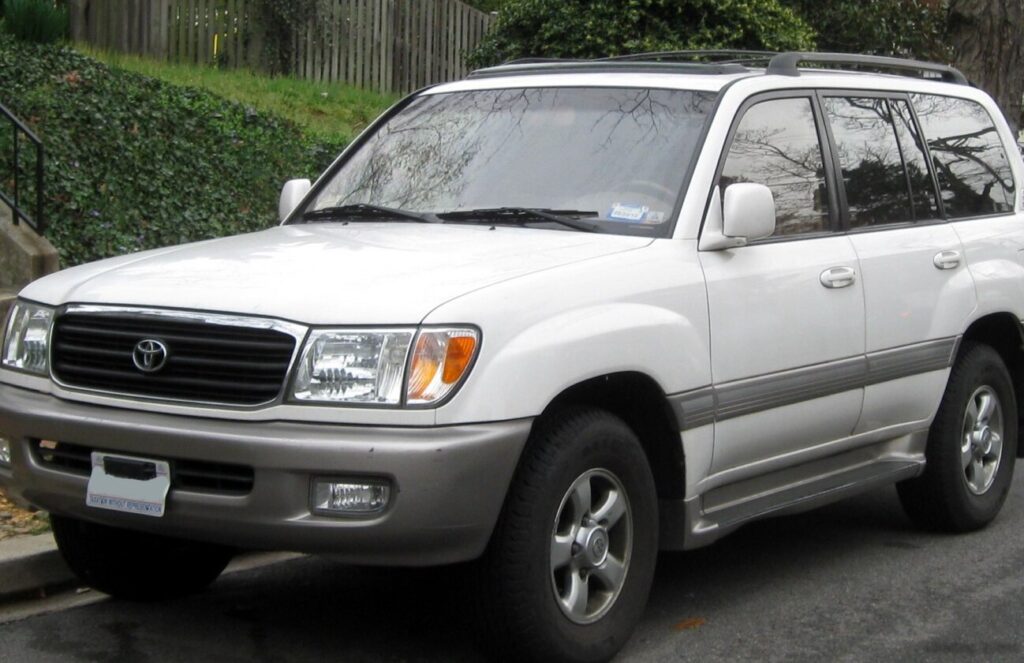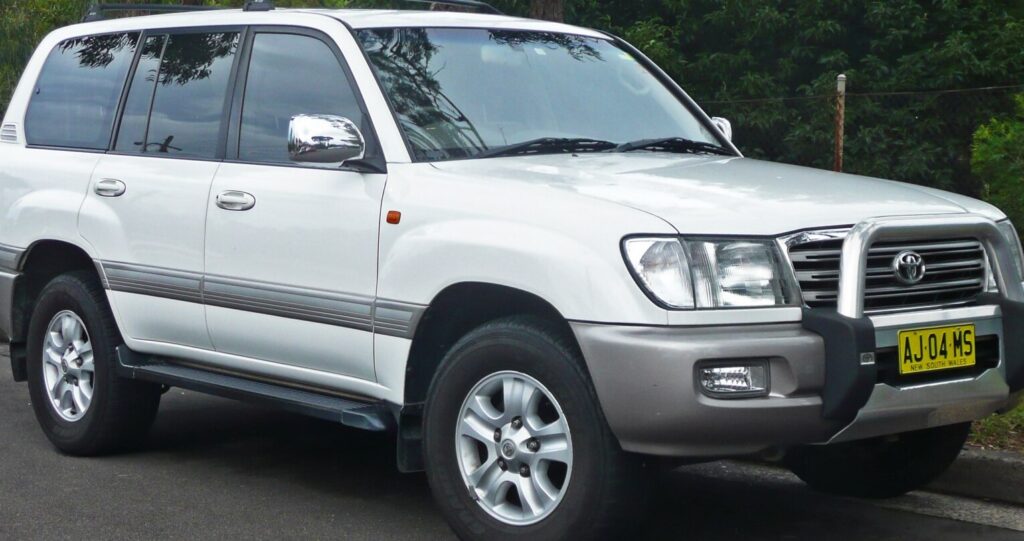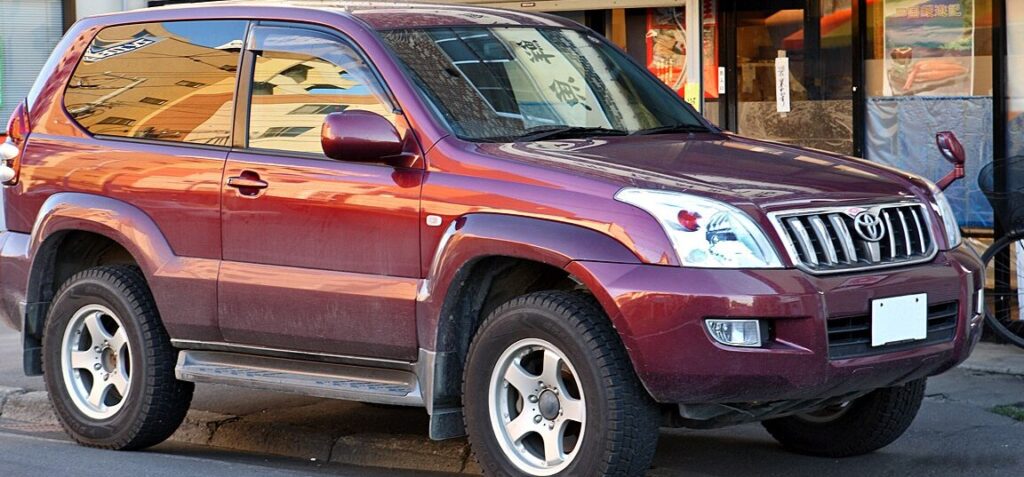
The Toyota Land Cruiser Prado J125, specifically the 3.0 D-4D variant producing 173 horsepower, was a key model in Toyota’s globally successful Prado lineup. Produced from 2007 to 2009, this iteration of the Prado (the fourth generation, internally designated J125) aimed to balance off-road capability with on-road comfort and refinement. It served as a mid-range offering within the J125 series, positioned between the lower-powered 2.8 D-4D models and the more potent 4.0-liter V6 gasoline engine. The J125 Prado was primarily marketed in Europe, Australia, Asia, and South America, with limited official sales in the United States.
Technical Specifications
| Brand | Toyota |
| Model | Land Cruiser Prado |
| Generation | Land Cruiser Prado (J125) |
| Type (Engine) | 3.0 D-4D (173 Hp) |
| Start of production | 2007 |
| End of production | 2009 |
| Powertrain Architecture | Internal Combustion engine |
| Body type | SUV |
| Seats | 5 |
| Doors | 3 |
| Fuel consumption (urban) | 11.1 l/100 km (21.2 US mpg) |
| Fuel consumption (extra urban) | 7.9 l/100 km (29.8 US mpg) |
| Fuel consumption (combined) | 9.1 l/100 km (25.8 US mpg) |
| CO2 emissions | 240 g/km |
| Fuel Type | Diesel |
| Acceleration 0 – 100 km/h | 11.5 sec |
| Acceleration 0 – 62 mph | 11.5 sec |
| Acceleration 0 – 60 mph | 10.9 sec |
| Maximum speed | 175 km/h (108.74 mph) |
| Emission standard | Euro 4 |
| Weight-to-power ratio | 10.7 kg/Hp |
| Weight-to-torque ratio | 4.5 kg/Nm |
| Power | 173 Hp @ 3400 rpm |
| Torque | 410 Nm @ 1600-2800 rpm (302.4 lb.-ft. @ 1600-2800 rpm) |
| Engine layout | Front, Longitudinal |
| Engine Model/Code | 1KD-FTV |
| Engine displacement | 2982 cm3 (181.97 cu. in.) |
| Number of cylinders | 4 |
| Engine configuration | Inline |
| Cylinder Bore | 96 mm (3.78 in.) |
| Piston Stroke | 103 mm (4.06 in.) |
| Compression ratio | 18.4:1 |
| Number of valves per cylinder | 4 |
| Fuel injection system | Diesel Commonrail |
| Engine aspiration | Turbocharger, Intercooler |
| Valvetrain | DOHC |
| Engine oil capacity | 7.4 l (7.82 US qt | 6.51 UK qt) |
| Coolant | 10.8 l (11.41 US qt | 9.5 UK qt) |
| Kerb Weight | 1850-2020 kg (4078.55 – 4453.34 lbs.) |
| Max. weight | 2600 kg (5732.02 lbs.) |
| Max load | 580-750 kg (1278.68 – 1653.47 lbs.) |
| Trunk (boot) space – minimum | 403 l (14.23 cu. ft.) |
| Trunk (boot) space – maximum | 1350 l (47.67 cu. ft.) |
| Fuel tank capacity | 87 l (22.98 US gal | 19.14 UK gal) |
| Max. roof load | 80 kg (176.37 lbs.) |
| Permitted trailer load with brakes (12%) | 2800 kg (6172.94 lbs.) |
| Permitted trailer load without brakes | 750 kg (1653.47 lbs.) |
| Permitted towbar download | 130 kg (286.6 lbs.) |
| Length | 4365 mm (171.85 in.) |
| Width | 1790 mm (70.47 in.) |
| Height | 1850 mm (72.83 in.) |
| Wheelbase | 2455 mm (96.65 in.) |
| Front track | 1535 mm (60.43 in.) |
| Rear (Back) track | 1535 mm (60.43 in.) |
| Ride height (ground clearance) | 205 mm (8.07 in.) |
| Minimum turning circle | 10.2 m (33.46 ft.) |
| Approach angle | 31° |
| Departure angle | 29° |
| Ramp-over angle | 20° |
| Climb angle | 42° |
| Wading depth | 700 mm (27.56 in.) |
| Drivetrain Architecture | All wheel drive (4×4) |
| Number of gears | 6 |
| Type of gearbox | Manual transmission |
| Front suspension | Double wishbone |
| Rear suspension | Rigid axle suspension, Coil spring |
| Front brakes | Ventilated discs |
| Rear brakes | Ventilated discs |
| Assisting systems | ABS (Anti-lock braking system) |
| Steering type | Steering rack and pinion |
| Tires size | 225/70 R17 |
| Wheel rims size | 6J x 17 |
INTRODUCTION
The Toyota Land Cruiser Prado J125 3.0 D-4D, launched in 2007, represented a significant step forward in the Prado’s evolution. Built on the J125 platform, it offered a blend of rugged capability and improved on-road manners compared to its predecessors. The 3.0 D-4D engine, a mainstay of Toyota’s diesel lineup, provided a balance of power and fuel efficiency, making it a popular choice for buyers seeking a versatile SUV. This variant typically came equipped with a six-speed manual transmission, though an automatic option was also available. It was positioned as a practical and reliable option for families and individuals needing a capable vehicle for both daily commutes and occasional off-road adventures.
Powertrain & Engine Architecture
The heart of the Prado 3.0 D-4D is the 1KD-FTV engine, a 2.982-liter (181.97 cu. in.) inline-four diesel. This engine utilizes a common rail direct injection system, delivering fuel at extremely high pressure for improved combustion efficiency and reduced emissions. The 1KD-FTV is a turbocharged and intercooled engine, enhancing power output and torque. The engine features a double overhead camshaft (DOHC) valvetrain with four valves per cylinder, optimizing airflow for increased performance. The 173 horsepower peak is achieved at 3400 rpm, while the substantial 410 Nm (302.4 lb.-ft.) of torque is available between 1600 and 2800 rpm, providing strong pulling power at lower engine speeds. The six-speed manual transmission was designed to efficiently manage the engine’s torque output and contribute to improved fuel economy. The automatic transmission option, while available, often resulted in a slight decrease in fuel efficiency and a less direct driving experience.
Driving Characteristics
The Prado 3.0 D-4D with the manual transmission offers a reasonably engaging driving experience. The engine’s torque delivery makes it well-suited for everyday driving, providing ample power for overtaking and climbing hills. While not a sports car, the Prado feels stable and composed on the road. The six-speed gearbox allows for precise gear selection, maximizing engine efficiency and responsiveness. Compared to the higher-output 4.0-liter V6, the 3.0 D-4D feels less powerful, particularly at higher speeds. Acceleration from 0-60 mph takes around 10.9 seconds, which is adequate but not particularly quick. The automatic transmission, while convenient, can sometimes feel sluggish, especially when downshifting. Off-road, the Prado 3.0 D-4D excels, thanks to its robust four-wheel-drive system and ample ground clearance.
Equipment & Trim Levels
The Prado 3.0 D-4D typically came with a respectable level of standard equipment. Features included air conditioning, power windows, power mirrors, and a basic audio system. Higher trim levels added features such as alloy wheels, a sunroof, leather upholstery, and a more advanced audio system with navigation. Safety features included ABS brakes, airbags, and a stability control system. Optional extras included a rear parking sensor, a tow hitch, and upgraded suspension components. Interior upholstery was typically cloth on the base models, with leather available as an upgrade. The dashboard layout was functional and straightforward, prioritizing usability over aesthetics.
Chassis & Braking
The Prado J125 utilizes a body-on-frame construction, providing excellent durability and off-road capability. The front suspension consists of a double wishbone setup, while the rear features a rigid axle with coil springs. This configuration provides a good balance of ride comfort and off-road performance. Braking duties are handled by ventilated discs on all four wheels, providing ample stopping power. The ABS system helps to prevent wheel lockup during hard braking, enhancing safety. Stabilizer bars are fitted to both the front and rear axles to reduce body roll during cornering.
Market Reception & Comparison
The Prado 3.0 D-4D was generally well-received by automotive critics. It was praised for its reliability, fuel efficiency, and off-road capability. However, some critics noted that the engine could be somewhat noisy and that the interior lacked the refinement of some of its competitors. Compared to the 4.0-liter V6 Prado, the 3.0 D-4D offered better fuel economy but less power. The 2.8 D-4D models were even more fuel-efficient but provided significantly less performance. The Prado’s main competitors included the Mitsubishi Pajero, Nissan Patrol, and Land Rover Discovery.
Legacy
The Toyota Land Cruiser Prado J125 3.0 D-4D has proven to be a remarkably reliable vehicle. The 1KD-FTV engine is known for its durability and longevity, and with proper maintenance, it can easily exceed 200,000 miles. In the used car market, these Prados remain popular due to their reputation for reliability and off-road capability. They are often sought after by those looking for a rugged and dependable SUV that can handle a variety of terrains. While newer SUVs offer more advanced technology and features, the J125 Prado 3.0 D-4D continues to hold its own as a practical and capable vehicle.