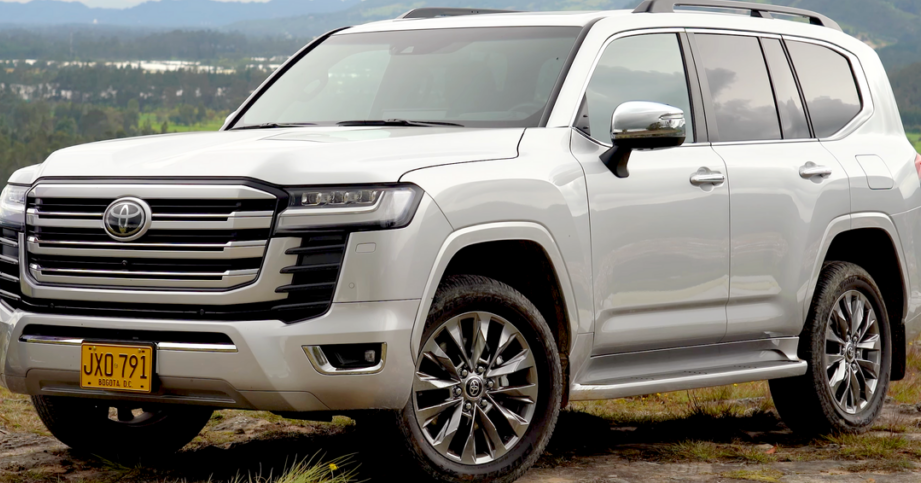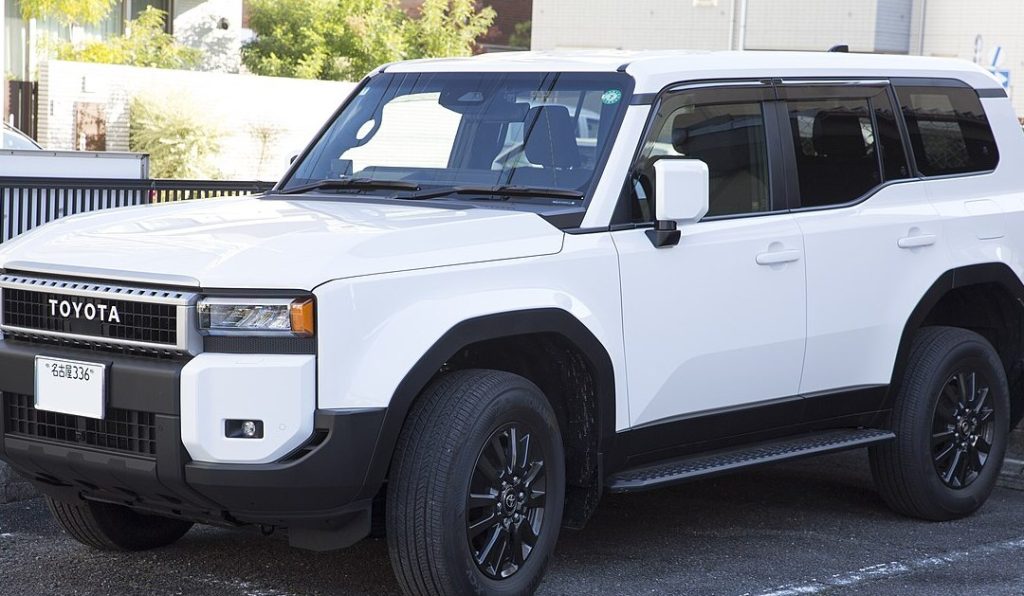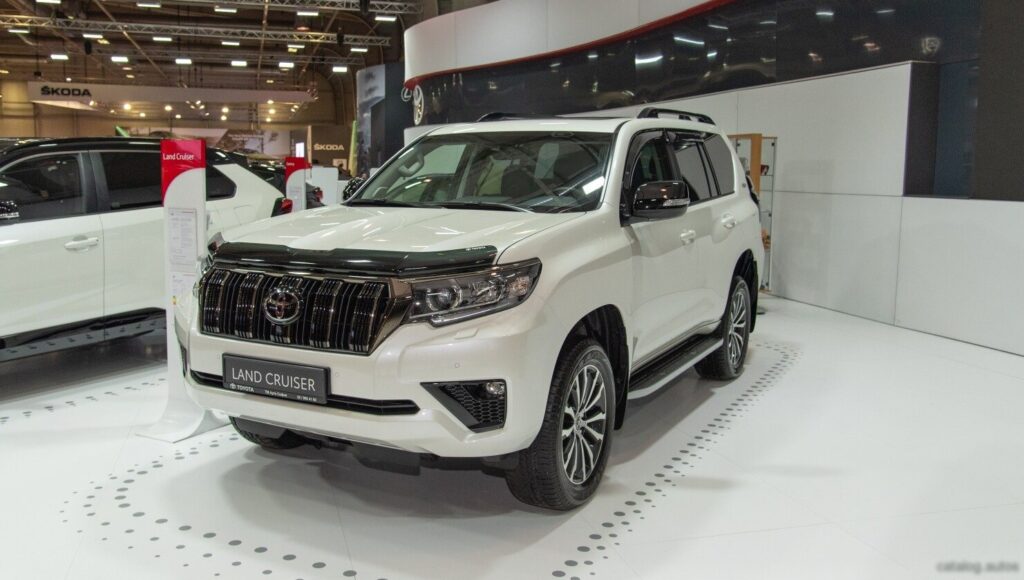
The Toyota Land Cruiser Prado (J150 series, post-2017 facelift) 5-door 2.7L 4WD Automatic represents an entry-level offering within the Prado lineup, produced from 2017 through October 2023. Positioned as a more accessible option compared to the higher-trim 4.0L V6 models, the 2.7L Prado aimed to provide the renowned Land Cruiser durability and off-road capability to a broader customer base. This variant was particularly popular in markets where fuel efficiency and purchase price were significant considerations. The J150 Prado series itself is built on a body-on-frame chassis, emphasizing robustness and off-road performance, and the facelift introduced updated styling and technology.
Powertrain & Engine Architecture
The heart of the 2.7L Prado is the 2TR-FE inline four-cylinder gasoline engine, displacing 2.7 liters (2694 cm3 or 164.4 cubic inches). This engine is a naturally aspirated design, utilizing multi-port fuel injection and Toyota’s Variable Valve Timing-intelligent (VVT-i) system. The 2TR-FE produces 163 horsepower at 5200 rpm and 246 Nm (181.44 lb-ft) of torque at 3900 rpm. The engine features a cast iron block and aluminum cylinder head, contributing to its durability. Bore and stroke are both 95mm, resulting in a compression ratio of 10.2:1. The engine oil capacity is 5.6 liters (5.92 US quarts or 4.93 UK quarts), and the cooling system holds 8.1 liters (8.56 US quarts or 7.13 UK quarts).
Paired with the 2TR-FE engine is a six-speed automatic transmission. This transmission was chosen for its balance of fuel efficiency and usability, particularly in off-road scenarios. While not offering the rapid acceleration of some competitors, the six-speed automatic provides smooth shifts and adequate power delivery for everyday driving and moderate off-road conditions. The transmission is electronically controlled, adapting to driving conditions and driver input.
Engine Code Specifics
The 2TR-FE engine code is a key identifier for this specific powerplant. It’s a member of Toyota’s TR family of engines, known for their reliability and longevity. The VVT-i system optimizes valve timing for improved performance and fuel economy across the engine’s operating range. Regular maintenance, including oil changes and timing belt replacements (as per Toyota’s recommended service intervals), is crucial for maintaining the engine’s health.
Driving Characteristics
The 2.7L Prado Automatic delivers a driving experience focused on comfort and capability rather than outright performance. Acceleration from 0-100 km/h (0-62 mph) takes approximately 13.9 seconds, and 0-60 mph is achieved in around 13.2 seconds. The top speed is limited to 160 km/h (99.42 mph). The automatic transmission contributes to a relaxed driving style, with gear changes generally smooth and unobtrusive. However, drivers seeking more spirited performance will find the 2.7L engine somewhat lacking, especially when fully loaded or tackling steep inclines. The weight-to-power ratio of 12.9 kg/hp highlights the engine’s limitations when considering the Prado’s substantial weight. The 4WD system provides excellent traction in various terrains, making it a capable off-road vehicle, but the engine’s torque output requires careful throttle control in challenging situations.
Equipment & Trim Levels
The 2.7L Prado Automatic typically came equipped with a standard set of features designed to provide comfort and convenience. These generally included air conditioning, power windows and locks, a basic audio system (often with CD player and auxiliary input), and cloth upholstery. Safety features such as ABS (Anti-lock Braking System) were standard. Higher trim levels within the 2.7L range, and across the Prado lineup, offered upgrades such as leather upholstery, a more advanced infotainment system with navigation, sunroof, and parking sensors. Optional extras often included a rear differential lock, kinetic dynamic suspension system (KDSS), and upgraded audio systems. The interior dashboard configuration was generally functional and durable, prioritizing practicality over luxury.
Chassis & Braking
The Prado’s chassis is a traditional body-on-frame construction, providing excellent strength and durability for off-road use. The front suspension utilizes a double wishbone setup, while the rear suspension employs a dependent, multi-link spring with telescopic shock absorbers. This configuration balances ride comfort with off-road articulation. Braking duties are handled by ventilated discs on all four wheels, providing adequate stopping power for the vehicle’s weight. The steering system is a rack and pinion type with electric power steering, offering a reasonable level of responsiveness. Tire sizes varied depending on the trim level, with common options including 265/65 R17, 245/70 R17, and 265/60 R18. Wheel rim sizes typically ranged from 6.5J x 17 to 7.5J x 18.
Market Reception & Comparison
The 2.7L Prado Automatic received mixed reviews. Critics generally praised its reliability, off-road capability, and comfortable ride. However, the engine’s lack of power was a common criticism, particularly when compared to the more powerful 4.0L V6 options. Fuel consumption, rated at 12.5 l/100 km (18.8 US mpg or 22.6 UK mpg), was considered average for a vehicle of its size and type. In terms of reliability, the 2TR-FE engine has a solid reputation for longevity, provided it receives regular maintenance. Compared to the 4.0L V6, the 2.7L Prado offered a lower purchase price and better fuel economy, making it an attractive option for budget-conscious buyers. The 2.7L also offered a simpler mechanical setup, potentially leading to lower maintenance costs over the long term. Compared to diesel variants (where available), the 2.7L Prado offered a quieter and smoother driving experience, but lacked the diesel’s superior torque and fuel efficiency.
Technical Specifications
| Brand | Toyota |
| Model | Land Cruiser Prado |
| Generation | Land Cruiser Prado (J150, facelift 2017) 5-door |
| Type | 2.7 (163 Hp) 4WD Automatic |
| Start of production | 2017 |
| End of production | October, 2023 |
| Powertrain Architecture | Internal Combustion engine |
| Body type | SUV |
| Seats | 5-7 |
| Doors | 5 |
| Fuel consumption (combined) | 12.5 l/100 km |
| Fuel consumption (US mpg) | 18.8 US mpg |
| Fuel consumption (UK mpg) | 22.6 UK mpg |
| CO2 emissions | 292 g/km |
| Fuel Type | Petrol (Gasoline) |
| Acceleration 0 – 100 km/h | 13.9 sec |
| Acceleration 0 – 62 mph | 13.9 sec |
| Acceleration 0 – 60 mph | 13.2 sec |
| Maximum speed | 160 km/h (99.42 mph) |
| Emission standard | Euro 6 |
| Weight-to-power ratio | 12.9 kg/Hp |
| Weight-to-torque ratio | 8.5 kg/Nm |
| Power | 163 Hp @ 5200 rpm |
| Torque | 246 Nm @ 3900 rpm (181.44 lb.-ft. @ 3900 rpm) |
| Engine layout | Front, Longitudinal |
| Engine Model/Code | 2TR-FE |
| Engine displacement | 2694 cm3 (164.4 cu. in.) |
| Number of cylinders | 4 |
| Engine configuration | Inline |
| Cylinder Bore | 95 mm (3.74 in.) |
| Piston Stroke | 95 mm (3.74 in.) |
| Compression ratio | 10.2:1 |
| Number of valves per cylinder | 4 |
| Fuel injection system | Multi-port manifold injection |
| Engine aspiration | Naturally aspirated engine |
| Valvetrain | VVT-i |
| Engine oil capacity | 5.6 l (5.92 US qt | 4.93 UK qt) |
| Coolant capacity | 8.1 l (8.56 US qt | 7.13 UK qt) |
| Kerb Weight | 2095 kg (4618.68 lbs.) |
| Max. weight | 2850 kg (6283.17 lbs.) |
| Max load | 755 kg (1664.49 lbs.) |
| Trunk (boot) space – minimum | 621 l (21.93 cu. ft.) |
| Trunk (boot) space – maximum | 1934 l (68.3 cu. ft.) |
| Fuel tank capacity | 87 l (22.98 US gal | 19.14 UK gal) |
| Permitted trailer load with brakes (12%) | 1500 kg (3306.93 lbs.) |
| Permitted trailer load without brakes | 750 kg (1653.47 lbs.) |
| Length | 4840 mm (190.55 in.) |
| Width | 1855 mm (73.03 in.) |
| Height | 1845 mm (72.64 in.) |
| Wheelbase | 2790 mm (109.84 in.) |
Legacy
The 2.7L Prado Automatic, while not the most powerful or fuel-efficient option in the Prado range, has proven to be a reliable and durable vehicle. On the used car market, these models are often sought after by buyers looking for a capable and affordable SUV. The 2TR-FE engine’s reputation for longevity contributes to its continued desirability. Regular maintenance is key to preserving the vehicle’s value and ensuring its continued reliability. While newer Prado generations offer more advanced features and technology, the J150 2.7L remains a popular choice for those seeking a robust and dependable SUV with a proven track record.