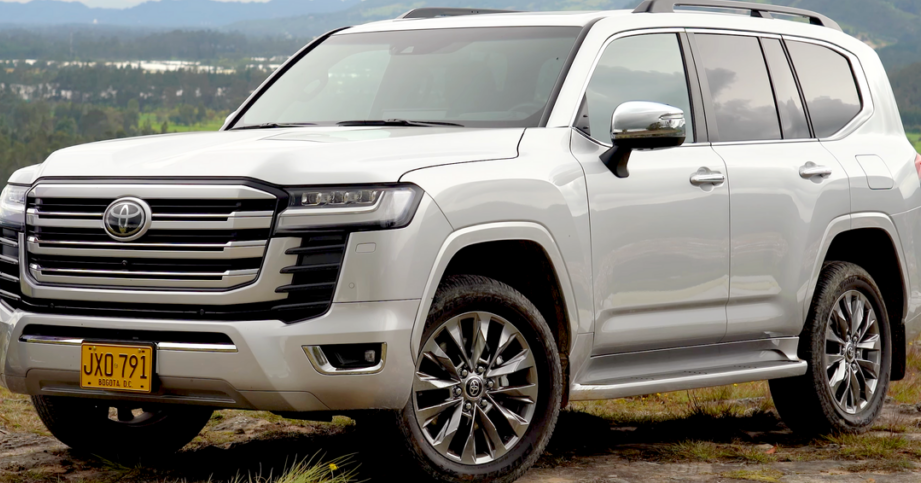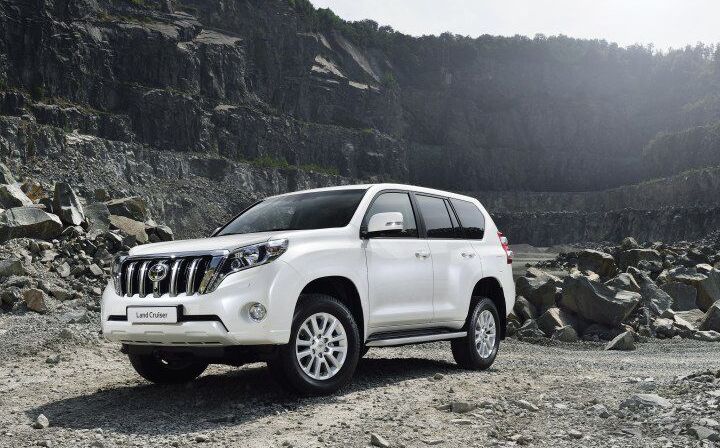
The Toyota Land Cruiser Prado (J150 series, post-facelift introduced in 2013) 5-door model powered by the 2.8 D-4D turbodiesel engine producing 177 horsepower and equipped with all-wheel drive (AWD) was a significant offering in Toyota’s globally successful Prado lineup. Production of this specific configuration ran from 2015 to 2017. Positioned as a mid-range option within the J150 series, it aimed to balance fuel efficiency, on- and off-road capability, and family practicality. The Prado, in general, has long been a staple for buyers seeking a robust and reliable SUV, particularly in markets outside of North America where full-size SUVs are less common.
Technical Specifications
| Brand | Toyota |
| Model | Land Cruiser Prado |
| Generation | Land Cruiser Prado (J150, facelift 2013) 5-door |
| Type (Engine) | 2.8 D-4D (177 Hp) AWD |
| Start of production | 2015 |
| End of production | 2017 |
| Powertrain Architecture | Internal Combustion engine |
| Body type | SUV |
| Seats | 5-7 |
| Doors | 5 |
| Fuel consumption (urban) | 8.9 l/100 km (26.4 US mpg, 31.7 UK mpg, 11.2 km/l) |
| Fuel consumption (extra urban) | 6.6 l/100 km (35.6 US mpg, 42.8 UK mpg, 15.2 km/l) |
| Fuel consumption (combined) | 7.4 l/100 km (31.8 US mpg, 38.2 UK mpg, 13.5 km/l) |
| CO2 emissions | 194 g/km |
| Fuel Type | Diesel |
| Acceleration 0 – 100 km/h | 12.1 sec |
| Acceleration 0 – 62 mph | 12.1 sec |
| Acceleration 0 – 60 mph | 11.5 sec |
| Maximum speed | 175 km/h (108.74 mph) |
| Emission standard | Euro 6 |
| Weight-to-power ratio | 12 kg/Hp, 83.5 Hp/tonne |
| Weight-to-torque ratio | 5 kg/Nm, 198.1 Nm/tonne |
| Power | 177 Hp @ 3400 rpm |
| Power per litre | 64.2 Hp/l |
| Torque | 420 Nm @ 1400-2600 rpm (309.78 lb.-ft. @ 1400-2600 rpm) |
| Engine layout | Front, Transverse |
| Engine Model/Code | 1GD-FTV |
| Engine displacement | 2755 cm3 (168.12 cu. in.) |
| Number of cylinders | 4 |
| Engine configuration | Inline |
| Number of valves per cylinder | 4 |
| Fuel injection system | Diesel Commonrail |
| Engine aspiration | Turbocharger, Intercooler |
| Valvetrain | DOHC |
| Engine oil capacity | 7.7 l (8.14 US qt | 6.78 UK qt) |
| Coolant capacity | 10.1 l (10.67 US qt | 8.89 UK qt) |
| Kerb Weight | 2120-2385 kg (4673.8 – 5258.02 lbs.) |
| Max. weight | 2990 kg (6591.82 lbs.) |
| Max load | 605-870 kg (1333.8 – 1918.02 lbs.) |
| Trunk (boot) space – minimum | 640 l (22.6 cu. ft.) |
| Trunk (boot) space – maximum | 1150 l (40.61 cu. ft.) |
| Fuel tank capacity | 87 l (22.98 US gal | 19.14 UK gal) |
| Permitted trailer load with brakes (12%) | 3000 kg (6613.87 lbs.) |
| Permitted trailer load without brakes | 750 kg (1653.47 lbs.) |
| Length | 4780 mm (188.19 in.) |
| Width | 1885 mm (74.21 in.) |
| Height | 1890 mm (74.41 in.) |
| Wheelbase | 2790 mm (109.84 in.) |
| Front track | 1585 mm (62.4 in.) |
| Rear (Back) track | 1585 mm (62.4 in.) |
| Ride height (ground clearance) | 220 mm (8.66 in.) |
| Minimum turning circle (turning diameter) | 11.8 m (38.71 ft.) |
| Approach angle | 32° |
| Drivetrain Architecture | The Internal combustion engine (ICE) drives permanently the four wheels of the vehicle. |
| Drive wheel | All wheel drive (4×4) |
| Number of gears and type of gearbox | 6 gears, manual transmission |
| Front suspension | Double wishbone |
| Rear suspension | Dependent, multi-link spring with telescopic shock absorbers |
| Front brakes | Ventilated discs |
| Rear brakes | Disc |
| Assisting systems | ABS (Anti-lock braking system) |
| Steering type | Steering rack and pinion |
| Power steering | Electric Steering |
| Tires size | 265/65 R17; 265/60 R18 |
| Wheel rims size | 7.5J x 17; 7.5J x 18 |
INTRODUCTION
The J150 Prado, introduced in 2009 and facelifted in 2013, represented Toyota’s fourth generation of the Land Cruiser Prado. This iteration aimed to modernize the Prado while retaining its core strengths: durability, off-road prowess, and comfort. The 2.8 D-4D AWD variant, launched in 2015, was a key model for many international markets, offering a balance between performance and fuel economy. It slotted into the lineup as a more accessible option compared to the more powerful, often petrol-powered, trims, and provided a compelling alternative to competitors like the Mitsubishi Pajero and Nissan Patrol.
Powertrain & Engine Architecture
The heart of this Prado variant is the 1GD-FTV 2.8-liter inline-four turbodiesel engine. This engine is part of Toyota’s GD series of diesel engines, known for their robustness and efficiency. The 1GD-FTV utilizes a common-rail direct injection system, delivering fuel at extremely high pressure for improved combustion and reduced emissions. A variable geometry turbocharger (VGT) and intercooler further enhance performance and efficiency. The engine produces 177 horsepower at 3400 rpm and a substantial 420 Nm (309.78 lb-ft) of torque between 1400 and 2600 rpm. This broad torque band is crucial for off-road driving and towing. The engine features a double overhead camshaft (DOHC) valvetrain with four valves per cylinder. The 6-speed manual transmission was standard, providing a direct connection to the engine and allowing for driver control.
Driving Characteristics
The 2.8 D-4D Prado offers a comfortable and capable driving experience. While not a performance-oriented vehicle, the engine’s strong low-end torque makes it well-suited for everyday driving and tackling challenging terrain. The 6-speed manual transmission allows for precise gear selection, but the relatively long gearing prioritizes fuel economy over outright acceleration. Compared to higher-output petrol versions of the Prado, this variant feels less eager to rev, but its fuel efficiency is significantly better. The Prado’s full-time all-wheel-drive system provides excellent traction in various conditions, and the vehicle’s robust suspension absorbs bumps and irregularities with ease. The manual transmission provides a more engaging driving experience than the available automatic option, offering greater control, especially during off-road excursions.
Equipment & Trim Levels
The 2.8 D-4D AWD Prado typically came equipped with a respectable level of standard features. These included air conditioning, power windows and locks, a basic audio system, and alloy wheels. Higher trim levels offered upgrades such as leather upholstery, a more advanced infotainment system with navigation, automatic climate control, and parking sensors. Optional extras included a sunroof, heated seats, and a rear entertainment system. Safety features generally included ABS, multiple airbags, and stability control. The interior design was functional and durable, prioritizing practicality over luxury.
Chassis & Braking
The Prado J150 utilizes a body-on-frame construction, providing excellent strength and durability. The front suspension consists of a double wishbone setup, while the rear features a dependent, multi-link spring system with telescopic shock absorbers. This configuration balances ride comfort with off-road capability. Braking duties are handled by ventilated discs at the front and solid discs at the rear. The ABS system helps to maintain control during hard braking. The Prado’s robust chassis and suspension allow it to handle significant loads and navigate rough terrain with confidence.
Market Reception & Comparison
The 2.8 D-4D Prado was generally well-received by automotive critics and buyers alike. It was praised for its reliability, fuel efficiency, and off-road capability. Compared to the petrol-powered versions, the diesel variant offered significantly better fuel economy, making it a popular choice for those who frequently travel long distances. However, some critics noted that the engine could be somewhat noisy and lacked the refinement of some competitors. Against rivals like the Mitsubishi Pajero and Nissan Patrol, the Prado stood out for its build quality, reliability, and strong resale value.
Legacy
The 1GD-FTV engine has proven to be a remarkably durable and reliable powertrain. Prados equipped with this engine continue to be sought after in the used car market, particularly in regions where diesel engines are popular. While maintenance costs can be higher than for some petrol engines, the 1GD-FTV’s longevity and fuel efficiency make it a worthwhile investment for many buyers. The J150 Prado, as a whole, has established a reputation as a dependable and capable SUV, and the 2.8 D-4D AWD variant remains a popular choice for those seeking a robust and versatile vehicle.