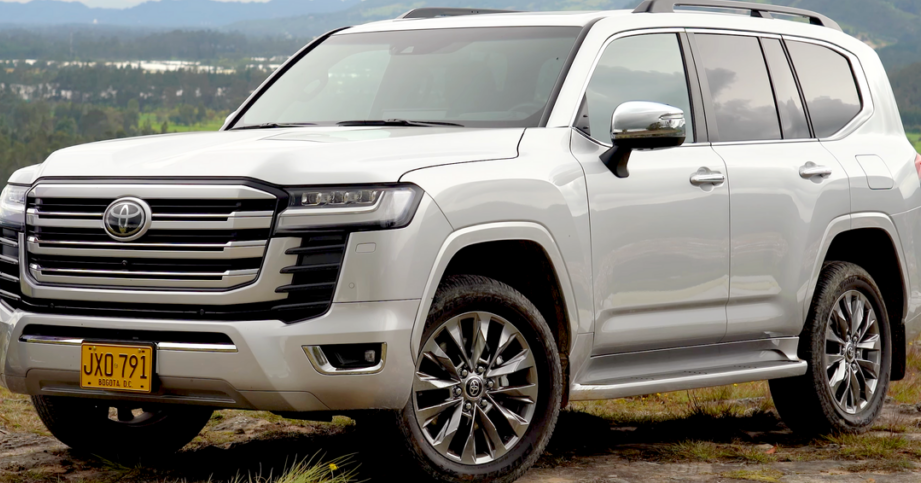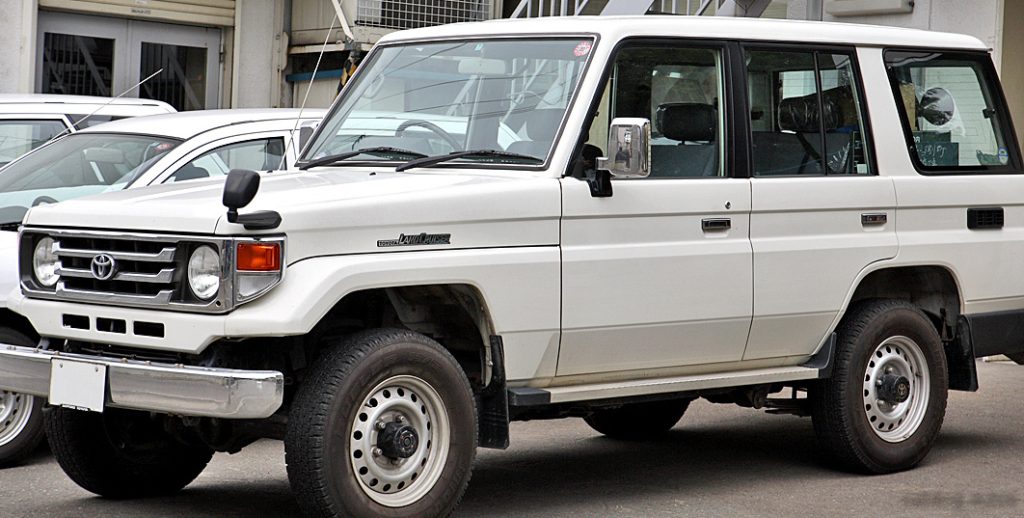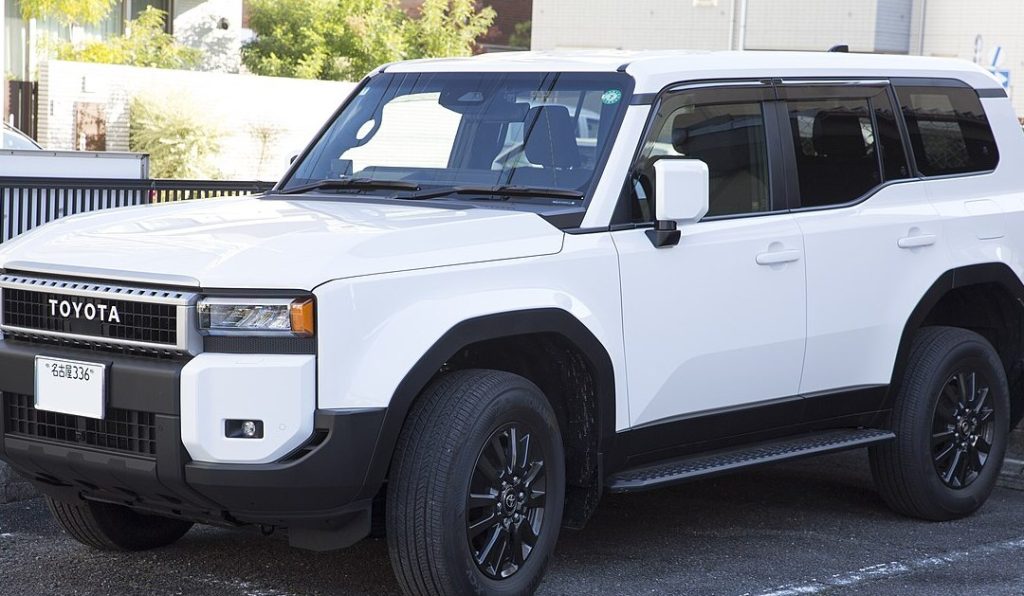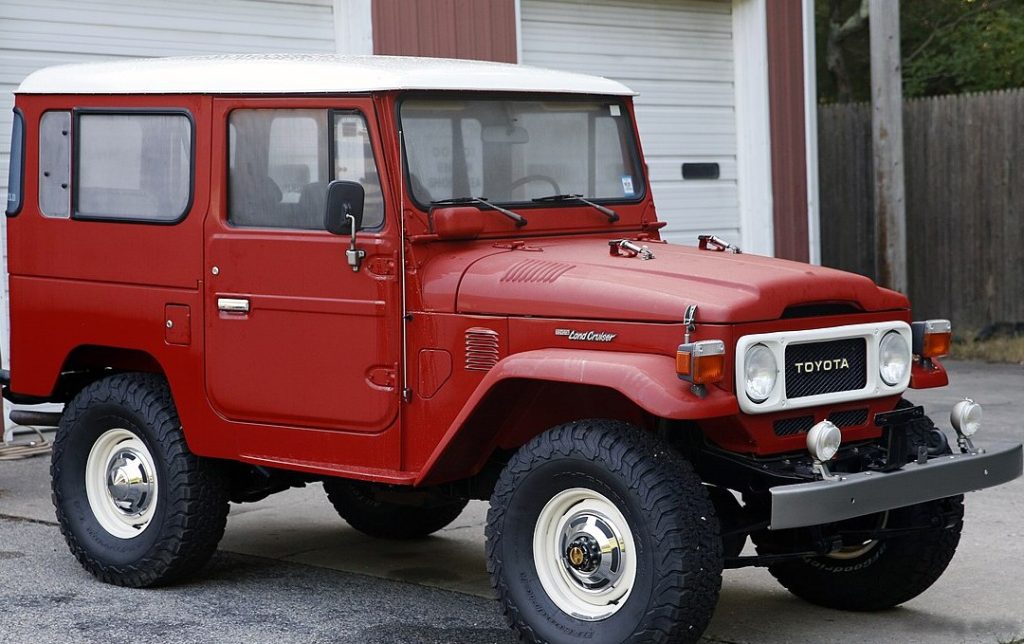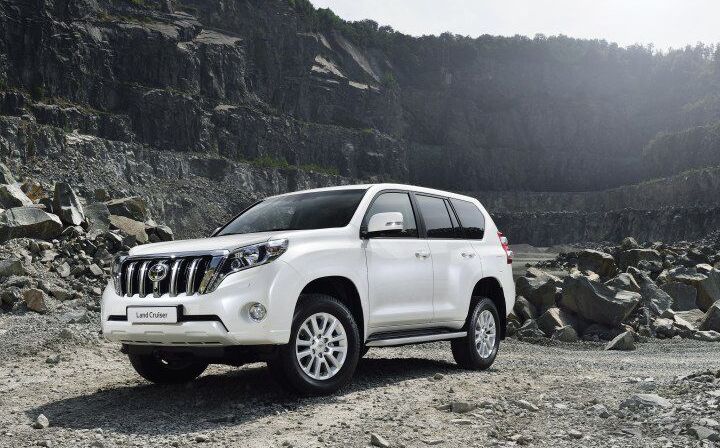
The Toyota Land Cruiser Prado (J150 series, specifically the 2013 facelift) 5-door model powered by the 3.0 D-4D diesel engine producing 190 horsepower and equipped with a four-wheel drive system, represents a significant iteration of Toyota’s globally renowned SUV. Produced from 2013 to 2015, this variant occupied a crucial position within the Prado lineup, offering a balance between fuel efficiency, off-road capability, and on-road comfort. It was primarily aimed at markets outside of North America, where the Prado was sold alongside the larger Land Cruiser 200 series. This model built upon the foundation of the J150 platform (introduced in 2009), incorporating styling updates and refinements to maintain its competitive edge in the mid-size SUV segment.
Technical Specifications
| Brand | Toyota |
| Model | Land Cruiser Prado |
| Generation | Land Cruiser Prado (J150, facelift 2013) 5-door |
| Type (Engine) | 3.0 D-4D (190 Hp) 4WD |
| Start of production | 2013 |
| End of production | 2015 |
| Powertrain Architecture | Internal Combustion engine |
| Body type | SUV |
| Seats | 5 |
| Doors | 5 |
| Fuel consumption (urban) | 9.8 l/100 km (24 US mpg, 28.8 UK mpg, 10.2 km/l) |
| Fuel consumption (extra urban) | 7.3 l/100 km (32.2 US mpg, 38.7 UK mpg, 13.7 km/l) |
| Fuel consumption (combined) | 8.2 l/100 km (28.7 US mpg, 34.4 UK mpg, 12.2 km/l) |
| CO2 emissions | 217 g/km |
| Fuel Type | Diesel |
| Acceleration 0 – 100 km/h | 11.4 sec |
| Acceleration 0 – 62 mph | 11.4 sec |
| Acceleration 0 – 60 mph | 10.8 sec |
| Maximum speed | 175 km/h (108.74 mph) |
| Emission standard | Euro 5 |
| Power | 190 Hp @ 3400 rpm |
| Torque | 420 Nm @ 1600-3000 rpm (309.78 lb.-ft. @ 1600-3000 rpm) |
| Engine layout | Front, Transverse |
| Engine Model/Code | 1KD-FTV |
| Engine displacement | 2982 cm3 (181.97 cu. in.) |
| Number of cylinders | 4 |
| Engine configuration | Inline |
| Cylinder Bore | 96 mm (3.78 in.) |
| Piston Stroke | 103 mm (4.06 in.) |
| Compression ratio | 15:1 |
| Number of valves per cylinder | 4 |
| Fuel injection system | Diesel Commonrail |
| Engine aspiration | Turbocharger, Intercooler |
| Valvetrain | DOHC |
| Engine oil capacity | 7 l (7.4 US qt | 6.16 UK qt) |
| Coolant capacity | 13.2 l (13.95 US qt | 11.61 UK qt) |
| Max. weight | 2990 kg (6591.82 lbs.) |
| Trunk (boot) space – minimum | 621 l (21.93 cu. ft.) |
| Trunk (boot) space – maximum | 1934 l (68.3 cu. ft.) |
| Fuel tank capacity | 87 l (22.98 US gal | 19.14 UK gal) |
| Max. roof load | 80 kg (176.37 lbs.) |
| Permitted trailer load with brakes (12%) | 3000 kg (6613.87 lbs.) |
| Permitted trailer load without brakes | 750 kg (1653.47 lbs.) |
| Permitted towbar download | 120 kg (264.55 lbs.) |
| Length | 4780 mm (188.19 in.) |
| Width | 1885 mm (74.21 in.) |
| Height | 1845 mm (72.64 in.) |
| Wheelbase | 2790 mm (109.84 in.) |
| Front track | 1585 mm (62.4 in.) |
| Rear track | 1585 mm (62.4 in.) |
| Minimum turning circle | 11.8 m (38.71 ft.) |
| Drivetrain Architecture | All wheel drive (4×4). ICE drives all four wheels permanently. |
| Number of gears | 6 |
| Gearbox type | Manual transmission |
| Front suspension | Double wishbone |
| Rear suspension | Dependent, multi-link spring with telescopic shock absorbers |
| Front brakes | Ventilated discs |
| Rear brakes | Ventilated discs |
| Assisting systems | ABS (Anti-lock braking system) |
| Steering type | Steering rack and pinion |
| Tires size | 265/65 R17 |
| Wheel rims size | 7.5J x 17 |
INTRODUCTION
The 2013-2015 Toyota Land Cruiser Prado 3.0 D-4D 4WD represents a refinement of the J150 series, a generation known for its robust build quality and off-road prowess. This particular variant, with its 190 horsepower diesel engine, was a popular choice in markets like Europe, Australia, and parts of Asia, where diesel fuel was readily available and fuel economy was a significant consideration. Positioned as a mid-range offering within the Prado lineup, it slotted between the lower-powered 2.8 D-4D models and the more expensive, higher-performance 4.0-liter V6 gasoline versions. The facelift brought updated styling, including a revised front fascia, headlights, and taillights, along with interior enhancements.
Powertrain & Engine Architecture
At the heart of this Prado variant lies the 1KD-FTV 3.0-liter inline-four diesel engine. This engine is a workhorse, known for its durability and relatively simple design. It utilizes a common rail direct injection system, delivering fuel at extremely high pressure for improved combustion efficiency and reduced emissions. The 1KD-FTV is also equipped with a turbocharger and intercooler, boosting power output and torque. The engine’s DOHC (Double Overhead Camshaft) valvetrain contributes to its efficient operation. The 6-speed manual transmission was standard, providing drivers with precise control over gear selection. This transmission was chosen for its robustness and ability to handle the engine’s torque output, particularly in off-road situations. The engine’s transverse mounting configuration contributes to a more compact engine bay and improved packaging.
Driving Characteristics
The 190 horsepower and 309.78 lb.-ft. of torque produced by the 3.0 D-4D engine provided adequate, though not exhilarating, performance for the Prado. Acceleration from 0-60 mph took around 10.8 seconds, making it competitive with other mid-size SUVs of the time. The engine’s torque curve was relatively flat, delivering strong pulling power from low engine speeds, which was particularly beneficial for off-roading and towing. Compared to the more powerful 4.0-liter V6, the 3.0 D-4D felt less responsive, especially at higher speeds. However, the manual transmission allowed drivers to maximize the engine’s potential and maintain control in challenging conditions. The Prado’s robust suspension system provided a comfortable ride on paved roads, while also offering excellent articulation and ground clearance for off-road adventures.
Equipment & Trim Levels
The 2013-2015 Prado 3.0 D-4D typically came equipped with a respectable level of standard features. These included air conditioning, power windows and locks, a basic audio system, and alloy wheels. Higher trim levels offered upgrades such as leather upholstery, a sunroof, a navigation system, and a more advanced audio system with multiple speakers. Safety features included ABS (Anti-lock Braking System), airbags, and stability control. Optional extras often included a rear parking camera, heated seats, and a tow hitch.
Chassis & Braking
The Prado’s chassis was built around a body-on-frame construction, providing exceptional strength and durability. The front suspension utilized a double wishbone setup, while the rear suspension employed a dependent, multi-link spring system with telescopic shock absorbers. This configuration provided a good balance between ride comfort and off-road capability. Ventilated disc brakes were fitted on all four wheels, providing ample stopping power. The Prado’s robust braking system was well-suited for handling the vehicle’s weight and the demands of both on-road and off-road driving.
Market Reception & Comparison
The Prado 3.0 D-4D was generally well-received by automotive critics, who praised its fuel efficiency, off-road capability, and build quality. However, some reviewers noted that the engine lacked the refinement and power of some of its competitors. Compared to the 4.0-liter V6 Prado, the 3.0 D-4D offered significantly better fuel economy, making it a more practical choice for drivers who covered long distances. The 3.0 D-4D also proved to be more reliable than some of the more complex gasoline-powered alternatives.
Legacy
The 1KD-FTV engine, found in this Prado variant, has a reputation for being exceptionally durable and reliable. With proper maintenance, these engines can easily exceed 200,000 miles. In the used car market, the 2013-2015 Prado 3.0 D-4D remains a popular choice, particularly among those seeking a capable and reliable off-road vehicle. Its combination of fuel efficiency, durability, and off-road prowess continues to make it a compelling option for buyers looking for a rugged and practical SUV.