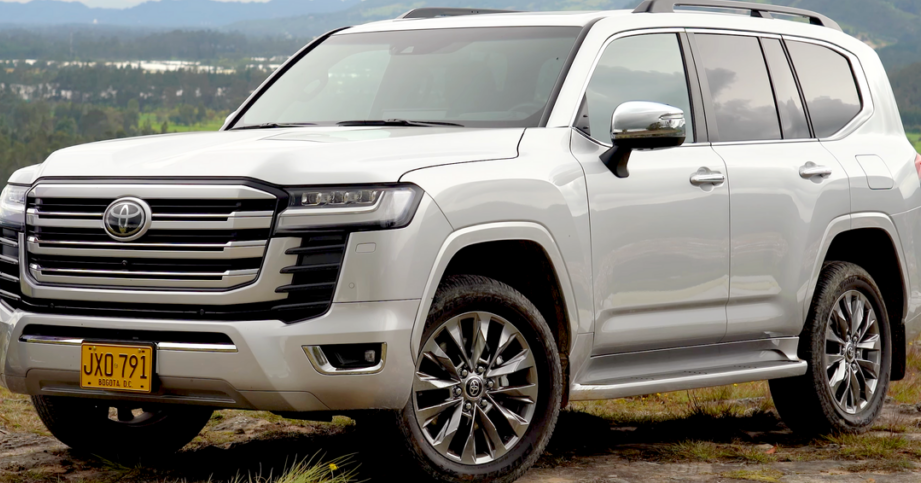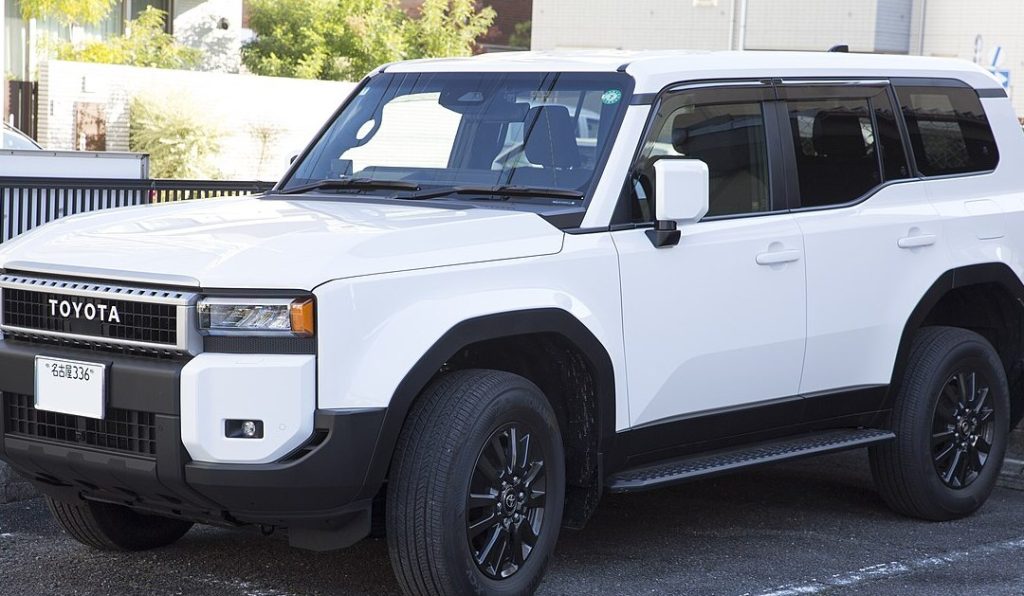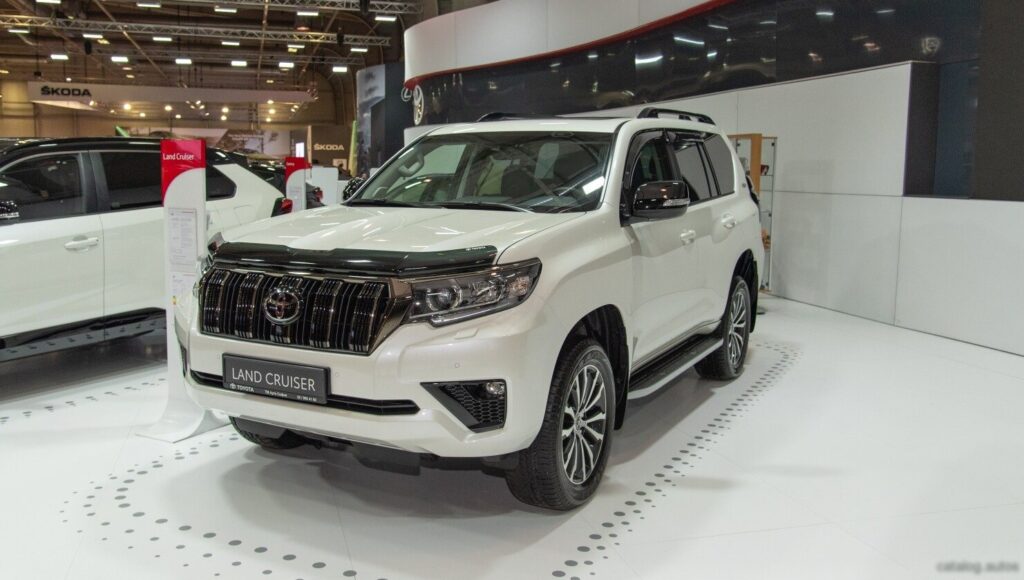
The Toyota Land Cruiser Prado (J150 series, specifically the 2017 facelift) 5-door model powered by the 4.0-liter V6 engine producing 282 horsepower and paired with a four-wheel-drive automatic transmission represents a significant iteration of Toyota’s long-running Prado lineage. Introduced in 2017 and continuing through October 2023, this variant occupied a premium position within the Prado range, offering a blend of off-road capability, on-road comfort, and a robust powertrain. The J150 Prado, built on a body-on-frame chassis, aimed to balance the Land Cruiser’s legendary durability with more modern amenities and a slightly more manageable size compared to its larger Land Cruiser 200 sibling.
The 4.0L V6 Automatic Prado: Positioning and Overview
The 4.0L V6 Automatic Prado was positioned as the flagship engine option for the J150 series in many markets. While diesel engines (particularly the 2.8L and 3.0L turbodiesels) were popular in certain regions, the gasoline V6 offered a different driving experience and was often favored by buyers prioritizing smooth power delivery and reduced maintenance complexity. This variant typically came equipped with a higher level of standard features and was often offered with optional luxury packages, making it a popular choice for families and those seeking a capable and comfortable SUV for both daily driving and adventurous excursions. It catered to a buyer who wanted a powerful, reliable vehicle without necessarily prioritizing ultimate fuel efficiency.
Powertrain & Engine Architecture
At the heart of this Prado variant lies the 1GR-FE 4.0-liter (3956 cm3 / 241.41 cu. in.) V6 engine. This engine is a naturally aspirated, longitudinally mounted powerplant featuring a 60-degree V-angle. It produces 282 horsepower at 5600 rpm and 387 Nm (285.44 lb-ft) of torque at 4400 rpm, resulting in a power-to-liter ratio of 71.3 hp/l. The engine utilizes a multi-port fuel injection system and Toyota’s Dual VVT-i (Variable Valve Timing-intelligent) technology, optimizing valve timing for both intake and exhaust to improve performance and fuel efficiency across the rev range. The engine’s bore and stroke are 94 mm (3.7 in) and 95 mm (3.74 in) respectively, with a compression ratio of 10.4:1. The 1GR-FE is known for its durability and relatively simple design, contributing to its reputation for reliability.
The engine is mated to a 6-speed automatic transmission. This transmission is designed for smooth shifting and provides adequate gear ratios for both on-road cruising and off-road crawling. While not the most technologically advanced automatic available at the time, it proved to be a robust and dependable unit. The transmission is electronically controlled, adapting shift patterns based on driving conditions and throttle input.
Driving Characteristics
The 4.0L V6 Automatic Prado delivers a smooth and refined driving experience. Acceleration to 100 km/h (62 mph) takes approximately 9.2 seconds, and 0-60 mph is achieved in around 8.7 seconds. While not a sports car, the V6 provides ample power for overtaking and maintaining highway speeds, even when fully loaded. The automatic transmission contributes to a relaxed driving style, with seamless gear changes. Compared to the diesel variants, the V6 offers a more linear power delivery and a more responsive feel, particularly at higher engine speeds. However, the diesel engines generally offered superior torque at lower RPMs, making them more suitable for challenging off-road situations requiring low-speed power. The V6 Prado’s fuel economy, at 11.4 l/100 km (20.6 US mpg), is noticeably lower than the diesel alternatives, a key trade-off for the smoother power delivery and potentially lower maintenance costs.
Equipment & Trim Levels
The 4.0L V6 Automatic Prado typically came standard with a comprehensive list of features, including air conditioning, power windows and locks, a touchscreen infotainment system (varying in size and functionality depending on the market), and a rearview camera. Higher trim levels added features such as leather upholstery, heated and ventilated front seats, a premium sound system, a sunroof, and advanced safety technologies like lane departure alert and adaptive cruise control. Optional extras often included a rear entertainment system, upgraded alloy wheels, and a tow hitch. Interior upholstery ranged from cloth in base models to high-quality leather in premium trims. Dashboard configurations varied slightly depending on the year and market, but generally featured a user-friendly layout with intuitive controls.
Chassis & Braking
The Prado J150 utilizes a traditional body-on-frame construction, providing excellent durability and off-road capability. The front suspension consists of a double wishbone setup, while the rear employs a dependent, multi-link spring system with telescopic shock absorbers. This suspension configuration balances ride comfort with off-road articulation. Braking duties are handled by ventilated discs on all four wheels, providing ample stopping power. The Prado is equipped with ABS (Anti-lock Braking System) as standard. Steering is rack and pinion with electric power steering, offering a responsive and precise feel. Wheel sizes typically ranged from 17 to 18 inches, with tire sizes varying accordingly (265/65 R17, 245/70 R17, 265/60 R18 being common).
Market Reception & Comparison
The 4.0L V6 Automatic Prado generally received positive reviews from automotive critics. It was praised for its comfortable ride, spacious interior, and robust powertrain. However, its fuel economy was often cited as a drawback compared to the diesel alternatives. In terms of reliability, the 1GR-FE engine has a strong reputation for longevity, and the Prado as a whole is known for its durability. Compared to the 2.8L diesel, the V6 offered a more refined driving experience but lacked the low-end torque favored by serious off-road enthusiasts. Compared to the 3.0L diesel, the V6 offered a simpler engine design, potentially reducing long-term maintenance costs. The Prado’s main competitors included the Mitsubishi Pajero, Nissan Patrol, and Land Rover Discovery.
Technical Specifications
| Brand | Toyota |
| Model | Land Cruiser Prado |
| Generation | Land Cruiser Prado (J150, facelift 2017) 5-door |
| Type | 4.0 V6 (282 Hp) 4WD Automatic |
| Start of production | 2017 |
| End of production | October, 2023 |
| Fuel consumption (combined) | 11.4 l/100 km |
| Fuel consumption (US mpg) | 20.6 US mpg |
| Fuel consumption (UK mpg) | 24.8 UK mpg |
| CO2 emissions | 261 g/km |
| Fuel Type | Petrol (Gasoline) |
| Acceleration 0-100 km/h | 9.2 sec |
| Acceleration 0-62 mph | 9.2 sec |
| Acceleration 0-60 mph | 8.7 sec |
| Maximum speed | 175 km/h (108.74 mph) |
| Emission standard | Euro 6 |
| Power | 282 Hp @ 5600 rpm |
| Torque | 387 Nm @ 4400 rpm (285.44 lb.-ft. @ 4400 rpm) |
| Engine layout | Front, Longitudinal |
| Engine Model/Code | 1GR-FE |
| Engine displacement | 3956 cm3 (241.41 cu. in.) |
| Number of cylinders | 6 |
| Engine configuration | V-engine |
| Cylinder Bore | 94 mm (3.7 in) |
| Piston Stroke | 95 mm (3.74 in) |
| Compression ratio | 10.4:1 |
| Number of valves per cylinder | 4 |
| Fuel injection system | Multi-port manifold injection |
| Engine aspiration | Naturally aspirated engine |
| Valvetrain | Dual VVT-i |
| Engine oil capacity | 6.2 l (6.55 US qt | 5.46 UK qt) |
| Coolant capacity | 10.5 l (11.1 US qt | 9.24 UK qt) |
| Max. weight | 2900 kg (6393.41 lbs) |
| Trunk (boot) space – minimum | 621 l (21.93 cu. ft) |
| Trunk (boot) space – maximum | 1934 l (68.3 cu. ft) |
| Fuel tank capacity | 87 l (22.98 US gal | 19.14 UK gal) |
| Permitted trailer load with brakes (12%) | 3000 kg (6613.87 lbs) |
| Permitted trailer load without brakes | 750 kg (1653.47 lbs) |
| Length | 4840 mm (190.55 in) |
| Width | 1855 mm (73.03 in) |
| Height | 1845 mm (72.64 in) |
| Wheelbase | 2790 mm (109.84 in) |
| Drive wheel | All wheel drive (4×4) |
| Number of gears | 6 |
| Gearbox type | Automatic transmission |
Legacy
The 4.0L V6 Automatic Prado (J150 facelift) has established a strong reputation for long-term reliability. The 1GR-FE engine is known to withstand high mileage with proper maintenance. On the used car market, these Prados hold their value well, particularly those that have been well-maintained and have a documented service history. While fuel economy remains a concern for some buyers, the V6’s smooth power delivery, comfortable ride, and proven durability continue to make it a desirable choice for those seeking a capable and reliable SUV. The J150 Prado, in general, is considered a robust and capable vehicle, and the V6 variant remains a popular option for buyers seeking a blend of performance, comfort, and longevity.