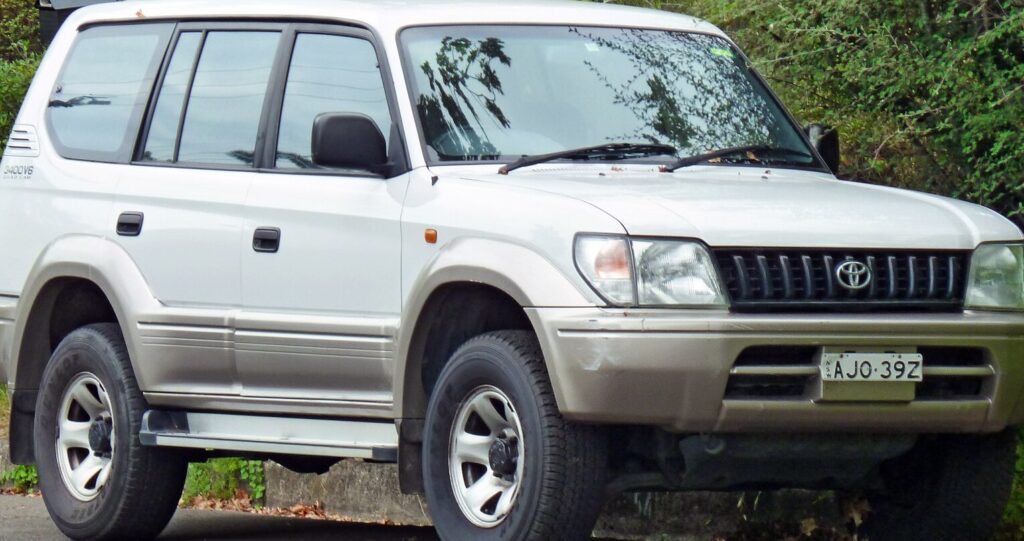
The Toyota Land Cruiser Prado J90 series, produced from 1996 to 1999, represented a significant evolution in Toyota’s long-standing tradition of robust, capable off-road vehicles. This generation Prado aimed to blend off-road prowess with increased on-road comfort and refinement. Within the J90 lineup, the 5-door 3.0 TD (125 hp) 4WD ECT variant occupied a middle ground, offering a balance between fuel efficiency, towing capacity, and affordability. It was positioned as a practical choice for families and individuals needing a versatile vehicle capable of handling both daily commutes and adventurous excursions. The J90 Prado was built on the 1HX0 platform, also shared with the Lexus RX300, marking a shift towards more car-like underpinnings compared to previous Land Cruiser generations.
The 3.0 TD (125 hp) Prado: A Detailed Overview
The 3.0 TD variant of the J90 Prado was primarily aimed at markets outside of North America, where diesel engines were more popular. It offered a compelling alternative to the gasoline-powered options available in some regions, providing improved fuel economy and torque for towing and off-road driving. The “ECT” designation refers to Electronically Controlled Transmission, indicating the presence of an automatic gearbox. This combination – the 3.0-liter turbocharged diesel engine paired with a four-speed automatic – was a popular choice for buyers seeking convenience and ease of use.
Powertrain & Engine Architecture
At the heart of the 3.0 TD Prado lies the 1KZ-TE engine, a 2.982-liter (181.97 cubic inches) inline-four cylinder diesel. This engine utilizes a precombustion chamber injection system, a common design for diesel engines of the era, which improves combustion efficiency and reduces noise. The 1KZ-TE boasts a compression ratio of 21.2:1 and is equipped with an overhead camshaft (OHC) valvetrain with two valves per cylinder. The turbocharger significantly boosts power output, allowing the engine to produce 125 horsepower at 3600 rpm and 295 Nm (217.58 lb-ft) of torque at 2000 rpm. This torque figure is particularly noteworthy, providing ample pulling power for towing and navigating challenging terrain.
The automatic transmission used in this variant is a four-speed unit, designed to provide smooth and convenient gear changes. While not as sophisticated as modern automatic transmissions with more gears, it was a reliable and durable unit well-suited to the engine’s characteristics. The transmission’s gear ratios are tuned to prioritize low-end torque, making it effective for off-road driving and towing. The ECT system allows for some driver control over shift points, offering a “hold” function to prevent upshifts during demanding driving conditions.
Driving Characteristics
The 3.0 TD Prado with the automatic transmission delivers a driving experience focused on practicality and usability rather than outright performance. Acceleration from 0 to 100 km/h (0-62 mph) takes approximately 14 seconds, and 0 to 60 mph is achieved in around 13.3 seconds. The top speed is limited to 160 km/h (99.42 mph). While these figures aren’t particularly impressive by modern standards, they are adequate for most driving situations. The engine’s strong low-end torque makes it feel more responsive than the horsepower figure suggests, particularly when towing or climbing hills.
Compared to the gasoline-powered Prado variants, the 3.0 TD offers significantly better fuel economy. Urban fuel consumption is rated at 13.2 l/100 km (17.8 US mpg), while extra-urban consumption is 9.6 l/100 km (24.5 US mpg). Compared to higher-output diesel versions (if available in certain markets), the 125 hp variant provides a more economical option, albeit with a noticeable reduction in overall performance. The automatic transmission, while convenient, does result in a slight power loss compared to the available manual transmission options.
Equipment & Trim Levels
The 3.0 TD Prado typically came equipped with a reasonable level of standard features, reflecting its position as a mid-range offering. Standard equipment generally included air conditioning, power windows, power door locks, and a basic audio system. Interior upholstery was typically cloth, although leather options were available as upgrades. The dashboard layout was functional and straightforward, prioritizing ease of use over stylistic flair. Optional extras included a sunroof, upgraded audio systems, and various off-road accessories such as a winch and roof rack. Trim levels varied depending on the specific market, with higher trims offering additional features like alloy wheels, woodgrain interior trim, and automatic climate control.
Chassis & Braking
The J90 Prado features a robust chassis designed to withstand the rigors of off-road driving. The front suspension utilizes a coil spring, double wishbone setup with a transverse stabilizer bar, providing a comfortable ride and good handling on paved roads. The rear suspension employs a rigid axle with coil springs, offering excellent articulation for off-road capability. Braking duties are handled by ventilated discs on all four wheels, providing ample stopping power. An Anti-lock Braking System (ABS) was typically included as standard equipment, enhancing safety and control. The steering system is a rack and pinion setup with hydraulic power steering, offering precise and responsive steering feel. The vehicle rides on 215/80 R16 tires mounted on 16-inch steel or alloy wheels.
Market Reception & Comparison
The 3.0 TD Prado was generally well-received by automotive critics as a practical and capable SUV. Its fuel efficiency and strong torque output were praised, as was its comfortable ride and spacious interior. However, some critics noted that the engine could be somewhat noisy and that the automatic transmission wasn’t as responsive as a manual gearbox. Compared to other SUVs in its class, the Prado offered a compelling combination of off-road capability, reliability, and value for money. Against higher-trim Prado models with more powerful engines, the 3.0 TD represented a more affordable option, sacrificing some performance for improved fuel economy and lower running costs.
Technical Specifications
| Engine Model/Code | 1KZ-TE |
| Engine Displacement | 2982 cm3 (181.97 cu. in.) |
| Number of Cylinders | 4, Inline |
| Power | 125 Hp @ 3600 rpm |
| Torque | 295 Nm @ 2000 rpm (217.58 lb.-ft. @ 2000 rpm) |
| Fuel Type | Diesel |
| Fuel Consumption (Urban) | 13.2 l/100 km (17.8 US mpg) |
| Fuel Consumption (Extra Urban) | 9.6 l/100 km (24.5 US mpg) |
| Acceleration 0-100 km/h | 14 sec |
| Maximum Speed | 160 km/h (99.42 mph) |
| Kerb Weight | 1885 kg (4155.71 lbs.) |
| Max. Weight | 2680 kg (5908.39 lbs.) |
| Fuel Tank Capacity | 90 l (23.78 US gal) |
| Transmission | 4-speed Automatic (ECT) |
| Drive Type | All Wheel Drive (4×4) |
| Length | 4675 mm (184.06 in.) |
| Width | 1820 mm (71.65 in.) |
| Height | 1880 mm (74.02 in.) |
Legacy
The 3.0 TD Prado J90 remains a popular choice in the used car market, particularly in regions where diesel engines are favored. The 1KZ-TE engine is renowned for its durability and reliability, and with proper maintenance, it can easily exceed 300,000 kilometers. The automatic transmission, while not the most advanced, is also generally reliable. However, potential buyers should be aware of common diesel engine issues such as injector problems and turbocharger wear. Overall, the 3.0 TD Prado J90 represents a well-built and capable SUV that continues to offer good value for money, making it a solid choice for those seeking a dependable and versatile vehicle.