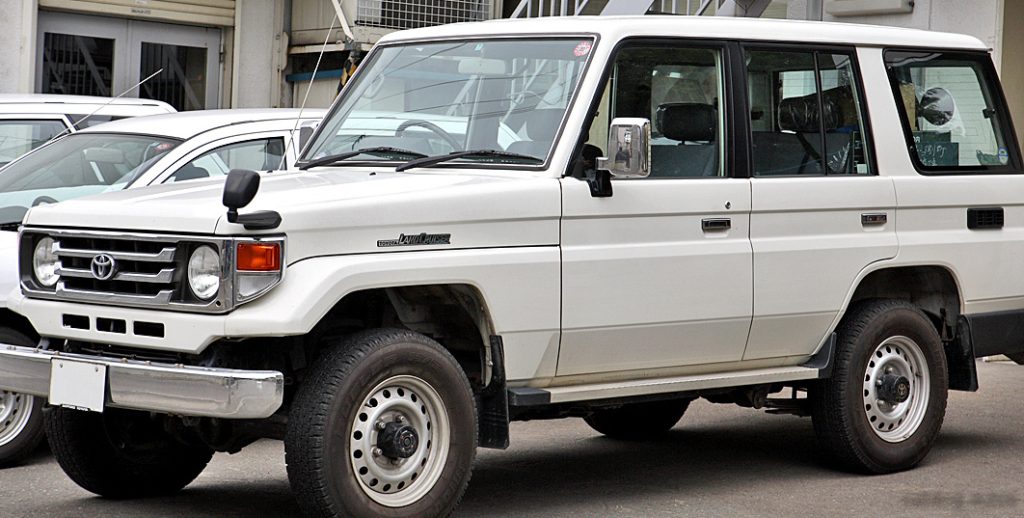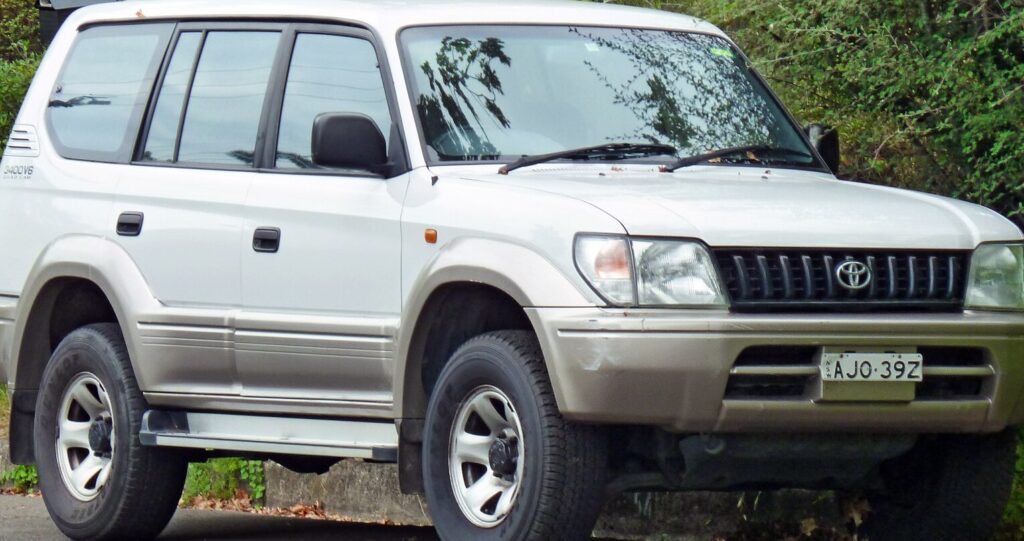
The Toyota Land Cruiser Prado J90, produced between 1996 and 1999, represented a significant evolution in Toyota’s long-standing lineage of capable, body-on-frame SUVs. This generation Prado, designated the J90 series, aimed to blend traditional Land Cruiser robustness with increased refinement and on-road comfort. The 5-door configuration, particularly when equipped with the 3.4-liter V6 24V engine producing 178 horsepower and a four-wheel-drive system, occupied a middle ground within the Prado lineup, offering a balance between performance, practicality, and cost. It served as a step up from the four-cylinder models, while remaining more accessible than the later, more powerful engine options.
The 3.4L V6 Prado: Positioning and Overview
The 3.4L V6 Prado (specifically the 5-door variant) was positioned as a versatile family SUV, appealing to buyers who needed space, off-road capability, and a more powerful engine than the base models offered. It was designed to cater to both urban commuting and weekend adventures. The J90 Prado, built on the 1HX0 platform (also shared with the Lexus RX), represented a move towards a more car-like driving experience compared to its predecessors, while still retaining the ruggedness expected of a Land Cruiser. This particular engine and drivetrain combination was popular in markets outside of North America, where larger displacement engines were more readily accepted.
Powertrain & Engine Architecture
At the heart of this Prado variant lies the 5VZ-FE 3.4-liter V6 engine. This naturally aspirated engine, a member of Toyota’s VZ series, is known for its durability and relatively simple design. It features a 60-degree V-angle, four valves per cylinder (DOHC), and multi-port fuel injection. The engine’s displacement is 3378 cm³ (206.14 cubic inches), and it produces 178 horsepower at 4600 rpm and 303 Nm (223.48 lb-ft) of torque at 3600 rpm. The compression ratio is 9.6:1. The 5VZ-FE is a longitudinally mounted engine, contributing to a more balanced weight distribution.
The transmission paired with the 3.4L V6 in this configuration was typically a 5-speed manual transmission. While an automatic transmission was available in some markets, the manual was a common choice, particularly for those prioritizing control and fuel efficiency. The manual transmission offered a relatively direct feel, though it wasn’t known for particularly sporty shift throws. The 4WD system was a part-time system, allowing the driver to switch between 2WD, 4WD High, and 4WD Low, providing versatility for various terrains.
Driving Characteristics
The 3.4L V6 Prado, while not a performance vehicle, offered adequate power for most driving situations. Acceleration from 0-100 km/h (0-62 mph) took approximately 10.4 seconds, and 0-60 mph was achieved in around 9.9 seconds. The engine’s torque curve was relatively flat, providing usable power across a wide range of engine speeds. However, it did require the driver to downshift when tackling steep inclines or overtaking at highway speeds. Compared to the later 3.4L supercharged versions, this naturally aspirated engine felt less responsive. Compared to the four-cylinder models, the V6 provided a noticeable improvement in both acceleration and overall refinement. The Prado’s body-on-frame construction resulted in a more noticeable body roll in corners compared to modern crossover SUVs, but the suspension did a reasonable job of absorbing bumps and providing a comfortable ride.
Equipment & Trim Levels
The standard equipment level for the 3.4L V6 Prado varied depending on the market. Generally, it included features such as air conditioning, power windows, power locks, and a basic audio system. Higher trim levels added features like leather upholstery, woodgrain interior trim, a sunroof, and upgraded audio systems. The interior was designed with practicality in mind, offering ample space for passengers and cargo. The 5-door configuration provided easy access to the rear seats, and the rear seats could be folded down to increase cargo capacity. Optional extras included a rear differential lock, a winch, and various off-road accessories.
Chassis & Braking
The Prado J90 utilized a traditional body-on-frame construction, providing a robust and durable platform. The front suspension consisted of a double wishbone setup with coil springs and a transverse stabilizer bar. The rear suspension employed a rigid axle configuration with coil springs. This setup provided a good balance between off-road capability and on-road comfort. Braking duties were handled by ventilated discs on all four wheels, providing adequate stopping power. An Anti-lock Braking System (ABS) was typically included as standard equipment. The steering system was a rack and pinion setup with hydraulic power steering, offering a reasonable level of steering feel and responsiveness. Tire size was typically 215/80 R16.
Market Reception & Comparison
The 3.4L V6 Prado was generally well-received by automotive critics and consumers alike. It was praised for its reliability, durability, and off-road capability. However, some critics noted that the engine lacked the refinement and power of some of its competitors. Fuel economy was also a concern, with urban fuel consumption reaching 17.6 l/100 km (13.4 US mpg) and extra-urban consumption at 11.1 l/100 km (21.2 US mpg). Compared to the four-cylinder Prado models, the V6 offered a significant improvement in performance, but at the cost of increased fuel consumption. Compared to the later supercharged V6 versions, this engine offered a more affordable entry point into the Prado lineup, but with less overall performance.
Technical Specifications
| Brand | Toyota |
| Model | Land Cruiser Prado |
| Generation | Land Cruiser Prado (J90) 5-door |
| Type | 3.4 V6 24V (178 Hp) 4WD |
| Start of production | 1996 |
| End of production | 1999 |
| Engine Model/Code | 5VZ-FE |
| Engine displacement | 3378 cm3 (206.14 cu. in.) |
| Number of cylinders | 6 |
| Power | 178 Hp @ 4600 rpm |
| Torque | 303 Nm @ 3600 rpm (223.48 lb.-ft. @ 3600 rpm) |
| Fuel Type | Petrol (Gasoline) |
| Acceleration 0 – 100 km/h | 10.4 sec |
| Acceleration 0 – 60 mph | 9.9 sec |
| Maximum speed | 180 km/h (111.85 mph) |
| Kerb Weight | 1835 kg (4045.48 lbs.) |
| Max. weight | 2710 kg (5974.53 lbs.) |
| Fuel tank capacity | 90 l (23.78 US gal | 19.8 UK gal) |
| Length | 4675 mm (184.06 in.) |
| Width | 1820 mm (71.65 in.) |
| Height | 1880 mm (74.02 in.) |
| Wheelbase | 2675 mm (105.31 in.) |
Legacy
The 3.4L V6 Prado J90 has earned a reputation for long-term reliability, particularly the 5VZ-FE engine. These engines are known to withstand high mileage with proper maintenance. In the used car market today, these Prados are sought after by enthusiasts and those looking for a dependable and capable SUV. While they may not offer the latest technology or features, their simplicity and durability make them a compelling option. Parts availability remains generally good, and the Prado’s robust construction ensures that it can continue to provide years of service with proper care. The 5VZ-FE engine, in particular, is considered a strong and reliable powerplant, contributing to the Prado’s enduring appeal.