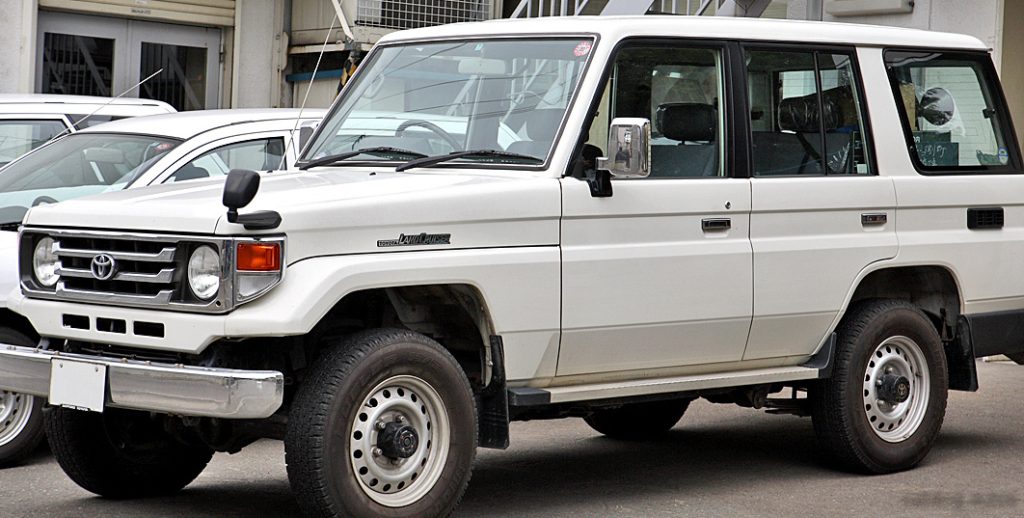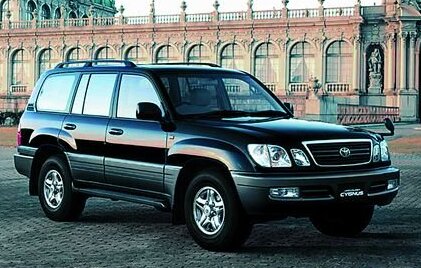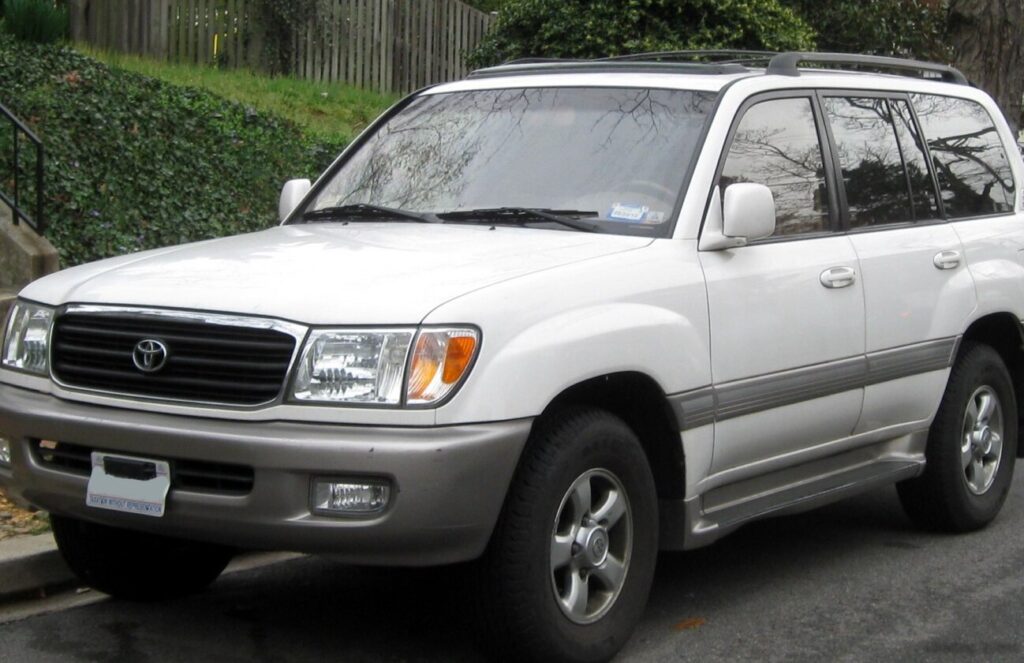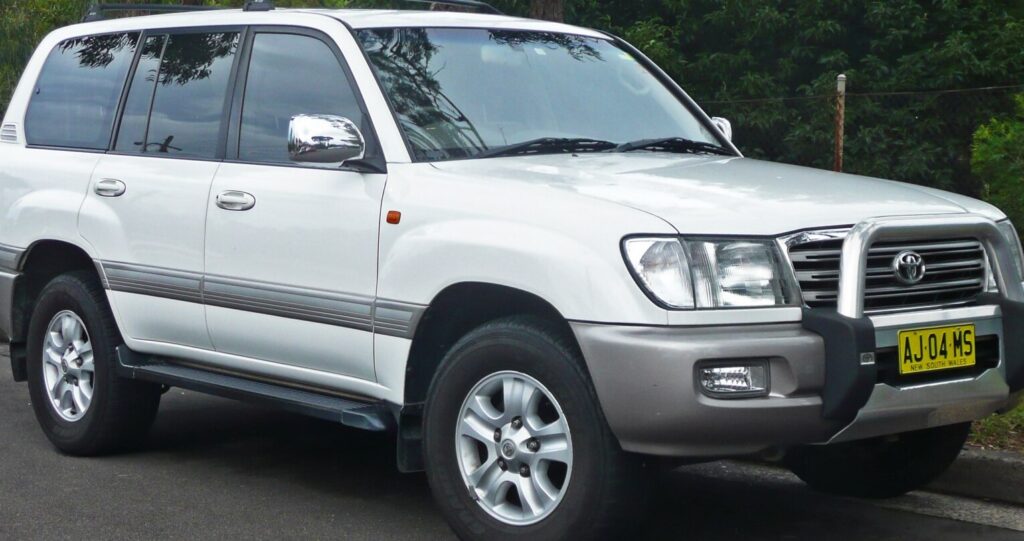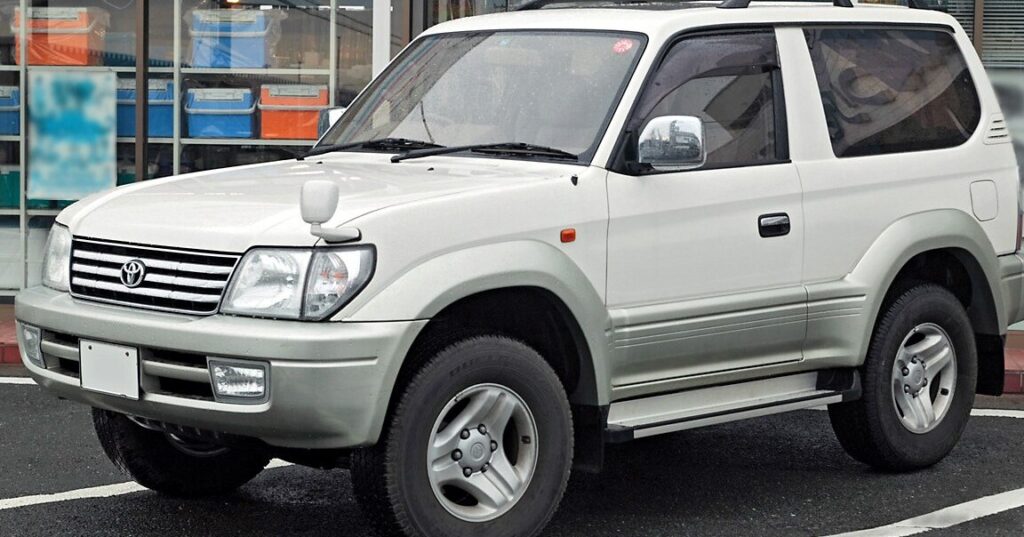
The Toyota Land Cruiser Prado J90 series, particularly the 3-door variant produced from 2000 to 2002, represented a significant evolution in Toyota’s long-standing tradition of rugged, capable off-road vehicles. This specific iteration, equipped with the 2.7-liter 16V (150 hp) gasoline engine and a four-speed automatic transmission with Electronic Controlled Transmission (ECT), occupied a unique position within the Prado lineup. It was designed to offer a balance between affordability, practicality, and off-road capability, appealing to buyers who desired the Land Cruiser reputation without the higher price tag and complexity of larger engine options or the five-door body style. The J90 Prado, built on the 120-series platform, aimed to modernize the Land Cruiser while retaining its core strengths.
The 2.7L 16V Engine and Automatic Transmission
The heart of this Prado variant is the 3RZ-FE engine, a 2.7-liter inline-four cylinder gasoline engine. This engine is a naturally aspirated design, meaning it doesn’t utilize a turbocharger or supercharger to force air into the cylinders. It features a double overhead camshaft (DOHC) valvetrain with four valves per cylinder, contributing to improved breathing and efficiency. The 3RZ-FE utilizes a multi-port fuel injection system, delivering fuel directly to each intake port for precise fuel metering. The engine produces 150 horsepower at 4800 rpm and 235 Nm (173.33 lb-ft) of torque at 4000 rpm. The bore and stroke are both 95mm, resulting in a relatively square engine configuration. Compression ratio is set at 9.5:1.
Paired with the 3RZ-FE is a four-speed automatic transmission, designated as ECT. This transmission was chosen for its ease of use and suitability for a wider range of drivers, particularly those less experienced with manual transmissions or those who frequently encounter stop-and-go traffic. The ECT system allows for adaptive shifting, adjusting to driving conditions and driver input to optimize performance and fuel economy. While not as sophisticated as some contemporary automatic transmissions, the four-speed unit proved to be reliable and durable.
Powertrain Characteristics and Comparison
Compared to other engine options available in the J90 Prado, such as the 3.4-liter V6, the 2.7-liter engine offered a more economical choice. The V6 provided significantly more power and torque, resulting in quicker acceleration and improved towing capacity, but at the expense of fuel efficiency. The 2.7L Prado was also positioned below the diesel variants (typically a 3.0L turbo diesel in many markets) in terms of outright performance and towing ability. However, the 2.7L engine was generally considered more refined and quieter than the diesel options. The 2.7L automatic combination targeted buyers who prioritized fuel economy and ease of driving over outright performance, making it a popular choice for everyday use and light off-roading.
Driving Characteristics
The 2.7-liter Prado with the automatic transmission delivers a comfortable, if not particularly exhilarating, driving experience. Acceleration is adequate for most situations, but the engine can feel strained when climbing steep hills or carrying a full load. The automatic transmission’s gear ratios are tuned for fuel efficiency and smooth operation, rather than aggressive performance. The ECT transmission provides relatively smooth shifts, although it can sometimes hesitate during quick downshifts. The weight-to-power ratio of 11.6 kg/hp translates to a noticeable lack of urgency compared to higher-powered Prados. However, the engine’s torque output of 235 Nm is sufficient for tackling moderate off-road obstacles. The permanent four-wheel drive system provides excellent traction in a variety of conditions, and the relatively short wheelbase of the 3-door model enhances maneuverability on tight trails.
Equipment & Trim Levels
The 3-door 2.7L Prado typically came with a standard equipment list focused on practicality and comfort. Standard features generally included air conditioning, power windows, power door locks, and a basic audio system. Interior upholstery was typically cloth, although leather options were available as upgrades. The dashboard layout was functional and straightforward, with easy-to-read gauges and controls. Optional extras could include a sunroof, upgraded audio system, alloy wheels, and rear parking sensors. The level of trim varied depending on the specific market, with some regions offering more luxurious packages than others. The 3-door model generally had a more spartan interior compared to the five-door version, reflecting its more utilitarian focus.
Chassis & Braking
The J90 Prado’s chassis is built on a robust body-on-frame construction, providing excellent durability and off-road capability. The front suspension utilizes a coil spring, double wishbone setup with a transverse stabilizer bar, while the rear suspension employs a rigid axle with coil springs. This suspension configuration provides a good balance between ride comfort and off-road articulation. Braking duties are handled by ventilated discs on all four wheels, providing adequate stopping power for the vehicle’s weight. An Anti-lock Braking System (ABS) was typically standard, enhancing safety during emergency braking situations. The steering system is a rack and pinion setup with hydraulic power steering, offering precise and responsive steering feel. The vehicle rides on 215/80 R16 tires, providing a good compromise between on-road comfort and off-road traction.
Market Reception & Comparison
The 2.7-liter Prado 3-door received generally positive reviews, particularly for its affordability, reliability, and off-road capability. Critics praised its rugged construction and durable powertrain, but noted that its performance was not as impressive as some of its competitors. Fuel economy was considered to be reasonable for a vehicle of its size and type. Compared to other trims in the Prado lineup, the 2.7L automatic variant offered the best value for buyers who didn’t require the extra power or space of the larger engine or five-door body style. It was often seen as a sensible choice for those who primarily used their vehicle for commuting and occasional off-road adventures.
Technical Specifications
| Engine Model/Code | 3RZ-FE |
| Engine Displacement | 2693 cm3 (164.34 cu. in.) |
| Number of Cylinders | 4, Inline |
| Cylinder Bore | 95 mm (3.74 in.) |
| Piston Stroke | 95 mm (3.74 in.) |
| Compression Ratio | 9.5:1 |
| Number of Valves per Cylinder | 4 |
| Fuel Injection System | Multi-port manifold injection |
| Engine Aspiration | Naturally aspirated |
| Power | 150 Hp @ 4800 rpm |
| Torque | 235 Nm @ 4000 rpm (173.33 lb.-ft. @ 4000 rpm) |
| Engine Oil Capacity | 5.4 l (5.71 US qt | 4.75 UK qt) |
| Coolant Capacity | 10 l (10.57 US qt | 8.8 UK qt) |
| Kerb Weight | 1740 kg (3836.04 lbs.) |
| Max. Weight | 2015 kg (4442.31 lbs.) |
| Max Load | 275 kg (606.27 lbs.) |
| Trunk (boot) space – minimum | 450 l (15.89 cu. ft.) |
| Trunk (boot) space – maximum | 836 l (29.52 cu. ft.) |
| Fuel Tank Capacity | 90 l (23.78 US gal | 19.8 UK gal) |
| Length | 4255 mm (167.52 in.) |
| Width | 1820 mm (71.65 in.) |
| Height | 1880 mm (74.02 in.) |
| Wheelbase | 2370 mm (93.31 in.) |
| Front Track | 1505 mm (59.25 in.) |
| Rear Track | 1510 mm (59.45 in.) |
| Ride Height (ground clearance) | 230 mm (9.06 in.) |
| Minimum Turning Circle | 10.2 m (33.46 ft.) |
| Approach Angle | 37° |
| Departure Angle | 28° |
| Ramp-over Angle | 32° |
| Drivetrain | All wheel drive (4×4) |
| Gearbox | 4 gears, automatic transmission ECT |
Legacy
The 3RZ-FE engine, in general, is known for its exceptional reliability and longevity. When properly maintained, these engines can easily exceed 200,000 miles (320,000 km) without major issues. The automatic transmission, while not as technologically advanced as modern units, is also considered to be durable. In the used car market, the 2.7-liter Prado 3-door remains a popular choice for buyers seeking a capable and affordable off-road vehicle. Its simplicity and robust construction make it relatively easy and inexpensive to maintain. However, potential buyers should be aware of the engine’s limited power output and the age-related wear and tear that may be present in older vehicles. The Prado J90, and this variant specifically, has earned a reputation as a dependable and long-lasting vehicle, contributing to the Land Cruiser’s enduring legacy of toughness and reliability.