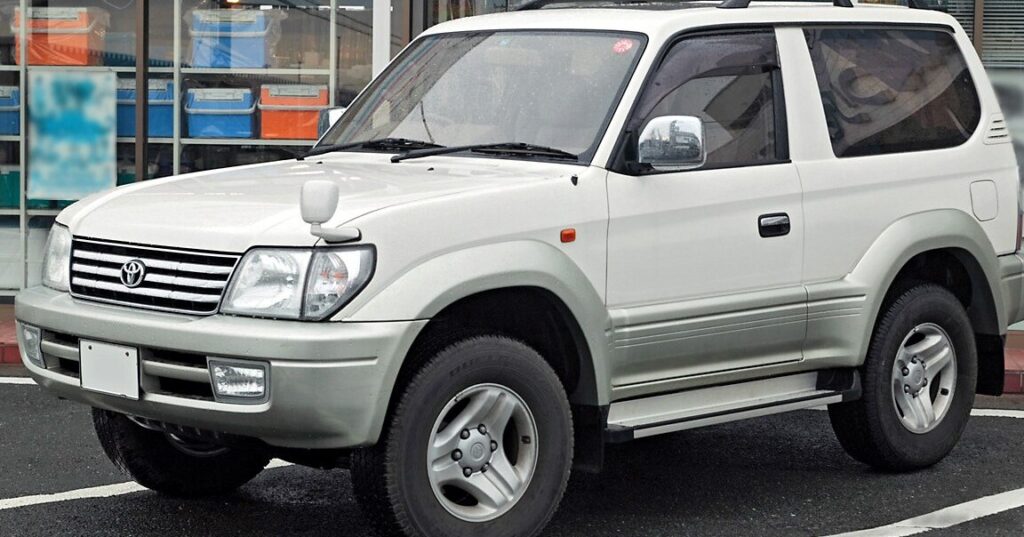
The Toyota Land Cruiser Prado J90, specifically the 3-door model produced between 2000 and 2002, represents a significant iteration in the Prado lineage. This variant, equipped with the 3.0 D-4D (163 hp) turbocharged diesel engine and four-wheel drive, was positioned as a more utilitarian and compact offering within the broader J90 range, which also included 5-door models and various engine options. The facelifted J90, introduced in 2000, brought styling updates and refinements to the already capable Prado platform, building upon the foundation laid by the initial J90 series launched in 1996. This 3-door model catered to buyers prioritizing off-road capability and maneuverability over outright passenger space.
Powertrain & Engine Architecture
The heart of this Prado variant is the 1KD-FTV 3.0-liter inline-four cylinder diesel engine. This engine, a member of Toyota’s D-4D family, is renowned for its durability and fuel efficiency. Producing 163 horsepower at 3400 rpm and 343 Nm (252.98 lb-ft) of torque at 1600 rpm, the 1KD-FTV utilizes a common rail direct injection system, delivering precise fuel metering for optimized combustion. The engine features a double overhead camshaft (DOHC) valvetrain with four valves per cylinder, enhancing volumetric efficiency. A turbocharger with an intercooler further boosts performance, providing increased air intake to the engine. The engine’s displacement is 2982 cm³ (181.97 cu. in.) with a compression ratio of 18.4:1. Engine oil capacity is 7.5 liters (7.93 US qt / 6.6 UK qt), and the recommended oil specification should be consulted in the vehicle’s owner’s manual.
Transmission
The 3-door 3.0 D-4D Prado was primarily equipped with a 5-speed manual transmission. While an automatic transmission was available in some markets, the manual gearbox was the more common configuration, particularly for those seeking maximum control in off-road situations. The manual transmission’s gear ratios are tuned to balance fuel economy with the engine’s torque characteristics, providing adequate acceleration and climbing ability. The transmission is robust and designed to handle the engine’s output, contributing to the Prado’s reputation for reliability.
Driving Characteristics
The 3-door Prado 3.0 D-4D offers a driving experience focused on capability and practicality rather than outright speed. Acceleration from 0-100 km/h (0-62 mph) takes approximately 12.5 seconds, and the vehicle has a top speed of 165 km/h (102.53 mph). The engine’s strong low-end torque makes it well-suited for off-road driving and towing, providing ample pulling power even at lower engine speeds. Compared to the larger-engined Prado variants, such as those equipped with the 3.4-liter gasoline V6, the 3.0 D-4D offers less outright power but significantly better fuel economy. The shorter wheelbase of the 3-door model contributes to improved maneuverability in tight spaces and challenging terrain, making it a favorite among those who frequently venture off the beaten path. The manual transmission provides a more engaging driving experience and allows for greater control over gear selection, particularly useful when navigating difficult obstacles.
Equipment & Trim Levels
The 3-door Prado 3.0 D-4D typically came with a relatively basic level of equipment, reflecting its utilitarian focus. Standard features generally included air conditioning, power steering, and a basic audio system. Interior upholstery was typically cloth, with durable and practical materials used throughout the cabin. Depending on the market and optional packages, features such as power windows, central locking, and alloy wheels could be added. The dashboard layout is functional and straightforward, prioritizing ease of use over luxury. Optional extras often included a sunroof, upgraded audio systems, and enhanced interior trim.
Chassis & Braking
The Prado J90 utilizes a body-on-frame construction, providing a robust and durable platform for off-road use. The front suspension consists of a coil spring, double wishbone setup with a transverse stabilizer bar, while the rear suspension employs a rigid axle with coil springs. This suspension configuration provides a good balance between ride comfort and off-road capability. Braking duties are handled by ventilated discs on all four wheels, providing ample stopping power. An Anti-lock Braking System (ABS) is standard, enhancing safety and control during emergency braking situations. The steering system is a rack and pinion type with hydraulic power assistance, offering precise and responsive steering feel. The vehicle is equipped with 215/80 R16 S tires, chosen for their durability and all-terrain capabilities.
Market Reception & Comparison
The 3-door Prado 3.0 D-4D was generally well-received by critics and buyers alike, particularly those seeking a capable and reliable off-road vehicle. Its fuel efficiency was a major selling point, especially compared to the larger-engined Prado variants. While the 3.0 D-4D offered less outright performance than the gasoline V6 models, its strong torque and durable engine made it a popular choice for those who prioritized practicality and longevity. Compared to competitors such as the Mitsubishi Pajero and Nissan Patrol, the Prado offered a refined driving experience and a reputation for exceptional reliability. Fuel consumption figures are approximately 11.7 l/100 km (20.1 US mpg / 24.1 UK mpg) in urban conditions, 8.2 l/100 km (28.7 US mpg / 34.4 UK mpg) on the extra-urban cycle, and 10.4 l/100 km (22.6 US mpg / 27.2 UK mpg) combined.
Technical Specifications
| Brand | Toyota |
| Model | Land Cruiser Prado |
| Generation | Land Cruiser Prado (J90, facelift 2000) 3-door |
| Type (Engine) | 3.0 D-4D (163 Hp) 4WD |
| Start of production | 2000 year |
| End of production | 2002 year |
| Fuel consumption (urban) | 11.7 l/100 km (20.1 US mpg / 24.1 UK mpg) |
| Fuel consumption (extra urban) | 8.2 l/100 km (28.7 US mpg / 34.4 UK mpg) |
| Fuel consumption (combined) | 10.4 l/100 km (22.6 US mpg / 27.2 UK mpg) |
| Fuel Type | Diesel |
| Acceleration 0 – 100 km/h | 12.5 sec |
| Acceleration 0 – 62 mph | 12.5 sec |
| Acceleration 0 – 60 mph | 11.9 sec |
| Maximum speed | 165 km/h (102.53 mph) |
| Power | 163 Hp @ 3400 rpm |
| Torque | 343 Nm @ 1600 rpm (252.98 lb.-ft. @ 1600 rpm) |
| Engine layout | Front, Longitudinal |
| Engine Model/Code | 1KD-FTV |
| Engine displacement | 2982 cm3 (181.97 cu. in.) |
| Number of cylinders | 4 |
| Engine configuration | Inline |
| Cylinder Bore | 96 mm (3.78 in.) |
| Piston Stroke | 103 mm (4.06 in.) |
| Compression ratio | 18.4:1 |
| Engine oil capacity | 7.5 l (7.93 US qt / 6.6 UK qt) |
| Coolant capacity | 10 l (10.57 US qt / 8.8 UK qt) |
| Kerb Weight | 1835 kg (4045.48 lbs.) |
| Max. weight | 2510 kg (5533.6 lbs.) |
| Trunk (boot) space – minimum | 450 l (15.89 cu. ft.) |
| Trunk (boot) space – maximum | 836 l (29.52 cu. ft.) |
| Fuel tank capacity | 90 l (23.78 US gal / 19.8 UK gal) |
| Length | 4255 mm (167.52 in.) |
| Width | 1820 mm (71.65 in.) |
| Height | 1880 mm (74.02 in.) |
| Wheelbase | 2370 mm (93.31 in.) |
Legacy
The 1KD-FTV engine, found in this Prado variant, has earned a reputation for exceptional reliability and longevity. Properly maintained examples continue to operate reliably even with high mileage. The 3-door Prado 3.0 D-4D remains a popular choice in the used car market, particularly among those seeking a capable and affordable off-road vehicle. Its robust construction, fuel efficiency, and readily available parts contribute to its enduring appeal. While older models may require routine maintenance and repairs, the Prado’s inherent durability ensures that it remains a viable option for years to come. The combination of the 1KD-FTV engine and the Prado’s capable chassis has solidified its position as a trusted and respected vehicle in the world of off-road enthusiasts.