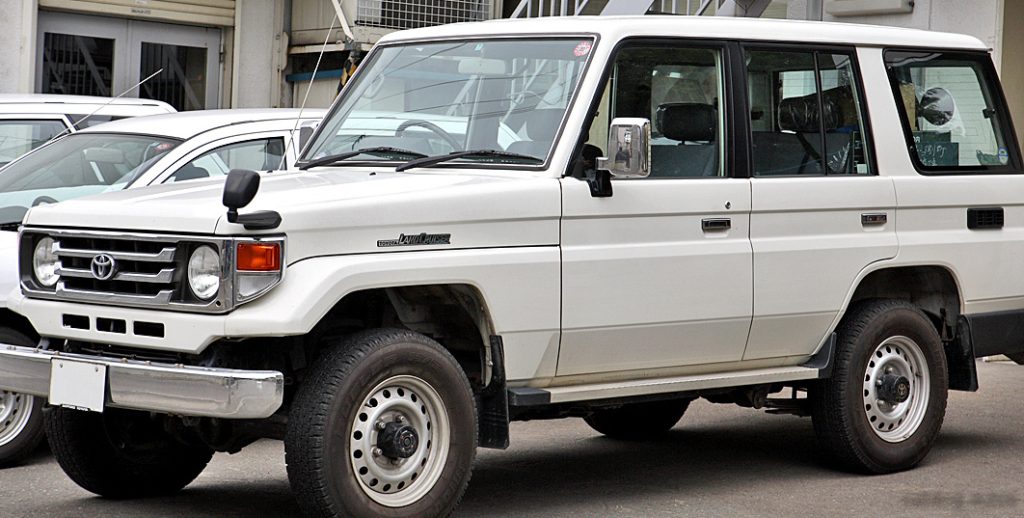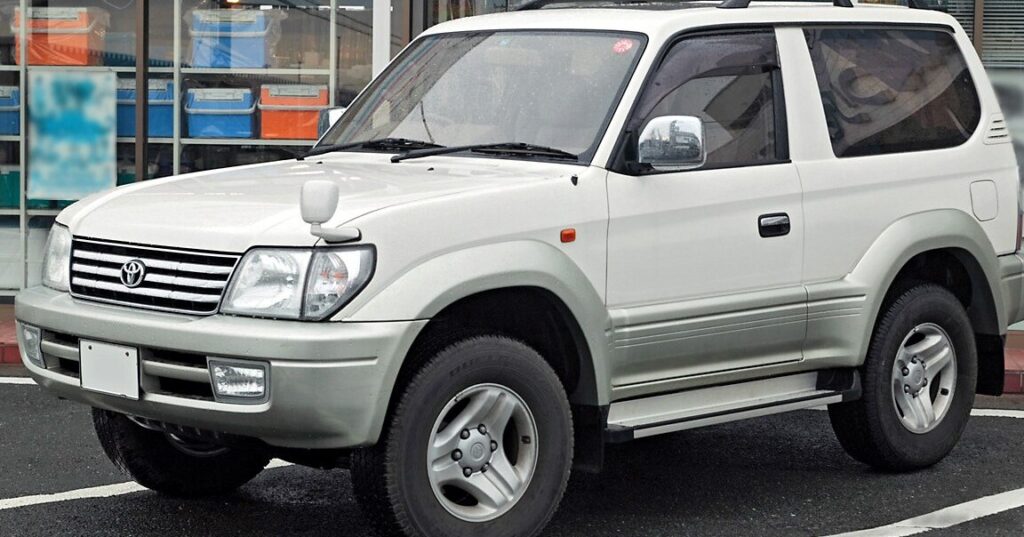
The Toyota Land Cruiser Prado J90 series, particularly the 3-door model produced between 2000 and 2002, represented a significant evolution in Toyota’s renowned off-road vehicle lineage. This specific variant, equipped with the 3.0-liter turbocharged diesel engine (1KZ-TE) producing 145 horsepower and paired with a 4-speed automatic transmission (ECT), occupied a unique position within the Prado lineup. It catered to buyers seeking a capable and relatively economical off-roader in a more compact and maneuverable package than the larger, five-door models. The J90 Prado, launched in 1996 and facelifted in 2000, was built on the 120 platform, offering improved refinement and on-road comfort compared to its predecessors while retaining the Land Cruiser’s legendary durability and off-road prowess.
The 3.0 TD (145 Hp) 4WD ECT Variant: Positioning and Overview
The 3.0 TD automatic Prado was positioned as a mid-range offering within the J90 series. While the gasoline engines (typically 2.7L and 3.4L V6s) provided more outright power, they often came at the expense of fuel economy, a crucial consideration for many buyers in markets where diesel fuel was more prevalent and affordable. Compared to the 3.0 TD manual transmission versions, the automatic offered increased convenience, particularly in challenging off-road situations and urban driving. However, it did result in a slight performance compromise due to the inherent efficiency losses of the automatic gearbox. This trim level appealed to a broad audience, including those needing a reliable work vehicle, families seeking a versatile adventure vehicle, and individuals prioritizing fuel efficiency without sacrificing off-road capability.
Powertrain & Engine Architecture
At the heart of this Prado variant lies the 1KZ-TE 3.0-liter inline-four cylinder diesel engine. This engine is a robust and well-regarded unit known for its longevity and relatively simple mechanical design. It utilizes a precombustion chamber injection system, a common feature in Toyota diesel engines of this era, which contributes to quieter operation and reduced emissions compared to direct injection systems. The 1KZ-TE features a single overhead camshaft (OHC) valvetrain operating two valves per cylinder. A turbocharger with an intercooler is employed to boost power output, delivering 145 hp at 3600 rpm and 343 Nm (252.98 lb-ft) of torque at 2000 rpm. This torque output is particularly noteworthy, providing ample low-end grunt for off-road driving and towing.
The automatic transmission is a 4-speed electronically controlled transmission (ECT). While not as sophisticated as modern automatic transmissions, it provides smooth and reliable shifting. The ECT system allows for adaptive shifting based on driving conditions and throttle input. The transmission is designed to handle the engine’s torque output effectively, although it does contribute to a slight reduction in fuel economy compared to the manual transmission versions. The engine is mounted longitudinally in the chassis, and power is delivered to all four wheels via a permanent all-wheel-drive system.
Driving Characteristics
The 3.0 TD automatic Prado offers a comfortable and capable driving experience. The engine delivers strong low-end torque, making it well-suited for navigating challenging terrain and towing loads. While the 145 hp output isn’t particularly high by modern standards, it’s sufficient for most driving situations. The automatic transmission provides smooth gear changes, enhancing comfort during on-road driving. However, the 4-speed transmission can feel somewhat dated compared to more modern transmissions with more gears. Acceleration is adequate but not brisk, and overtaking maneuvers require careful planning. The permanent all-wheel-drive system provides excellent traction on various surfaces, and the Prado’s robust suspension absorbs bumps and irregularities effectively. The gear ratios are optimized for torque delivery rather than outright speed, prioritizing off-road capability and towing capacity. Compared to the gasoline-powered Prados, the diesel version offers significantly better fuel economy, making it a more practical choice for long-distance travel.
Equipment & Trim Levels
The 3-door Prado 3.0 TD automatic typically came equipped with a reasonable level of standard features. These generally included air conditioning, power windows, power steering, and an AM/FM radio. Depending on the market and optional packages selected, additional features could include alloy wheels, a sunroof, upgraded audio systems, and leather upholstery. Interior trim levels varied, with base models featuring cloth upholstery and simpler dashboard appointments, while higher-spec models offered more luxurious materials and finishes. The 3-door configuration inherently limits rear passenger space compared to the 5-door model, but the rear seats are still reasonably comfortable for shorter journeys. The cargo area is also smaller in the 3-door version, but it’s still adequate for carrying luggage and gear.
Chassis & Braking
The Prado J90 series utilizes a body-on-frame construction, providing excellent durability and off-road capability. The front suspension consists of a coil spring, double wishbone setup with a transverse stabilizer bar, while the rear suspension employs a rigid axle with coil springs. This suspension configuration provides a good balance between on-road comfort and off-road articulation. The braking system features ventilated discs on all four wheels, providing adequate stopping power. An Anti-lock Braking System (ABS) was typically included as standard equipment, enhancing safety during emergency braking situations. The steering system is a rack and pinion type with hydraulic power assistance, offering precise and responsive steering feel. The tires are typically 215/80 R16, providing a good compromise between on-road comfort and off-road traction.
Market Reception & Comparison
The 3.0 TD automatic Prado was generally well-received by automotive critics and buyers alike. It was praised for its reliability, durability, and off-road capability. The diesel engine’s fuel efficiency was also a major selling point, particularly in markets where fuel costs were high. Compared to the gasoline-powered Prados, the 3.0 TD automatic offered a more practical and economical option for those prioritizing long-distance travel and off-road adventures. However, some critics noted the automatic transmission’s lack of responsiveness and the engine’s relatively modest power output. Compared to competitors like the Mitsubishi Pajero and Nissan Patrol, the Prado was often seen as offering a more refined and comfortable driving experience, albeit at a slightly higher price point.
Technical Specifications
| Engine Model/Code | 1KZ-TE |
| Engine Displacement | 2982 cm3 (181.97 cu. in.) |
| Number of Cylinders | 4, Inline |
| Cylinder Bore | 96 mm (3.78 in.) |
| Piston Stroke | 103 mm (4.06 in.) |
| Compression Ratio | 21:1 |
| Number of Valves per Cylinder | 2 |
| Fuel Injection System | Precombustion chamber injection |
| Engine Aspiration | Turbocharger, Intercooler |
| Power | 145 Hp @ 3600 rpm |
| Torque | 343 Nm @ 2000 rpm (252.98 lb.-ft. @ 2000 rpm) |
| Engine Oil Capacity | 7 l (7.4 US qt | 6.16 UK qt) |
| Coolant Capacity | 10 l (10.57 US qt | 8.8 UK qt) |
| Kerb Weight | 1830-1850 kg (4034.46 – 4078.55 lbs.) |
| Max. Weight | 2125 kg (4684.82 lbs.) |
| Max Load | 275-295 kg (606.27 – 650.36 lbs.) |
| Trunk (boot) space – minimum | 450 l (15.89 cu. ft.) |
| Trunk (boot) space – maximum | 836 l (29.52 cu. ft.) |
| Fuel Tank Capacity | 90 l (23.78 US gal | 19.8 UK gal) |
| Length | 4255 mm (167.52 in.) |
| Width | 1820 mm (71.65 in.) |
| Height | 1880 mm (74.02 in.) |
| Wheelbase | 2370 mm (93.31 in.) |
| Gearbox | 4 gears, automatic transmission ECT |
Legacy
The 3.0 TD automatic Prado J90 remains a popular choice in the used car market, particularly in regions where reliability and off-road capability are highly valued. The 1KZ-TE engine is renowned for its durability and can often exceed 300,000 kilometers (186,000 miles) with proper maintenance. While the automatic transmission may require occasional servicing, it’s generally a reliable unit. Common maintenance items include regular oil changes, filter replacements, and inspection of the turbocharger and fuel injection system. The Prado’s robust construction and readily available parts supply contribute to its long-term reliability and affordability. Today, these vehicles are often sought after by overlanding enthusiasts and those seeking a dependable and capable off-road vehicle at a reasonable price.