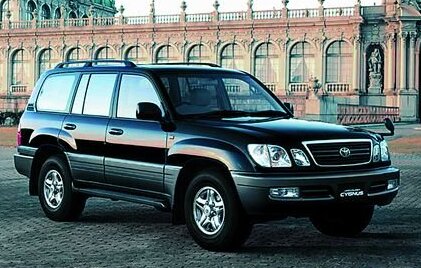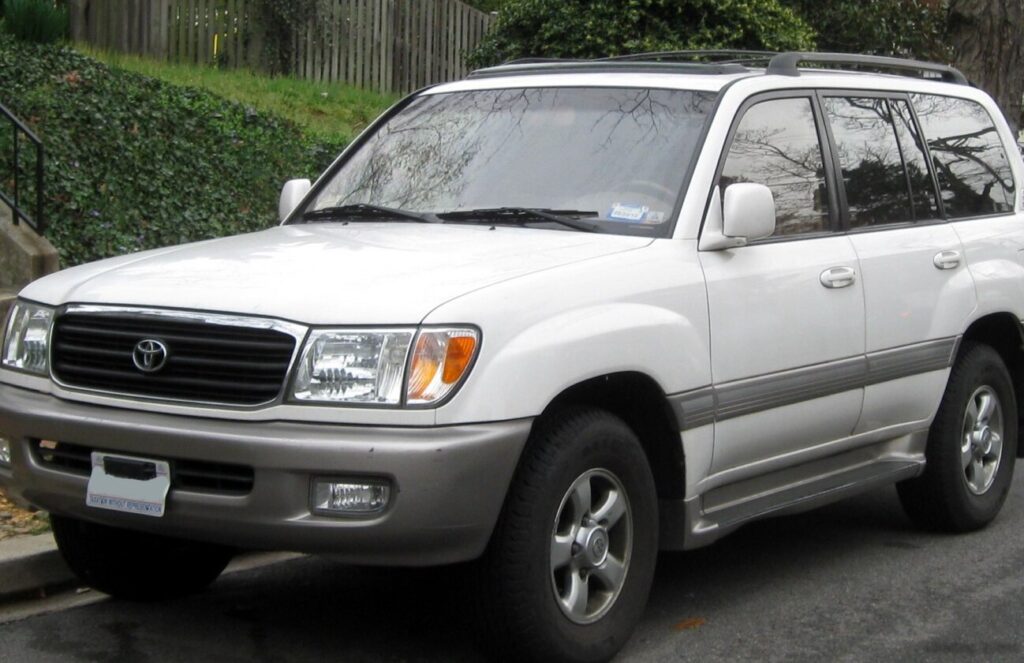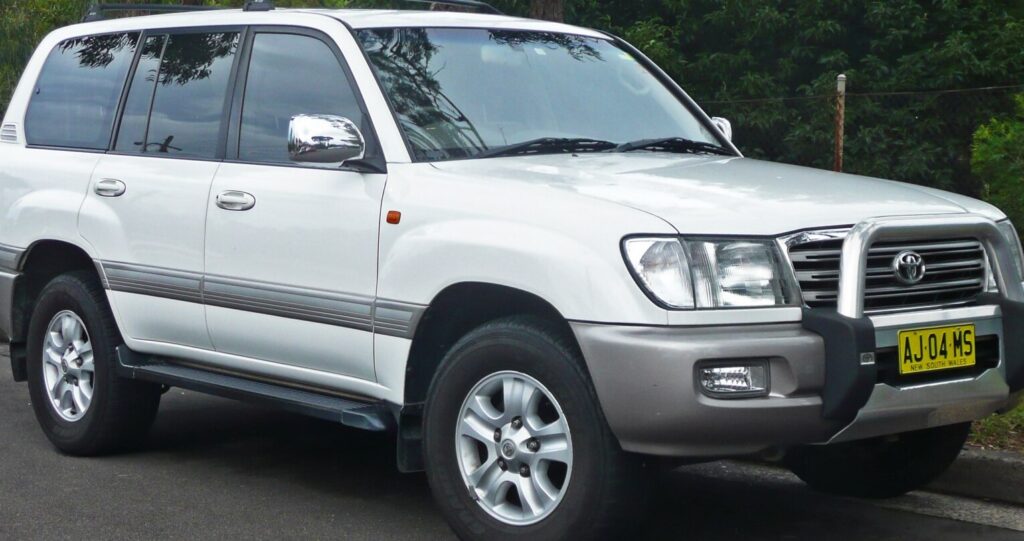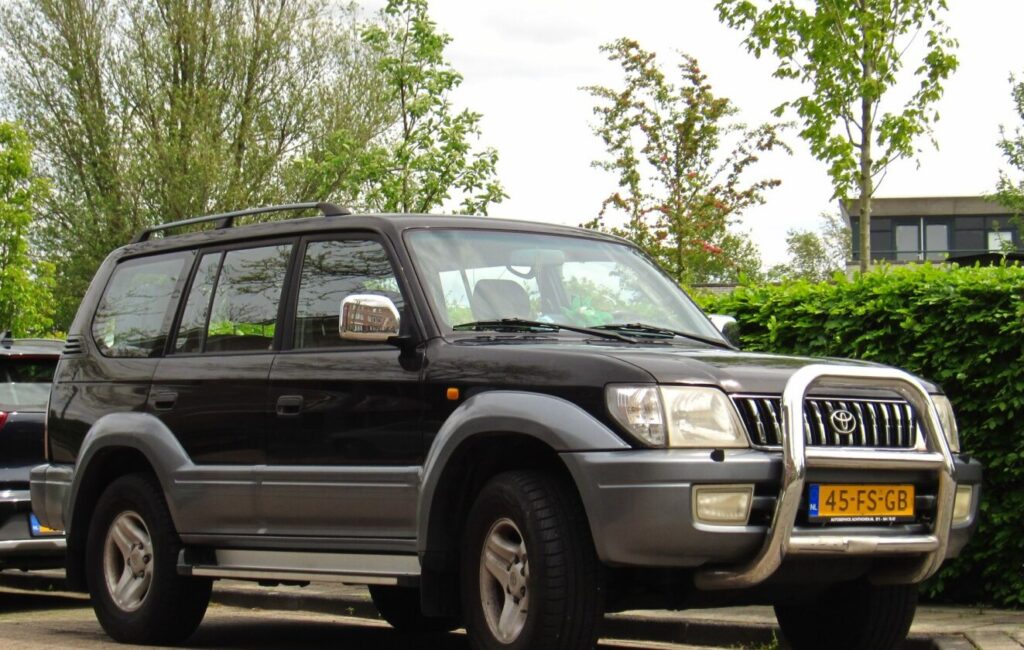
The Toyota Land Cruiser Prado J90, specifically the 5-door model with the 2.7-liter 16V (150 hp) engine and four-wheel drive, was produced from 2000 to 2002 as part of the facelifted J90 series. This variant represented a key entry point into the Land Cruiser Prado range, offering a balance of off-road capability, family practicality, and relative affordability. The J90 Prado, launched in 1996, was a significant departure from its predecessor, moving towards a more comfortable and refined SUV while retaining the Land Cruiser’s legendary durability and off-road prowess. The 2000 facelift brought cosmetic updates and refinements to the engine and transmission.
The 2.7L Prado: Positioning and Target Audience
Within the J90 Prado lineup, the 2.7-liter model served as the base engine option, positioned below the more powerful 3.4-liter V6 and the diesel-powered variants. It was aimed at buyers who prioritized fuel efficiency and a lower purchase price over outright performance. This made it particularly popular in markets where gasoline prices were higher or where the Prado was used primarily for daily commuting and occasional off-road excursions. The 2.7L Prado was often chosen by families needing a spacious and reliable SUV, but who didn’t require the extra power of the larger engines. It was a common sight in both urban and rural environments.
Powertrain & Engine Architecture
The heart of this Prado variant is the 3RZ-FE engine, a 2.7-liter (2693 cc) inline-four cylinder gasoline engine. This engine is a naturally aspirated, single overhead camshaft (SOHC) design with four valves per cylinder (16V). It produces 150 horsepower at 4800 rpm and 235 Nm (173.33 lb-ft) of torque at 4000 rpm. The engine utilizes a multi-port fuel injection system for efficient fuel delivery. The 3RZ-FE is known for its robustness and relatively simple design, contributing to its reputation for reliability.
Paired with the 3RZ-FE engine is a four-speed automatic transmission, designated as ECT (Electronically Controlled Transmission). This transmission was chosen for its ease of use and suitability for both on-road and moderate off-road driving. While not offering the most advanced gear ratios, it provided smooth shifts and adequate performance for the engine’s output. The transmission is electronically controlled, allowing for adaptive shifting based on driving conditions and throttle input.
Driving Characteristics
The 2.7-liter Prado with the automatic transmission delivers a comfortable, if not particularly exhilarating, driving experience. Acceleration is adequate for everyday driving, but it’s noticeably slower than the V6 models. The automatic transmission contributes to a relaxed driving style, but can sometimes feel hesitant when attempting quick overtaking maneuvers. The gear ratios are optimized for fuel economy and low-end torque, making it well-suited for climbing hills and navigating rough terrain at lower speeds. Compared to the manual transmission versions of the 2.7L Prado, the automatic sacrifices some responsiveness for convenience. The weight-to-power ratio of 12.1 kg/hp means that the vehicle feels substantial, and the engine needs to work harder when fully loaded or climbing steep inclines.
Equipment & Trim Levels
The standard equipment level for the 2.7-liter Prado varied depending on the specific market. However, common features included air conditioning, power windows, power locks, and a basic audio system. Interior upholstery was typically cloth, with options for upgraded materials in some regions. The dashboard layout was functional and straightforward, prioritizing usability over luxury. Optional extras included a sunroof, upgraded audio systems, alloy wheels, and rear parking sensors. Higher trim levels might also have featured woodgrain interior trim and leather upholstery. The Prado J90 offered a generous amount of space for passengers and cargo, with seating for up to eight occupants in some configurations. Trunk space ranged from 742 liters (26.2 cu. ft.) with the rear seats up to 1150 liters (40.61 cu. ft.) with the rear seats folded down.
Chassis & Braking
The J90 Prado features a robust body-on-frame construction, providing excellent durability and off-road capability. The front suspension utilizes a coil spring, double wishbone setup with a transverse stabilizer bar, while the rear suspension employs a rigid axle with coil springs. This suspension configuration provides a comfortable ride on paved roads while maintaining good articulation for off-road use. Braking duties are handled by ventilated discs on the front wheels and drum brakes on the rear. The inclusion of an Anti-lock Braking System (ABS) enhanced safety by preventing wheel lockup during hard braking. The steering system is a rack and pinion type with hydraulic power assistance, providing precise and responsive steering feel. The vehicle rides on 215/80 R16 tires mounted on 16-inch steel or alloy wheels.
Market Reception & Comparison
The 2.7-liter Prado was generally well-received by critics as a practical and reliable SUV. While its performance wasn’t considered sporty, it was deemed adequate for most driving situations. Fuel economy was a strong point, particularly compared to the larger V6 engine. Reliability was consistently praised, with the 3RZ-FE engine earning a reputation for its longevity. Compared to the 3.4-liter V6 Prado, the 2.7-liter model offered a more affordable entry point into the Land Cruiser Prado range, but at the cost of performance. The diesel variants provided better fuel economy and torque, but were often more expensive and subject to stricter emissions regulations. The 2.7L Prado often found itself competing with other mid-size SUVs like the Mitsubishi Pajero and Nissan Patrol, offering a similar blend of off-road capability and family practicality.
Technical Specifications
| Engine Model/Code | 3RZ-FE |
| Engine Displacement | 2693 cm3 (164.34 cu. in.) |
| Number of Cylinders | 4, Inline |
| Cylinder Bore | 95 mm (3.74 in.) |
| Piston Stroke | 95 mm (3.74 in.) |
| Compression Ratio | 9.5:1 |
| Number of Valves per Cylinder | 4 |
| Fuel Injection System | Multi-port manifold injection |
| Engine Aspiration | Naturally aspirated |
| Engine Oil Capacity | 5.4 l (5.71 US qt | 4.75 UK qt) |
| Coolant Capacity | 10 l (10.57 US qt | 8.8 UK qt) |
| Kerb Weight | 1820-1860 kg (4012.41 – 4100.6 lbs.) |
| Max. Weight | 2300 kg (5070.63 lbs.) |
| Max Load | 440-480 kg (970.03 – 1058.22 lbs.) |
| Trunk (boot) space – minimum | 742 l (26.2 cu. ft.) |
| Trunk (boot) space – maximum | 1150 l (40.61 cu. ft.) |
| Fuel Tank Capacity | 90 l (23.78 US gal | 19.8 UK gal) |
| Length | 4690 mm (184.65 in.) |
| Width | 1820 mm (71.65 in.) |
| Height | 1880 mm (74.02 in.) |
| Wheelbase | 2675 mm (105.31 in.) |
| Gears/Transmission Type | 4 gears, automatic transmission ECT |
Legacy
The 2.7-liter Prado J90 remains a popular choice in the used car market, particularly in regions where reliability and off-road capability are highly valued. The 3RZ-FE engine is known for its longevity and relatively low maintenance costs. While older models may require some maintenance due to age, the engine itself is generally considered very durable. The Prado J90’s body-on-frame construction and robust drivetrain contribute to its long-term reliability. Today, these vehicles are often sought after by enthusiasts and those looking for a dependable and capable SUV that can handle a variety of terrains. The combination of affordability, practicality, and legendary Land Cruiser durability ensures that the 2.7-liter Prado J90 will continue to be a sought-after vehicle for years to come.