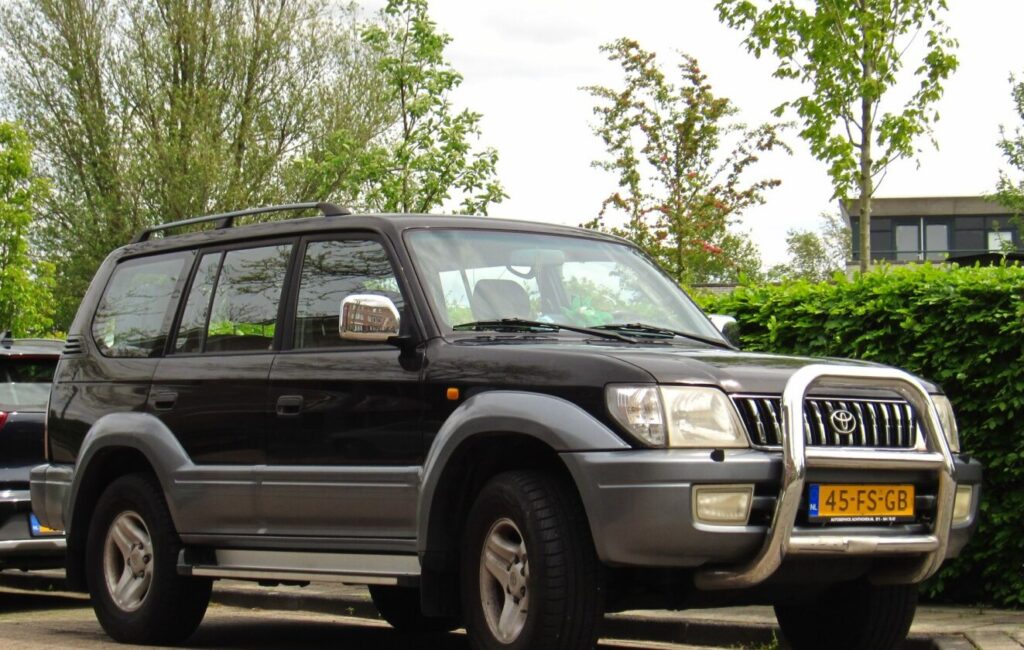
The Toyota Land Cruiser Prado J90 series, particularly the facelifted version introduced in 2000, represented a significant evolution of Toyota’s renowned off-road capability combined with increasing on-road refinement. This five-door variant, powered by the 3.0 TD (145 hp) engine and equipped with a four-wheel-drive system, occupied a crucial position within the Prado lineup. Produced from 2000 to 2002, it catered to buyers seeking a robust, family-oriented SUV with diesel efficiency and proven reliability. The J90 Prado, built on a body-on-frame chassis, aimed to bridge the gap between dedicated off-roaders and more comfortable, everyday SUVs, appealing to a wider customer base than previous Land Cruiser generations.
The 3.0 TD (145 hp) Prado: Positioning and Overview
The 3.0 TD variant with 145 horsepower was positioned as a mid-range offering within the J90 Prado facelift range. Above it sat gasoline-powered engines offering higher horsepower, while below it were typically less-equipped or older model year Prados. This diesel engine was favored in many markets outside of North America due to its fuel efficiency and torque characteristics, making it well-suited for towing and challenging terrain. The facelifted J90, introduced in 2000, brought cosmetic updates, improved interior appointments, and refinements to the suspension and braking systems compared to the pre-facelift models. The five-door configuration provided seating for up to eight passengers, making it a practical choice for families and those requiring substantial passenger capacity.
Powertrain & Engine Architecture
The heart of this Prado variant is the 1KZ-TE 3.0-liter inline-four cylinder diesel engine. This engine is a turbocharged, indirect injection diesel, utilizing a precombustion chamber design. This system, common in Toyota diesels of the era, improves combustion efficiency and reduces noise compared to direct injection systems. The 1KZ-TE boasts a displacement of 2,982 cm³ (181.97 cubic inches) with a bore of 96 mm (3.78 inches) and a stroke of 103 mm (4.06 inches). It features a compression ratio of 21:1 and a two-valve per cylinder (OHC) valvetrain. The turbocharger provides a significant boost in power and torque, allowing the engine to produce 145 hp at 3600 rpm and 343 Nm (252.98 lb-ft) of torque at 2000 rpm. The engine oil capacity is 7 liters (7.4 US quarts / 6.16 UK quarts), and the cooling system holds 10 liters (10.57 US quarts / 8.8 UK quarts). The 1KZ-TE is known for its durability and longevity, provided it receives regular maintenance.
Driving Characteristics
The 3.0 TD Prado, while not a performance vehicle, offers a respectable driving experience. The 145 hp output, combined with the substantial 343 Nm of torque, provides adequate power for both on-road cruising and off-road excursions. The engine delivers its peak torque at a relatively low 2000 rpm, making it responsive in everyday driving situations and providing strong pulling power when needed. Compared to the gasoline-powered Prados, the diesel offers superior fuel economy and a more relaxed driving style. However, it lacks the higher-end acceleration of the gasoline engines. The five-speed manual transmission (as equipped in this variant) provides precise control, although an automatic transmission was also available. The Prado’s weight (approximately 2000 kg / 4409.25 lbs) does impact acceleration, but the engine’s torque helps to overcome this limitation. Off-road, the 3.0 TD Prado excels, with the diesel engine providing consistent power delivery even at low speeds and in challenging conditions.
Equipment & Trim Levels
The 2000-2002 Prado 3.0 TD typically came equipped with a range of features designed to enhance comfort and convenience. Standard equipment generally included air conditioning, power windows, power door locks, and a basic audio system. Interior upholstery was typically cloth, although leather options were available as upgrades. The dashboard layout was functional and straightforward, prioritizing usability over extravagant design. Optional extras included a sunroof, upgraded audio systems, alloy wheels, and a rear differential lock for enhanced off-road capability. Higher trim levels offered additional features such as automatic climate control, woodgrain interior trim, and more sophisticated audio systems. The five-door configuration provided ample space for passengers and cargo, with a trunk capacity ranging from 742 liters (26.2 cu. ft.) with the rear seats up to 1150 liters (40.61 cu. ft.) with the rear seats folded down.
Chassis & Braking
The Prado J90 utilizes a traditional body-on-frame construction, providing robust durability and off-road capability. The front suspension consists of a coil spring, double wishbone setup with a transverse stabilizer bar, while the rear suspension employs a rigid axle with coil springs. This suspension configuration provides a good balance between ride comfort and off-road performance. The braking system features ventilated discs on all four wheels, providing adequate stopping power for the vehicle’s weight. An Anti-lock Braking System (ABS) was standard, enhancing safety and control during emergency braking situations. The steering system is a rack and pinion type with hydraulic power steering, offering precise and responsive handling. The Prado rides on 215/80 R16 tires, providing a good compromise between on-road comfort and off-road traction. Ground clearance is a respectable 230 mm (9.06 inches), allowing it to navigate moderately challenging terrain.
Market Reception & Comparison
The Toyota Land Cruiser Prado J90 3.0 TD received generally positive reviews from automotive critics. It was praised for its reliability, durability, and off-road capability. The diesel engine was appreciated for its fuel efficiency and torque, making it a practical choice for long-distance travel and towing. However, some critics noted that the engine could be somewhat noisy and lacked the refinement of some of its competitors. Compared to other trims in the Prado lineup, the 3.0 TD offered a good balance between performance, fuel economy, and price. It was a popular choice for buyers who prioritized practicality and reliability over outright performance. Compared to competitors like the Mitsubishi Pajero and Nissan Patrol, the Prado was often seen as offering a more refined and comfortable driving experience, as well as a stronger reputation for reliability.
Technical Specifications
| Brand | Toyota |
| Model | Land Cruiser Prado |
| Generation | Land Cruiser Prado (J90, facelift 2000) 5-door |
| Type | 3.0 TD (145 Hp) 4WD |
| Start of production | 2000 year |
| End of production | 2002 year |
| Engine Model/Code | 1KZ-TE |
| Engine displacement | 2982 cm3 / 181.97 cu. in. |
| Number of cylinders | 4 |
| Power | 145 Hp @ 3600 rpm |
| Torque | 343 Nm @ 2000 rpm / 252.98 lb.-ft. @ 2000 rpm |
| Kerb Weight | 2000 kg / 4409.25 lbs. |
| Max. weight | 2440 kg / 5379.28 lbs. |
| Fuel tank capacity | 90 l / 23.78 US gal / 19.8 UK gal |
| Length | 4690 mm / 184.65 in. |
| Width | 1820 mm / 71.65 in. |
| Height | 1880 mm / 74.02 in. |
| Wheelbase | 2675 mm / 105.31 in. |
| Tires size | 215/80 R16 |
| Number of gears | 5, manual transmission |
Legacy
The Toyota Land Cruiser Prado J90 3.0 TD has proven to be a remarkably durable and reliable vehicle. The 1KZ-TE engine is renowned for its longevity, and many examples have exceeded 300,000 kilometers (186,000 miles) with proper maintenance. In the used car market today, these Prados are highly sought after, particularly in regions where diesel engines are popular. They are valued for their off-road capability, reliability, and practicality. While they may not offer the latest technology or features, they remain a capable and dependable choice for those seeking a robust and long-lasting SUV. The Prado J90 3.0 TD continues to hold its value well, reflecting its enduring reputation for quality and durability.