
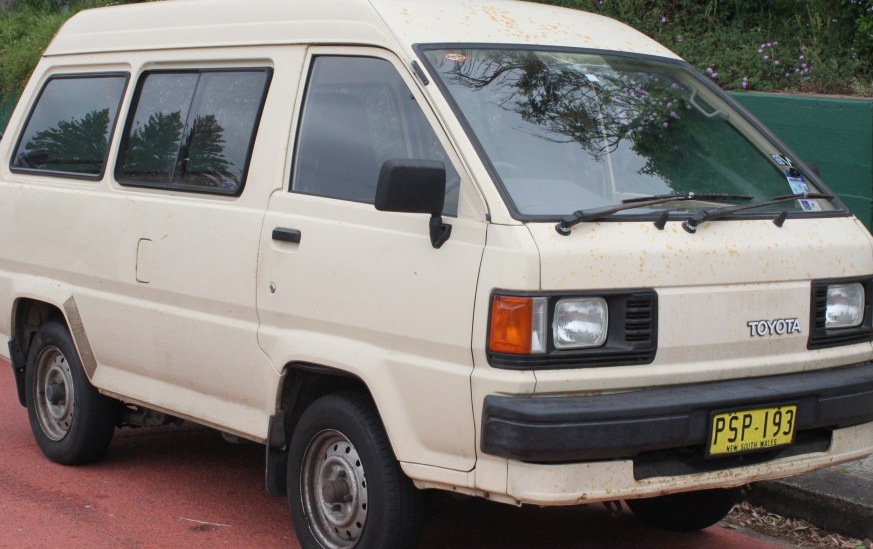
The Toyota Lite Ace 2.0 i (97 hp) was a variant of the Lite Ace minivan produced between 1988 and 1996. This model represented a mid-range offering within the fourth generation of the Lite Ace (K30/K40 series), positioned between the more basic, lower-powered versions and the higher-specification, often diesel-powered, models. The Lite Ace, throughout its various generations, served as a practical and affordable commercial and passenger vehicle, particularly popular in Asian markets. The 2.0 i variant aimed to provide a balance of performance and economy for families and small businesses requiring a versatile vehicle.
Toyota Lite Ace 2.0 i: Overview and Positioning
The fourth-generation Lite Ace, launched in 1988, saw a significant modernization of the vehicle, offering improved comfort, safety, and efficiency compared to its predecessors. The 2.0 i model, powered by the 1RZ-E engine, was designed to appeal to buyers who needed more power than the smaller 1.5-liter engines offered, but didn’t require the higher cost and often more utilitarian focus of the diesel options. It was commonly used as a family vehicle, a taxi, or a small delivery van. The Lite Ace competed with other compact minivans and vans of the era, such as the Mitsubishi Delica, Nissan Vanette, and Daihatsu Town Ace.
Powertrain & Engine Architecture
The heart of the Lite Ace 2.0 i is the Toyota 1RZ-E engine, a 1.998-liter (2.0L) inline-four cylinder gasoline engine. This engine is a naturally aspirated, overhead camshaft (OHC) design. The 1RZ-E is known for its relative simplicity and durability, characteristics valued in a workhorse vehicle. It utilizes a multi-point fuel injection system, contributing to improved fuel efficiency and reduced emissions compared to earlier carburetor-equipped engines. The engine produces 97 horsepower (hp) at 4,800 rpm and 136 lb-ft of torque at 3,200 rpm. The valvetrain consists of two valves per cylinder.
The 2.0 i variant was exclusively paired with a 4-speed automatic transmission. This transmission, while not known for its sporty performance, was chosen for its ease of use and suitability for the vehicle’s intended purpose. The automatic transmission features torque converter technology, providing smooth shifts and aiding in low-speed maneuverability. The gear ratios were optimized for everyday driving conditions, prioritizing fuel economy and drivability over outright acceleration. The transmission’s design focused on reliability and low maintenance, aligning with the overall ethos of the Lite Ace.
Driving Characteristics
The driving experience in the Lite Ace 2.0 i with the automatic transmission is best described as practical and unpretentious. Acceleration is adequate for most situations, but it’s not a particularly quick vehicle. The 97 hp engine provides sufficient power for highway cruising and city driving, although overtaking maneuvers require planning. The automatic transmission shifts smoothly, but can feel somewhat sluggish, especially when downshifting. The rear-wheel-drive configuration provides a stable driving experience, particularly when loaded with passengers or cargo. Compared to the manual transmission versions of the Lite Ace, the automatic sacrifices some responsiveness and fuel economy, but gains in convenience. Compared to the diesel variants, the 2.0 i offers quieter operation and a more refined driving experience, but lacks the diesel’s superior torque and fuel efficiency.
Equipment & Trim Levels
The Lite Ace 2.0 i typically came with a fairly basic level of equipment, reflecting its positioning as a value-oriented vehicle. Standard features generally included cloth upholstery, a basic instrument cluster, and manual windows and door locks. Air conditioning was often an optional extra, as were power windows and a more advanced audio system. The interior design was functional and durable, prioritizing practicality over luxury. The dashboard layout was straightforward and easy to use. Higher trim levels, if available in certain markets, might have included features such as upgraded seat fabrics, a tilt steering wheel, and a more comprehensive instrument panel. The vehicle’s interior was designed to be easily cleaned and maintained, catering to its use as a commercial vehicle.
Chassis & Braking
The Lite Ace 2.0 i utilizes a body-on-frame construction, providing a robust and durable chassis. The suspension system consists of independent front suspension with coil springs and a rigid axle rear suspension with leaf springs. This setup provides a comfortable ride, particularly when the vehicle is lightly loaded. The rear suspension is designed to handle heavier loads, making it suitable for commercial applications. The braking system typically features disc brakes on the front wheels and drum brakes on the rear wheels. Power steering was often an optional extra. The chassis and braking system were designed to provide reliable performance and durability, even under demanding conditions. Stabilizer bars were often omitted or were smaller in diameter compared to higher-spec models, reflecting the vehicle’s focus on affordability.
Market Reception & Comparison
The Toyota Lite Ace 2.0 i was generally well-received in the markets where it was sold. Critics praised its practicality, reliability, and affordability. However, some reviewers noted its lack of refinement and relatively modest performance. Compared to other minivans of the era, the Lite Ace offered a compelling value proposition, particularly for buyers who needed a durable and versatile vehicle. Its fuel economy was considered reasonable for a vehicle of its size and class, although the automatic transmission did reduce fuel efficiency compared to the manual versions. The 1RZ-E engine proved to be a reliable powerplant, with relatively low maintenance costs. The Lite Ace’s rear-wheel-drive layout was seen as a benefit by some, providing better handling and stability when loaded, but it also meant a less spacious interior compared to front-wheel-drive competitors.
Technical Specifications
| Body Type | Minivan |
| Doors | 4 |
| Seats | 8 |
| Engine Type | Inline-4 Cylinder Gasoline |
| Engine Displacement | 1.998 Liters (2.0L) |
| Engine Code | 1RZ-E |
| Power | 97 hp @ 4,800 rpm |
| Torque | 136 lb-ft @ 3,200 rpm |
| Fuel System | Multi-point Fuel Injection |
| Transmission | 4-speed Automatic |
| Drivetrain | Rear-Wheel Drive |
| Front Suspension | Independent, Coil Springs |
| Rear Suspension | Rigid Axle, Leaf Springs |
| Front Brakes | Disc |
| Rear Brakes | Drum |
| Production Years | 1988-1996 |
Legacy
The Toyota Lite Ace 2.0 i (97 hp) has proven to be a remarkably durable vehicle. Many examples are still on the road today, a testament to Toyota’s engineering and build quality. The 1RZ-E engine is known for its longevity and relatively low maintenance requirements. In the used car market, these Lite Aces are often sought after by those looking for a reliable and affordable work vehicle or a practical family van. While they may not offer the modern features and amenities of newer vehicles, their simplicity and durability continue to appeal to a wide range of buyers. Parts availability remains relatively good, further contributing to their continued usability. The Lite Ace 2.0 i represents a practical and dependable vehicle from a bygone era, embodying Toyota’s commitment to building reliable and affordable transportation.
