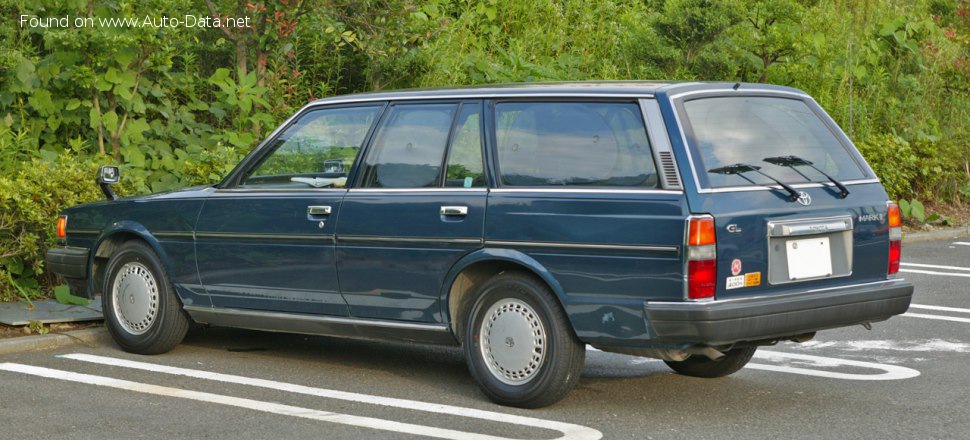
The Toyota Mark II Wagon (GX70) 2.0i 24V, produced between 1984 and 1997, represented a practical and relatively upscale offering within Toyota’s lineup. Positioned as a comfortable and spacious family vehicle, the GX70 Mark II Wagon aimed to blend the practicality of a station wagon with a degree of refinement not always found in vehicles of its class. This particular 2.0-liter, 24-valve variant, producing 135 horsepower, served as a mid-range option, offering a balance between performance and fuel economy within the broader Mark II wagon family. It was designed to appeal to buyers seeking a versatile vehicle for both daily commuting and longer journeys.
The 2.0i 24V Variant: Positioning and Overview
The GX70 Mark II Wagon was part of the larger X70 series, which also included sedan and hardtop coupe body styles. The wagon, however, distinguished itself with its increased cargo capacity and family-oriented focus. The 2.0i 24V trim level occupied a middle ground in the wagon’s offerings. Below it were typically smaller displacement engines with lower horsepower, geared towards budget-conscious buyers. Above it were higher-specification models, potentially featuring larger engines or more luxurious appointments. The GX70 platform was based on Toyota’s rear-wheel-drive architecture, a configuration that remained popular in Japan throughout the 1980s and 1990s.
Powertrain & Engine Architecture
The heart of the 2.0i 24V Mark II Wagon was the 1G-FE engine. This 1,988 cc (121.32 cubic inches) inline-six cylinder engine was a key component of Toyota’s engineering during this period. It featured a double overhead camshaft (DOHC) valvetrain operating 24 valves (four per cylinder), contributing to its relatively high output for a naturally aspirated engine of its displacement. The 1G-FE utilized multi-port fuel injection, a significant advancement over earlier carburetor-based systems, improving fuel efficiency and responsiveness. The engine’s bore and stroke were both 75mm (2.95 inches), resulting in a compression ratio of 9.6:1. The engine required 4.1 liters (4.33 US quarts, 3.61 UK quarts) of engine oil, and the recommended specification would have been detailed in the owner’s manual for the specific year of manufacture.
Driving Characteristics
The 135 horsepower and 177 Nm (130.55 lb-ft) of torque produced by the 1G-FE engine provided adequate, though not particularly sporty, performance for the Mark II Wagon. The rear-wheel-drive configuration contributed to a balanced feel, especially when compared to front-wheel-drive alternatives. While a five-speed manual transmission was available, the automatic transmission was a popular choice, particularly for family buyers prioritizing ease of use. The automatic transmission’s gear ratios were tuned for comfortable cruising and reasonable acceleration. Compared to the higher-output engines available in other Mark II variants, the 2.0i 24V offered a more relaxed driving experience, prioritizing fuel economy and smooth operation over outright speed. Acceleration was respectable, but the wagon’s weight (1280 kg / 2821.92 lbs) limited its overall performance potential.
Equipment & Trim Levels
The GX70 Mark II Wagon 2.0i 24V typically came equipped with a range of features considered standard for a vehicle in its class during the 1980s and 1990s. These included power steering, a basic audio system, and cloth upholstery. Higher trim levels, or the addition of optional packages, could include features such as air conditioning, power windows, power locks, and upgraded audio systems. Interior appointments were generally functional and durable, reflecting the vehicle’s practical orientation. The dashboard layout was typical of Japanese cars of the era, with a focus on clear instrumentation and ease of use. The wagon’s interior was designed to maximize space and comfort for passengers and cargo.
Chassis & Braking
The GX70 Mark II Wagon utilized a traditional body-on-frame construction, contributing to its robust feel. The front suspension employed a spring strut design, while the rear suspension utilized coil springs. This setup provided a comfortable ride, although it wasn’t particularly sporty. Braking duties were handled by ventilated discs at the front and drum brakes at the rear. The steering system was a rack and pinion setup with hydraulic power assistance, providing relatively light and precise steering. The standard tire size was 185/70 R14 S, offering a balance between ride comfort and handling. The wagon’s weight distribution was reasonably well-balanced, contributing to stable handling characteristics.
Market Reception & Comparison
The Toyota Mark II Wagon, including the 2.0i 24V variant, was generally well-received in the Japanese market. It was praised for its spacious interior, comfortable ride, and reliable powertrain. Critics noted that the 2.0i 24V offered a good balance between performance and fuel economy, making it a practical choice for families. Compared to other wagons available at the time, the Mark II Wagon stood out for its relatively refined interior and build quality. Fuel economy was rated at 6.9 l/100 km (34.1 US mpg, 40.9 UK mpg, 14.5 km/l), which was competitive for a vehicle of its size and class. Reliability was a strong point, with the 1G-FE engine being known for its durability. However, some critics noted that the wagon’s styling was somewhat conservative compared to more modern designs.
Technical Specifications
| Brand | Toyota |
| Model | Mark II Wagon |
| Generation | GX70 |
| Type | 2.0i 24V (135 Hp) |
| Production Years | 1984-1997 |
| Body Type | Station Wagon (Estate) |
| Seats | 5 |
| Doors | 5 |
| Engine Model/Code | 1G-FE |
| Engine Displacement | 1988 cm3 (121.32 cu. in.) |
| Number of Cylinders | 6 (Inline) |
| Cylinder Bore | 75 mm (2.95 in.) |
| Piston Stroke | 75 mm (2.95 in.) |
| Compression Ratio | 9.6:1 |
| Fuel Injection System | Multi-port Manifold Injection |
| Power | 135 Hp @ 5600 rpm |
| Torque | 177 Nm @ 4400 rpm (130.55 lb.-ft. @ 4400 rpm) |
| Kerb Weight | 1280 kg (2821.92 lbs.) |
| Max. Weight | 1555 kg (3428.19 lbs.) |
| Fuel Tank Capacity | 65 l (17.17 US gal, 14.3 UK gal) |
| Length | 4690 mm (184.65 in.) |
| Width | 1690 mm (66.54 in.) |
| Height | 1475 mm (58.07 in.) |
| Wheelbase | 2660 mm (104.72 in.) |
| Drivetrain | Rear Wheel Drive |
| Gearbox | 5 gears, manual or automatic |
| Front Brakes | Ventilated Discs |
| Rear Brakes | Drum |
Legacy
The GX70 Toyota Mark II Wagon, particularly the 2.0i 24V variant, has developed a reputation for long-term reliability. The 1G-FE engine is known to be durable and capable of high mileage with proper maintenance. Today, these wagons are becoming increasingly sought after by enthusiasts and collectors, particularly in Japan. While finding well-maintained examples can be challenging, the GX70 Mark II Wagon offers a unique blend of practicality, comfort, and reliability. The rear-wheel-drive layout and durable engine make it a compelling alternative to more modern vehicles. In the used car market, prices vary depending on condition, mileage, and trim level, but well-preserved examples can command a premium.