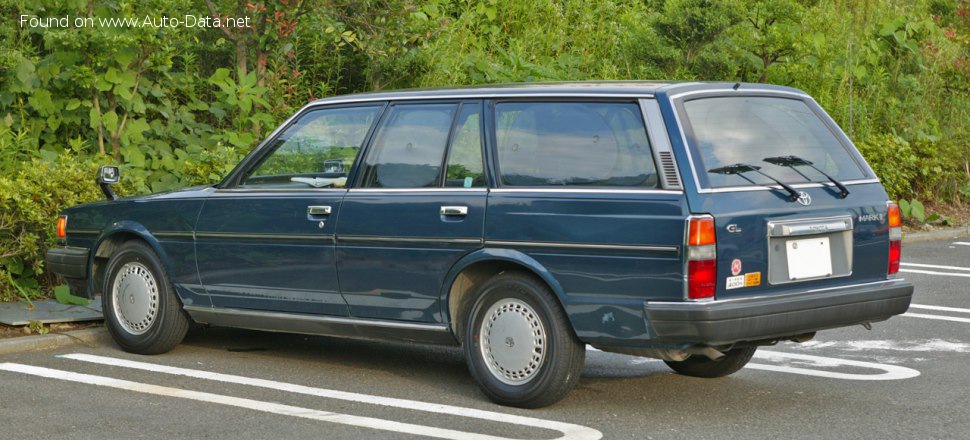
The Toyota Mark II Wagon (GX70) 2.0i 24V, produced from 1984 to 1997, represented a practical and relatively upscale offering within Toyota’s lineup. Positioned as a comfortable and spacious family vehicle, the GX70 Mark II Wagon aimed to blend the practicality of a station wagon with a degree of refinement not always found in vehicles of its class. This specific 2.0-liter, 135 horsepower variant with an automatic transmission served as a mid-range option, offering a balance between performance, fuel economy, and affordability within the broader Mark II Wagon range. It was built on the rear-wheel drive J-platform (GX70), sharing components with other Toyota models of the era, but distinguished by its wagon body style and available engine options.
The 2.0i 24V Automatic: A Mid-Range Offering
The 2.0i 24V Automatic trim occupied an important space in the Mark II Wagon lineup. Below it sat the smaller displacement engines, typically offering lower performance and fewer features, geared towards budget-conscious buyers. Above it were the more powerful engine options, such as the turbocharged variants or those with larger displacements, which catered to drivers prioritizing performance and a more premium experience. The 2.0i 24V Automatic, therefore, appealed to families and individuals seeking a well-rounded vehicle capable of comfortable daily driving and occasional longer trips, without the higher price tag of the top-tier trims.
Powertrain & Engine Architecture
At the heart of the GX70 2.0i 24V was the 1G-FE inline-six cylinder engine. This 1,988 cc (121.32 cubic inches) engine featured a double overhead camshaft (DOHC) valvetrain with four valves per cylinder – hence the “24V” designation. The 1G-FE was a naturally aspirated engine, relying on atmospheric pressure for intake, and utilized a multi-port fuel injection system for precise fuel delivery. This system improved fuel efficiency and reduced emissions compared to earlier carburetor-based designs. The engine produced 135 horsepower at 5,600 rpm and 177 Nm (130.55 lb-ft) of torque at 4,400 rpm.
The engine’s bore and stroke were both 75mm (2.95 inches), resulting in a relatively square configuration. A compression ratio of 9.6:1 was employed, striking a balance between performance and fuel economy. The engine required 4.1 liters (4.33 US quarts, 3.61 UK quarts) of engine oil, and the manufacturer specified appropriate oil grades for optimal performance and longevity.
Paired with the 1G-FE engine was a four-speed automatic transmission. This transmission was designed to provide smooth and convenient shifting, making it well-suited for everyday driving. While not offering the driver engagement of a manual transmission, the automatic provided ease of use, particularly in urban environments. The transmission’s gear ratios were tuned for a balance of acceleration and fuel efficiency, prioritizing comfortable cruising over outright performance.
Engine Code Specifics
The 1G-FE engine code is crucial for identifying parts and understanding the engine’s specifications. It’s a key identifier when sourcing replacement components or performing maintenance. The 1G-FE was known for its relative reliability, although like any engine, it required regular maintenance to ensure optimal performance and longevity. Common maintenance items included oil changes, timing belt replacements, and spark plug servicing.
Driving Characteristics
The GX70 2.0i 24V Automatic offered a comfortable and predictable driving experience. While not a sports car, the 135 horsepower engine provided adequate power for most driving situations. Acceleration was reasonable, though not particularly brisk, and the automatic transmission shifted smoothly. The rear-wheel drive configuration contributed to balanced handling, although the wagon body style and relatively soft suspension tuning prioritized ride comfort over sharp cornering. Compared to the manual transmission versions of the same engine, the automatic resulted in a slight performance decrease due to the inherent power loss within the torque converter. Compared to the higher-output engines available in the Mark II Wagon range, the 2.0i 24V Automatic offered a more relaxed and fuel-efficient driving experience, sacrificing some performance for practicality.
Equipment & Trim Levels
The GX70 2.0i 24V Automatic typically came equipped with a range of features designed to enhance comfort and convenience. Standard features often included power steering, air conditioning, and a basic audio system. Interior upholstery was typically cloth, although leather options were sometimes available as upgrades. The dashboard layout was functional and straightforward, with clearly labeled controls. Optional extras could include power windows, power locks, and upgraded audio systems. The level of equipment varied depending on the specific market and package selected.
Chassis & Braking
The GX70 Mark II Wagon utilized a conventional chassis design with a front strut suspension and a rear coil spring suspension. This setup provided a comfortable ride, absorbing bumps and irregularities in the road surface effectively. The front brakes were ventilated discs, offering good stopping power, while the rear brakes were drums. This combination was typical for vehicles of this class and price point during the 1980s and 1990s. The steering system was a rack and pinion setup with hydraulic power assistance, providing precise and effortless steering control. The vehicle rode on 185/70 R14 tires mounted on 14-inch steel wheels.
Market Reception & Comparison
The Toyota Mark II Wagon, including the 2.0i 24V Automatic variant, was generally well-received by critics and consumers alike. It was praised for its spacious interior, comfortable ride, and reliable powertrain. Fuel economy was considered respectable for a vehicle of its size and class, achieving approximately 6.9 l/100 km (34.1 US mpg, 40.9 UK mpg). Compared to other station wagons available at the time, the Mark II Wagon offered a good balance of features, performance, and value. In terms of reliability, the 1G-FE engine was known to be durable and long-lasting, provided it received regular maintenance. However, some owners reported issues with the automatic transmission over time, particularly with higher mileage.
Technical Specifications
| Brand | Toyota |
| Model | Mark II Wagon |
| Generation | GX70 |
| Type | 2.0i 24V Automatic |
| Start of Production | 1984 |
| End of Production | 1997 |
| Engine Model/Code | 1G-FE |
| Engine Displacement | 1,988 cm3 (121.32 cu. in.) |
| Number of Cylinders | 6 (Inline) |
| Power | 135 Hp @ 5600 rpm |
| Torque | 177 Nm @ 4400 rpm (130.55 lb-ft @ 4400 rpm) |
| Fuel Type | Petrol (Gasoline) |
| Fuel Consumption (Combined) | 6.9 l/100 km (34.1 US mpg, 40.9 UK mpg) |
| Kerb Weight | 1280 kg (2821.92 lbs) |
| Max. Weight | 1555 kg (3428.19 lbs) |
| Fuel Tank Capacity | 65 l (17.17 US gal, 14.3 UK gal) |
| Length | 4690 mm (184.65 in) |
| Width | 1690 mm (66.54 in) |
| Height | 1475 mm (58.07 in) |
| Wheelbase | 2660 mm (104.72 in) |
| Transmission | 4-speed Automatic |
| Drive Wheels | Rear Wheel Drive |
Legacy
The GX70 Toyota Mark II Wagon, particularly the 2.0i 24V Automatic variant, has developed a loyal following among enthusiasts and collectors. The 1G-FE engine is known for its durability and relatively simple maintenance requirements. While finding well-maintained examples can be challenging due to their age, these wagons offer a unique blend of practicality, comfort, and classic Toyota reliability. In the used car market today, GX70 Mark II Wagons are often sought after by those looking for a distinctive and dependable vehicle with a touch of retro charm. Parts availability can be a concern, but many components are still available through aftermarket suppliers or salvaged vehicles. The GX70 remains a testament to Toyota’s commitment to building durable and well-engineered vehicles.