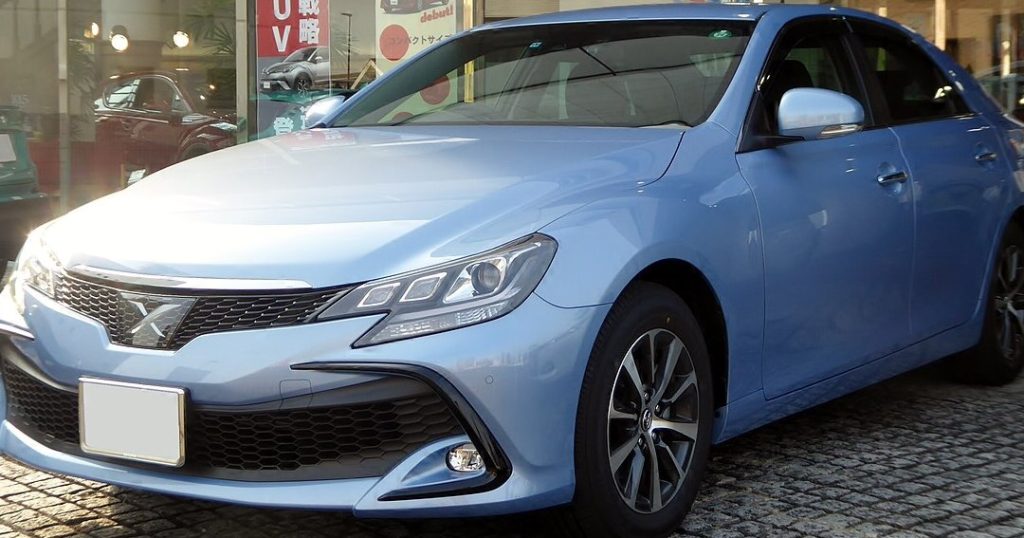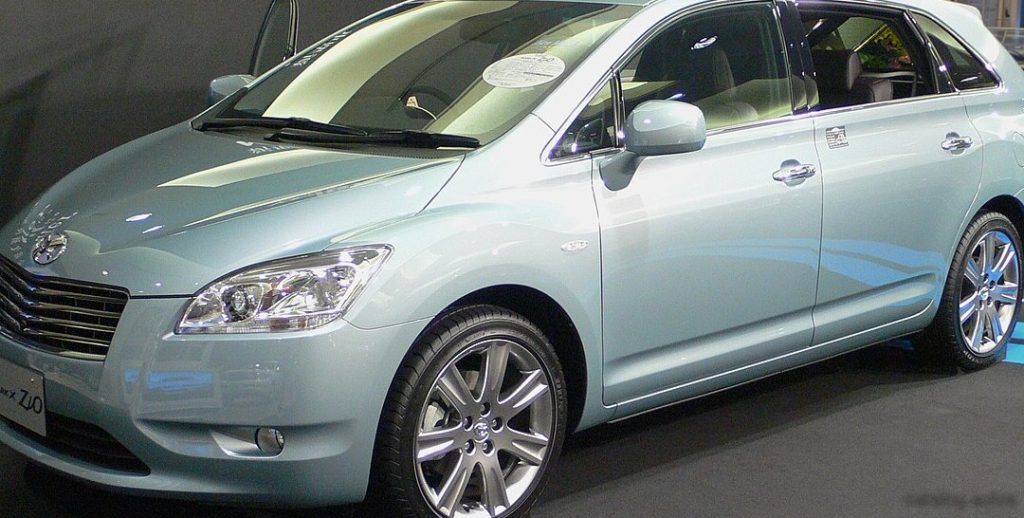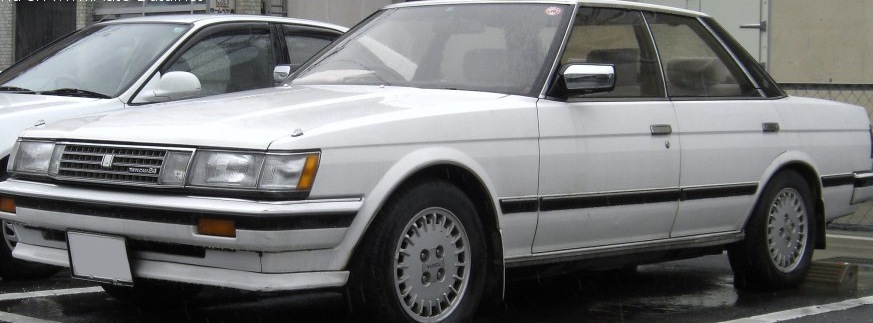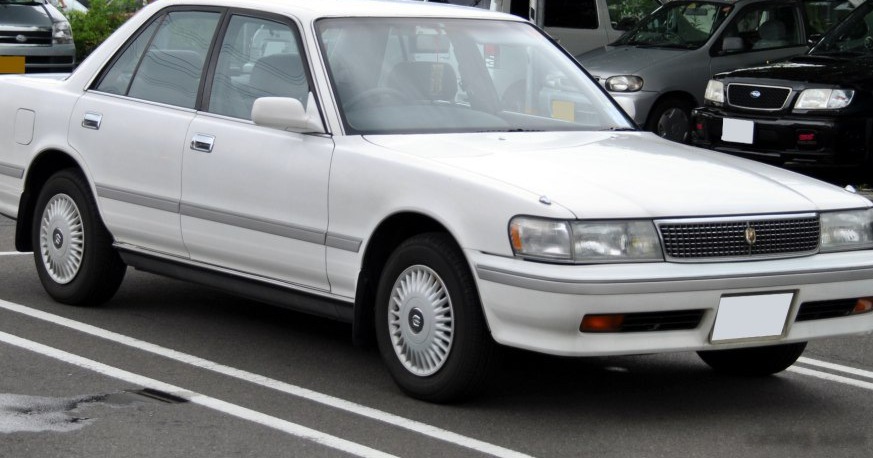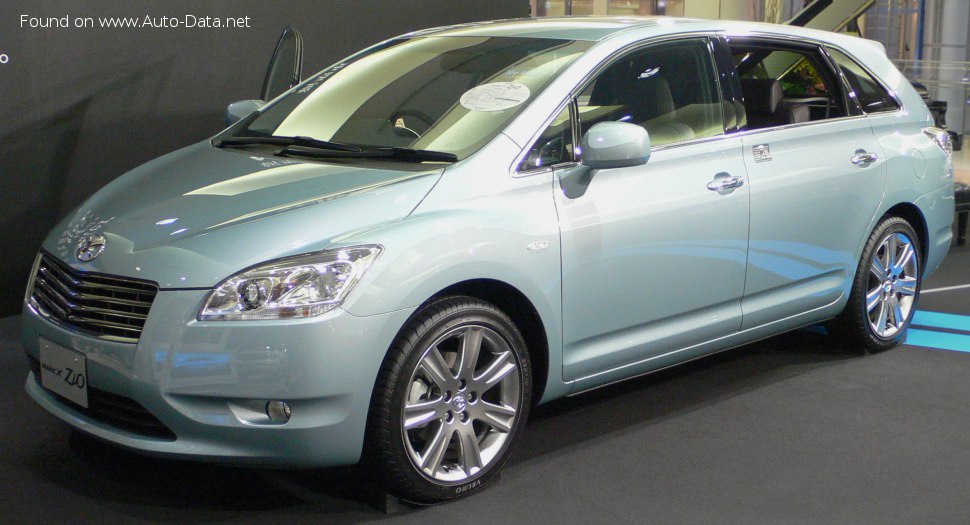
The Toyota Mark X Zio 2.4, produced between 2007 and 2013, was a station wagon variant of the Toyota Mark X, positioned as a more practical and family-oriented offering within the Mark X lineup. Unlike the traditional sedan body style of the standard Mark X, the Zio (short for “Zesty Innovation Operation”) featured a distinctive wagon configuration, aiming to appeal to buyers needing increased cargo capacity and versatility. This variant utilized the 2AZ-FE 2.4-liter inline-four engine, producing 165 horsepower, and was primarily targeted at the Japanese domestic market. It represented a mid-range option within the Zio family, slotting between the 2.0-liter models and the more powerful 3.5-liter variants.
Toyota Mark X Zio 2.4: Overview and Positioning
The Mark X Zio was introduced as Toyota sought to expand the Mark X’s appeal beyond the traditional executive sedan segment. The Zio, with its wagon body style, aimed to capture a share of the growing market for practical, yet stylish, family vehicles. The 2.4-liter engine option was designed to provide a balance between performance and fuel efficiency, making it an attractive choice for daily commuting and longer journeys. The Zio was built on the Toyota K platform, shared with other Toyota and Lexus models of the era, contributing to its overall refinement and build quality. The model was discontinued in 2013 as Toyota shifted its focus towards other vehicle segments.
Powertrain & Engine Architecture
The heart of the Mark X Zio 2.4 is the 2AZ-FE engine, a 2.4-liter (2362 cc) inline-four cylinder gasoline engine. This engine is a naturally aspirated design, meaning it does not utilize a turbocharger or supercharger. It features a double overhead camshaft (DOHC) valvetrain with four valves per cylinder, contributing to its relatively efficient operation. The 2AZ-FE employs sequential fuel injection, delivering fuel directly into the intake ports, optimizing combustion and reducing emissions. The engine’s block is constructed from cast iron, while the cylinder head is made of aluminum alloy, balancing durability with weight reduction. The compression ratio is 9.8:1. The engine’s output of 165 hp (119 kW) at 6000 rpm and 162 lb-ft (220 Nm) of torque at 4000 rpm is delivered through a four-speed automatic transmission in most configurations.
The four-speed automatic transmission used in the Mark X Zio 2.4 is a conventional hydraulic control unit design. While not as technologically advanced as some of the continuously variable transmissions (CVTs) becoming popular at the time, it offered smooth and reliable shifting characteristics. Gear ratios were tuned for a balance of acceleration and fuel economy, prioritizing comfortable cruising rather than outright performance. The transmission features overdrive, contributing to lower engine speeds at highway speeds and improved fuel efficiency. Manual shift functionality was not typically offered on this variant.
Driving Characteristics
The driving experience in the Mark X Zio 2.4 is characterized by its comfortable ride and predictable handling. The 165 hp engine provides adequate power for everyday driving situations, but it is not particularly sporty. Acceleration from a standstill is moderate, and overtaking maneuvers require careful planning. Compared to the 3.5-liter V6 Zio, the 2.4-liter model feels noticeably less powerful, with a slower response to throttle inputs. However, the 2.4-liter engine is more fuel-efficient than the V6, making it a more economical choice for those who prioritize fuel costs. The four-speed automatic transmission shifts smoothly, but it can sometimes feel sluggish, especially when downshifting. The Zio’s suspension is tuned for comfort, absorbing bumps and imperfections in the road surface effectively. Steering is light and precise, making it easy to maneuver in urban environments.
Equipment & Trim Levels
The Mark X Zio 2.4 typically came equipped with a range of standard features, including air conditioning, power windows, power locks, and a basic audio system. Higher trim levels offered additional features such as leather upholstery, woodgrain interior trim, a sunroof, and a more advanced audio system with navigation. Safety features included dual front airbags, side airbags, and anti-lock brakes (ABS). Optional extras included a rear-view camera, parking sensors, and a premium sound system. Interior upholstery was typically cloth on base models, with leather available as an upgrade. The dashboard layout was functional and straightforward, with easy-to-read gauges and controls. Trim levels varied depending on the year of manufacture and regional specifications.
Chassis & Braking
The Mark X Zio 2.4 utilizes a MacPherson strut front suspension and a double-wishbone rear suspension. This configuration provides a good balance of ride comfort and handling stability. The suspension is tuned to prioritize comfort, but it still offers reasonable control in corners. Braking duties are handled by ventilated disc brakes at the front and drum brakes at the rear. ABS is standard, providing enhanced braking performance in emergency situations. The steering system is a rack-and-pinion design, offering precise and responsive steering feel. Stabilizer bars are fitted to both the front and rear axles to reduce body roll during cornering. Wheel sizes typically ranged from 16 to 17 inches, depending on the trim level.
Market Reception & Comparison
The Mark X Zio 2.4 received generally positive reviews from automotive critics in Japan. It was praised for its spacious interior, comfortable ride, and practical wagon body style. However, some critics noted that the 2.4-liter engine lacked the performance of the 3.5-liter V6. Fuel economy was generally considered to be good for a vehicle of its size and class. Compared to other station wagons available in the Japanese market at the time, the Mark X Zio 2.4 offered a compelling combination of style, practicality, and refinement. Its main competitors included the Subaru Legacy Touring Wagon and the Honda Accord Wagon. The 2.4-liter engine offered a more economical alternative to the more powerful, but less fuel-efficient, V6 option within the Zio lineup.
Technical Specifications
| Engine Model | 2AZ-FE |
| Engine Type | Inline-4, Naturally Aspirated |
| Displacement | 2362 cc (2.4 liters) |
| Horsepower | 165 hp (119 kW) @ 6000 rpm |
| Torque | 162 lb-ft (220 Nm) @ 4000 rpm |
| Compression Ratio | 9.8:1 |
| Fuel Injection | Sequential Fuel Injection |
| Valve Configuration | DOHC, 4 valves per cylinder |
| Transmission | 4-Speed Automatic |
| Drivetrain | Front-Wheel Drive |
| Engine Oil Capacity | 4.3 liters (4.54 US qt / 3.78 UK qt) |
| Coolant Capacity | 6.2 liters (6.55 US qt / 5.46 UK qt) |
| Front Brakes | Ventilated Discs |
| Rear Brakes | Drums |
Legacy
The Toyota Mark X Zio 2.4, while not a high-performance vehicle, has proven to be a reliable and durable option in the used car market. The 2AZ-FE engine is known for its longevity and relatively low maintenance costs. Common issues are typically related to age and mileage, such as worn suspension components and minor oil leaks. The four-speed automatic transmission is generally reliable, but it may require servicing at higher mileages. Today, the Mark X Zio 2.4 represents an affordable and practical choice for buyers seeking a spacious and comfortable station wagon. Its relatively simple mechanical design makes it easier and less expensive to maintain compared to more complex modern vehicles. The Zio’s unique styling and practical wagon body style continue to appeal to a niche market of buyers who appreciate its blend of functionality and Japanese automotive engineering.